
Subtraction Worksheet Generator
Make subtraction worksheets to print: twenty subtractions on each sheet, from facts such as 9 − 5 up to four-digit numbers, with or without borrowing, in columns, or in a row to work out in your head.
Set the size of the number on top and of the number taken away, one to four digits each, the second never the longer of the two; whether the subtractions borrow, all of them, none, or a mix; and the layout. The result is never negative, and no subtraction appears twice on a sheet. Digits, minus signs and the rewritten borrowing digits come in Pebble or Granite through Font, soft or crisp, without shifting a column.
The answer key writes each difference on the dotted line under it, and in columns the digits that borrowing rewrites, crossed out with their new value above them.
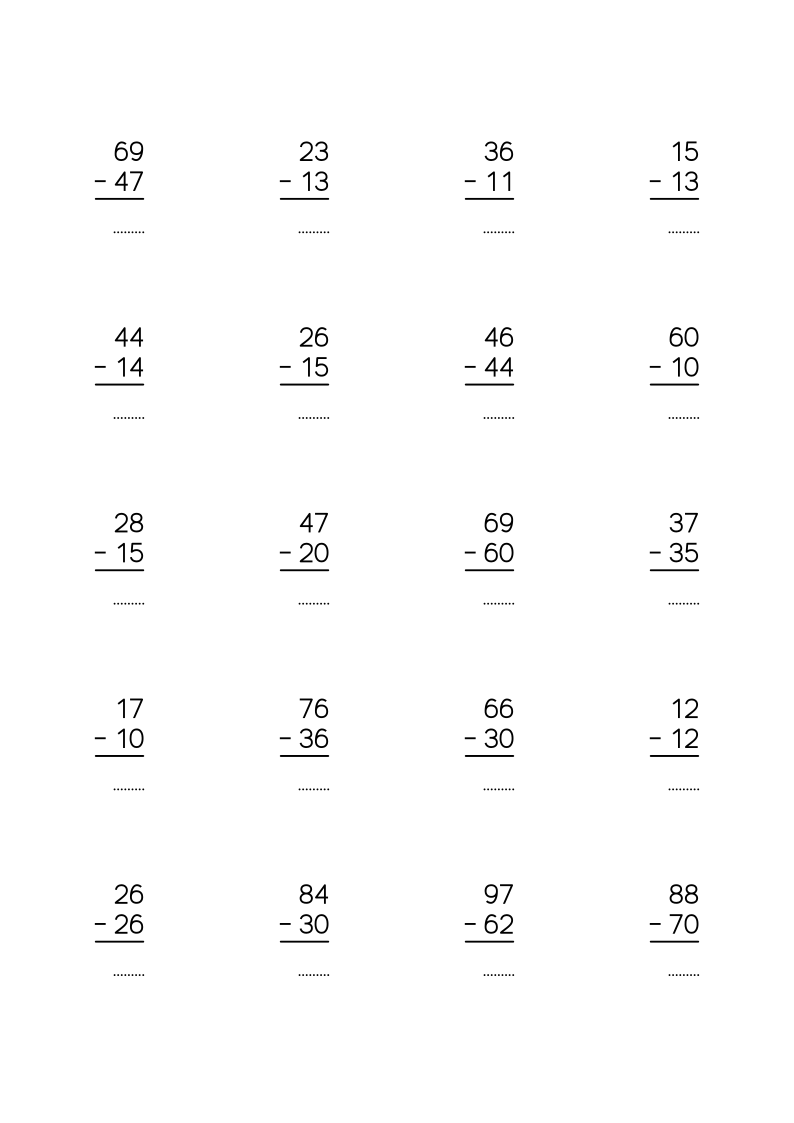
This browser is too old to make the page: please update it, or use another one. Here is an example page in the meantime.
The latest printable pages whose sheets were made with this generator, ready to download.


Frequently Asked Questions
What Can You Make With the Subtraction Worksheet Generator?
Subtraction worksheets from one-digit facts for beginners up to four-digit numbers, the number taken away as long as the first or shorter, where every subtraction borrows, none does, or both kinds mix, laid out in columns or lined up for mental math, twenty to a sheet with their answer key.
Why Practice Column Subtraction?
Column subtraction works like column addition, from right to left, starting with the ones. When a digit on top is smaller than the digit under it, you borrow: you take one ten from the next column, which makes the top digit 10 more. You can check each answer by adding it to the number you subtracted: you should get the top number back. The one-digit level never borrows: it builds the subtraction facts that every column uses.
Why Is the Number Taken Away Never Longer?
First Number gives the digits of the number on top and Second Number those of the number taken away, each between 1 Digit and 4 Digits, every number having exactly that many: 3 Digits with − 2 Digits gives subtractions like 482 − 57. The second may match the first in length but never pass it, since 7 − 25 would fall below zero. With a one-digit first number, − 1 Digit is the only choice left, and the list stays on the page, grayed out, to show it.
With or Without Borrowing?
Without borrowing, each digit on top is at least the digit under it, so every column subtracts on its own: the way to learn the layout. With borrowing, every subtraction needs at least one borrow: a column whose top digit is too small takes ten from its left neighbor, and a 0 that has to lend borrows in turn, as in 1,000 − 1. Mixed takes the subtractions as they come, some borrowing and some not. A one-digit subtraction never borrows, so the Borrowing list disappears when First Number is 1 Digit.
Subtractions in Columns or in a Row?
In columns, the number taken away goes under the other one, digit under digit, with room above for the borrowed digits and a dotted line under the rule for the difference. In a row, each subtraction is written as 62 − 27 = with a dotted line after it, for mental math: count on from the smaller number, or take away the tens then the ones. Both layouts hold the same subtractions for the same seed.
Why Is There a Dotted Line Below the Rule?
It marks where the difference goes, under the rule, and it is as long as the first number, because a difference can never have more digits than the number it starts from. Its dots invite the child to write on it, as on a notebook line, while the solid rule above stays the line of the calculation.
Which Subtraction Level Should I Choose?
Begin with 1 Digit and − 1 Digit, the facts like 9 − 4 that every column relies on. Then 2 Digits and − 1 Digit, Without borrowing, gives a first taste of columns, as in 48 − 5, and With borrowing, as in 42 − 7, brings the hardest idea of subtraction. Longer numbers add columns, and with three or four digits a borrow sometimes has to cross a zero, as in 503 − 278, the classic stumbling block worth practicing on its own sheets.
What Does the Answer Key Show?
Show the solution brings back the same twenty subtractions with their answers: each difference written above the dots, and the borrowing in columns as American schools write it, each digit that lends crossed out with its new value small above it, so 503 − 278 shows the 5 becoming 4 and the 0 becoming 9. The digits of the answers are dashed in the orange of the site, gray on a printer with black ink only.
What Age or Grade Are These Subtractions For?
Subtracting within 10 and then within 20 belongs to kindergarten and first grade in the usual US sequence. Second graders subtract two-digit numbers with regrouping, three-digit numbers follow over grades two and three, and by fourth grade the standard algorithm for multi-digit subtraction should run smoothly. Borrowing is often harder than carrying, so a sheet Without borrowing is a good start at each new size.
How Does the Subtraction Worksheet Generator Work?
The generator draws a first number with the digits chosen, then a second with its own digits, never more than the first, so the result is never negative and is sometimes 0. Unless the borrowing is mixed, it sets aside the pairs that do not match it, until it has twenty different ones; one-digit numbers run from 1 to 9. The seed of the page stays in its address, which brings back the same subtractions.