
Fraction Worksheet Generator
Make fraction worksheets to print, with shapes cut into equal parts: circles cut like a pie, bars cut into boxes and, if you like, rectangles cut into a grid. Three tasks: name the fraction that is shaded, color the fraction written under the shape, or compare two shaded fractions with the signs <, > and =.
Choose the task, the level, from halves, thirds and quarters up to tenths, and the shapes. A page has nine fractions to name or to color, or eight pairs to compare. Fractions, signs and answers come in the Font of your choice, smooth Pebble or print-like Granite, and the pies, bars and grids keep their size.
The answer key writes each fraction, shades the parts to color, or writes each sign.
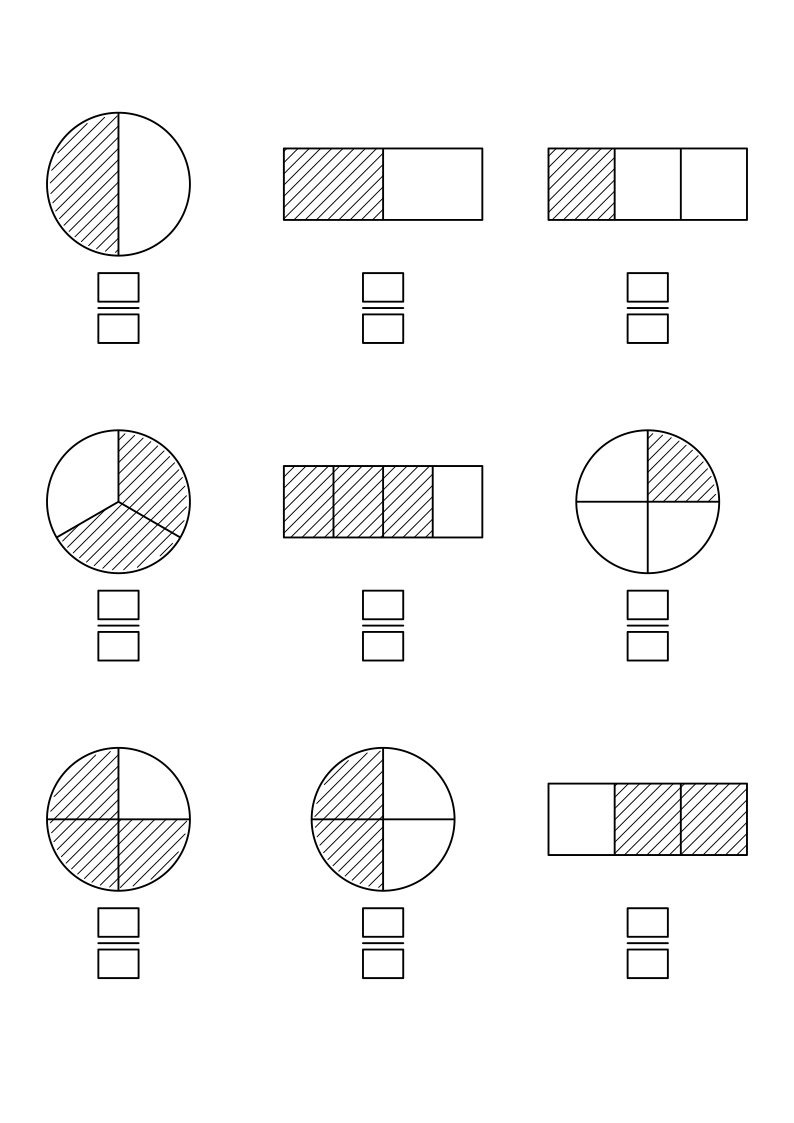
This browser is too old to make the page: please update it, or use another one. Here is an example page in the meantime.
The latest printable pages whose sheets were made with this generator, ready to download.


Frequently Asked Questions
What Can You Make With the Fraction Worksheet Generator?
Fraction worksheets in three tasks and three levels, on circles and bars, with grids as an option: shapes to name or to color, nine to a page, or pairs to compare, eight to a page, from halves to tenths.
Why Practice Fractions With Shapes?
A fraction names a part of a whole. Its bottom number, the denominator, counts the equal parts the whole is cut into; its top number, the numerator, counts the parts we take. Circles cut like a pie and bars cut into boxes make fractions easy to see. Naming the shaded fraction practices counting the parts, and coloring a fraction practices showing it. Comparing two shaded fractions shows which one covers more: with the same denominator, the larger numerator wins; with the same numerator, the fewer the parts, the bigger each part, and the bigger the fraction.
What Are the Three Tasks?
Name the Fraction shows a shape with some parts hatched: count all the parts, then the hatched ones, and write the fraction in the two boxes under the shape. Color the Fraction writes a fraction under an empty shape: color as many parts as the top number. Compare the Fractions shows two hatched shapes side by side, with their fractions written under them: write <, > or = in the circle between them.
Which Fraction Level Should I Choose?
Halves, thirds and quarters come first: few parts, easy to count and to compare. Up to Sixths adds fifths and sixths; Up to Tenths goes on to sevenths, eighths, ninths and tenths, where the parts get thin and counting takes care. Pies, Bars and Grids also draws some of these fractions as rectangles of squares.
Pies and Bars, or Grids Too?
Pies and Bars keeps to the two classic models: a circle cut into equal slices, and a bar cut into equal boxes side by side. Pies, Bars and Grids adds rectangles of squares for fractions of 4, 6, 8, 9 and 10 parts: 2 by 2 for quarters, 2 by 3 for sixths, 2 by 4 for eighths, 3 by 3 for ninths and 2 by 5 for tenths. Halves, thirds, fifths and sevenths stay circles and bars, since a grid of 2, 3, 5 or 7 squares could only be a single row, which is a bar. Rows and columns of parts are a first look at the area model, used later to multiply fractions.
Are 2/4 and 1/2 Both Right?
Both name the same amount: two quarters of a shape are one half of it. To name a shaded fraction, the worksheets count the parts as they are drawn, the parts shaded over all the parts, so a circle cut in four with two parts shaded reads 2/4 in the answer key; 1/2, the same fraction simplified, is right too. To color a fraction, any parts will do, as long as there are as many as the top number: the key shades the first ones, from the top right of a circle, the left of a bar or the top left of a grid, but three eighths colored anywhere are still 3/8. To compare, 2/4 and 1/2 take the sign =.
Why Is Every Fraction Less Than One Whole?
Each shape on the page stands for one whole, so a fraction drawn on it takes some of its parts, at least one and never all of them: the top number stays below the bottom one, and no shape is left blank or fully hatched. Fractions greater than one, like 5/4, need more than one whole and come later, with number lines and mixed numbers. These sheets keep to the first step, a part of a single shape.
What Does the Answer Key Show?
Show the solution completes each task in its own way: on Name the Fraction, the top and bottom numbers appear in their two boxes; on Color the Fraction, the parts to color are hatched; on Compare the Fractions, each circle receives its sign. Everything the key adds is orange, the numbers and signs in dashed strokes, so the answers stand apart from the black of the sheet even on a gray print.
What Age or Grade Are These Fractions For?
First and second graders split circles and rectangles into halves, thirds and fourths, in the US Common Core sequence, which the first level matches. Third grade writes those shares as fractions, with denominators 2, 3, 4, 6 and 8, and compares two fractions that share a top or a bottom number, the work of Up to Sixths. Fourth grade adds fifths, tenths and twelfths, equivalent fractions and the comparison of any two fractions, where Up to Tenths and the grids fit best.
How Does the Fraction Worksheet Generator Work?
For each fraction, the generator draws a number of parts allowed by the level, how many of them are taken, and a shape that can be cut that way: a circle or a bar, or a grid when the number of parts makes one. No two fractions of a page are the same, and each is smaller than 1; a pair to compare holds two fractions, about one pair in five equal, like 2/4 and 1/2. The hatching is made of thin lines at 45°, which stay clear in black and white. The address of the page holds the seed that drew these fractions.