Pyramid and Bipyramid Nets

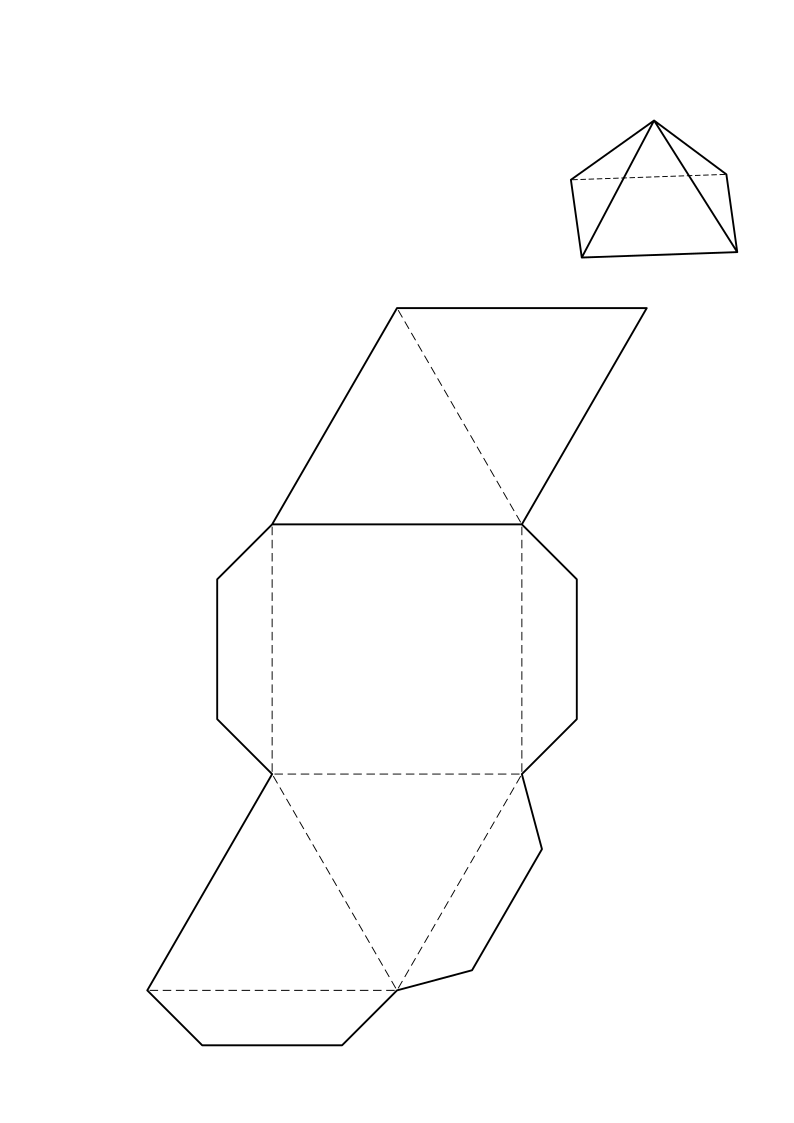
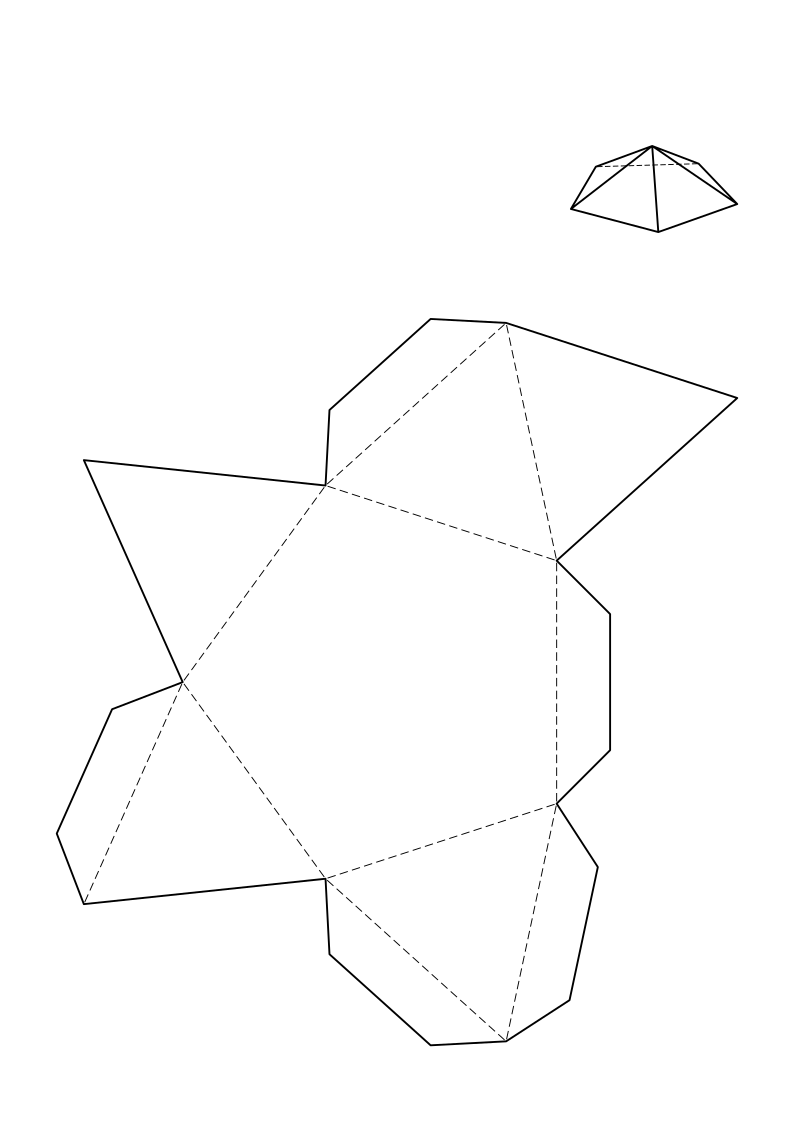
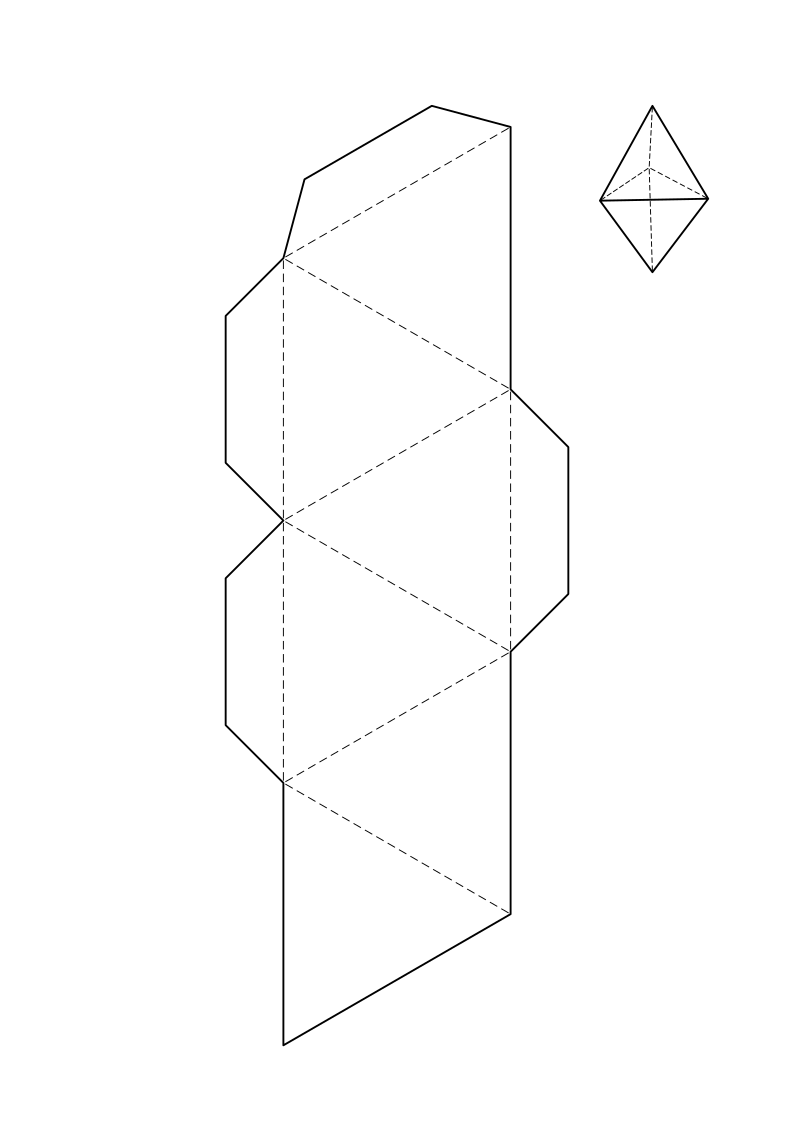
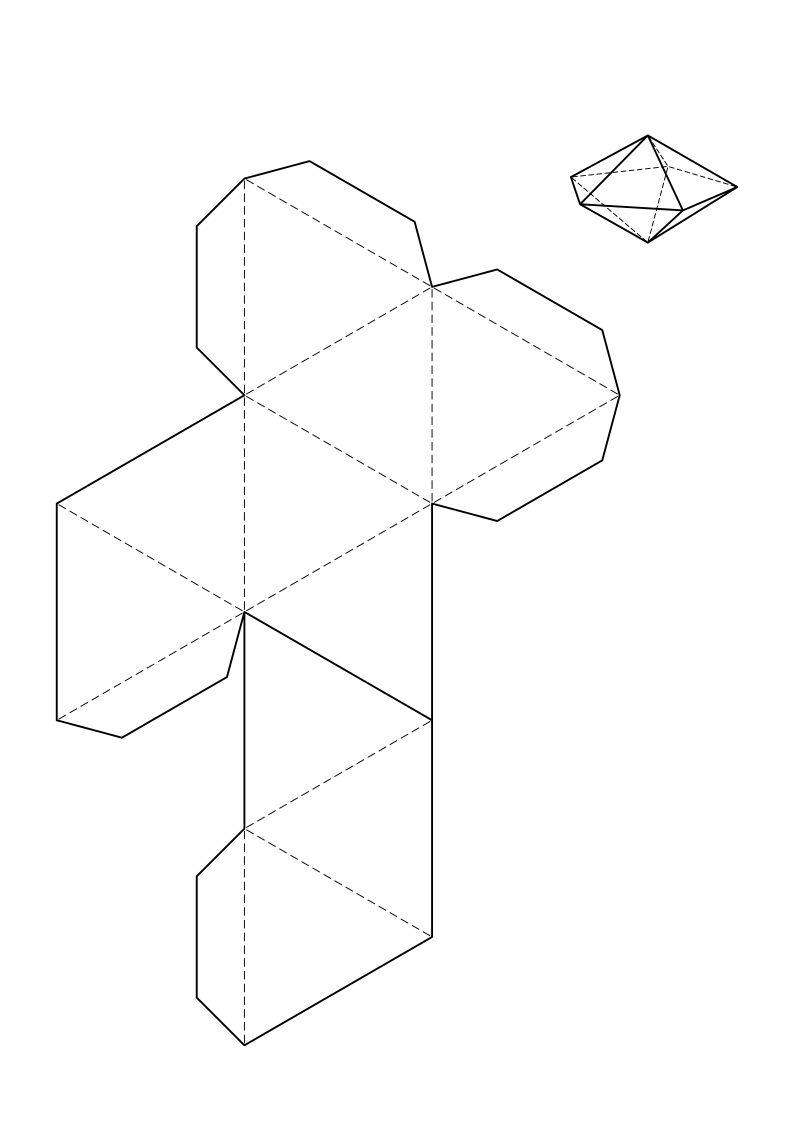
A pyramid rises from a polygon to a single point, its apex, with one triangle on each side of the base. On these nets, every triangle is equilateral: the square pyramid has a square and four triangles, the pentagonal pyramid a pentagon and five triangles. A bipyramid is two such pyramids joined base to base, so the base disappears inside: the triangular bipyramid has six triangles, the pentagonal bipyramid ten.

Each net prints on an A4 sheet, tabs included, with a small view of the solid once assembled.

Part of the Cut-Out Activities collection, Last updated on Thu, 29 Oct 2026 23:45:07 GMT.

Free Printables

Square Pyramid Net

Square pyramid net: a square base and four equilateral triangles meeting at the apex.
Square pyramid net: a square base and four equilateral triangles meeting at the apex. | zuzuzi.com

Pentagonal Pyramid Net

Pentagonal pyramid net: a pentagon with five triangles rising from its sides.
Pentagonal pyramid net: a pentagon with five triangles rising from its sides. | zuzuzi.com

Triangular Bipyramid Net

Triangular bipyramid net: six triangles that close into two pyramids sharing a hidden base.
Triangular bipyramid net: six triangles that close into two pyramids sharing a hidden base. | zuzuzi.com

Pentagonal Bipyramid Net

Pentagonal bipyramid net: ten triangles, five above and five below a hidden pentagon.
Pentagonal bipyramid net: ten triangles, five above and five below a hidden pentagon. | zuzuzi.com

Why No Hexagonal Pyramid?

Six equilateral triangles around one point lie perfectly flat and form a hexagon, so a pyramid on a hexagon cannot have equilateral sides: its apex would sit on the base. With a square or a pentagon at the bottom, the triangles still have room to rise to a point.

Where Is the Square Bipyramid?

Two square pyramids with equilateral sides, joined base to base, make the regular octahedron, one of the Platonic solids. Its net is on the page of Platonic solid nets, so this page keeps the triangular and pentagonal bipyramids.

Pyramids in the Classroom

A folded square pyramid gives children a model to hold next to pictures of the pyramids of Egypt, and to talk about a base, faces and an apex. Counting the triangles of a bipyramid also shows that a closed shape does not need a flat base to stand on.

Frequently Asked Questions

How many faces does each shape have?

The square pyramid has 5 faces and 5 corners, the pentagonal pyramid 6 faces and 6 corners, the triangular bipyramid 6 faces and 5 corners, and the pentagonal bipyramid 10 faces and 7 corners.

Are all the triangles the same size?

Yes. Every edge of these four solids has the same length, so all the triangles are equilateral and equal, and their sides match the sides of the square or pentagon they rise from.