Pentomino Puzzles

Each sheet holds a shape drawn on a grid of squares and, underneath, the pentominoes that fill it, ready to cut out. The pieces are drawn on squares of the same size as the shape, so once cut, they can be laid right on it and moved around until every square is covered.

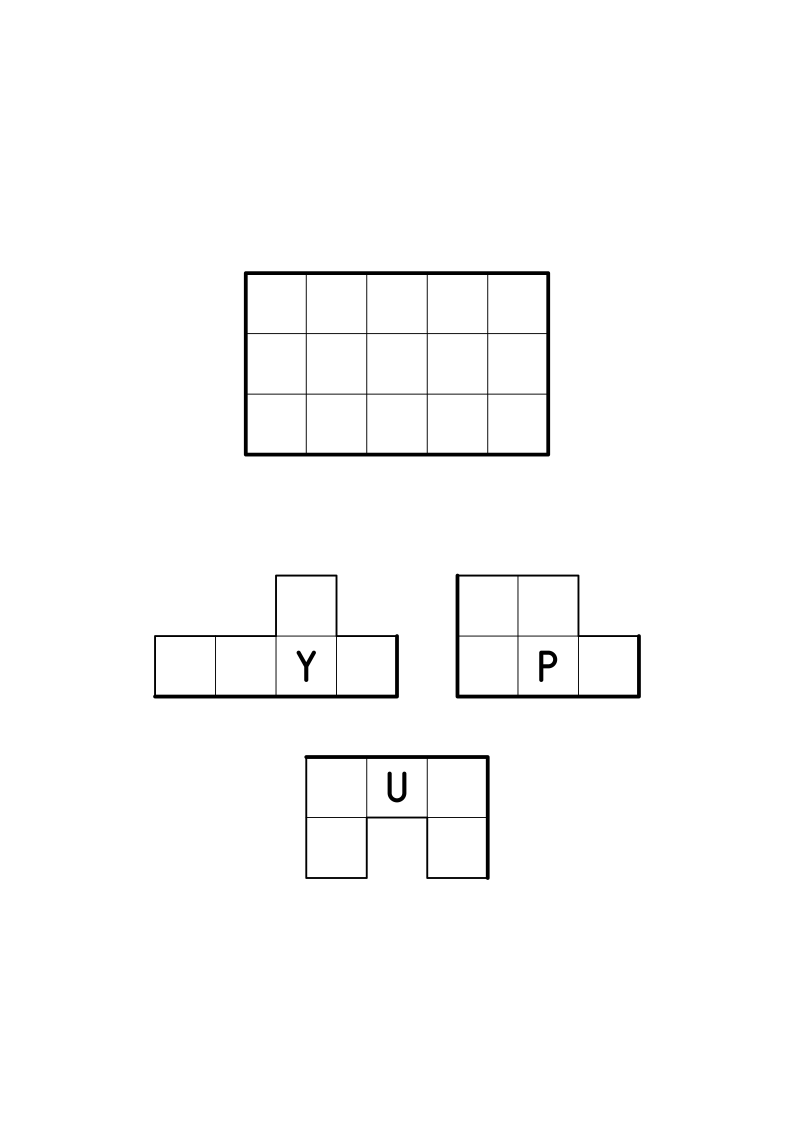
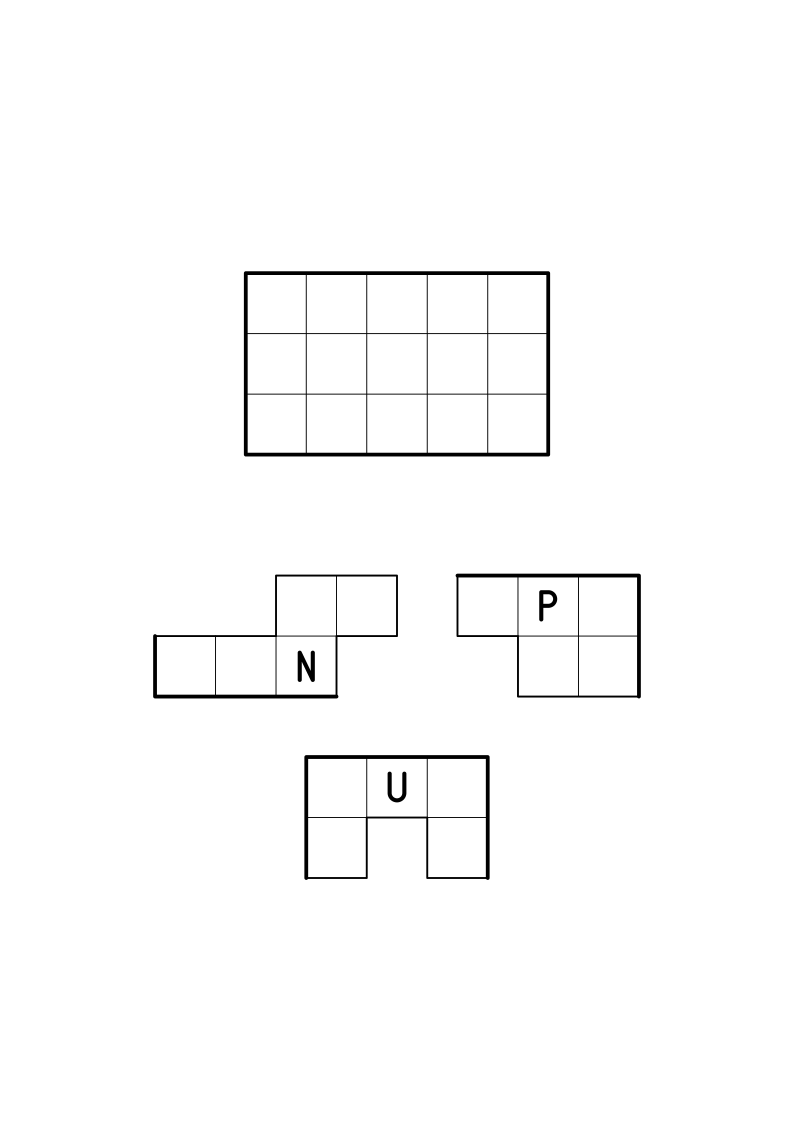
The page starts with three pieces, then six, then all twelve, each time in a rectangle or in a free shape. On the three-piece sheets, a thicker line on each piece shows which of its sides belong on the border of the shape.

Part of the Cut-Out Activities collection, Last updated on Thu, 29 Oct 2026 23:45:08 GMT.

Free Printables

Pentomino Rectangle, 3 Pieces (N1)

Three pentominoes to cut out and fit into a 3 by 5 rectangle, their border sides drawn thick. Sheet 1.
Three pentominoes to cut out and fit into a 3 by 5 rectangle, their border sides drawn thick. Sheet 1. | zuzuzi.com

Pentomino Rectangle, 3 Pieces (N2)

Three pentominoes to cut out and fit into a 3 by 5 rectangle, their border sides drawn thick. Sheet 2.
Three pentominoes to cut out and fit into a 3 by 5 rectangle, their border sides drawn thick. Sheet 2. | zuzuzi.com

Pentomino Free Shape, 3 Pieces (N1)

A free shape for three pentominoes, with thick lines marking the sides of each piece on its border. Sheet 1.
A free shape for three pentominoes, with thick lines marking the sides of each piece on its border. Sheet 1. | zuzuzi.com

Pentomino Free Shape, 3 Pieces (N2)

A free shape for three pentominoes, with thick lines marking the sides of each piece on its border. Sheet 2.
A free shape for three pentominoes, with thick lines marking the sides of each piece on its border. Sheet 2. | zuzuzi.com

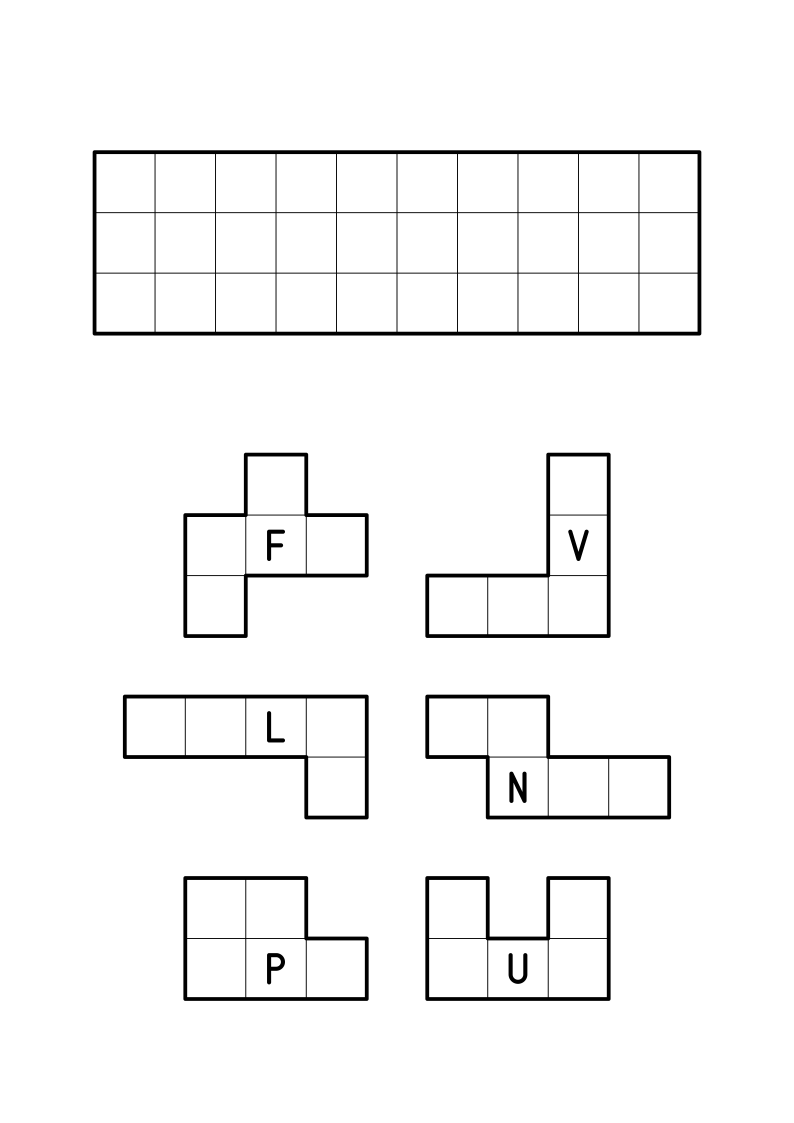
Pentomino Rectangle, 6 Pieces (N1)

Six pentominoes to cut out and fit into a 3 by 10 rectangle, every square covered once. Sheet 1.
Six pentominoes to cut out and fit into a 3 by 10 rectangle, every square covered once. Sheet 1. | zuzuzi.com

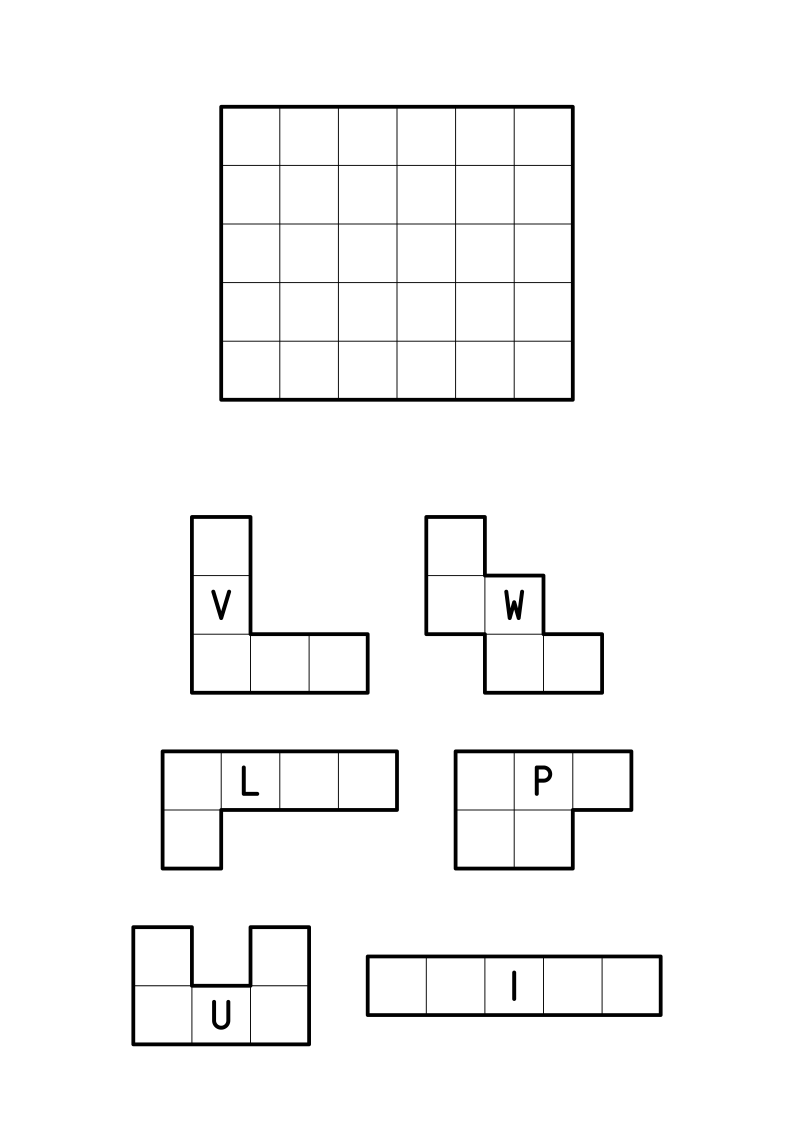
Pentomino Rectangle, 6 Pieces (N2)

Six pentominoes to cut out and fit into a 5 by 6 rectangle, every square covered once. Sheet 2.
Six pentominoes to cut out and fit into a 5 by 6 rectangle, every square covered once. Sheet 2. | zuzuzi.com

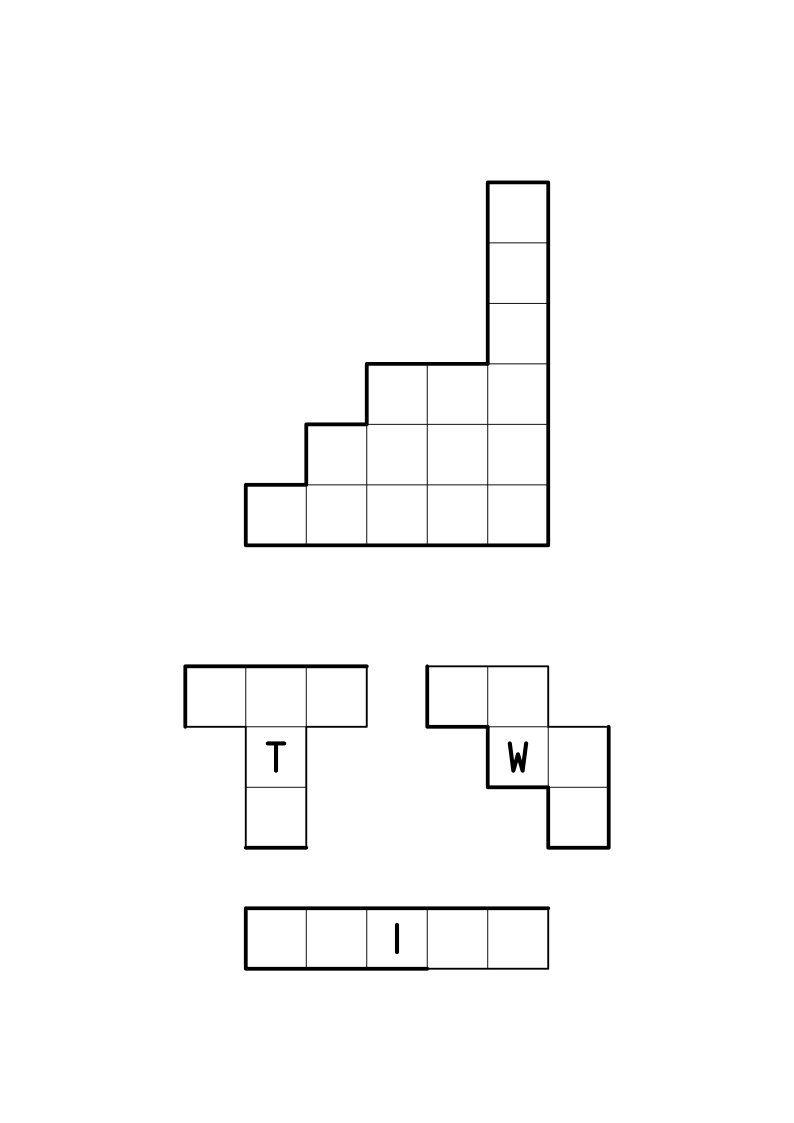
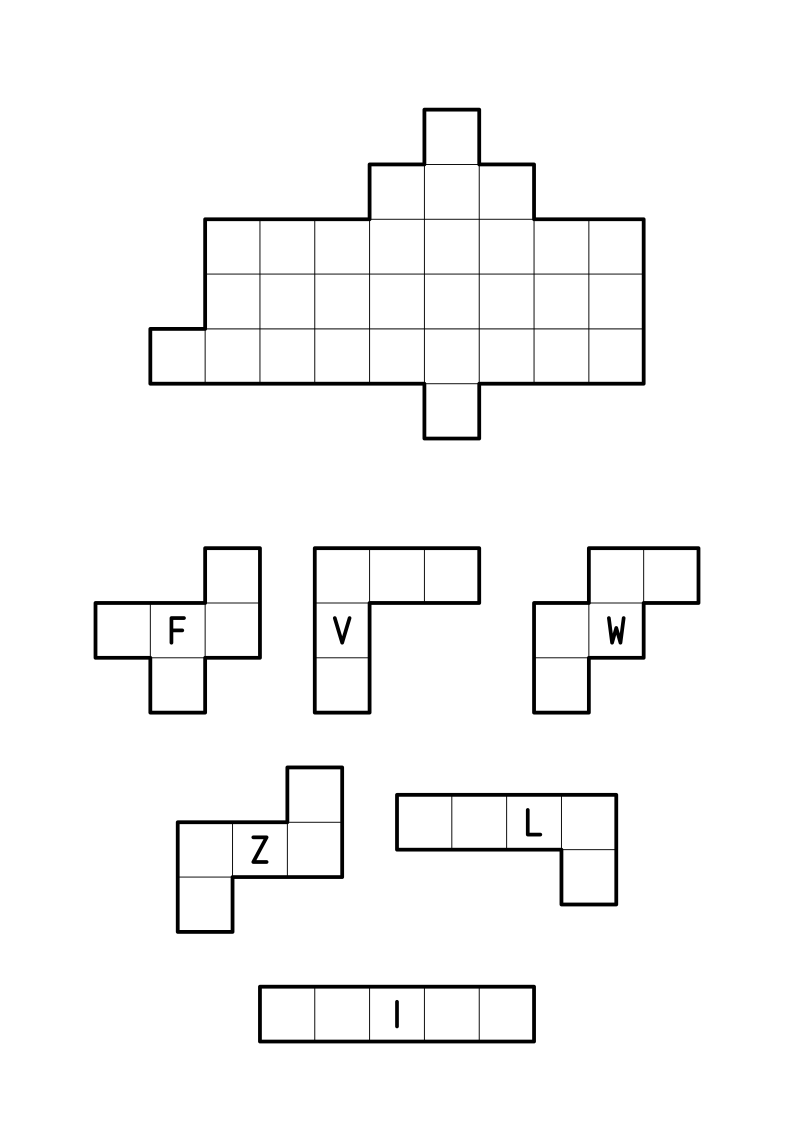
Pentomino Free Shape, 6 Pieces (N1)

Six pentominoes to cut out and assemble into the free shape drawn above them. Sheet 1.
Six pentominoes to cut out and assemble into the free shape drawn above them. Sheet 1. | zuzuzi.com

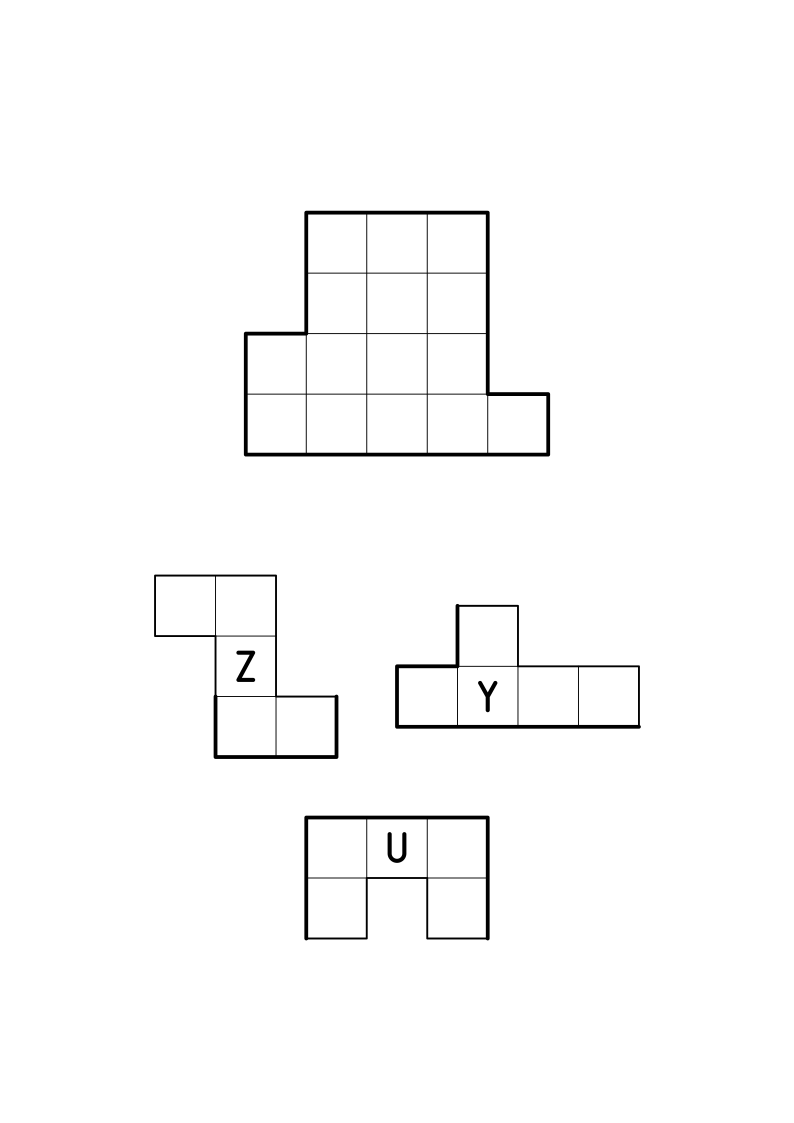
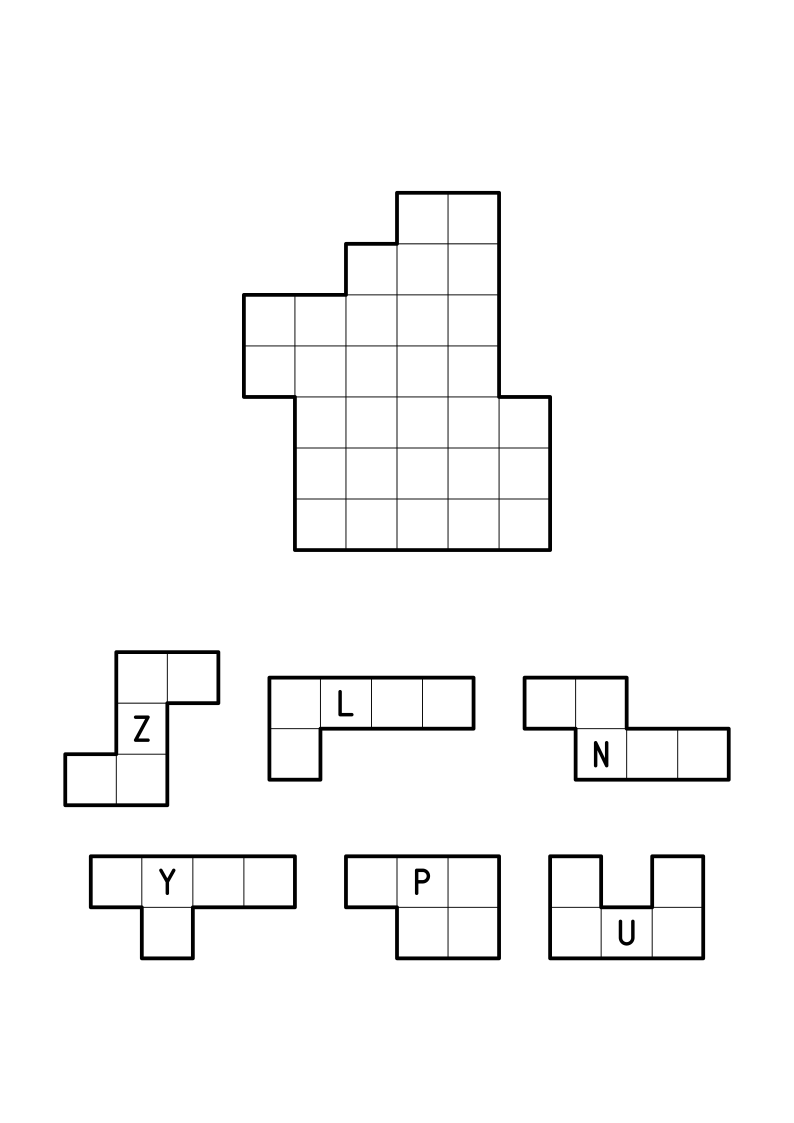
Pentomino Free Shape, 6 Pieces (N2)

Six pentominoes to cut out and assemble into the free shape drawn above them. Sheet 2.
Six pentominoes to cut out and assemble into the free shape drawn above them. Sheet 2. | zuzuzi.com

Pentomino Rectangle, 12 Pieces (N1)

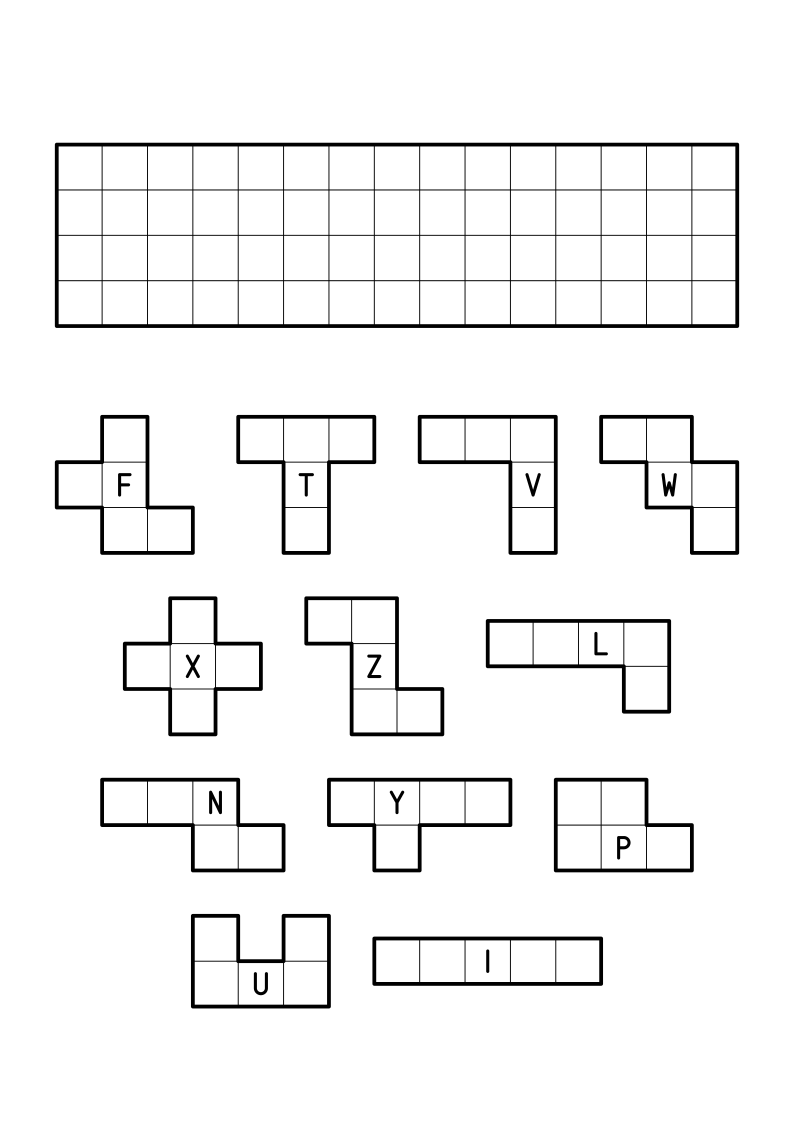
All twelve pentominoes, F to Z, to cut out and fit into a 4 by 15 rectangle. Sheet 1.
All twelve pentominoes, F to Z, to cut out and fit into a 4 by 15 rectangle. Sheet 1. | zuzuzi.com

Pentomino Rectangle, 12 Pieces (N2)

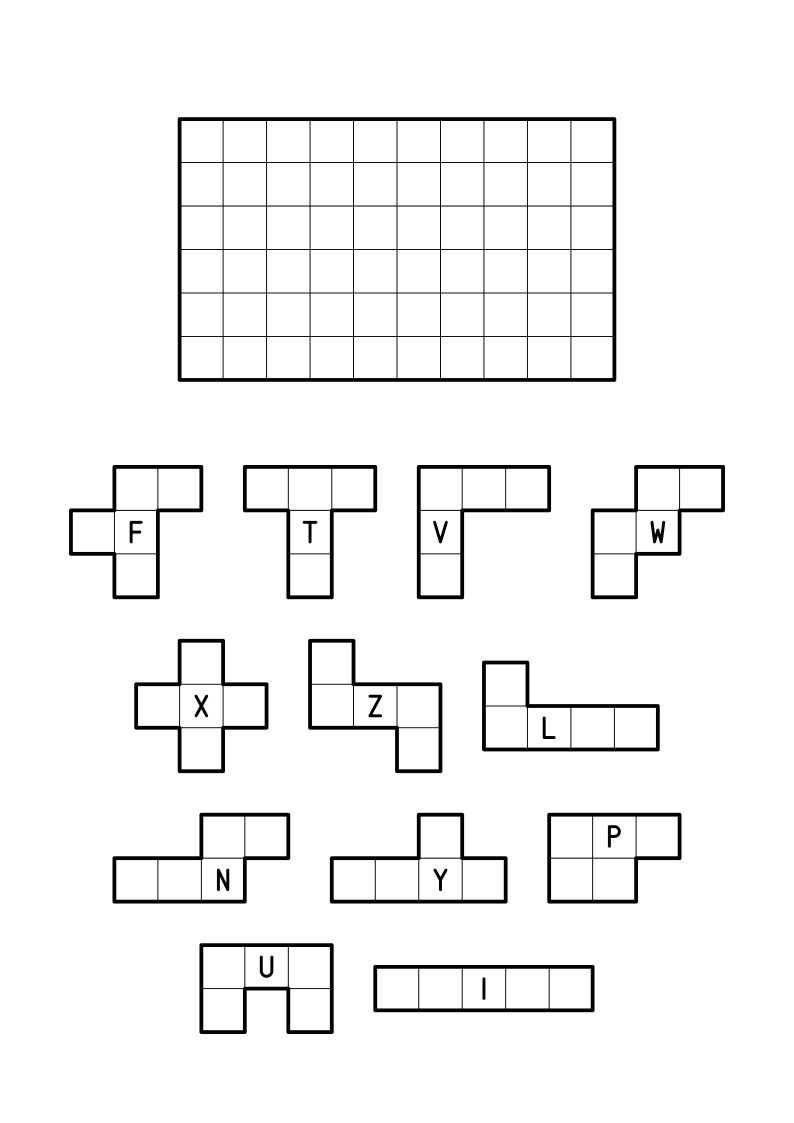
All twelve pentominoes, F to Z, to cut out and fit into a 6 by 10 rectangle. Sheet 2.
All twelve pentominoes, F to Z, to cut out and fit into a 6 by 10 rectangle. Sheet 2. | zuzuzi.com

Pentomino Free Shape, 12 Pieces (N1)

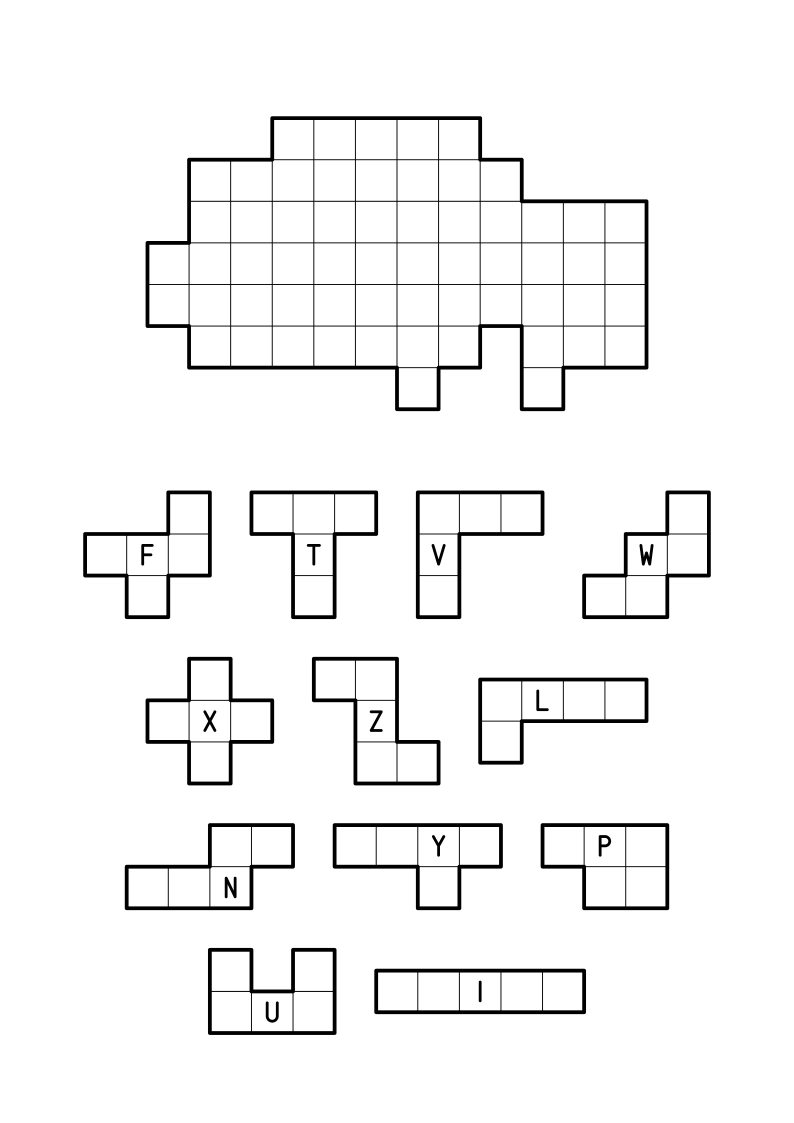
The full set of twelve pentominoes to cut out for a large free shape. Sheet 1.
The full set of twelve pentominoes to cut out for a large free shape. Sheet 1. | zuzuzi.com

Pentomino Free Shape, 12 Pieces (N2)

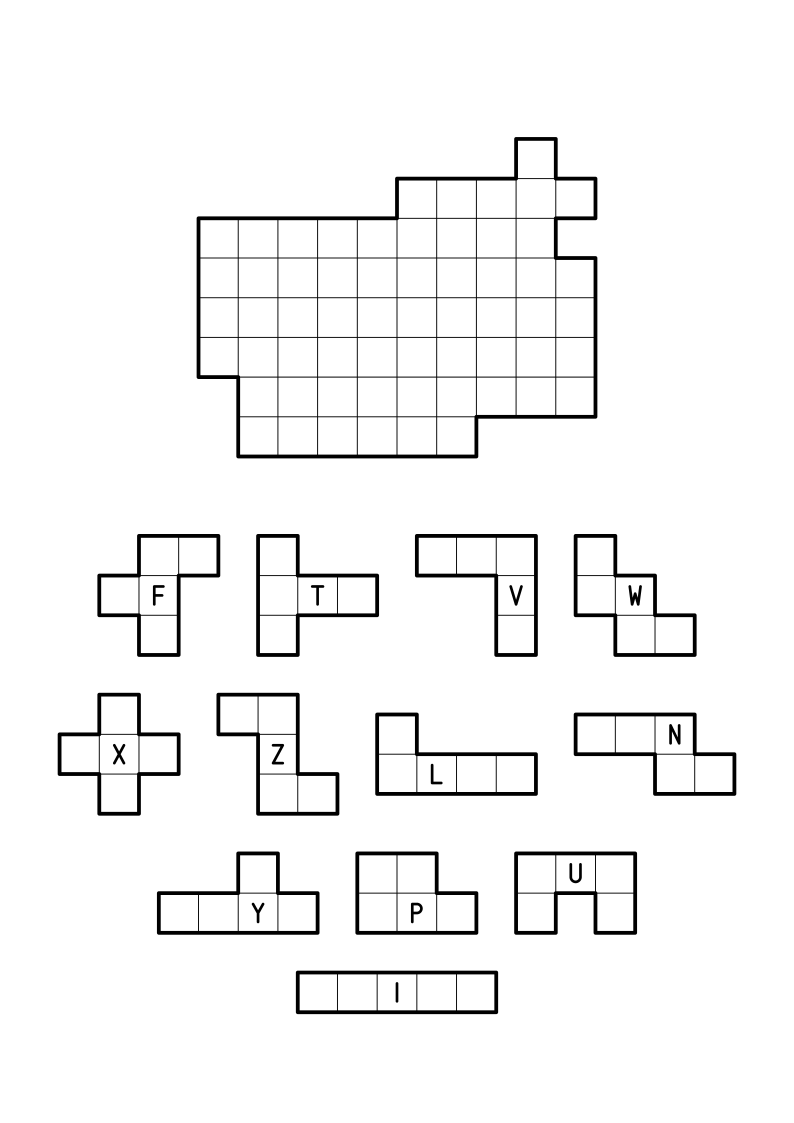
The full set of twelve pentominoes to cut out for a large free shape. Sheet 2.
The full set of twelve pentominoes to cut out for a large free shape. Sheet 2. | zuzuzi.com

Starting With Three Pieces

The first sheets ask for only three pieces, in a small rectangle of 3 by 5 squares or in a free shape. With so few pieces, a child can try every position by hand, turning and flipping each piece until the shape is full.

All Twelve Pieces

The last sheets use the full set, in a rectangle of 4 by 15, 5 by 12 or 6 by 10 squares, or in a free shape. The famous 6 by 10 rectangle has 2,339 different solutions, yet finding even one takes method: fill the corners and narrow parts first, and place the awkward X and I pieces early.

Why Pentominoes Are Good Practice

Turning and flipping a piece in the mind before placing it trains spatial reasoning, the same skill used to read a map or pack a suitcase. Cutting the pieces out adds a hands-on step that younger children enjoy.

Frequently Asked Questions

Who invented pentominoes?

Puzzles with these pieces appeared in the early twentieth century, but the name comes from the mathematician Solomon W. Golomb, who wrote about them in the 1950s. Martin Gardner’s puzzle columns in Scientific American then made them popular.

What do the thicker lines on the first pieces mean?

On the three-piece sheets, each piece shows in a thicker line the sides that lie along the border of the shape in the answer key. A piece with no thick side goes in the middle. On the other sheets, the pieces carry only their letters.