Platonic Solid Nets

The Platonic solids are the five shapes whose faces are all the same regular polygon, with the same number of faces meeting at every corner. This page has a net for each: the tetrahedron with 4 triangles, the cube with 6 squares, the octahedron with 8 triangles, the dodecahedron with 12 pentagons and the icosahedron with 20 triangles.

Every net fills its own A4 sheet, with tabs along the edges to glue and a drawing of the folded solid in the corner.

Part of the Cut-Out Activities collection, Last updated on Thu, 29 Oct 2026 23:45:07 GMT.

Free Printables

Tetrahedron Net

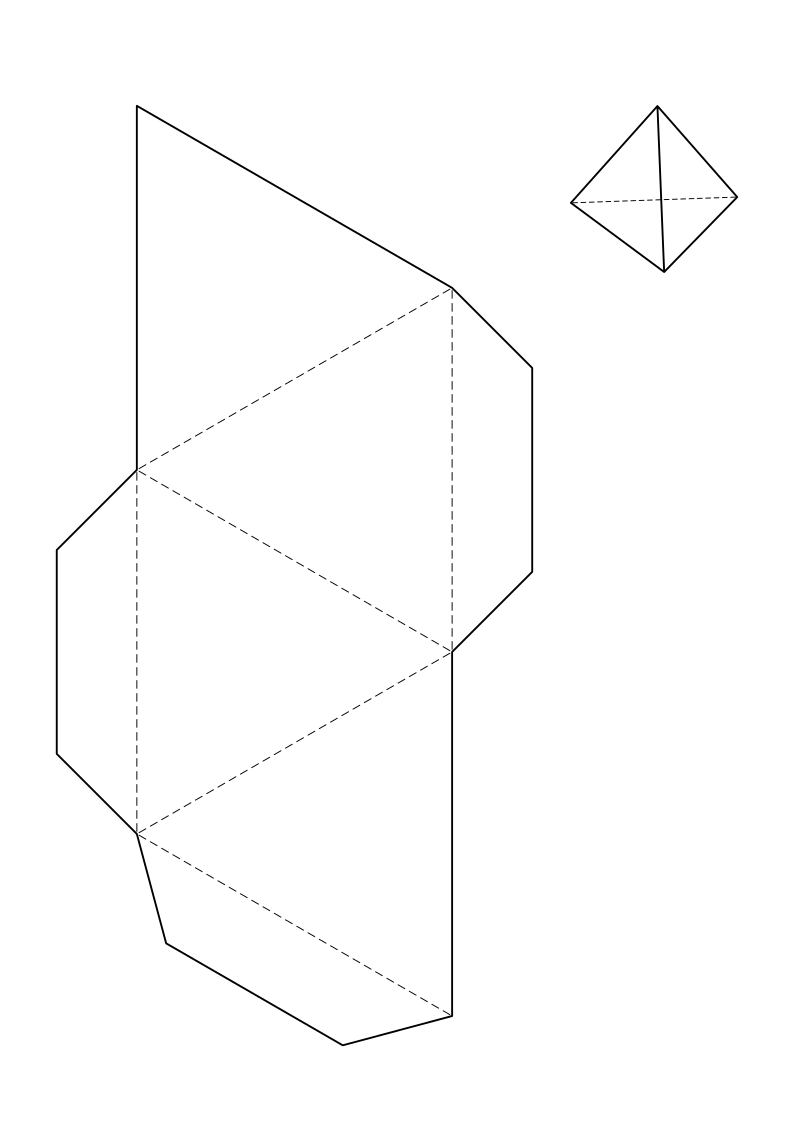
Tetrahedron net: four equilateral triangles that fold into a pyramid on a triangular base, glue tabs included.
Tetrahedron net: four equilateral triangles that fold into a pyramid on a triangular base, glue tabs included. | zuzuzi.com

Cube Net

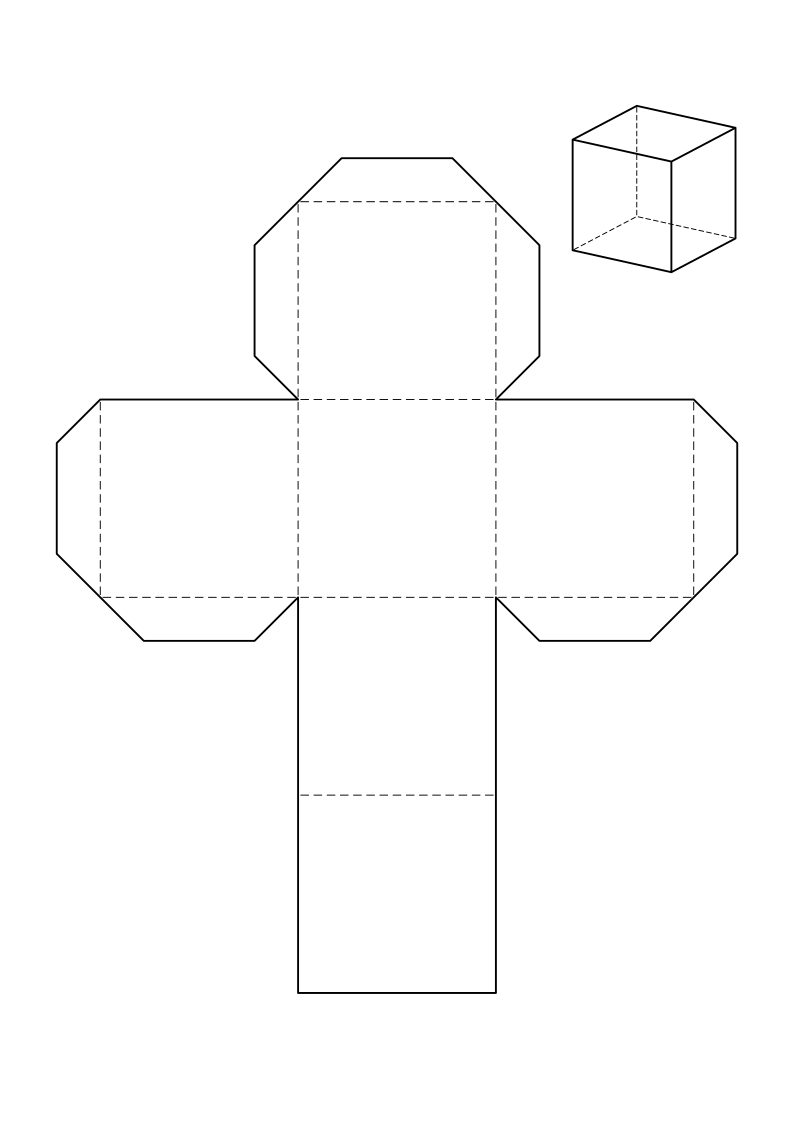
Cube net: six squares in one piece, with tabs to glue the edges that the net leaves open.
Cube net: six squares in one piece, with tabs to glue the edges that the net leaves open. | zuzuzi.com

Octahedron Net

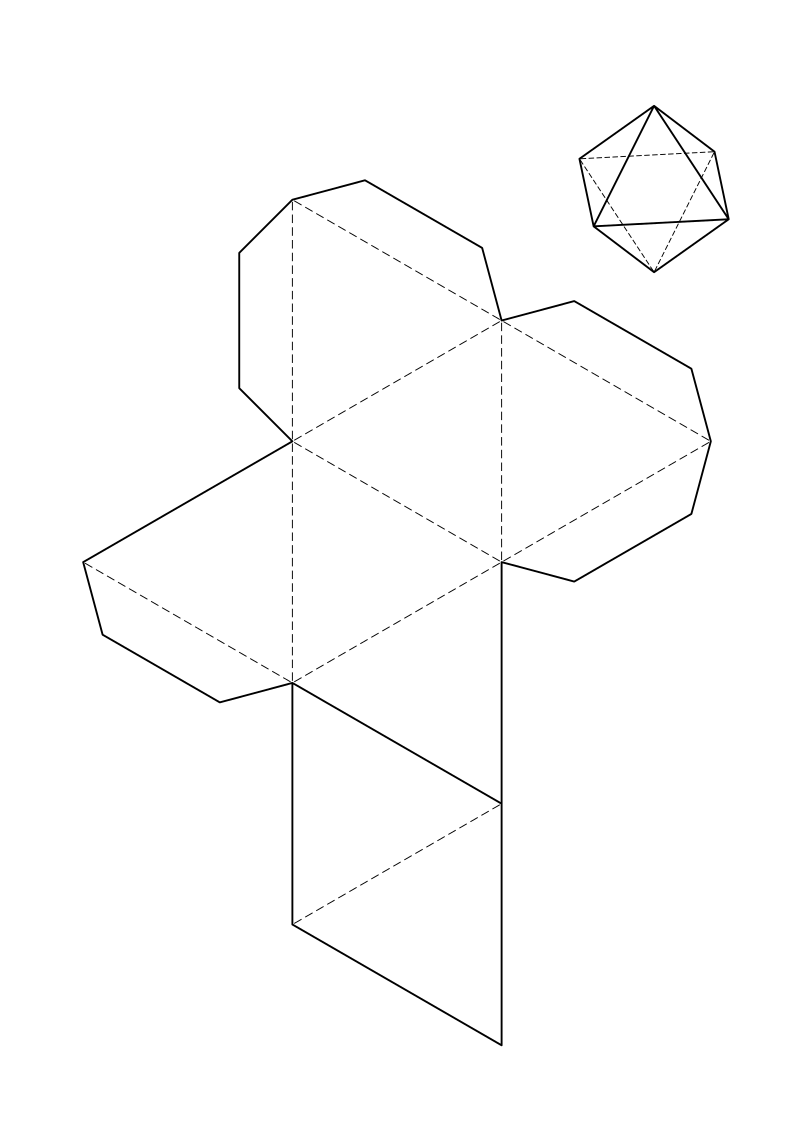
Octahedron net: eight triangles, four of them meeting at every corner of the finished solid.
Octahedron net: eight triangles, four of them meeting at every corner of the finished solid. | zuzuzi.com

Dodecahedron Net

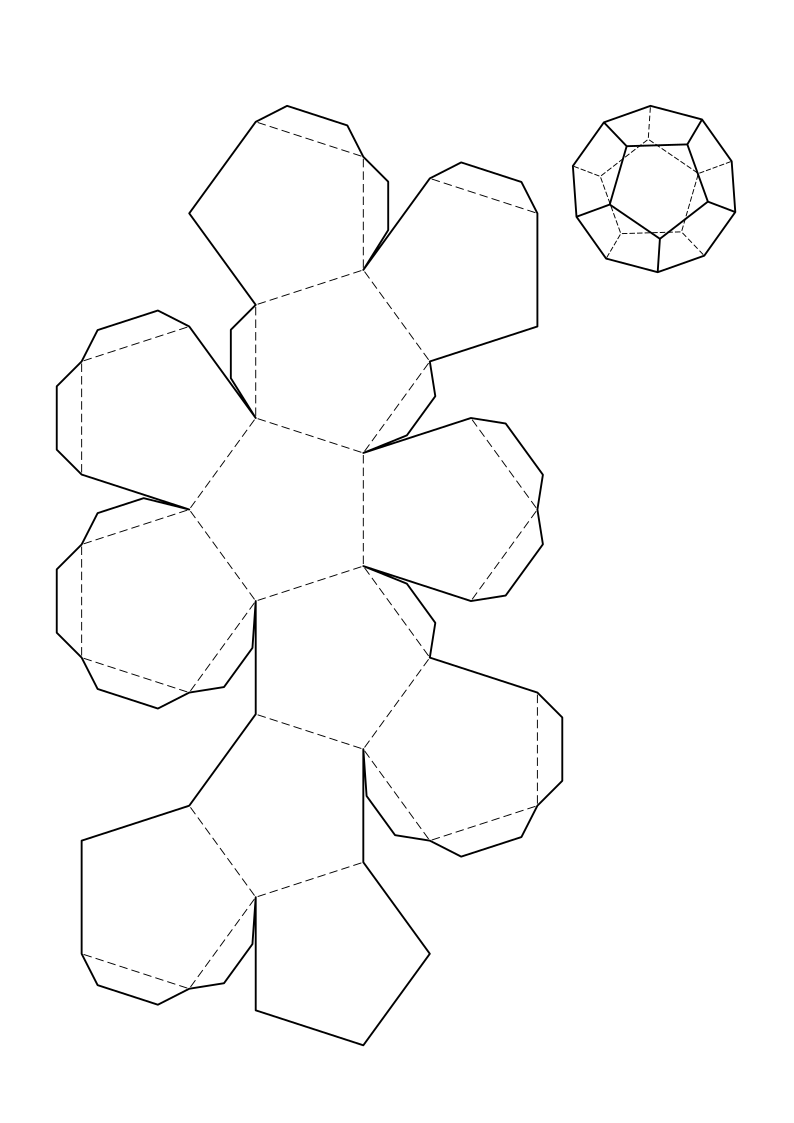
Dodecahedron net: twelve regular pentagons, three around each corner once folded.
Dodecahedron net: twelve regular pentagons, three around each corner once folded. | zuzuzi.com

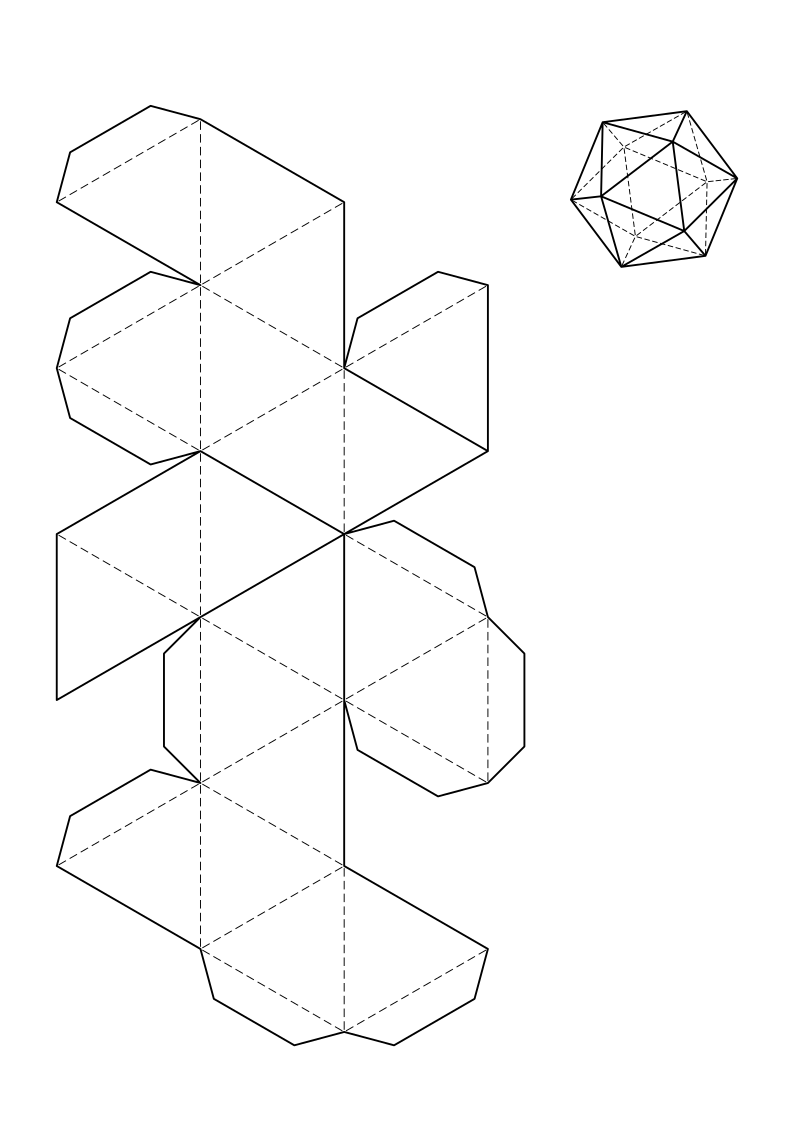
Icosahedron Net

Icosahedron net: twenty triangles, five meeting at each of its twelve corners.
Icosahedron net: twenty triangles, five meeting at each of its twelve corners. | zuzuzi.com

Why There Are Only Five

At each corner of a solid, at least three faces must meet, and their angles must add up to less than a full turn, or the corner would lie flat. With equilateral triangles, three, four or five can meet; with squares, only three; with regular pentagons, three again. Three hexagons already make a full turn, so no other combination works.

From First Model to Last

The cube and the tetrahedron fold up with few faces and are good first models. The octahedron and the icosahedron need more care, since four or five triangles meet at each corner. The dodecahedron, with its twelve pentagons, closes into a rounded shape that is very satisfying to finish.

Plato and the Elements

The solids take their name from the Greek philosopher Plato, who, in his dialogue Timaeus, matched four of them with the elements: the tetrahedron with fire, the cube with earth, the octahedron with air and the icosahedron with water. The dodecahedron he linked with the heavens as a whole.

Frequently Asked Questions

How many faces, edges and corners does each solid have?

The tetrahedron has 4 faces, 6 edges and 4 corners; the cube 6, 12 and 8; the octahedron 8, 12 and 6; the dodecahedron 12, 30 and 20; the icosahedron 20, 30 and 12. In every case, corners minus edges plus faces equals 2, a rule known as Euler’s formula.

Which paper works best for the nets?

Thin card or heavy paper keeps the faces flat and the model firm. Ordinary printer paper works too, especially for the cube and the tetrahedron, as long as each crease is folded firmly before gluing.