Number Line Worksheets

Build counting and skip counting skills with number lines. Each worksheet has eight number lines, each showing eleven numbers that follow the same step, and four of them are missing: children write the missing numbers in the boxes.

The levels count by 1 up to 20 and up to 100, by 2, 3, 4, and 5 up to 100, and by 10 up to 1,000, so children practice the patterns behind addition and multiplication tables.

Available as a high quality PDF ready for A4 printing, perfect for warm-ups, homework, or math centers.

Part of the Math Worksheets collection, Last updated on Mon, 26 Oct 2026 02:54:54 GMT.

Free Printables

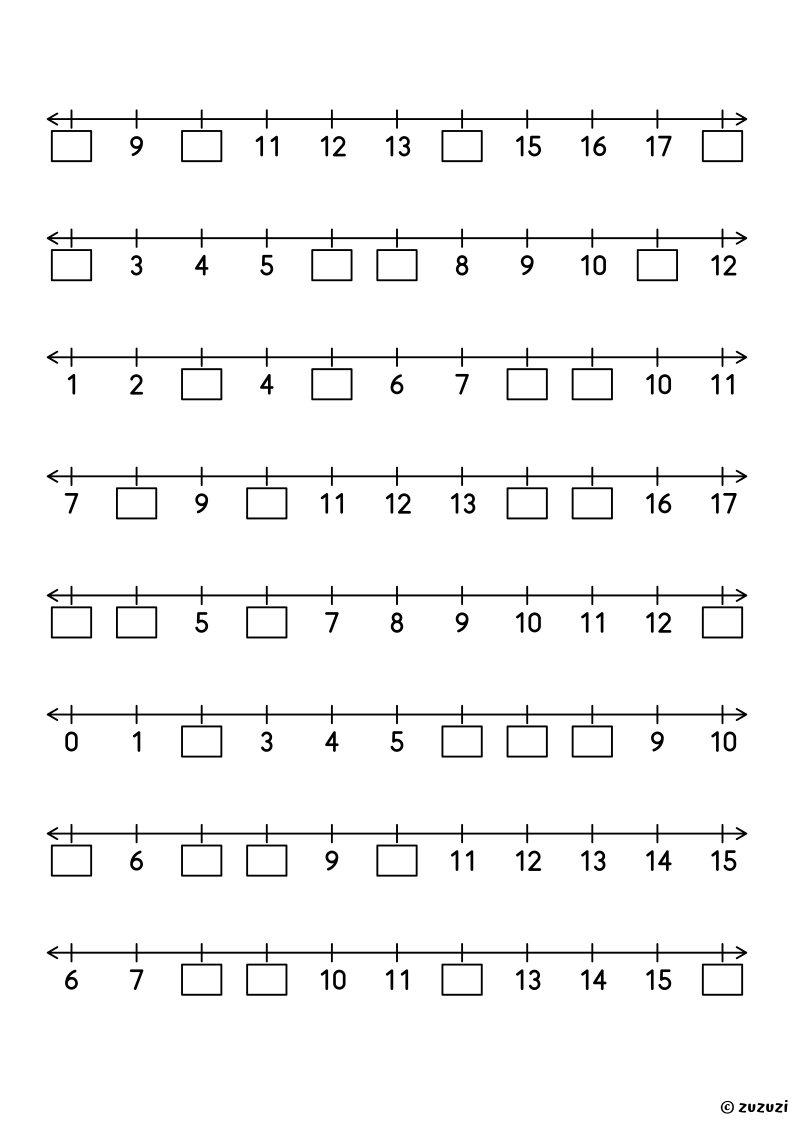
Number Line Worksheet: Counting by 1 to 20 (N1)

Worksheet with eight number lines counting by ones up to 20, each with eleven numbers, four of them missing, to write in the boxes.
Worksheet with eight number lines counting by ones up to 20, each with eleven numbers, four of them missing, to write in the boxes. | zuzuzi.com

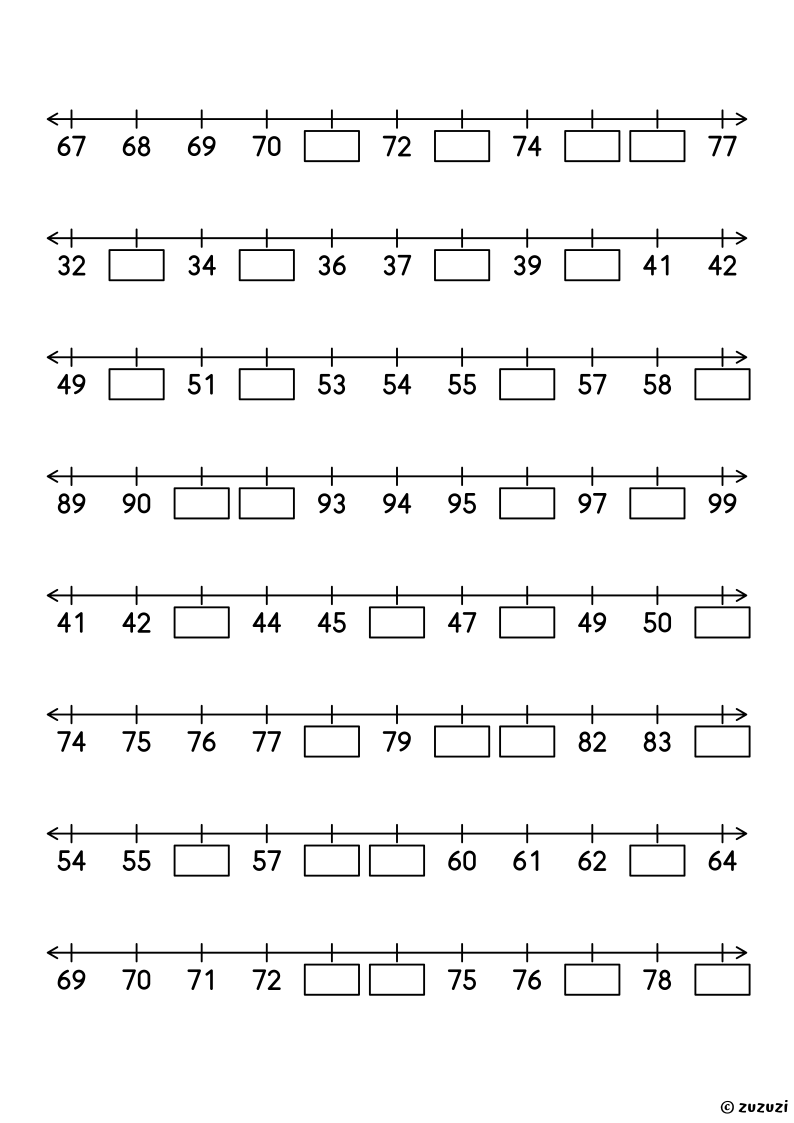
Number Line Worksheet: Counting by 1 to 100 (N2)

Worksheet with eight number lines counting by ones up to 100, each with eleven numbers, four of them missing, to write in the boxes.
Worksheet with eight number lines counting by ones up to 100, each with eleven numbers, four of them missing, to write in the boxes. | zuzuzi.com

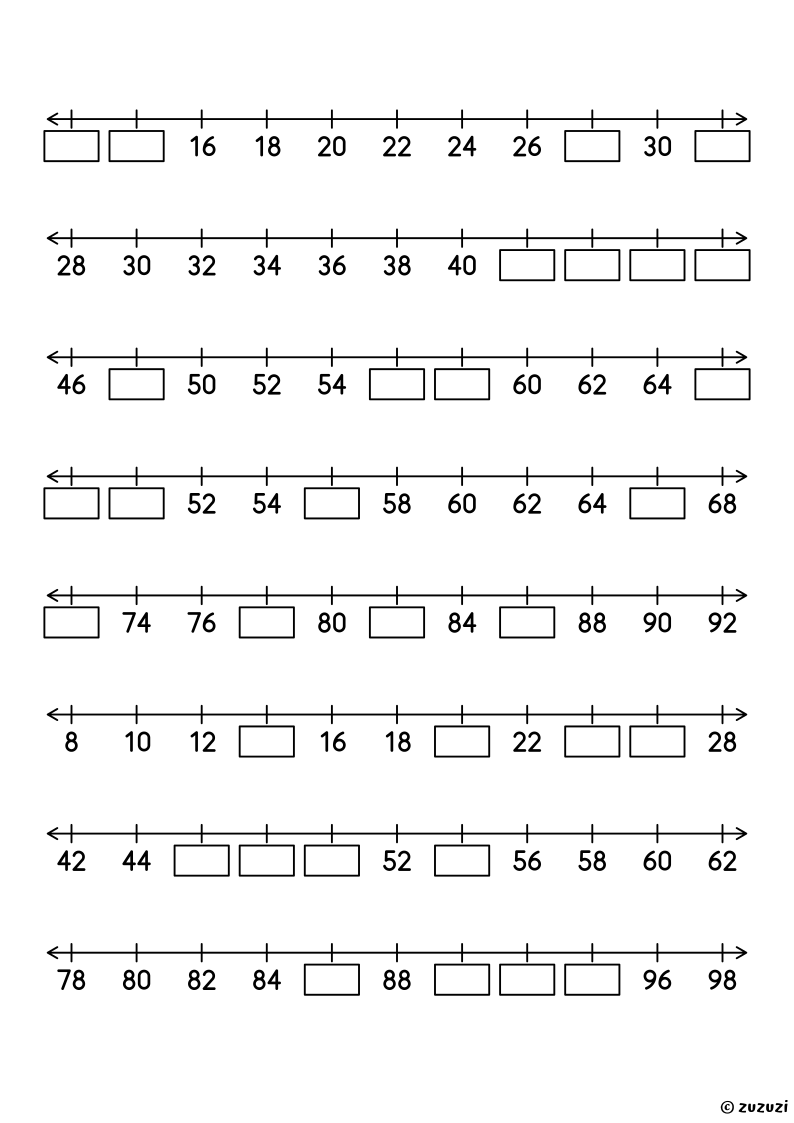
Number Line Worksheet: Counting by 2 (N3)

Worksheet with eight number lines counting by twos up to 100, each with eleven numbers, four of them missing, to write in the boxes.
Worksheet with eight number lines counting by twos up to 100, each with eleven numbers, four of them missing, to write in the boxes. | zuzuzi.com

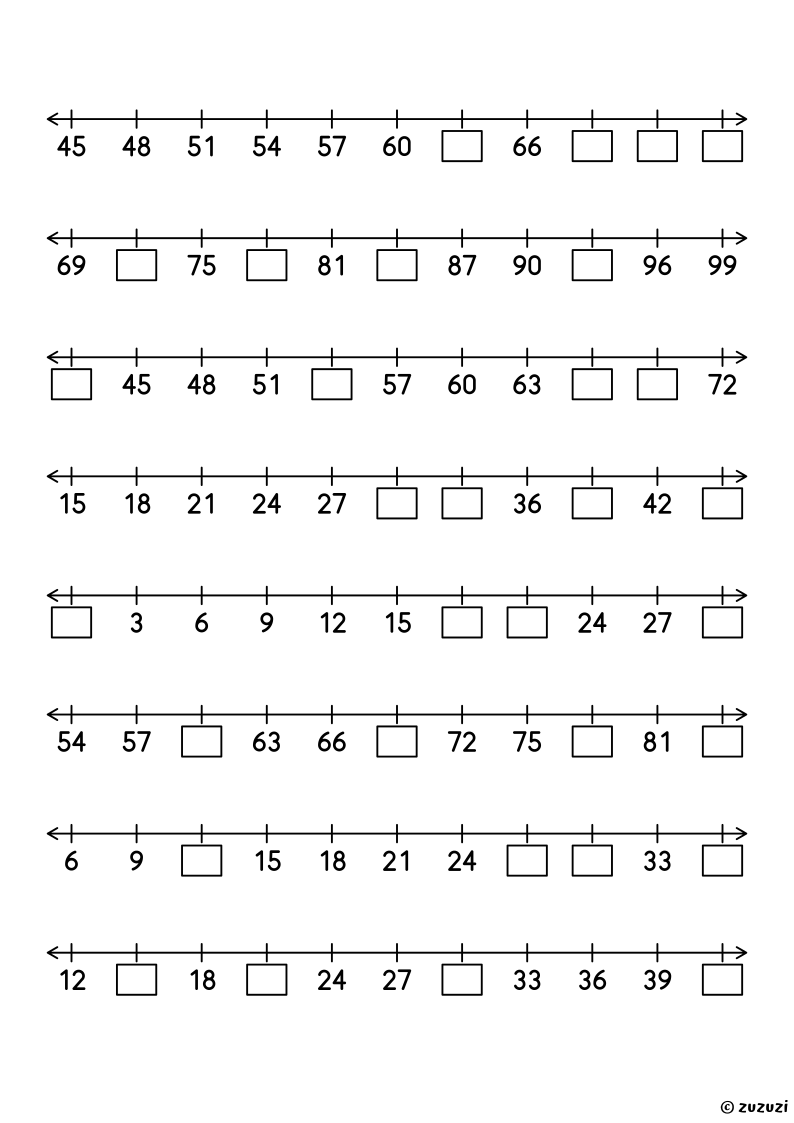
Number Line Worksheet: Counting by 3 (N4)

Worksheet with eight number lines counting by threes up to 100, each with eleven numbers, four of them missing, to write in the boxes.
Worksheet with eight number lines counting by threes up to 100, each with eleven numbers, four of them missing, to write in the boxes. | zuzuzi.com

Number Line Worksheet: Counting by 4 (N5)

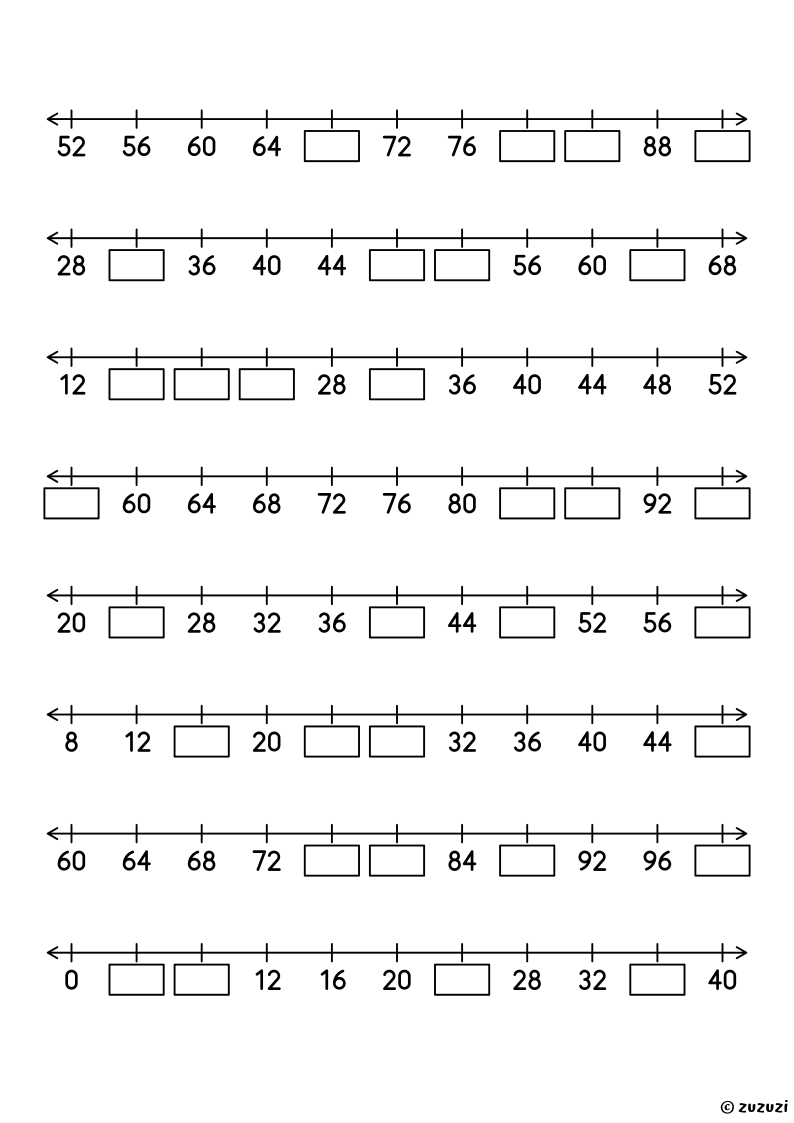
Worksheet with eight number lines counting by fours up to 100, each with eleven numbers, four of them missing, to write in the boxes.
Worksheet with eight number lines counting by fours up to 100, each with eleven numbers, four of them missing, to write in the boxes. | zuzuzi.com

Number Line Worksheet: Counting by 5 (N6)

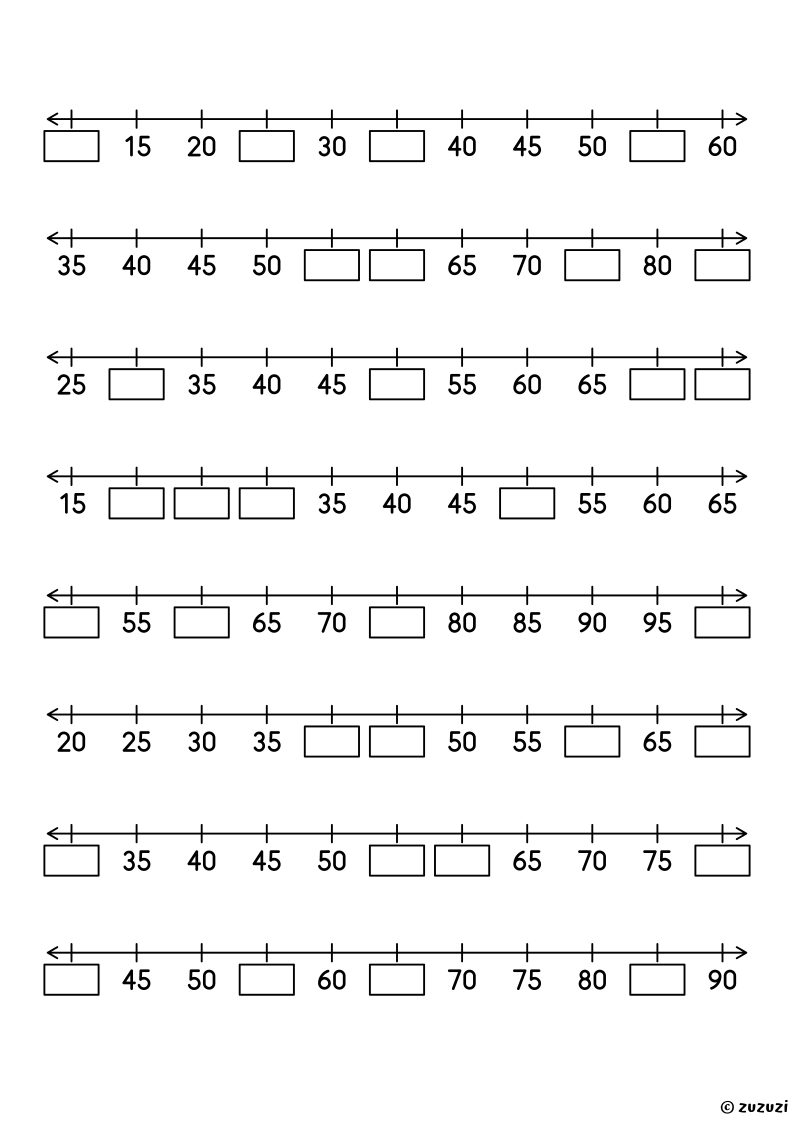
Worksheet with eight number lines counting by fives up to 100, each with eleven numbers, four of them missing, to write in the boxes.
Worksheet with eight number lines counting by fives up to 100, each with eleven numbers, four of them missing, to write in the boxes. | zuzuzi.com

Number Line Worksheet: Counting by 10 (N7)

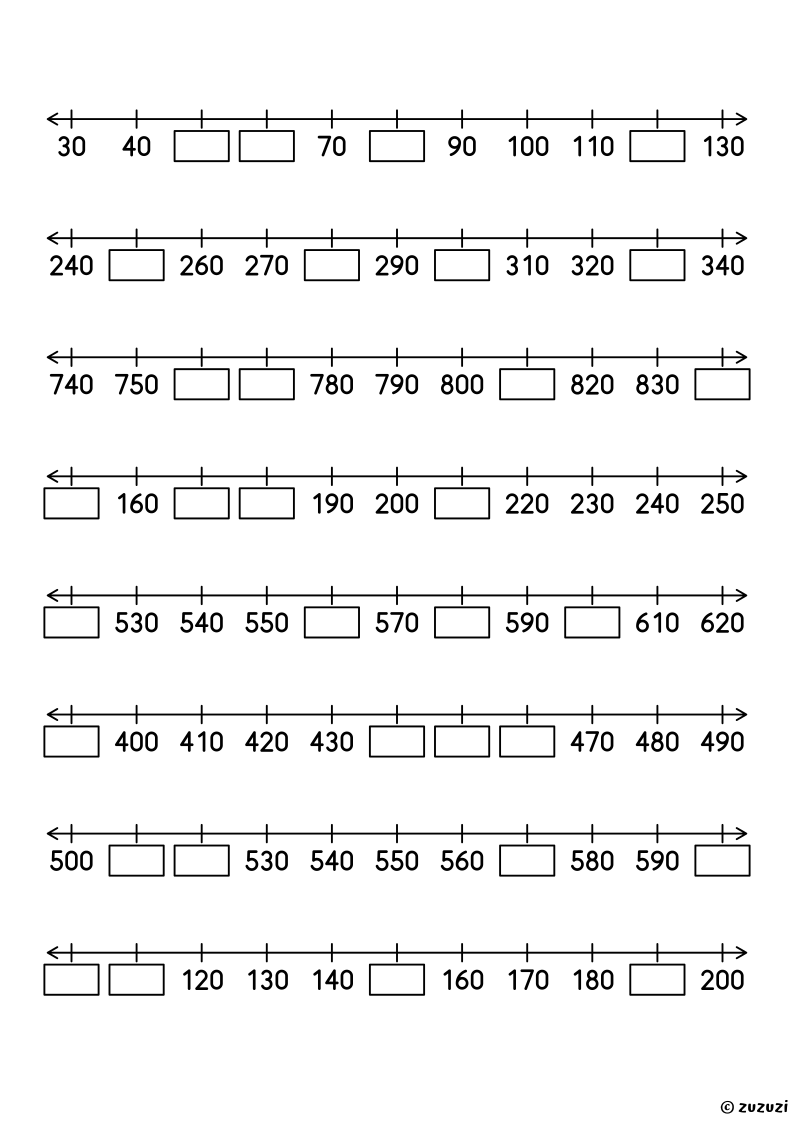
Worksheet with eight number lines counting by tens up to 1,000, each with eleven numbers, four of them missing, to write in the boxes.
Worksheet with eight number lines counting by tens up to 1,000, each with eleven numbers, four of them missing, to write in the boxes. | zuzuzi.com

How to Use a Number Line

A number line shows numbers in order, evenly spaced along a line. On these worksheets, every number line counts with the same step, the same jump from one number to the next. Children look at the numbers that are given, work out the step, and fill in the missing numbers by counting forward or backward.

How do the levels work?

The first levels count by ones, up to 20 and then up to 100. The next levels skip count by 2, 3, 4, and 5 up to 100, and the last one counts by tens up to 1,000. Every number on a line is a multiple of its step, just like in a multiplication table.

Tips for number lines

  • Find two neighboring numbers first: the difference between them is the step.
  • Count forward to fill a box on the right, and backward to fill a box on the left.
  • Check your answer with the next number given on the line.
  • Say the numbers out loud to learn the skip counting patterns by heart.

Frequently Asked Questions

What skills do number line worksheets build?

They build number sense, counting, and skip counting, which prepare children for addition, subtraction, and multiplication tables.

Which level should my child start with?

Start with counting by ones up to 20. When that feels easy, move on to counting up to 100, then to skip counting by 2, 5, and 10, the easiest patterns, before 3 and 4.