How to Compare Numbers
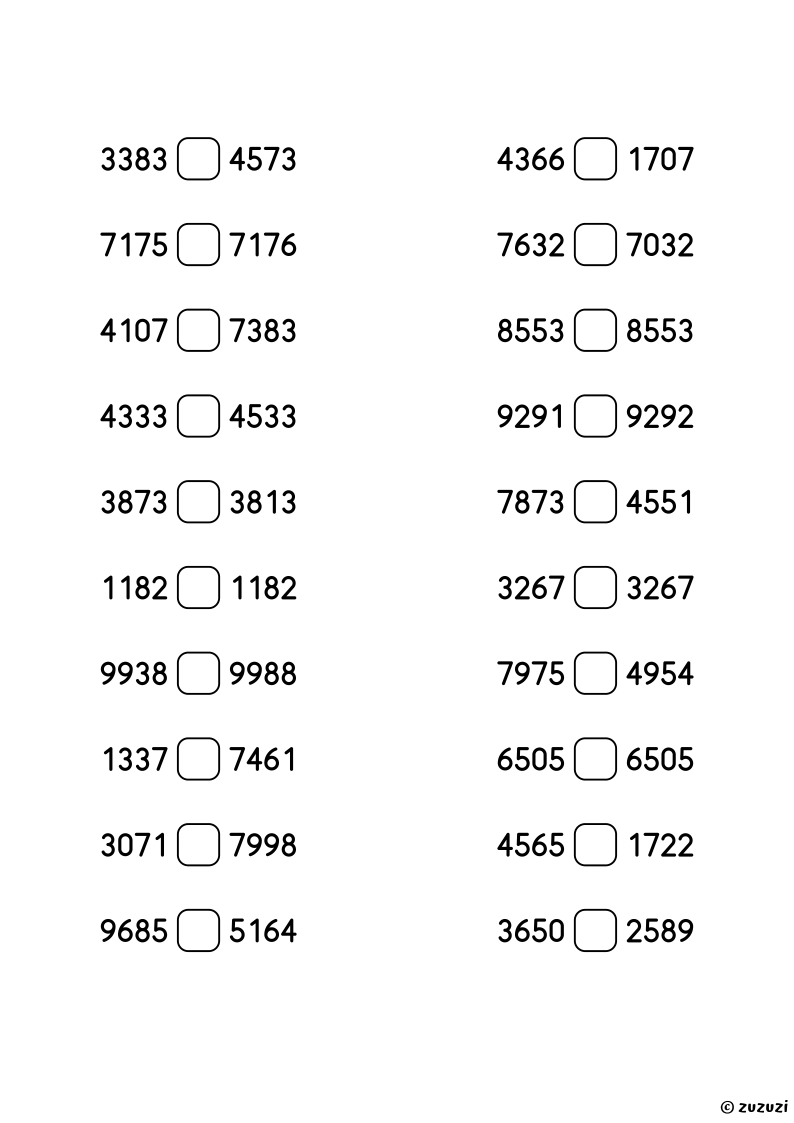
To compare two numbers, start with the number of digits: a number with more digits is larger. If both numbers have the same number of digits, compare them digit by digit from the left, starting with the highest place value. The first digit that differs tells you which number is larger. If every digit is the same, the numbers are equal.
Then write the sign: the open side of < and > always faces the larger number.
How do the levels work?
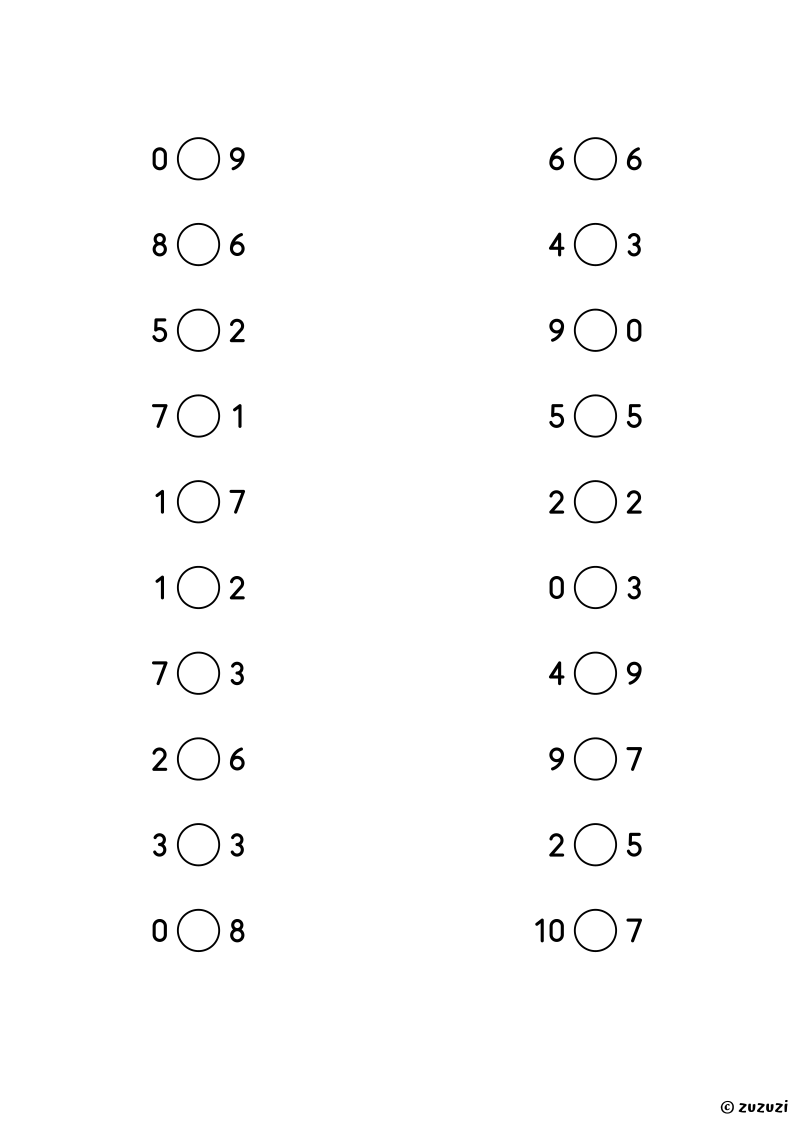
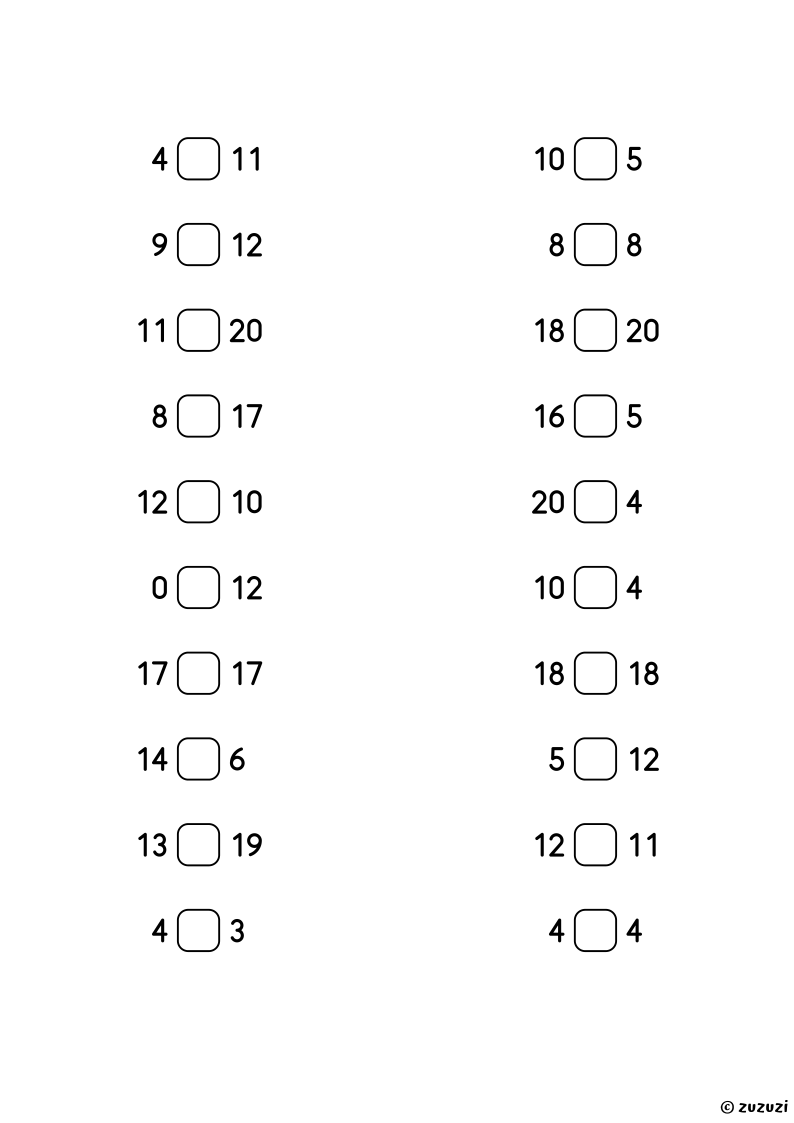
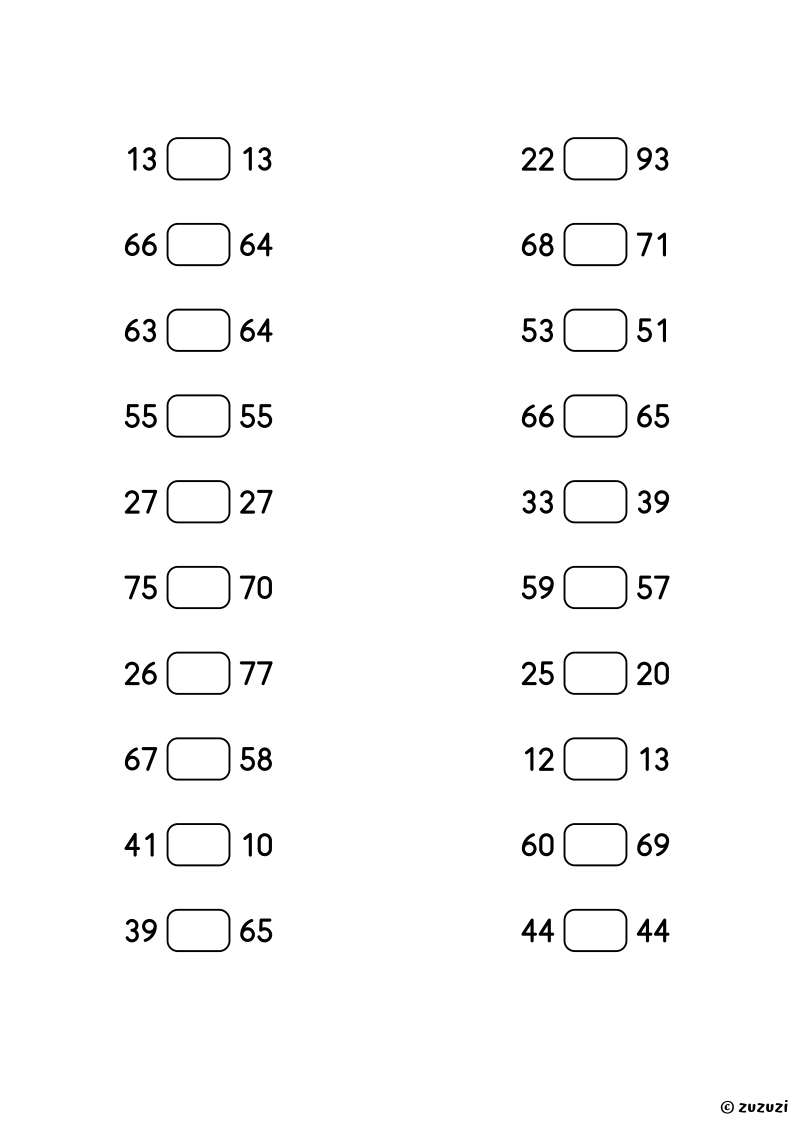
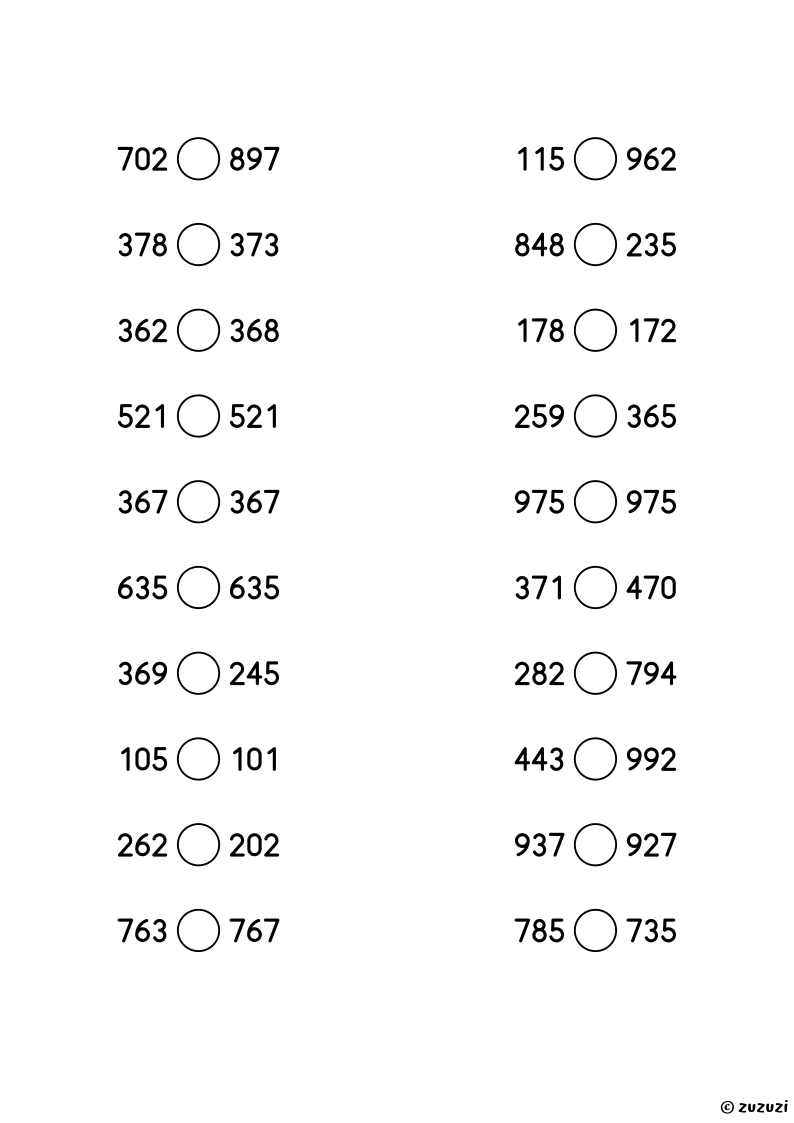
The first levels use small numbers, up to 10 and up to 20, which children can compare by counting. The next levels use 2-digit, 3-digit, and 4-digit numbers. At these levels, half of the pairs that differ change only one digit, never the first, so children must read each number carefully up to that digit.
Tips for comparing numbers
- Count the digits first: more digits means a larger number.
- Line up the place values: thousands, hundreds, tens, then ones.
- Remember the alligator trick: its mouth always opens toward the larger number.
- Watch for equal pairs: every page has a few.