6x6 Futoshiki Puzzles

At 6x6, futoshiki stops being a warm-up. Six digits per row and column, and between eleven and nineteen signs scattered over the grid: the first digits still come from the extremes, where a 6 or a 1 has only one place left, but the middle digits ask you to combine two or three signs with the row and column rule before anything is certain.

These eight puzzles put one large grid on each page, with up to three given digits to shorten the opening. Each has a single solution that logic reaches without a guess, and the book gathers all eight for a printing in one go.

Part of the Futoshiki Puzzles collection, Last updated on Tue, 27 Oct 2026 17:49:53 GMT.

Free Printables

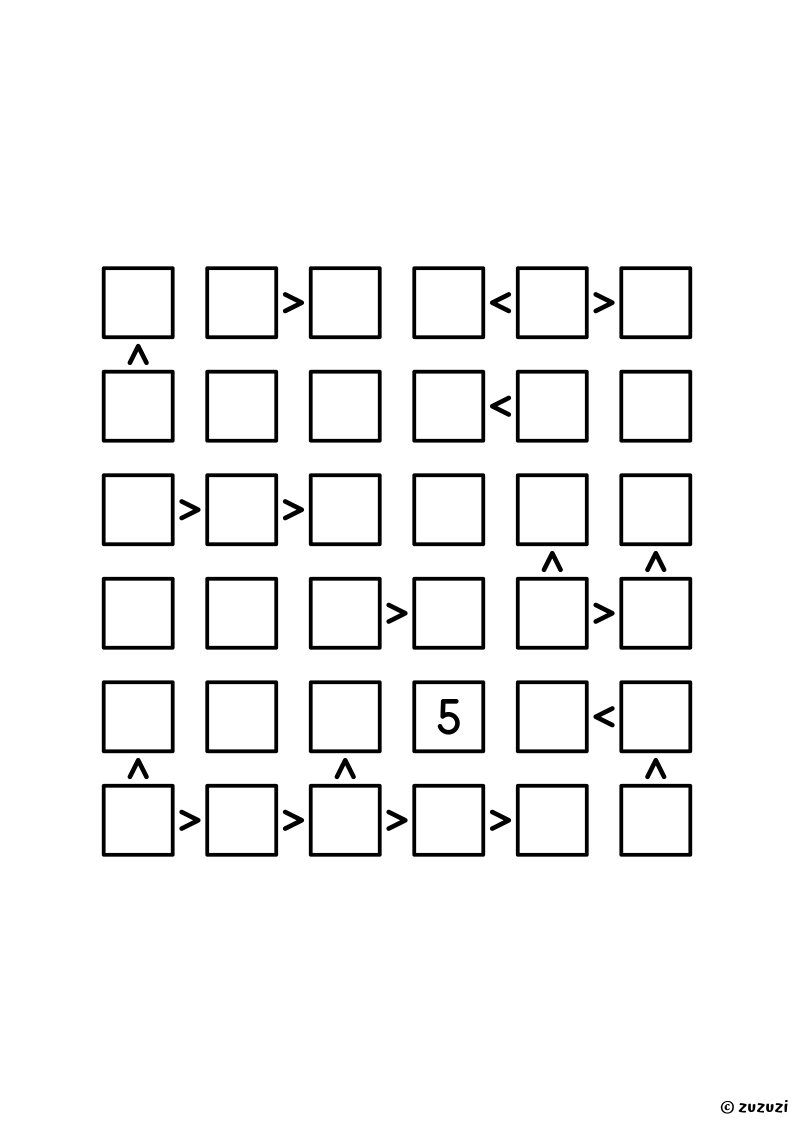
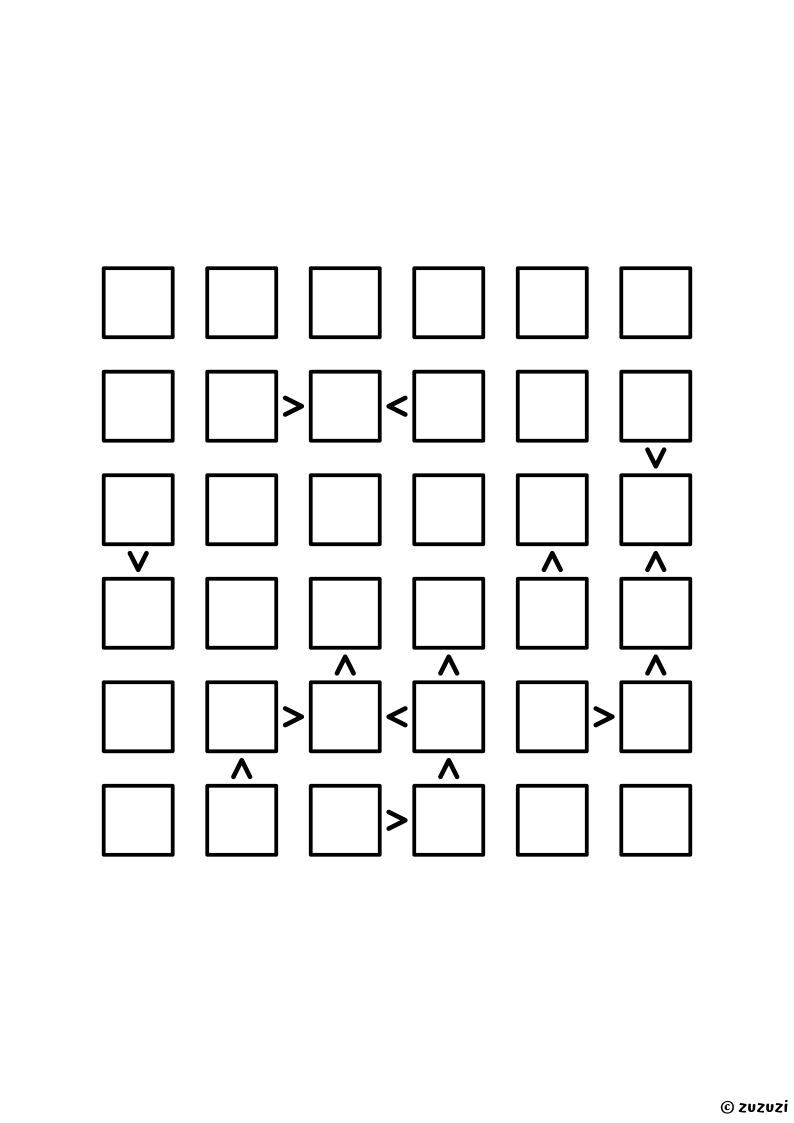
6x6 Futoshiki, Puzzle 1

6x6 futoshiki with one given digit and nineteen signs, the densest grid of the set: nearly a third of the sixty possible places carry a sign. Puzzle 1 of 8.
6x6 futoshiki with one given digit and nineteen signs, the densest grid of the set: nearly a third of the sixty possible places carry a sign. Puzzle 1 of 8. | zuzuzi.com

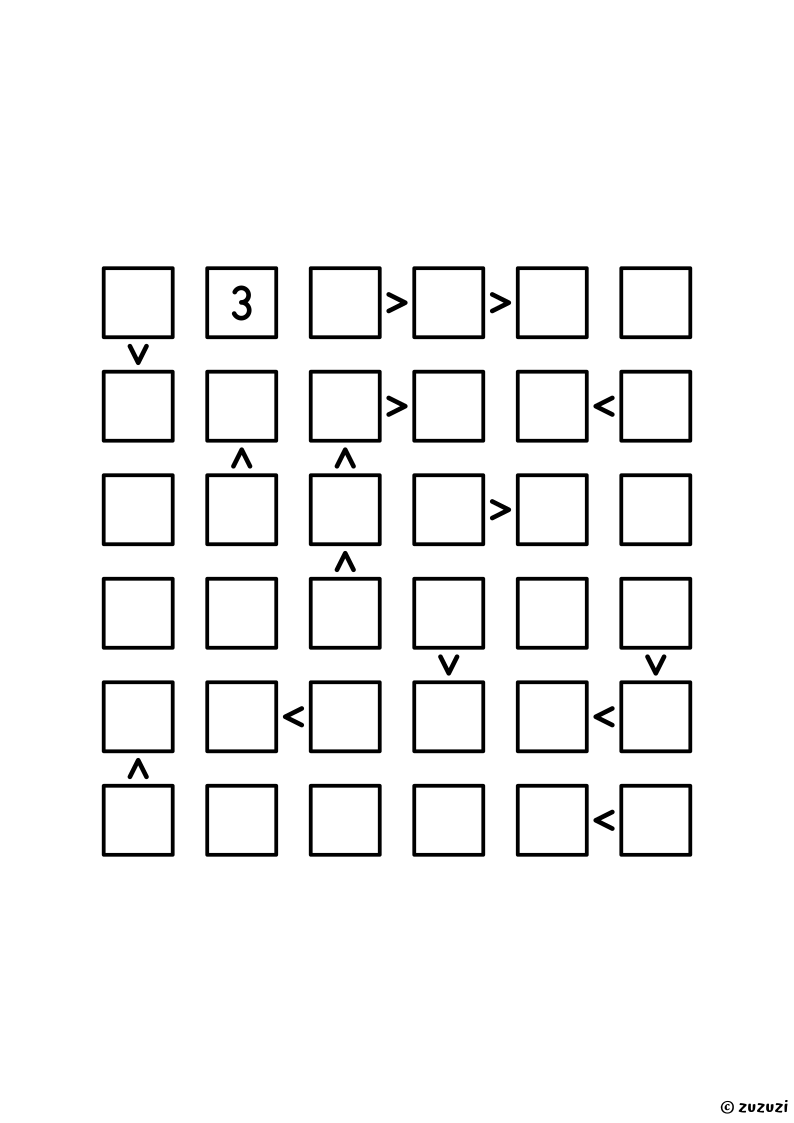
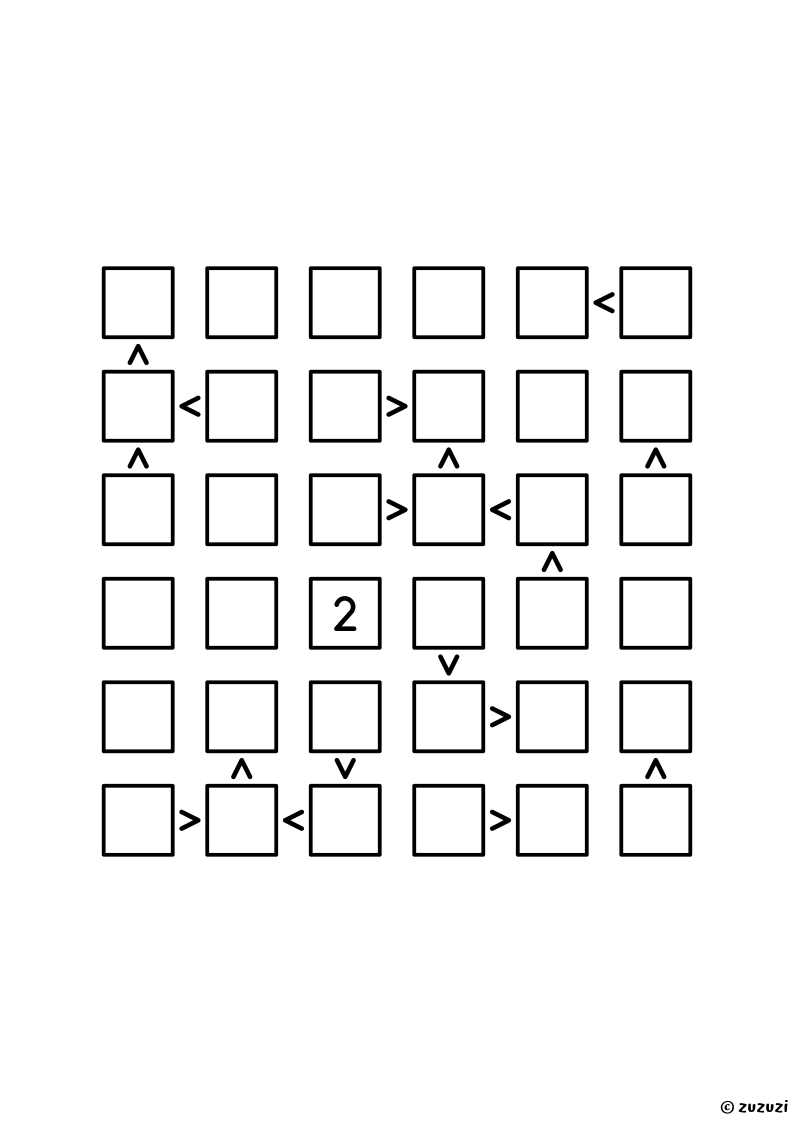
6x6 Futoshiki, Puzzle 2

6x6 futoshiki with one given digit and fifteen signs; look first for the row where the 6 has a single place left. Puzzle 2 of 8.
6x6 futoshiki with one given digit and fifteen signs; look first for the row where the 6 has a single place left. Puzzle 2 of 8. | zuzuzi.com

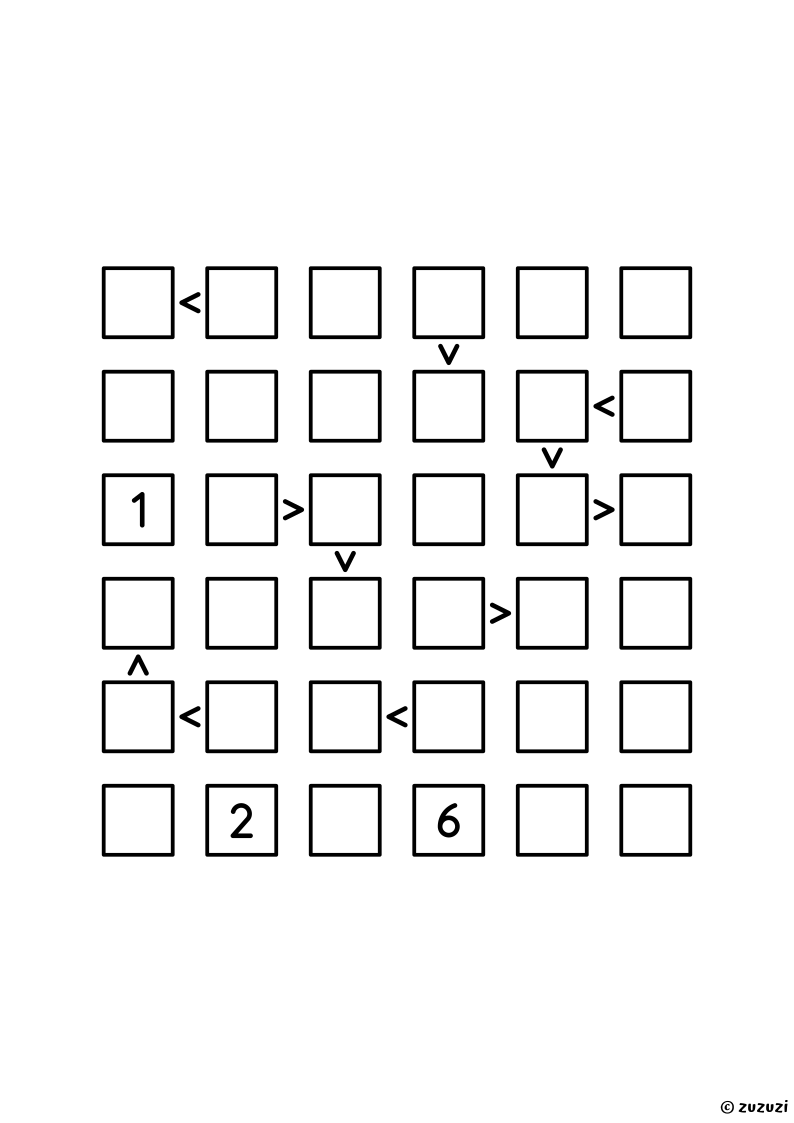
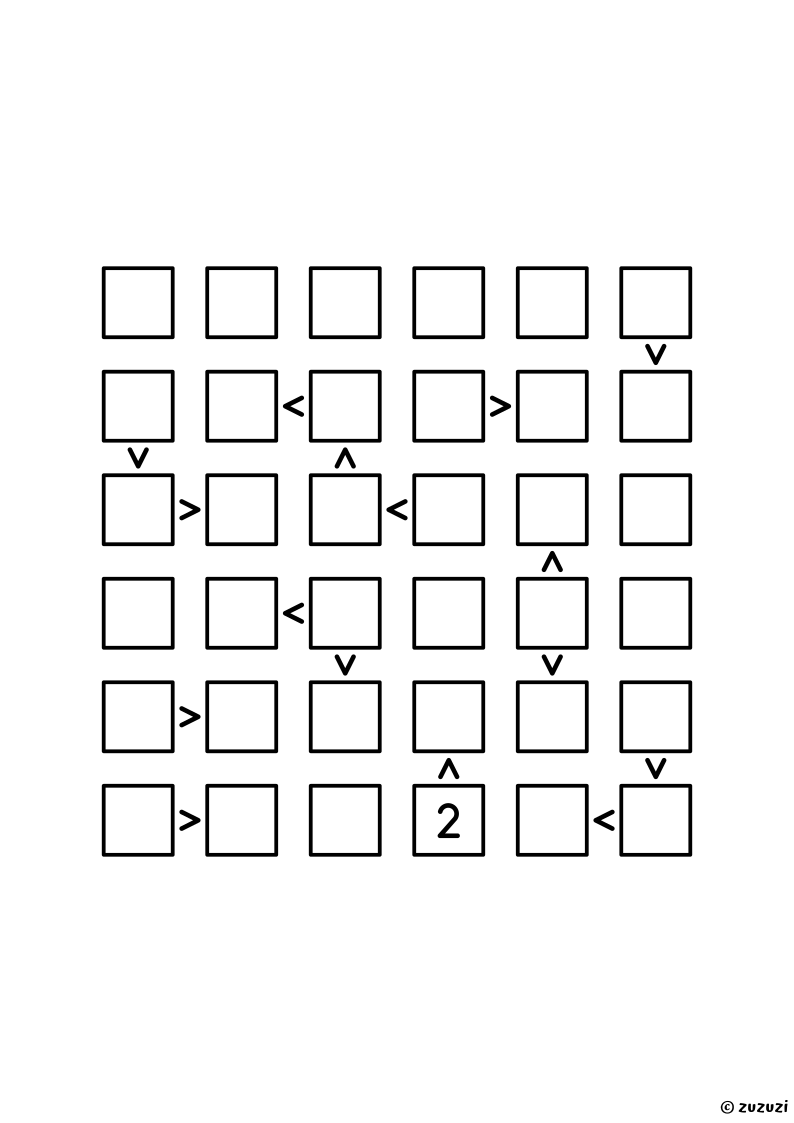
6x6 Futoshiki, Puzzle 3

6x6 futoshiki with three given digits and only eleven signs, the most open grid of the set: the row and column rule does more work than the signs. Puzzle 3 of 8.
6x6 futoshiki with three given digits and only eleven signs, the most open grid of the set: the row and column rule does more work than the signs. Puzzle 3 of 8. | zuzuzi.com

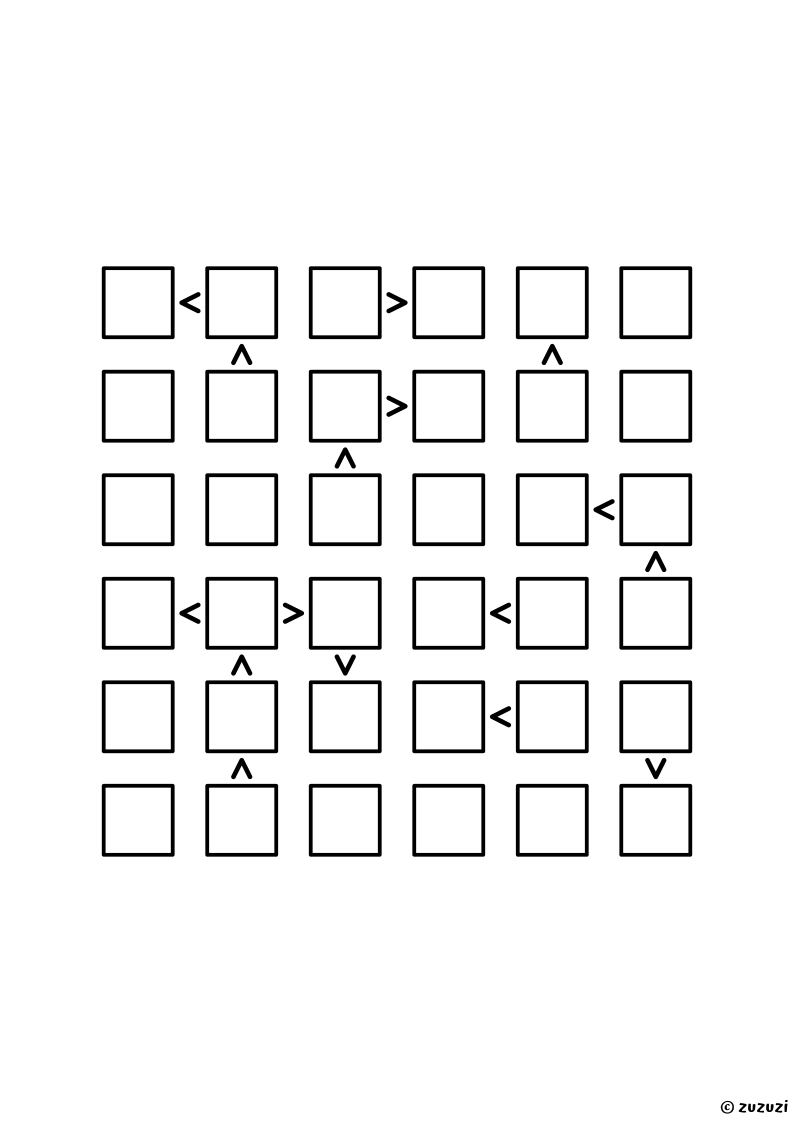
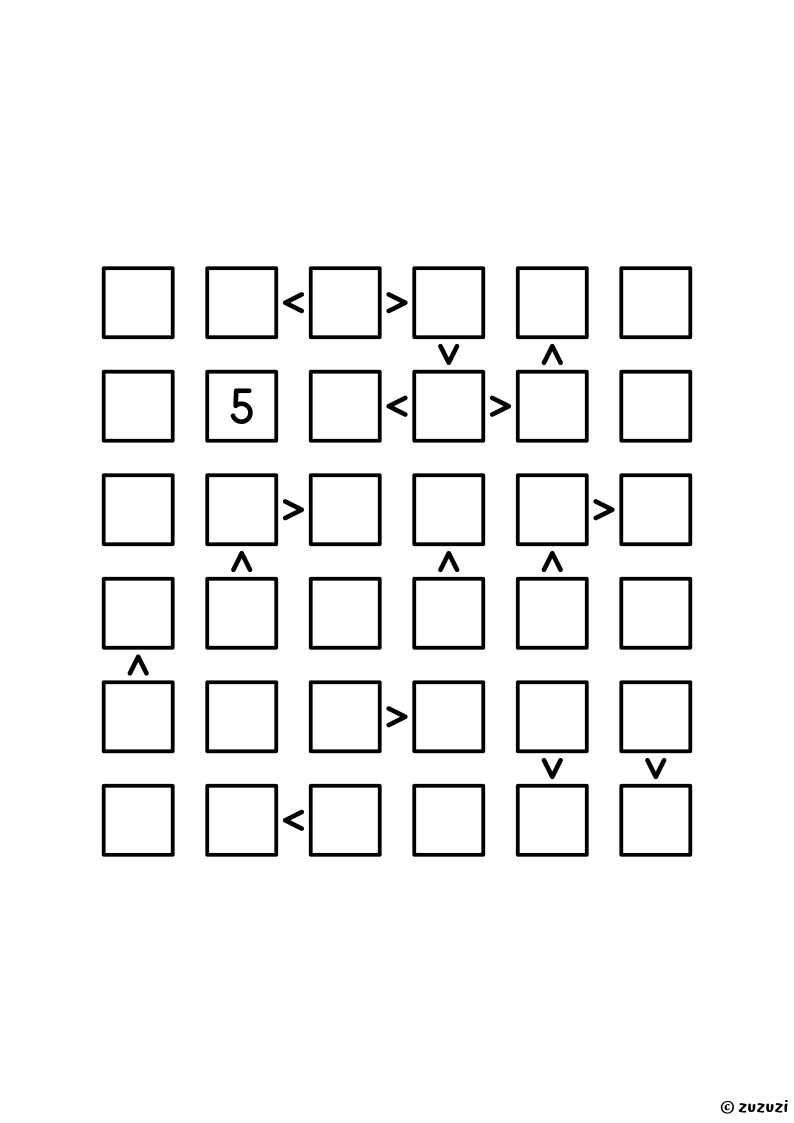
6x6 Futoshiki, Puzzle 4

6x6 futoshiki with sixteen signs and no given digit at all; every one of the thirty-six cells comes from the signs. Puzzle 4 of 8.
6x6 futoshiki with sixteen signs and no given digit at all; every one of the thirty-six cells comes from the signs. Puzzle 4 of 8. | zuzuzi.com

6x6 Futoshiki, Puzzle 5

6x6 futoshiki with fifteen signs and no given digit; start from the longest chain of signs, its top cell is high and its bottom cell low. Puzzle 5 of 8.
6x6 futoshiki with fifteen signs and no given digit; start from the longest chain of signs, its top cell is high and its bottom cell low. Puzzle 5 of 8. | zuzuzi.com

6x6 Futoshiki, Puzzle 6

6x6 futoshiki with one given digit and eighteen signs; mark the places left for each 1 and each 6 before writing anything. Puzzle 6 of 8.
6x6 futoshiki with one given digit and eighteen signs; mark the places left for each 1 and each 6 before writing anything. Puzzle 6 of 8. | zuzuzi.com

6x6 Futoshiki, Puzzle 7

6x6 futoshiki with one given digit and sixteen signs, a steady grid for the second half of the set. Puzzle 7 of 8.
6x6 futoshiki with one given digit and sixteen signs, a steady grid for the second half of the set. Puzzle 7 of 8. | zuzuzi.com

6x6 Futoshiki, Puzzle 8

6x6 futoshiki with one given digit and sixteen signs, the last of the set, with a layout of signs different from puzzle 7. Puzzle 8 of 8.
6x6 futoshiki with one given digit and sixteen signs, the last of the set, with a layout of signs different from puzzle 7. Puzzle 8 of 8. | zuzuzi.com

How to Solve a 6x6 Futoshiki

Find the 6s and the 1s first: a 6 can never sit on the pointed side of a sign, a 1 never on the open side, and in a row with several signs, only one or two cells remain for each. Then read the chains: a cell greater than two neighbours is at least 3, a cell smaller than two neighbours is at most 4, and a cell at the top of a chain of three signs is at least 4. Pencil the candidates, cross out what each placed digit forbids in its row and column, and return to the cell that has just lost all but one option.

Frequently Asked Questions

How many signs does a 6x6 futoshiki have?

In this set, from eleven to nineteen, out of sixty possible places between neighbouring cells. More signs do not always mean an easier grid: a few well-placed chains constrain more than many scattered signs.

Can I solve these without writing candidates?

The first two or three digits, yes; the rest is much easier with small candidate digits in the corners of the cells, which the large grid leaves room for. Erase them as the rows fill.