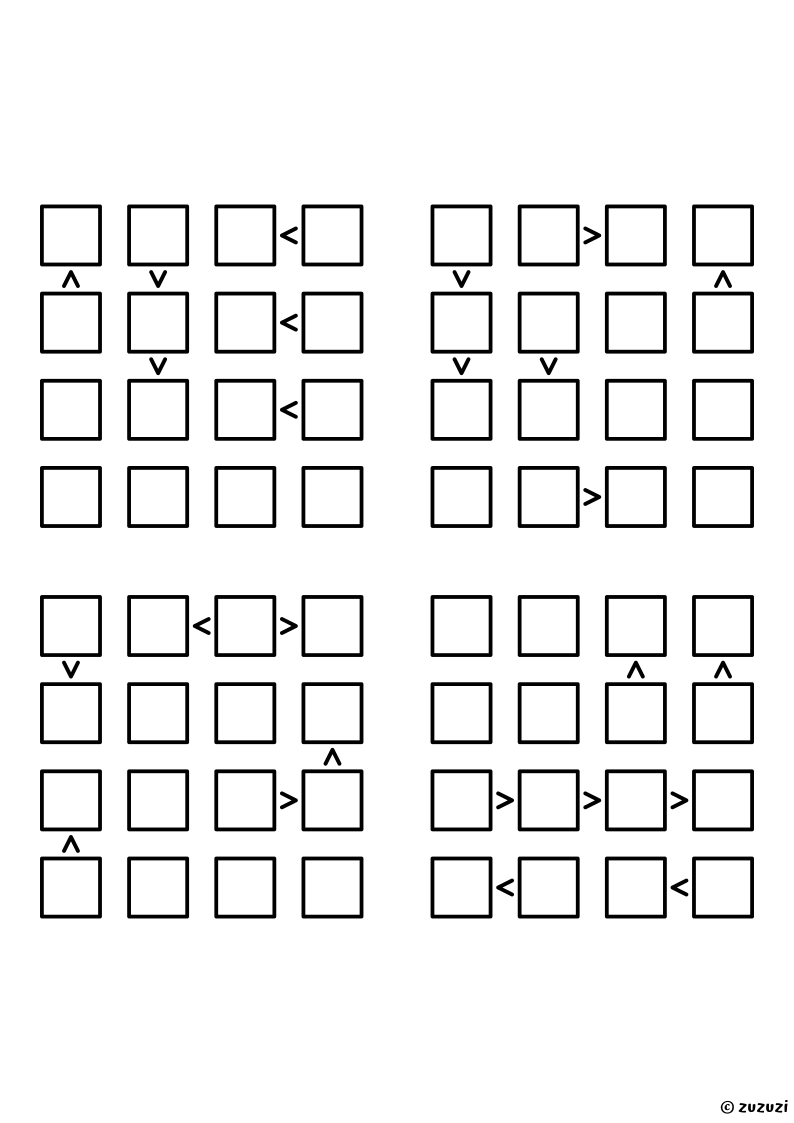
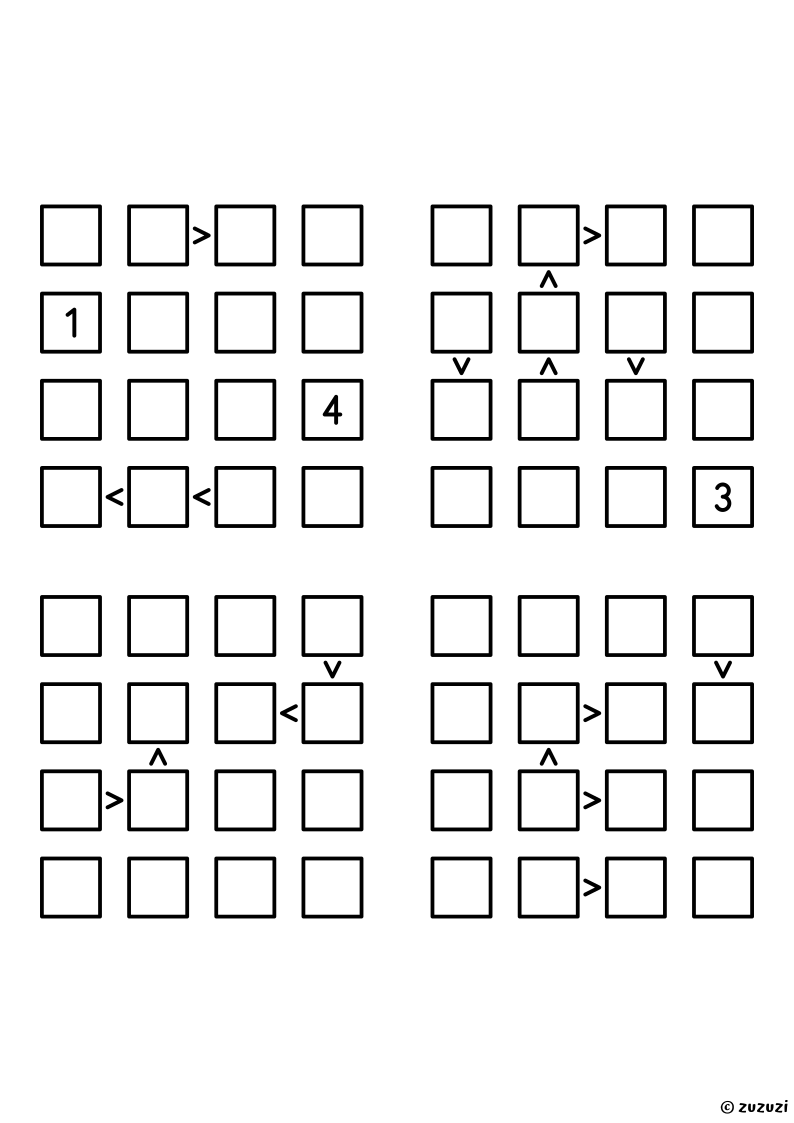
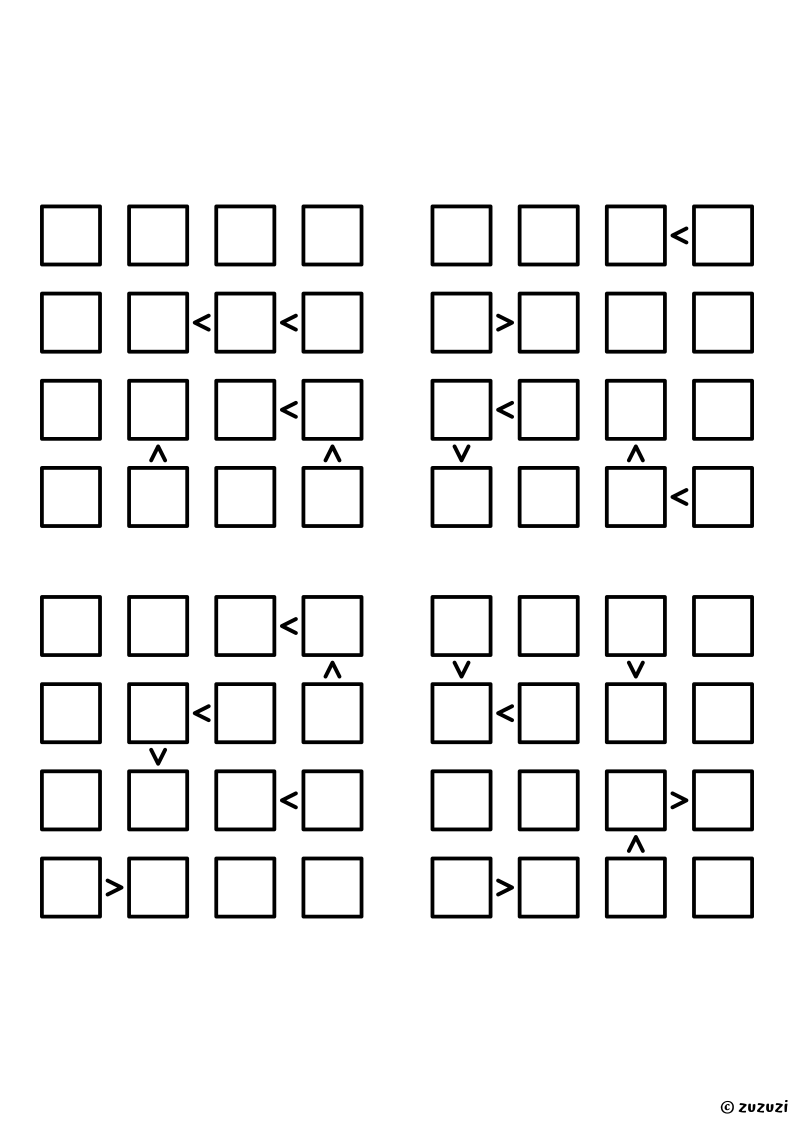
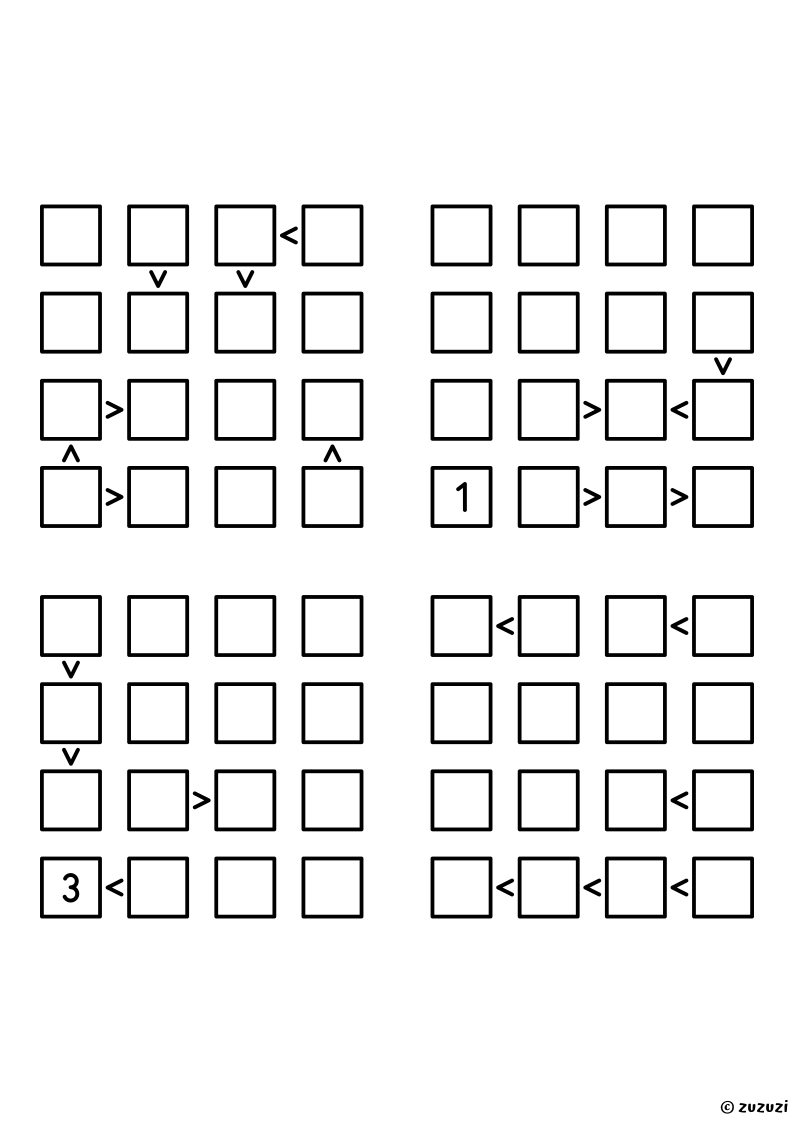
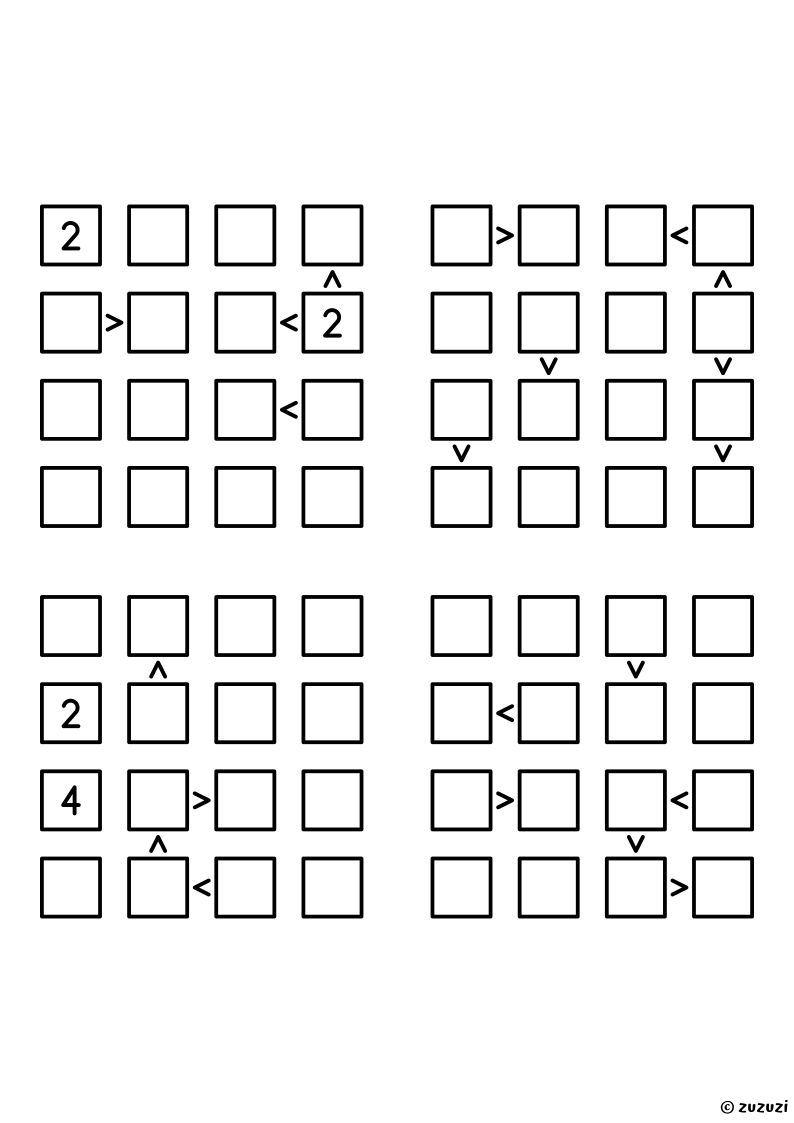
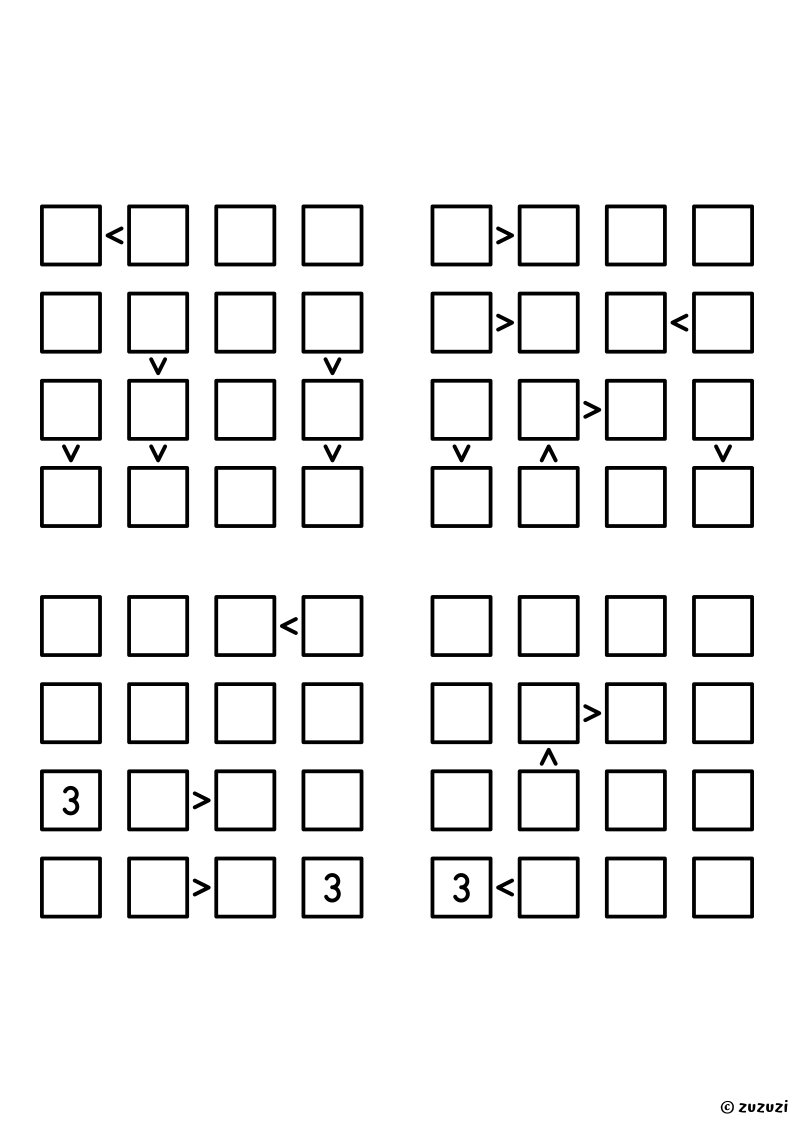
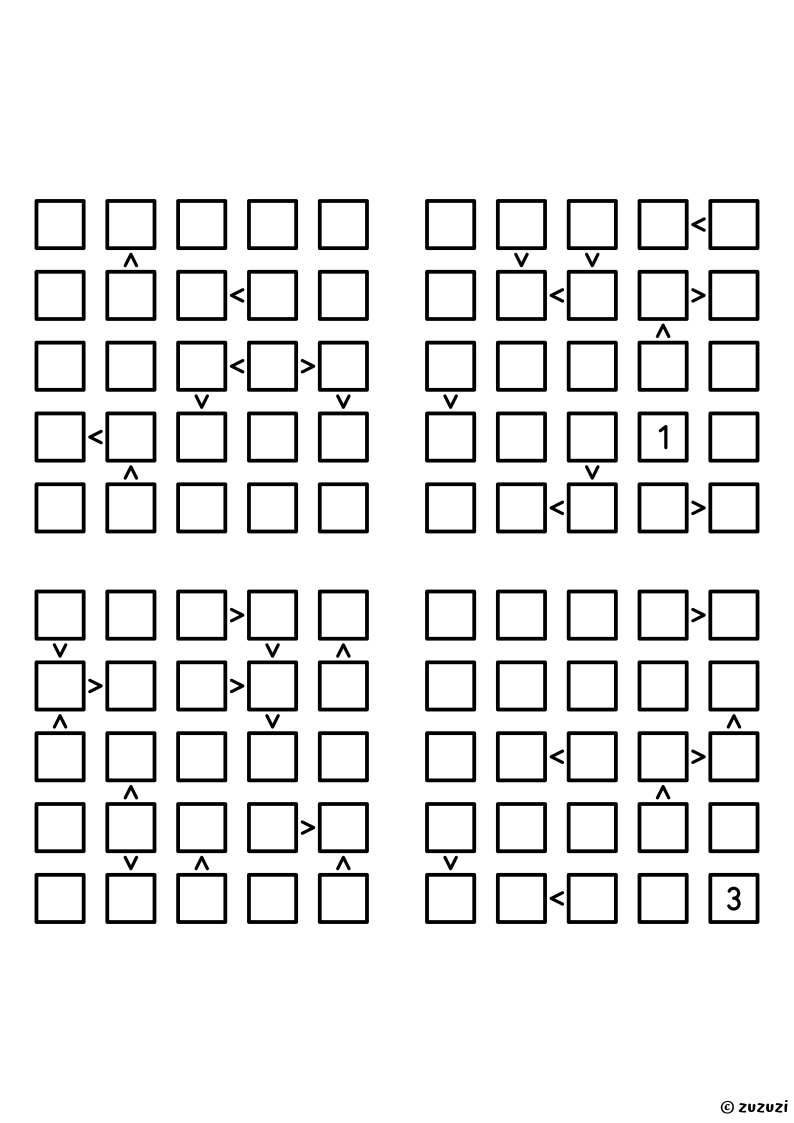
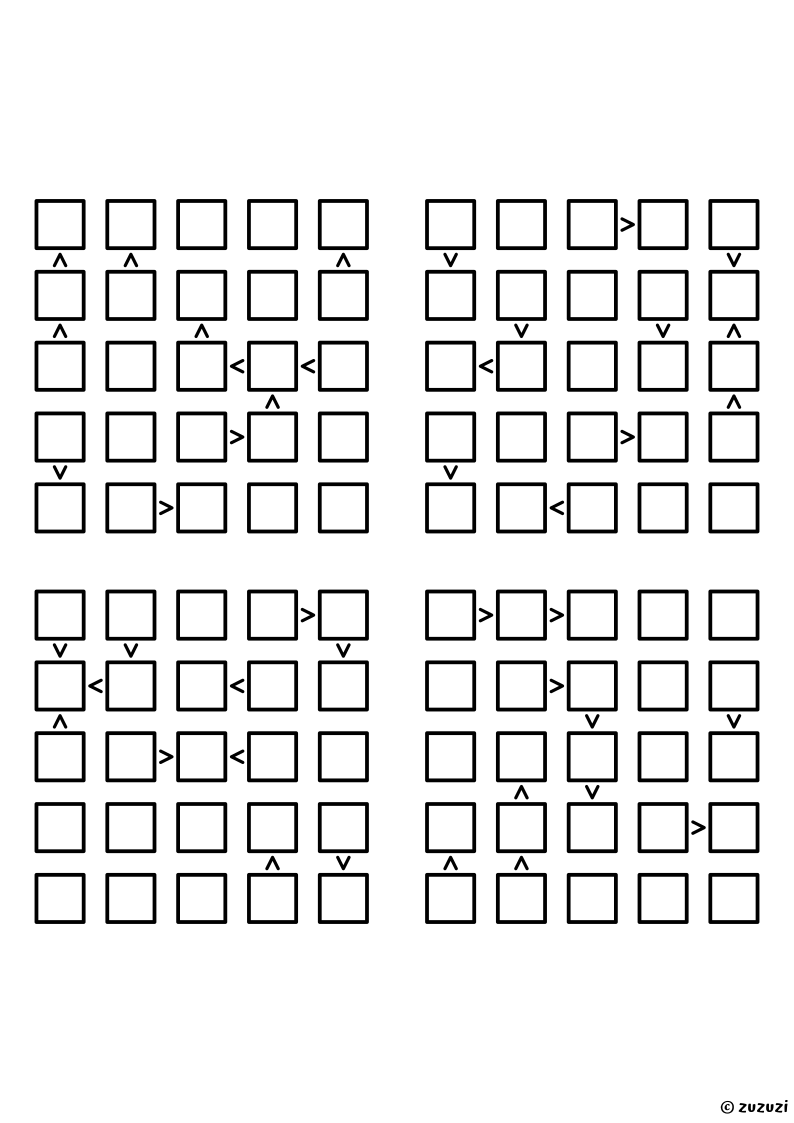
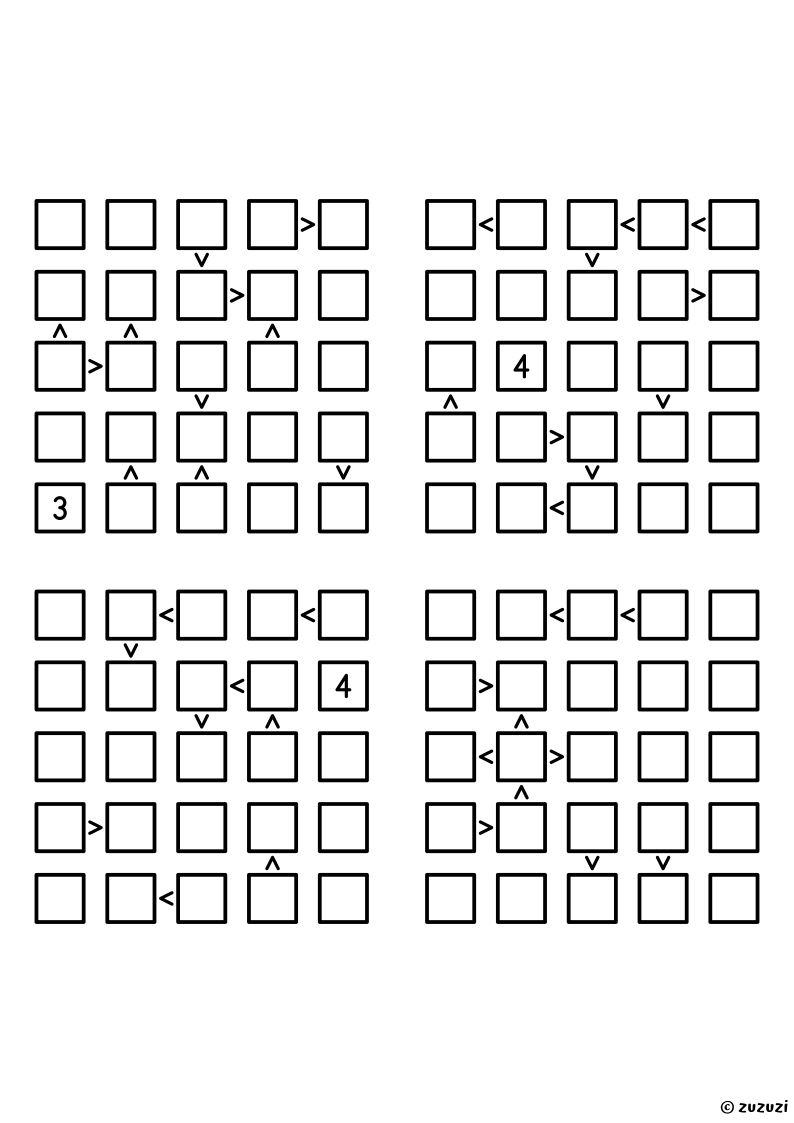
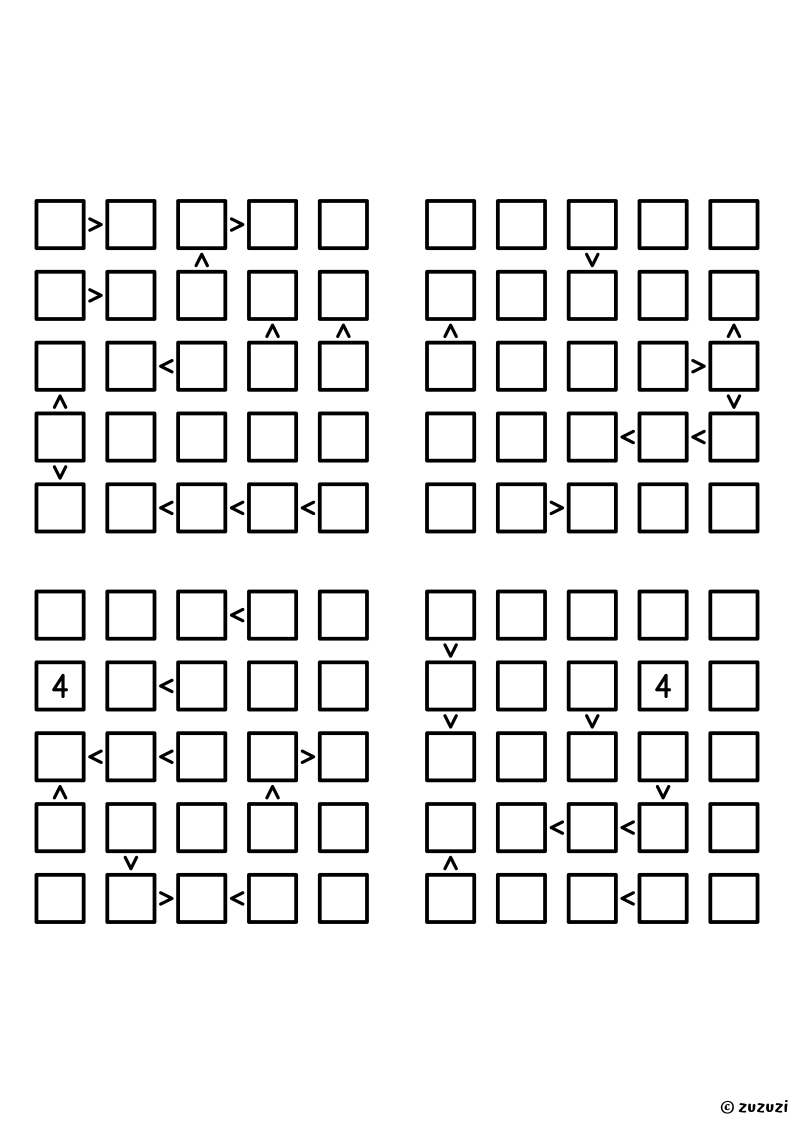
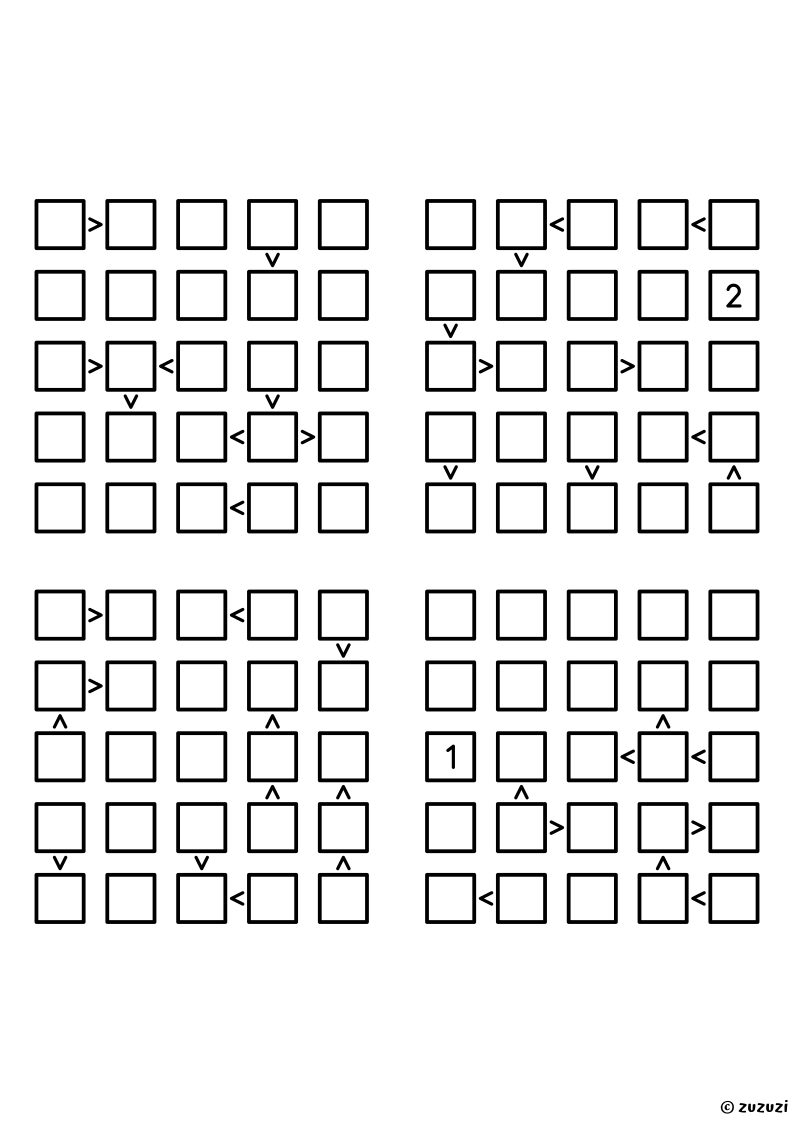
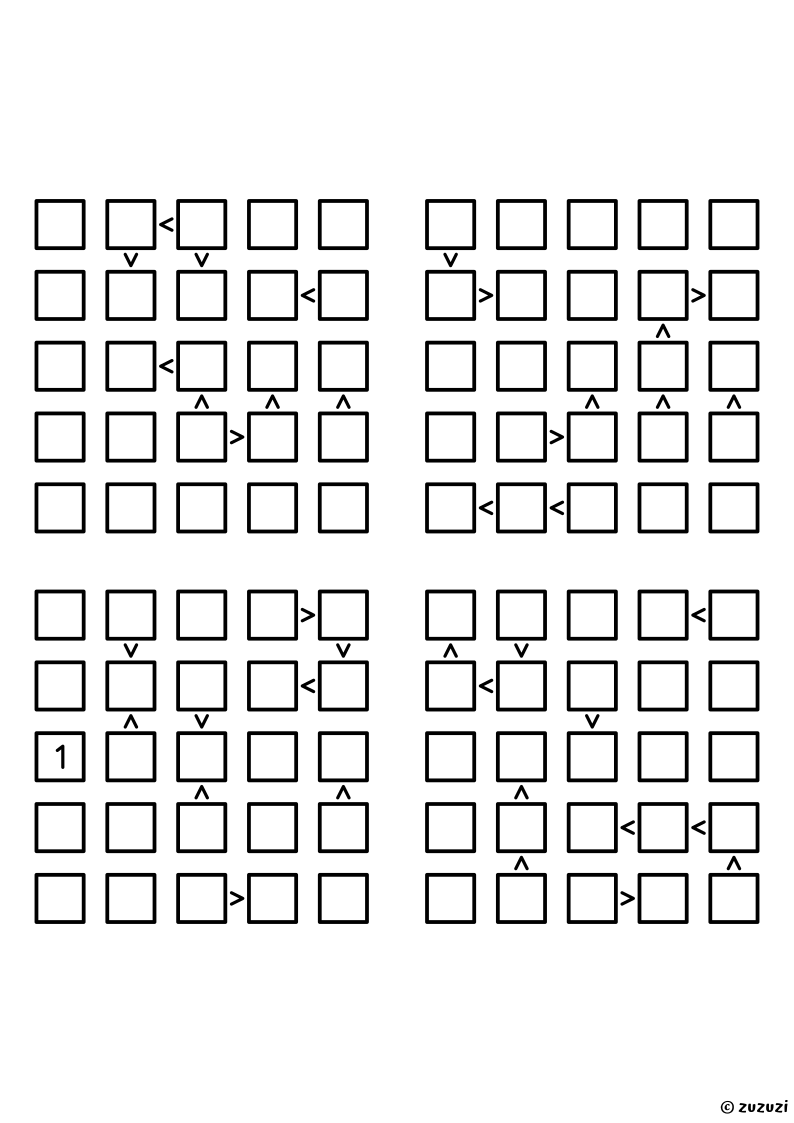
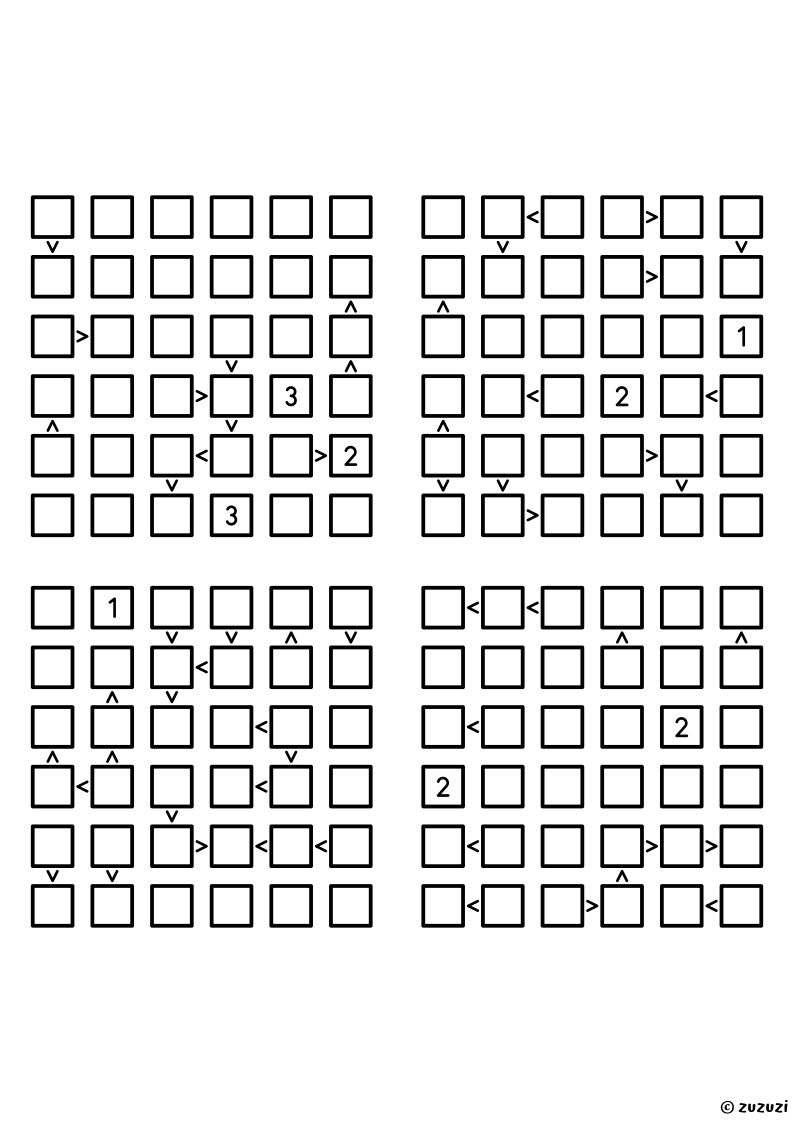
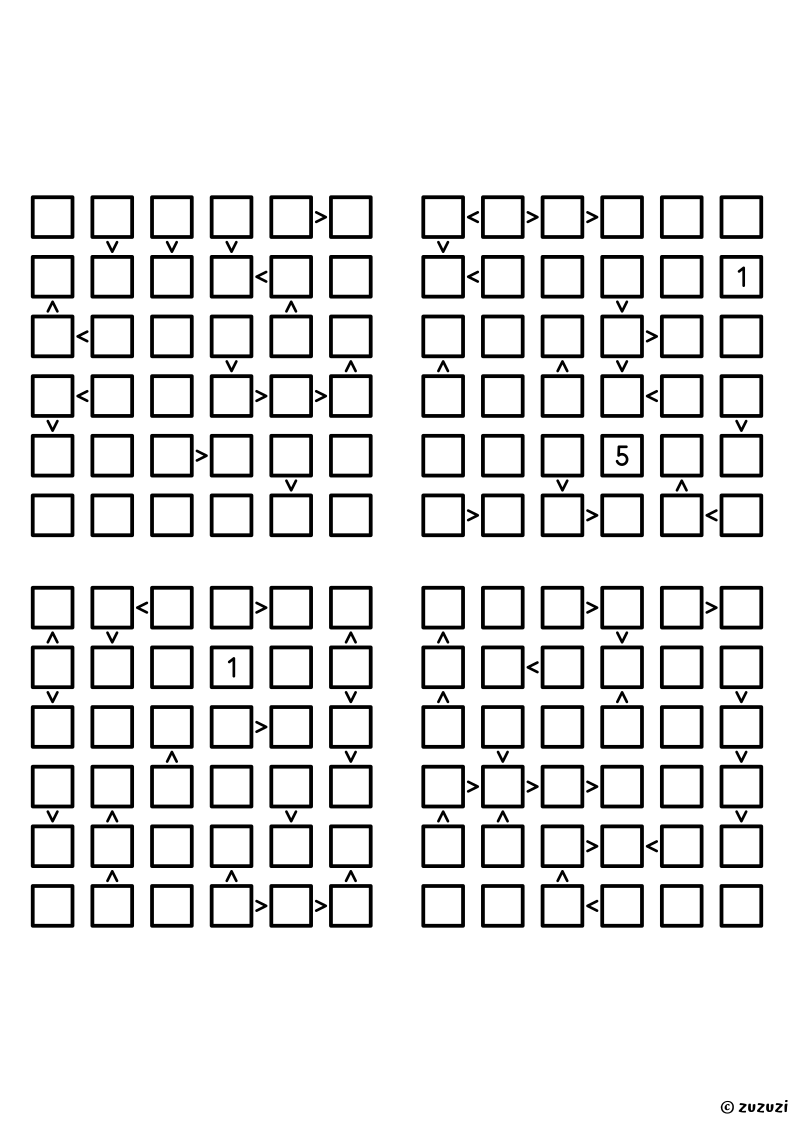
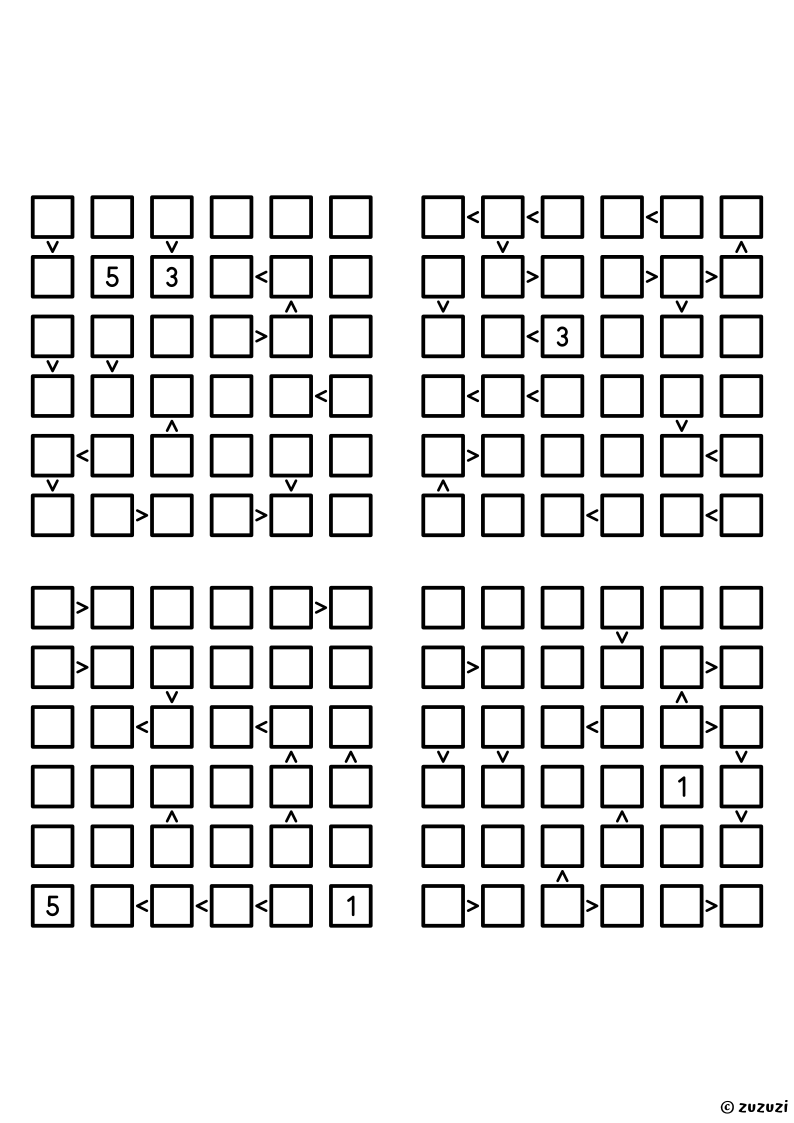
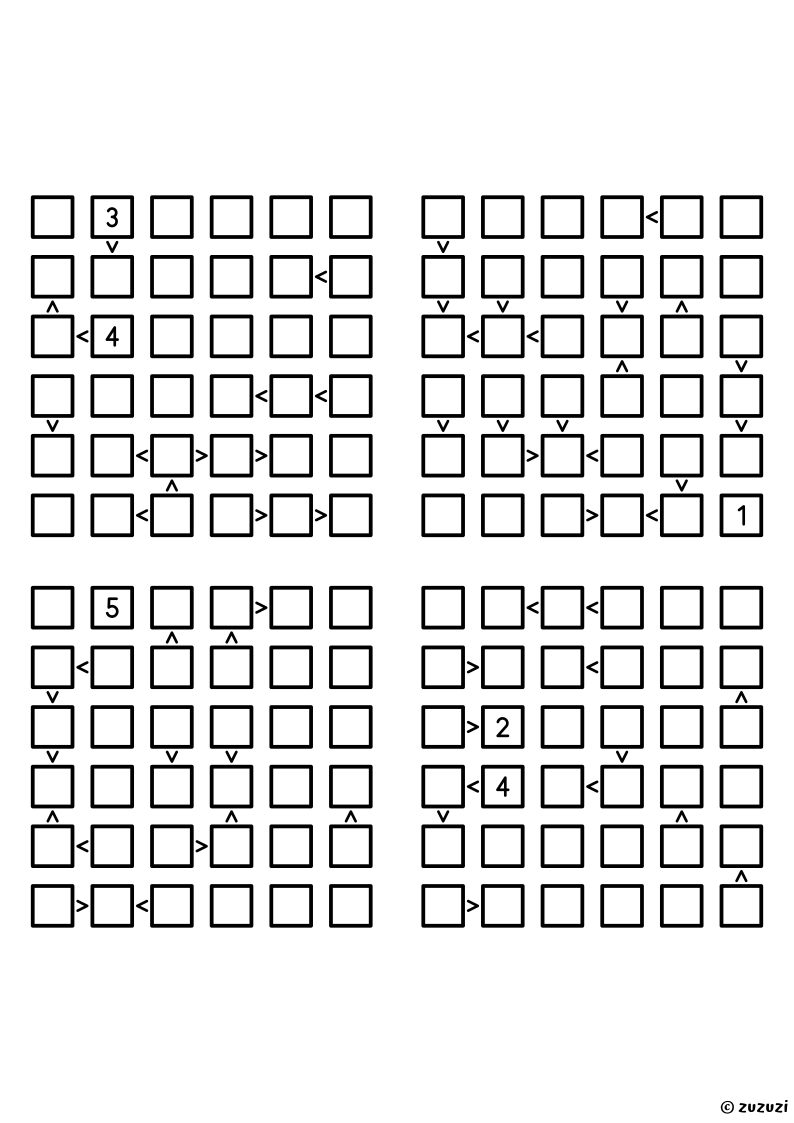
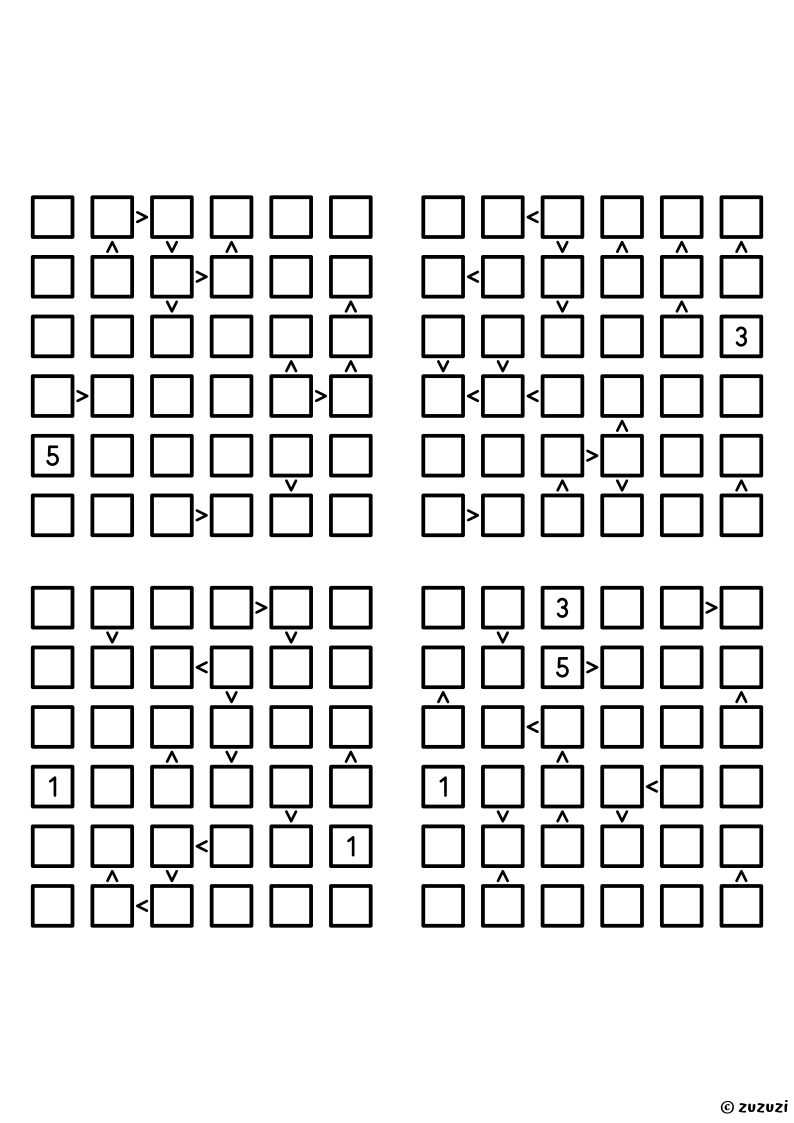
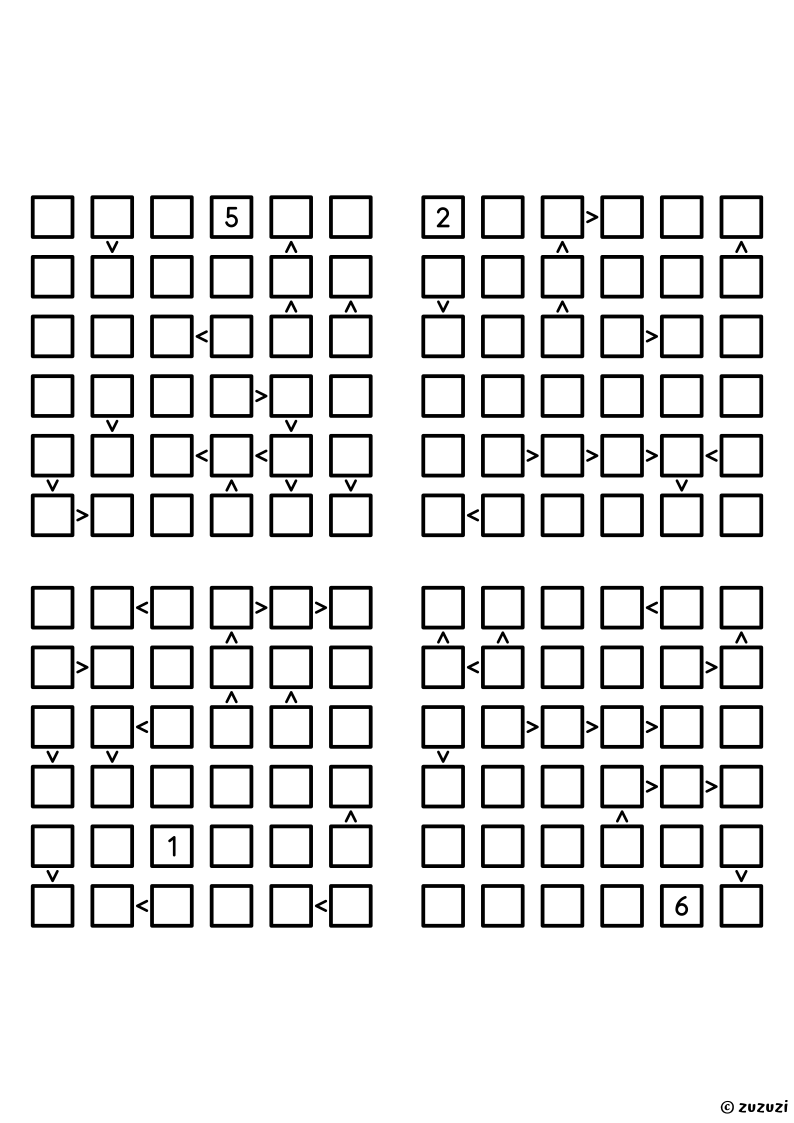
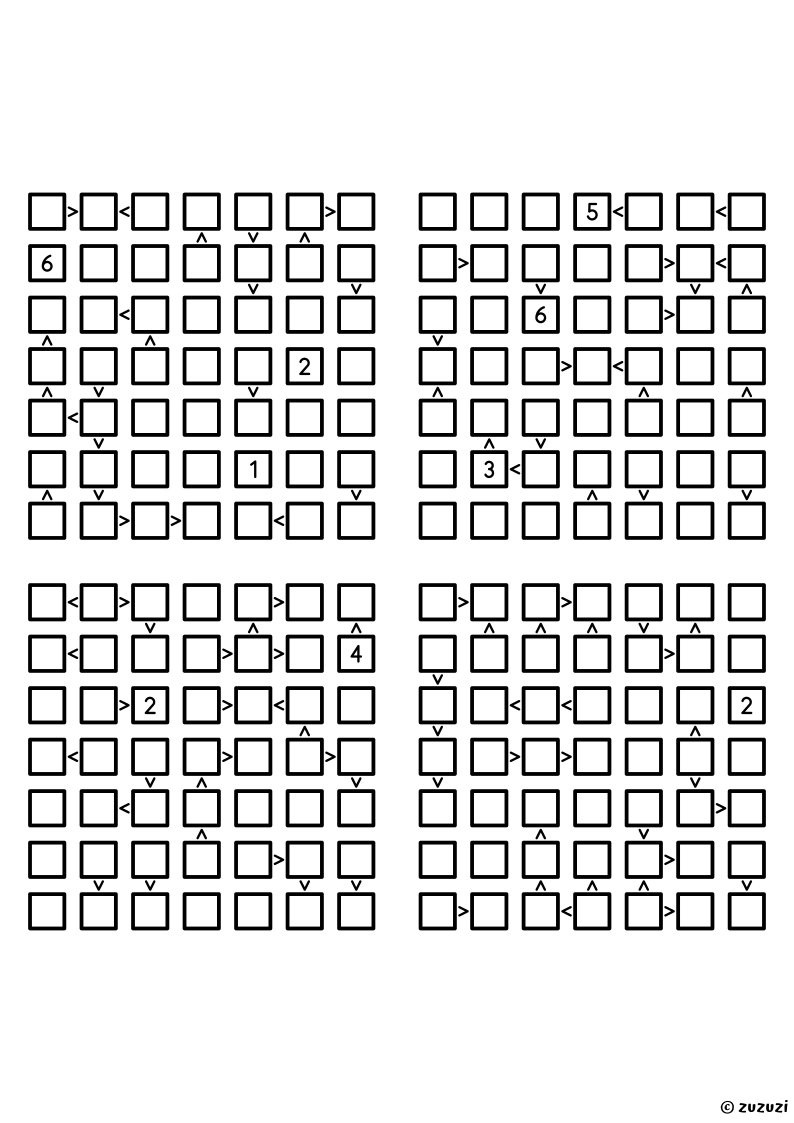
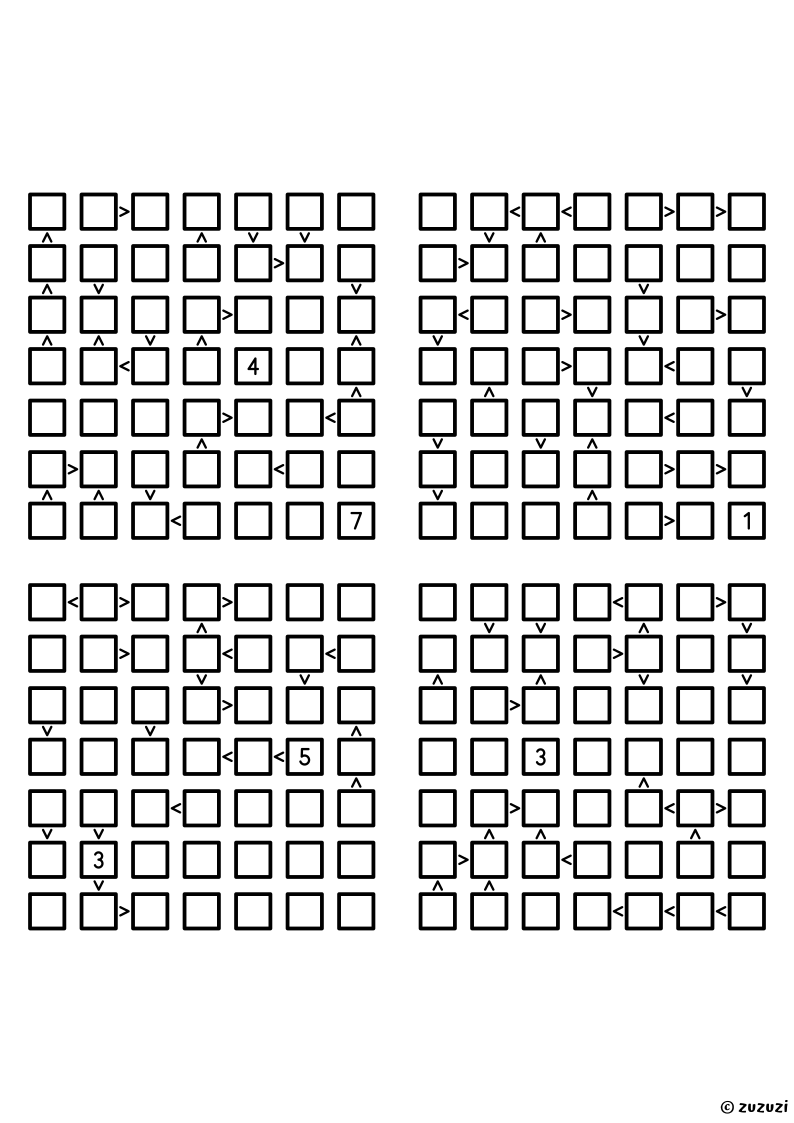
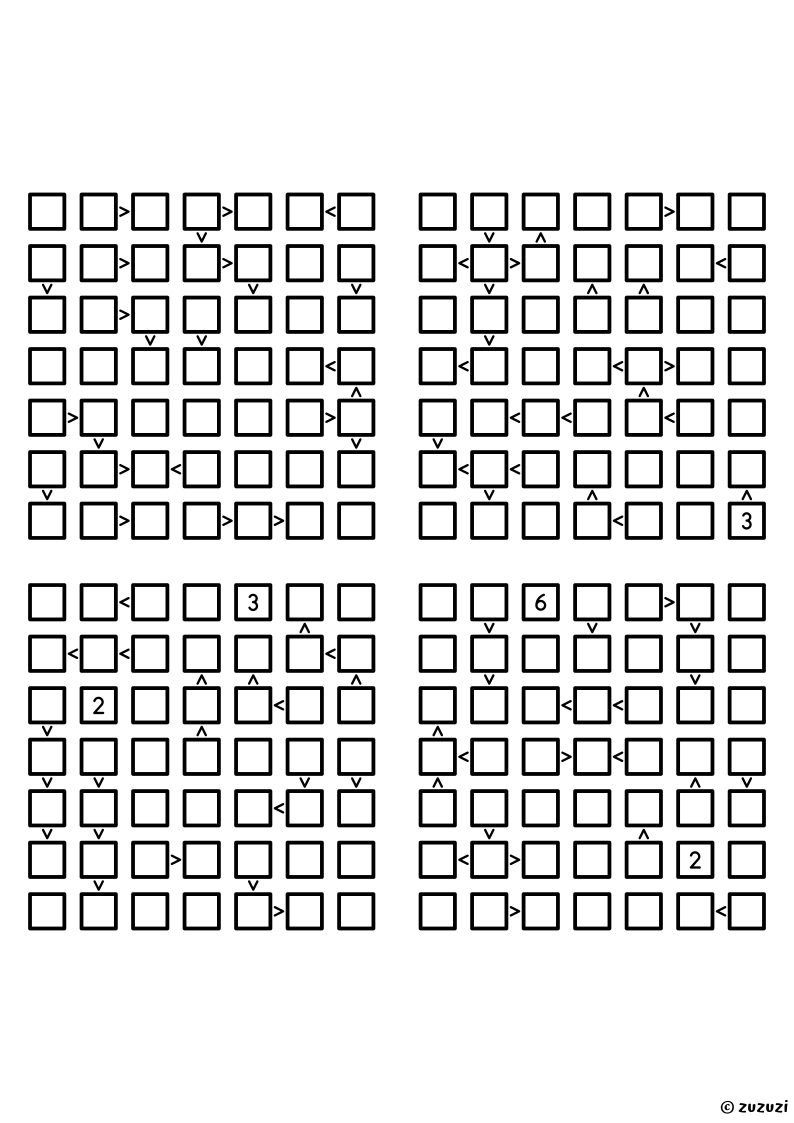
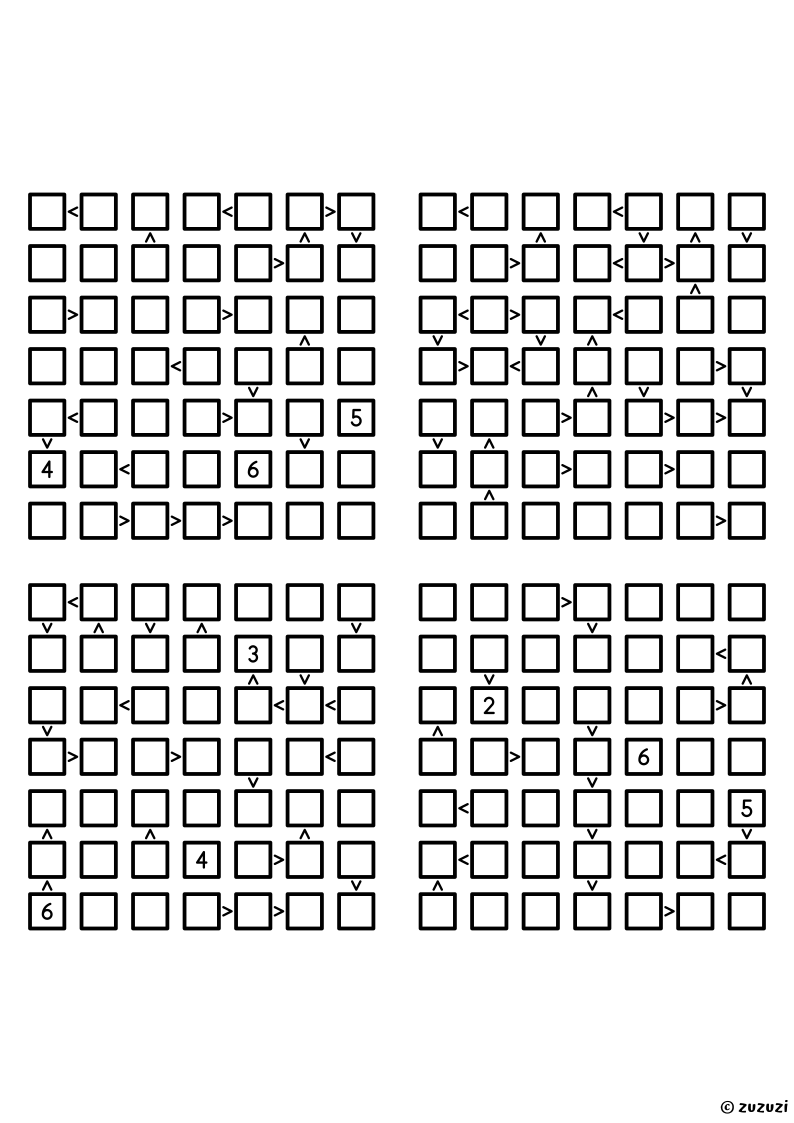
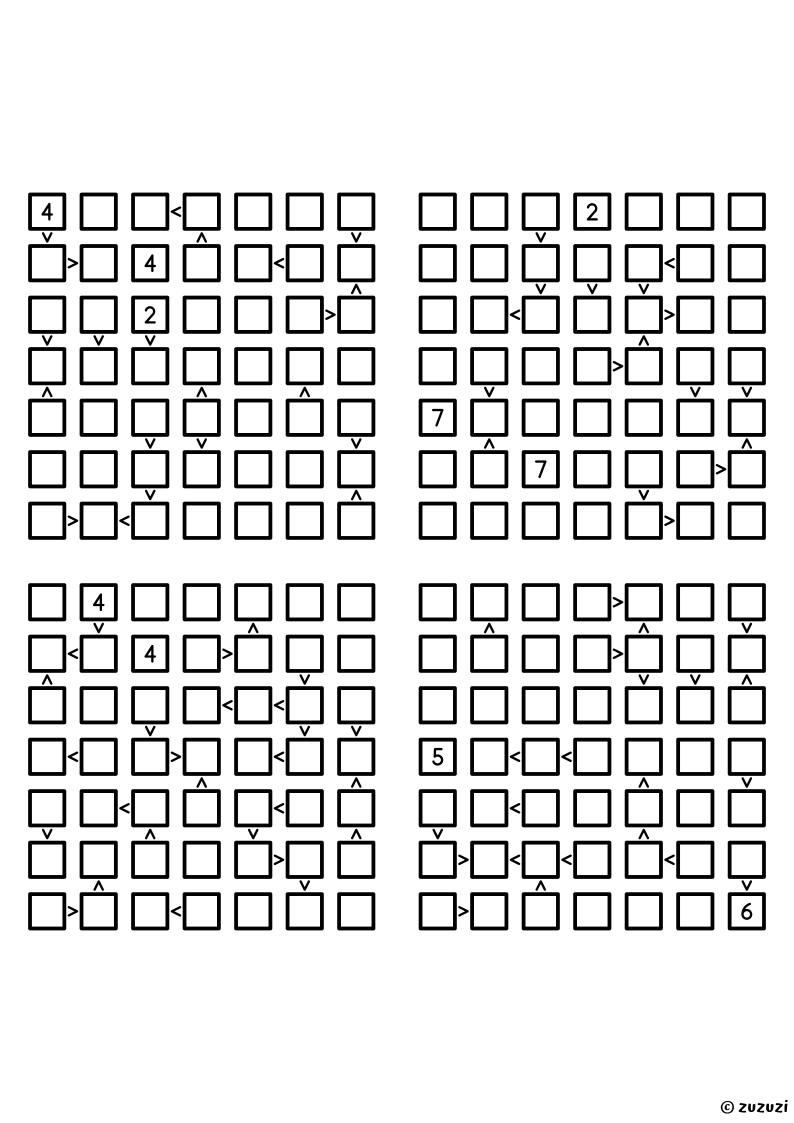
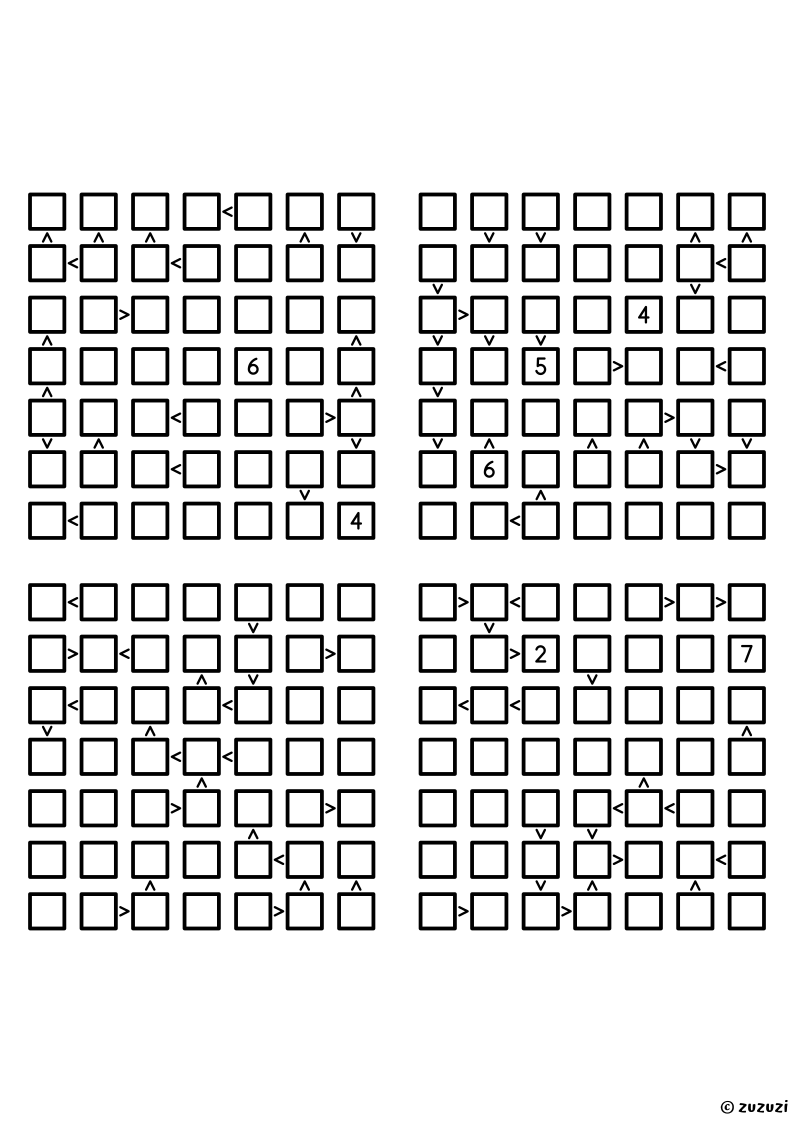
How to Play Futoshiki
A futoshiki grid has as many rows and columns as the digits it uses: digits 1 to 4 in a 4x4 grid, up to digits 1 to 7 in a 7x7 grid. Place each digit exactly once in every row and every column. Between some neighboring cells, an inequality sign shows which digit is smaller: the point of the sign always faces the smaller digit. A few digits may be printed in the grid to help you start.
Every puzzle has exactly one solution, and you can reach it by logic alone, one deduction at a time.
How does difficulty work in futoshiki?
Difficulty grows with the size of the grid: a 4x4 grid is quick and friendly, while a 7x7 grid has many more cells, signs, and possibilities to keep track of. Every puzzle keeps only the clues it needs, so each sign and each given digit matters.
Tips for solving futoshiki
- A cell that is smaller than its neighbor can never hold the largest digit, and a cell that is larger can never hold 1.
- Follow chains of signs: in a chain of three cells, each smaller than the next, the first cell holds at most the third-largest digit.
- Use pencil marks to note the possible digits in each cell.
- When a row or column has only one place left for a digit, write it in.