4x4 Futoshiki Puzzles

Futoshiki, the Japanese “inequality” puzzle, is sudoku with a twist of arithmetic: each row and each column holds every digit once, and the signs between neighbouring cells tell you which of the two must be larger. In a 4x4 grid, the digits are 1 to 4, and most puzzles give you no digit at all, only four to seven signs.

These eight grids fill a page each, big enough for a child’s handwriting. They are the right first step: a 4 can only sit on the open side of a sign, a 1 only on its pointed side, and from there the whole grid follows. Every puzzle has a single solution, and none needs a guess.

Part of the Futoshiki Puzzles collection, Last updated on Tue, 27 Oct 2026 17:47:15 GMT.

Free Printables

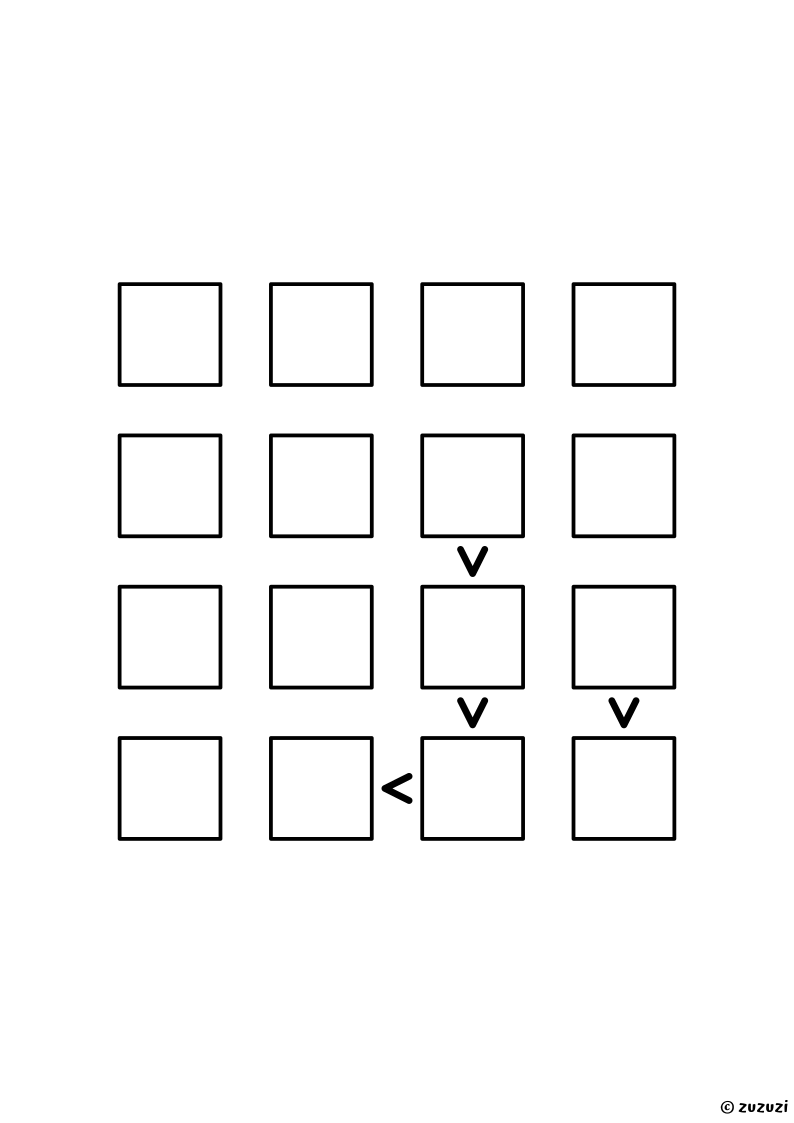
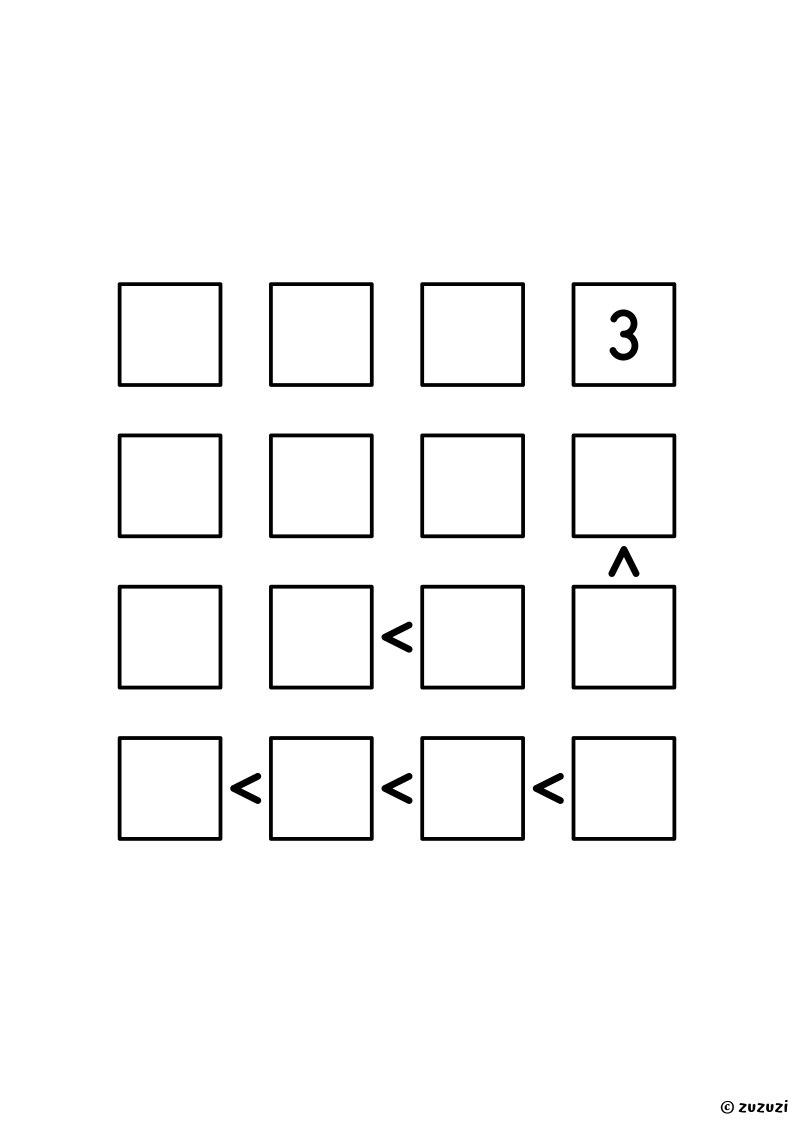
4x4 Futoshiki, Puzzle 1

4x4 futoshiki with no given digit and only four signs: the smallest set of clues that still forces a single solution. Puzzle 1 of 8.
4x4 futoshiki with no given digit and only four signs: the smallest set of clues that still forces a single solution. Puzzle 1 of 8. | zuzuzi.com

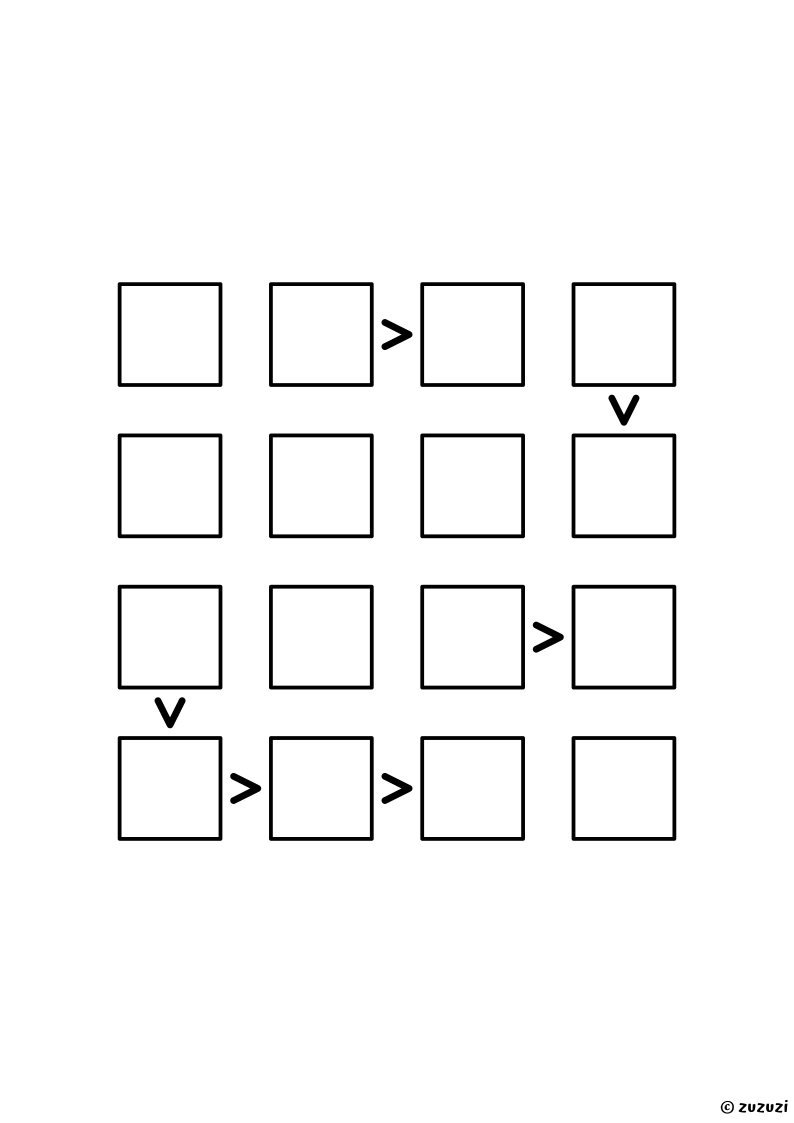
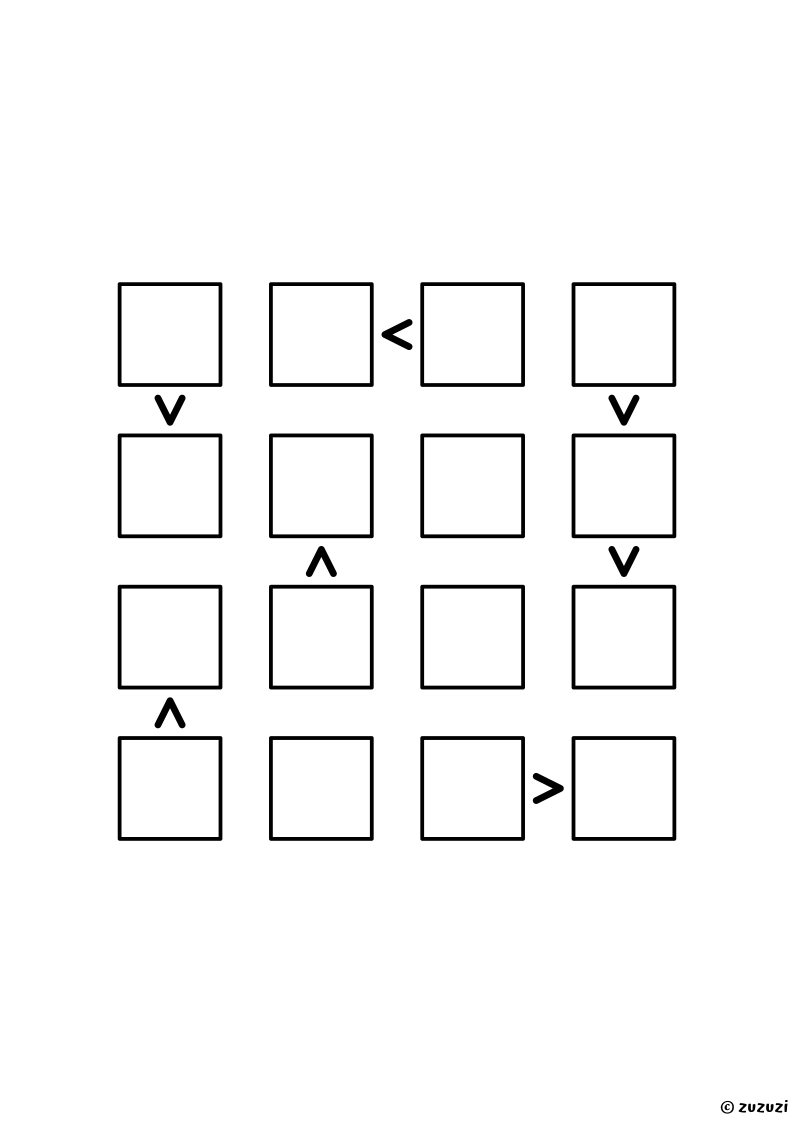
4x4 Futoshiki, Puzzle 2

4x4 futoshiki with six inequality signs and no given digit; start from the cell that two signs declare larger than its neighbours. Puzzle 2 of 8.
4x4 futoshiki with six inequality signs and no given digit; start from the cell that two signs declare larger than its neighbours. Puzzle 2 of 8. | zuzuzi.com

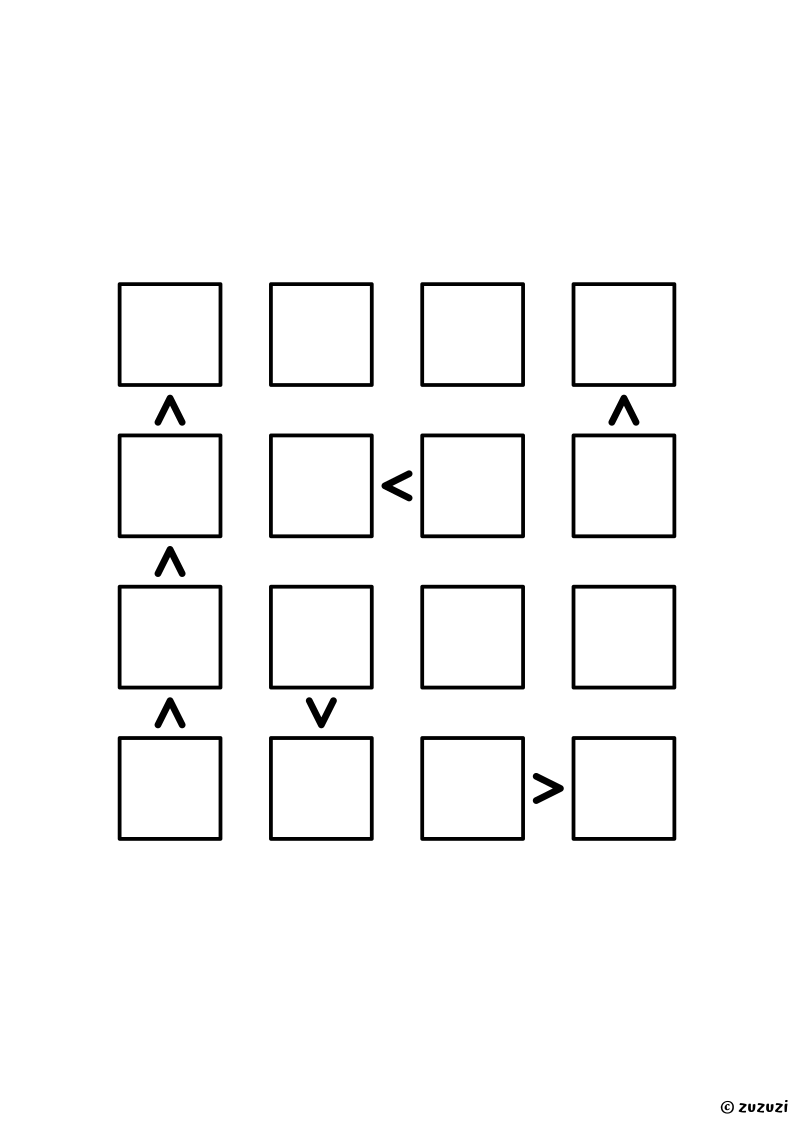
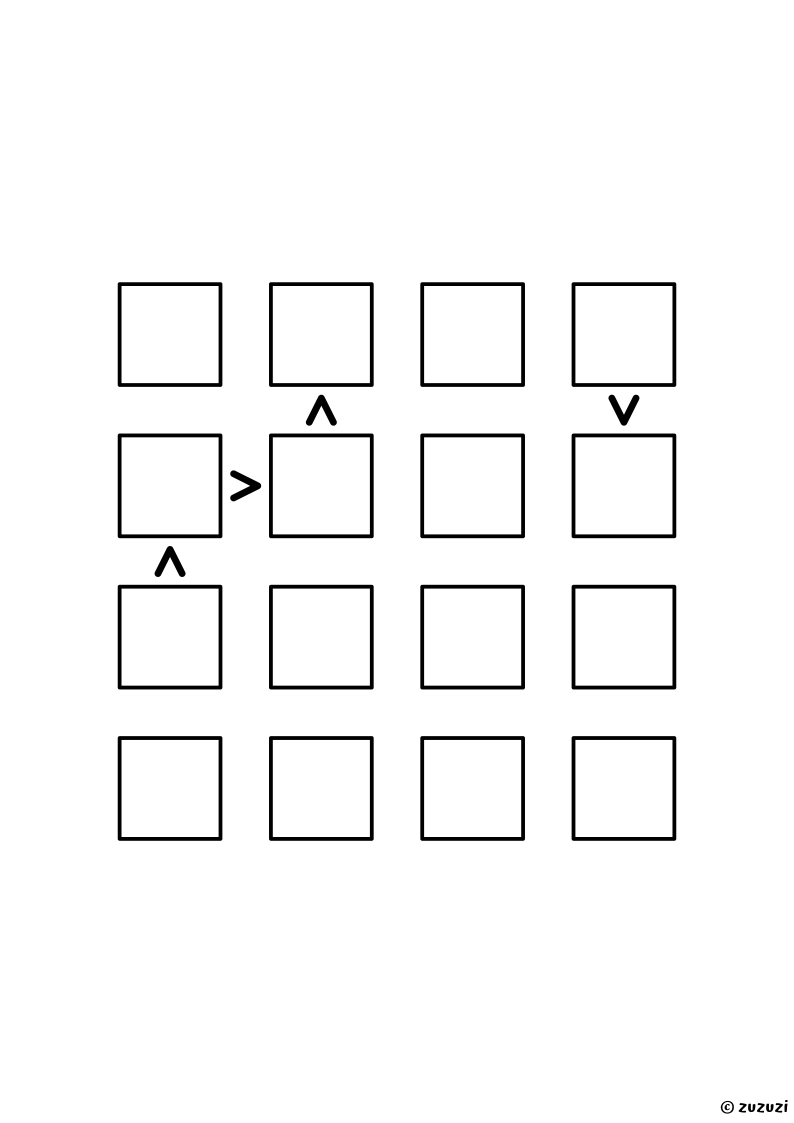
4x4 Futoshiki, Puzzle 3

4x4 futoshiki with seven signs and no given digit, the densest grid of the set: the chains of signs do all the work. Puzzle 3 of 8.
4x4 futoshiki with seven signs and no given digit, the densest grid of the set: the chains of signs do all the work. Puzzle 3 of 8. | zuzuzi.com

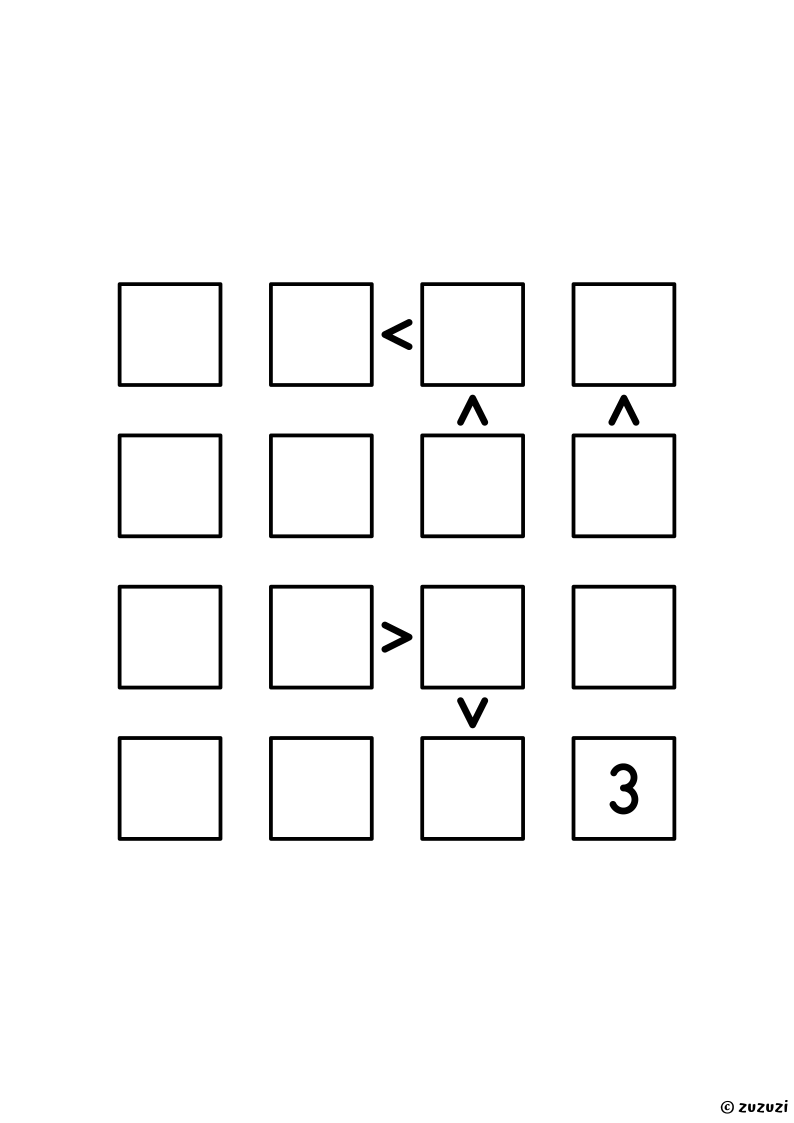
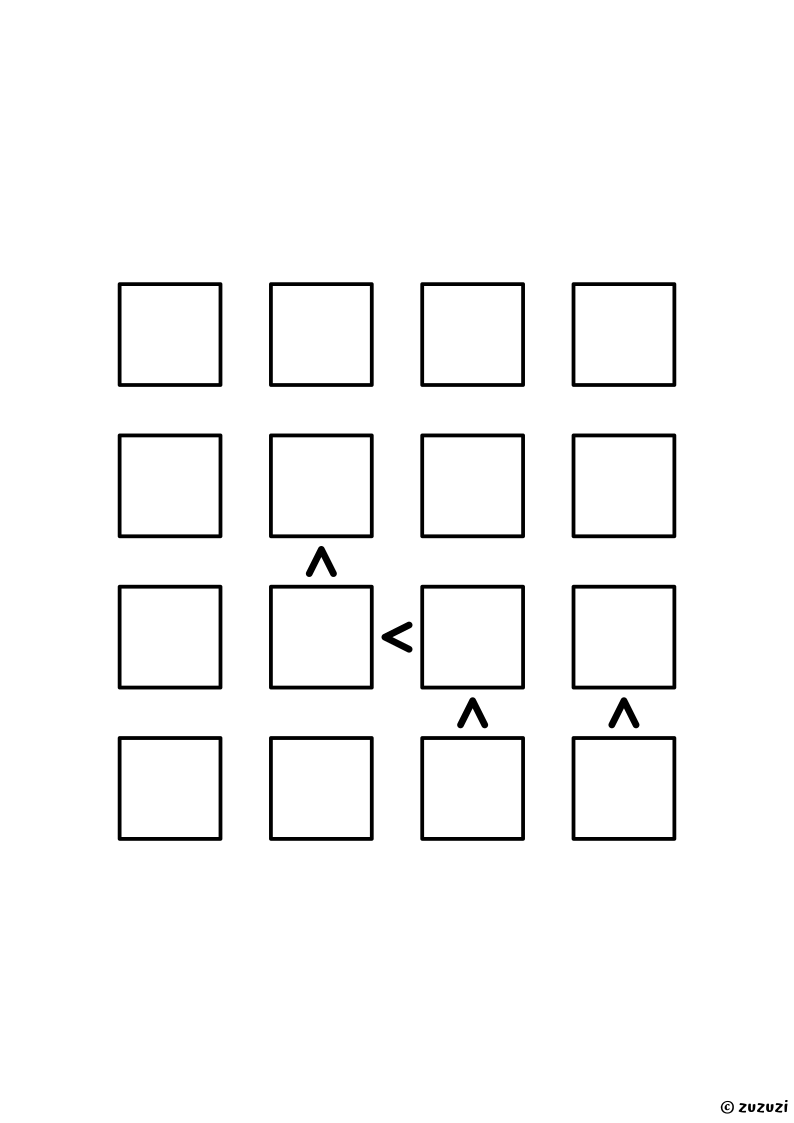
4x4 Futoshiki, Puzzle 4

4x4 futoshiki with one given digit and five signs: fill what the given digit forbids in its row and column, then follow the signs. Puzzle 4 of 8.
4x4 futoshiki with one given digit and five signs: fill what the given digit forbids in its row and column, then follow the signs. Puzzle 4 of 8. | zuzuzi.com

4x4 Futoshiki, Puzzle 5

4x4 futoshiki with one given digit and five inequality signs, a gentle grid for the middle of the set. Puzzle 5 of 8.
4x4 futoshiki with one given digit and five inequality signs, a gentle grid for the middle of the set. Puzzle 5 of 8. | zuzuzi.com

4x4 Futoshiki, Puzzle 6

4x4 futoshiki with seven signs and no given digit: look for a cell declared greater than two neighbours, it holds 3 or 4. Puzzle 6 of 8.
4x4 futoshiki with seven signs and no given digit: look for a cell declared greater than two neighbours, it holds 3 or 4. Puzzle 6 of 8. | zuzuzi.com

4x4 Futoshiki, Puzzle 7

4x4 futoshiki with four signs and no given digit, as sparse as the first puzzle, with the signs placed differently. Puzzle 7 of 8.
4x4 futoshiki with four signs and no given digit, as sparse as the first puzzle, with the signs placed differently. Puzzle 7 of 8. | zuzuzi.com

4x4 Futoshiki, Puzzle 8

4x4 futoshiki with four signs and no given digit, the last of the set: enough practice to move on to 5x5. Puzzle 8 of 8.
4x4 futoshiki with four signs and no given digit, the last of the set: enough practice to move on to 5x5. Puzzle 8 of 8. | zuzuzi.com

How to Solve a 4x4 Futoshiki

Look at the signs first. A cell that must be greater than another can never hold 1, and a cell that must be smaller can never hold 4; a chain of two signs pointing the same way pins the middle cell to 2 or 3. Write the possible digits small in each cell, then apply the sudoku rule: a digit used in a row or a column is crossed out everywhere else in that line. When a row has a single place left for the 4, write it; the signs around it then settle their neighbours.

Frequently Asked Questions

Do the signs point to the smaller or the larger number?

The sign opens towards the larger number, like the “greater than” sign in mathematics: 3 > 1 reads “3 is greater than 1”. The pointed end always touches the smaller digit.

Why do most of these grids give no digit at all?

Because the signs alone are enough: four to seven inequalities fix the digits 1 to 4 in every row and column. A few grids give one digit to shorten the first step.