5x5 Futoshiki Puzzles

The 5x5 grid is the classic futoshiki, the size most puzzle pages use. Five rows and five columns each hold the digits 1 to 5 once, and the signs between cells say which neighbour is larger. With five digits, a chain of signs becomes a real tool: three cells linked by two signs in the same direction run upward, so the first is at most 3 and the last at least 3.

Each of these eight puzzles stands alone on its page, with between seven and twelve signs and at most two given digits. They are for solvers who have tried the 4x4 grids and want deductions that go two or three steps deep, with a single solution every time and no guessing.

Part of the Futoshiki Puzzles collection, Last updated on Tue, 27 Oct 2026 17:48:27 GMT.

Free Printables

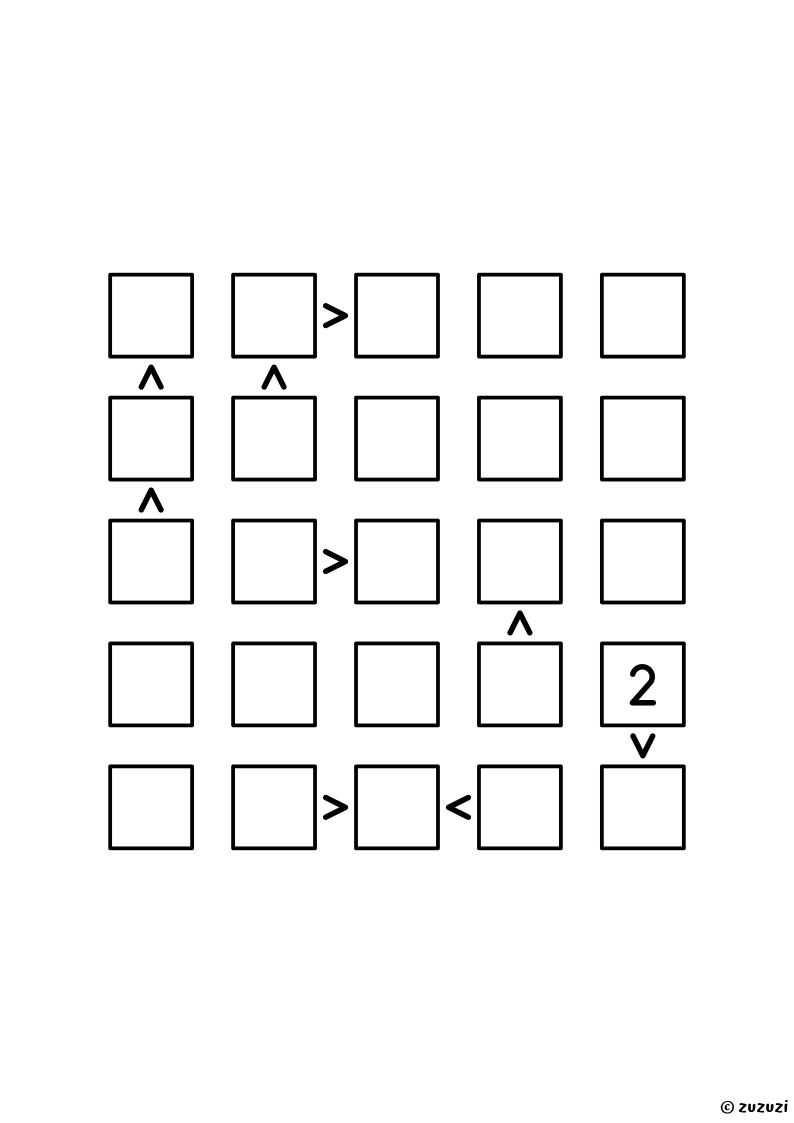
5x5 Futoshiki, Puzzle 1

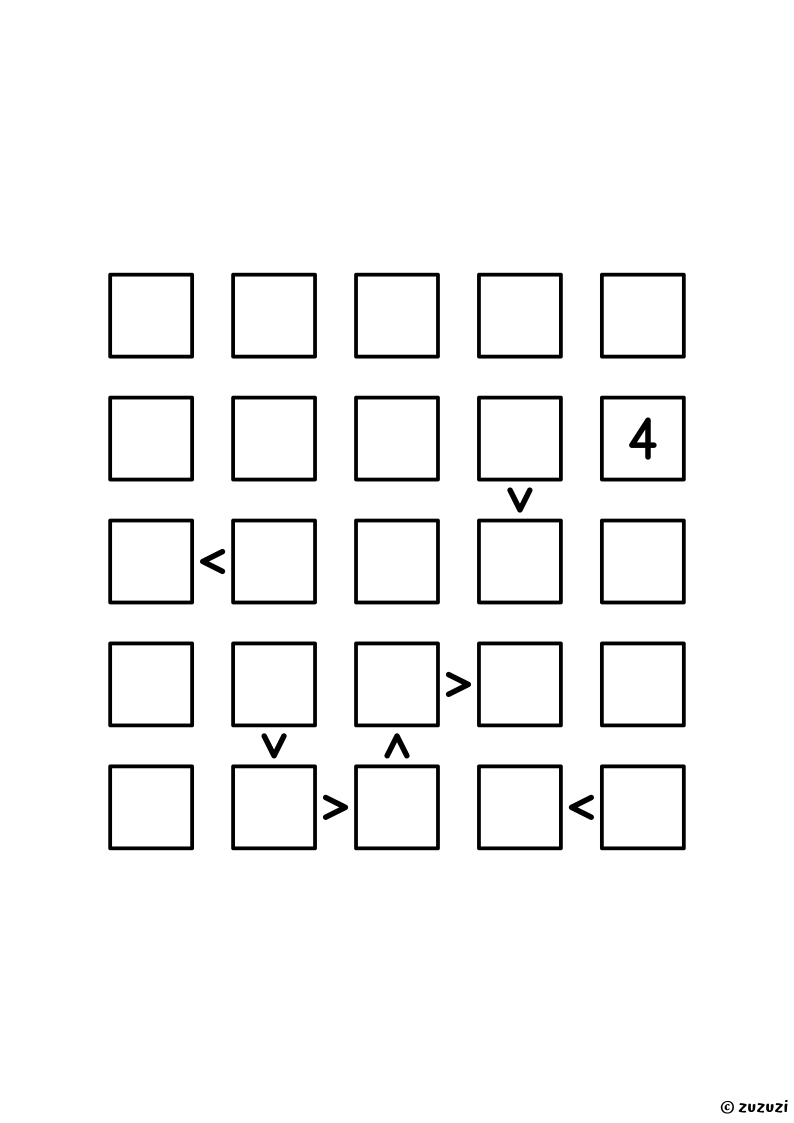
5x5 futoshiki with one given digit and seven signs, the sparsest grid of the set: each sign carries a lot of weight. Puzzle 1 of 8.
5x5 futoshiki with one given digit and seven signs, the sparsest grid of the set: each sign carries a lot of weight. Puzzle 1 of 8. | zuzuzi.com

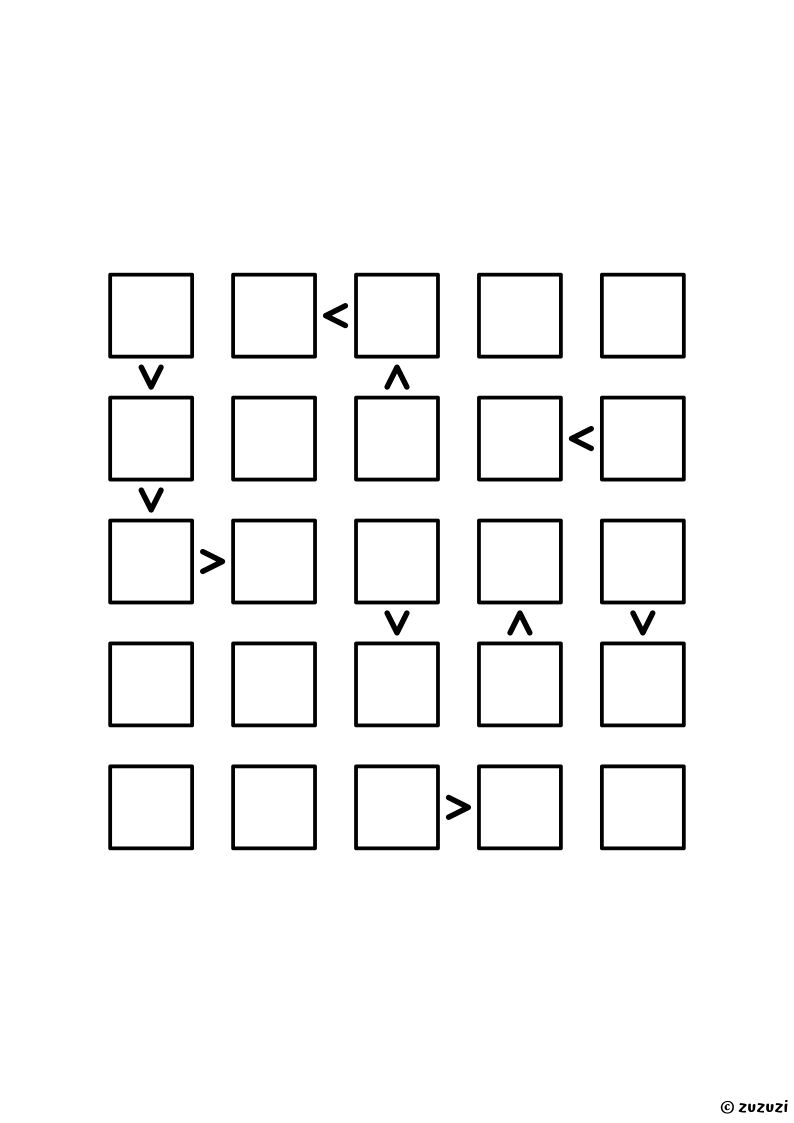
5x5 Futoshiki, Puzzle 2

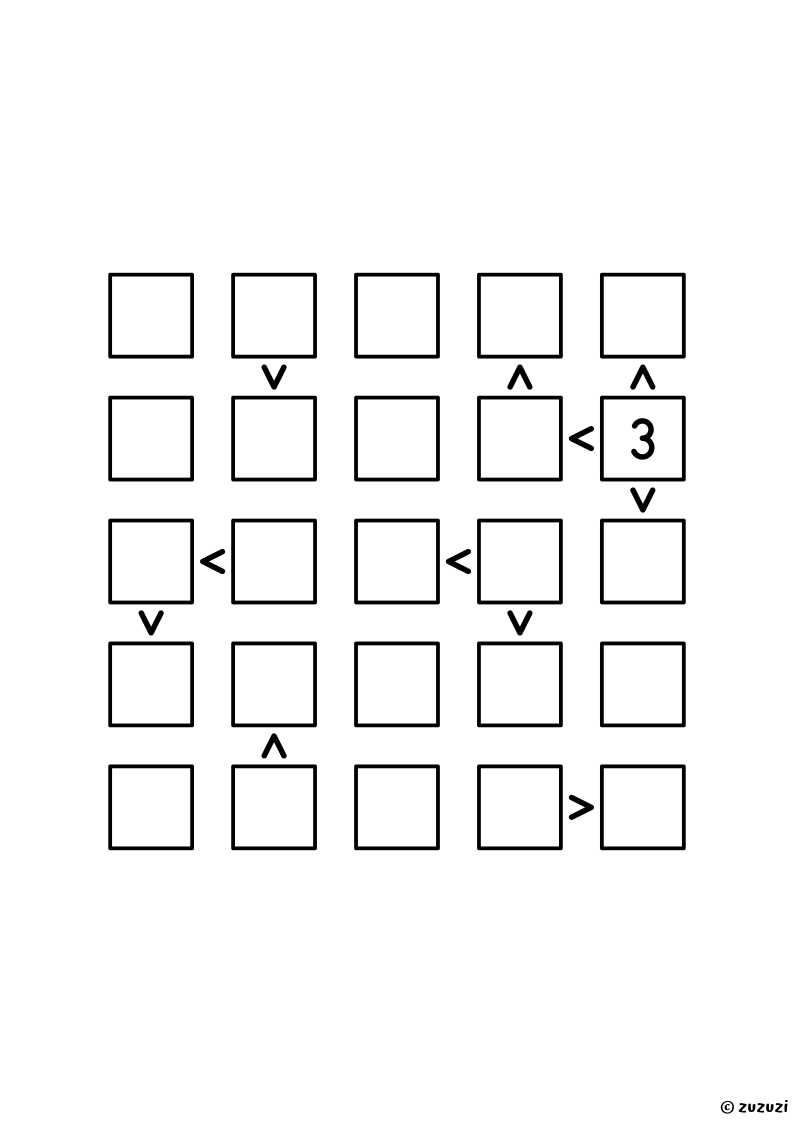
5x5 futoshiki with one given digit and eleven inequality signs; follow the longest chain of signs first. Puzzle 2 of 8.
5x5 futoshiki with one given digit and eleven inequality signs; follow the longest chain of signs first. Puzzle 2 of 8. | zuzuzi.com

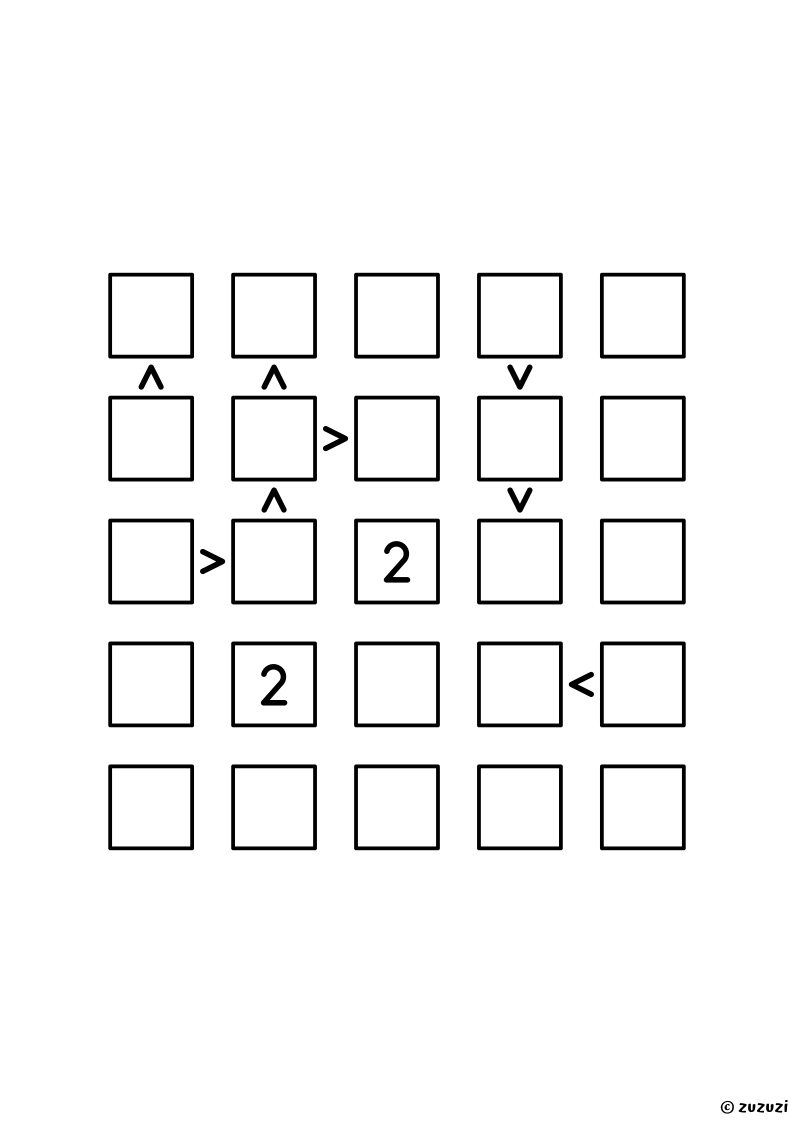
5x5 Futoshiki, Puzzle 3

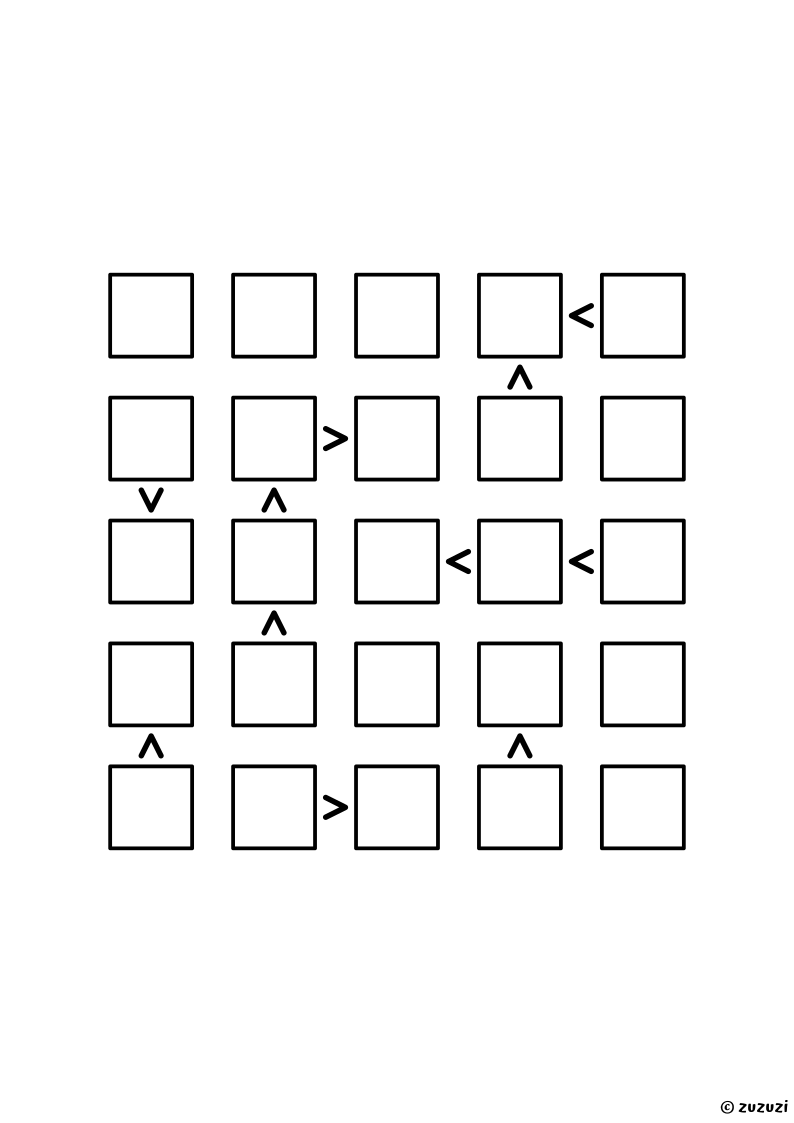
5x5 futoshiki with eleven signs and no given digit at all: the signs alone fix all twenty-five cells. Puzzle 3 of 8.
5x5 futoshiki with eleven signs and no given digit at all: the signs alone fix all twenty-five cells. Puzzle 3 of 8. | zuzuzi.com

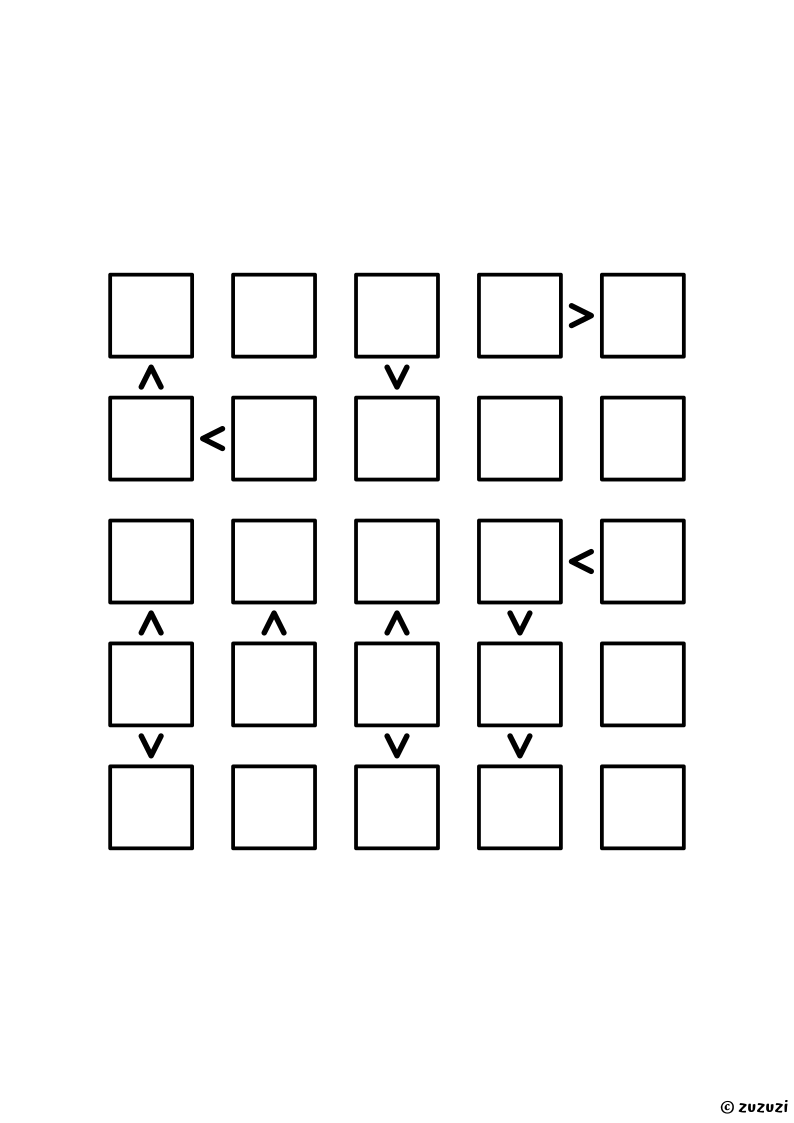
5x5 Futoshiki, Puzzle 4

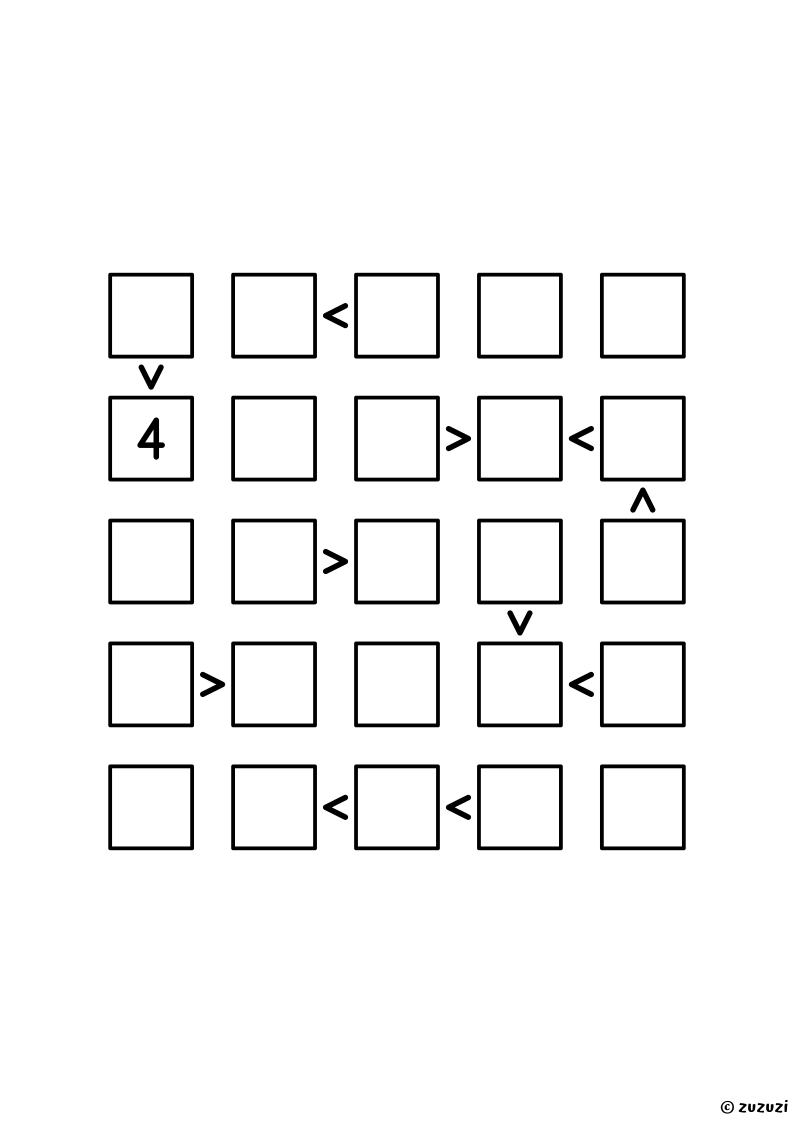
5x5 futoshiki with one given digit and eleven signs; the given digit removes a candidate from its whole row and column before you read a single sign. Puzzle 4 of 8.
5x5 futoshiki with one given digit and eleven signs; the given digit removes a candidate from its whole row and column before you read a single sign. Puzzle 4 of 8. | zuzuzi.com

5x5 Futoshiki, Puzzle 5

5x5 futoshiki with one given digit and nine signs, a mid-weight grid for the middle of the set. Puzzle 5 of 8.
5x5 futoshiki with one given digit and nine signs, a mid-weight grid for the middle of the set. Puzzle 5 of 8. | zuzuzi.com

5x5 Futoshiki, Puzzle 6

5x5 futoshiki with ten signs and no given digit: start by marking where a 5 can still go in each row. Puzzle 6 of 8.
5x5 futoshiki with ten signs and no given digit: start by marking where a 5 can still go in each row. Puzzle 6 of 8. | zuzuzi.com

5x5 Futoshiki, Puzzle 7

5x5 futoshiki with two given digits and eight signs, the most generous grid of the set, a good one to print first. Puzzle 7 of 8.
5x5 futoshiki with two given digits and eight signs, the most generous grid of the set, a good one to print first. Puzzle 7 of 8. | zuzuzi.com

5x5 Futoshiki, Puzzle 8

5x5 futoshiki with twelve signs and no given digit, the densest grid of the set: the chains run through most of the board. Puzzle 8 of 8.
5x5 futoshiki with twelve signs and no given digit, the densest grid of the set: the chains run through most of the board. Puzzle 8 of 8. | zuzuzi.com

How to Solve a 5x5 Futoshiki

Start with the extremes: the 5 cannot sit on the pointed side of any sign, the 1 cannot sit on the open side. Mark in each row and column the cells that can still take a 5 and a 1; often only one remains. Then follow the chains: two signs in a row pointing the same way fix the middle cell between the two ends, and a cell greater than two different neighbours is at least 3. Keep candidates written small, and cross them out as digits land.

Frequently Asked Questions

Is a 5x5 futoshiki much harder than a 4x4?

It takes longer rather than harder: the same two rules apply, but with five digits the signs forbid fewer values at once, so you combine them with the row and column rule more often before a digit is sure.

What does a chain of signs tell me?

That the cells along it are in increasing order. In a 5x5 grid, three cells linked by two signs the same way hold three increasing digits, such as 1, 2, 3 or 2, 4, 5; four cells linked that way leave out a single digit, so the first is 1 or 2 and the last 4 or 5.