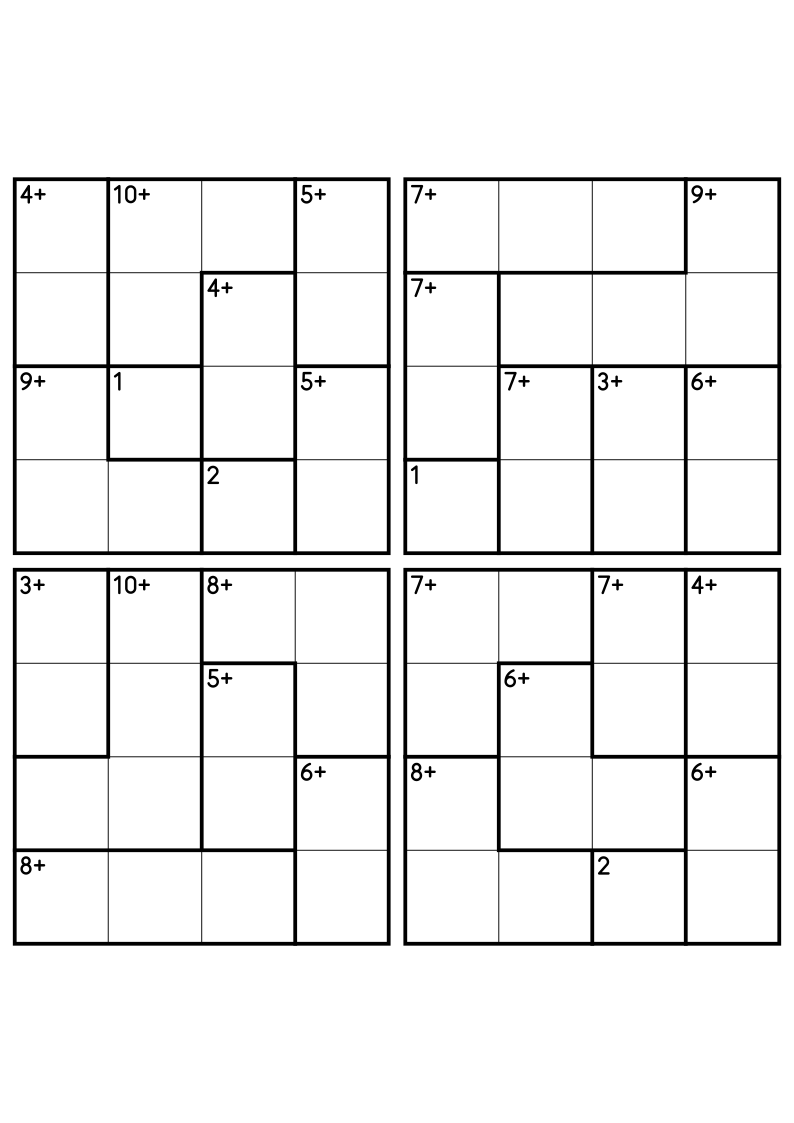
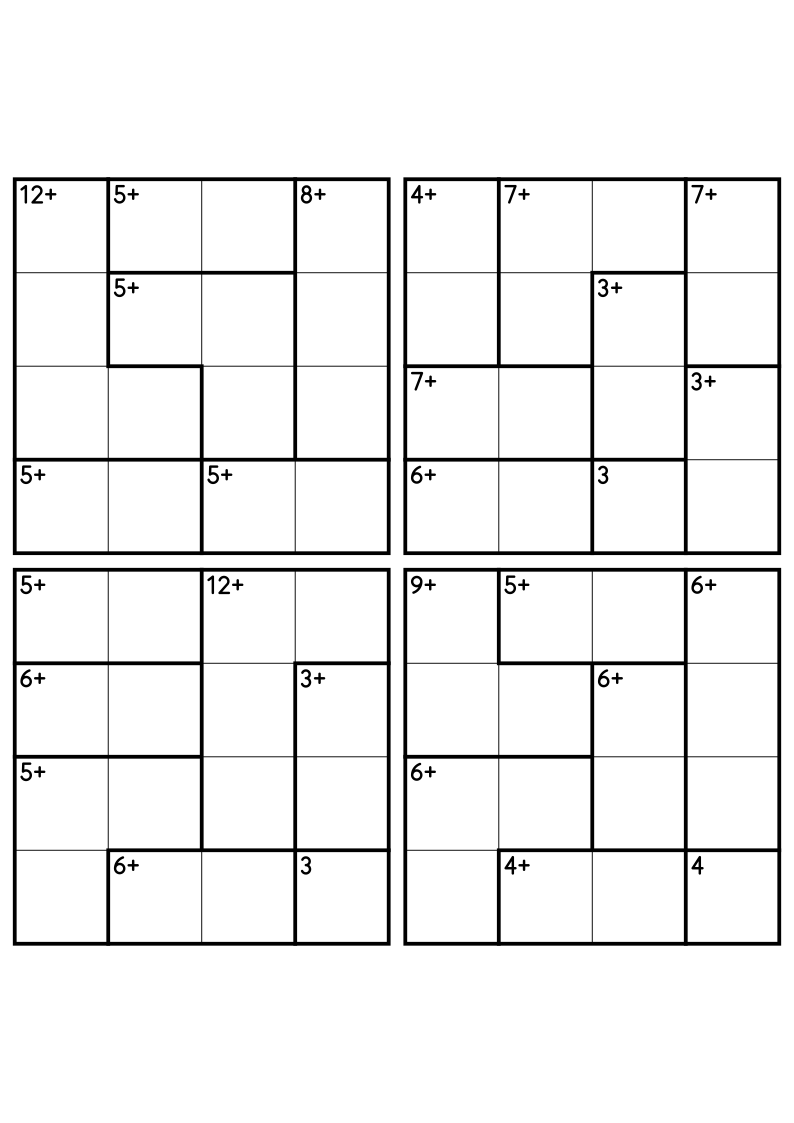
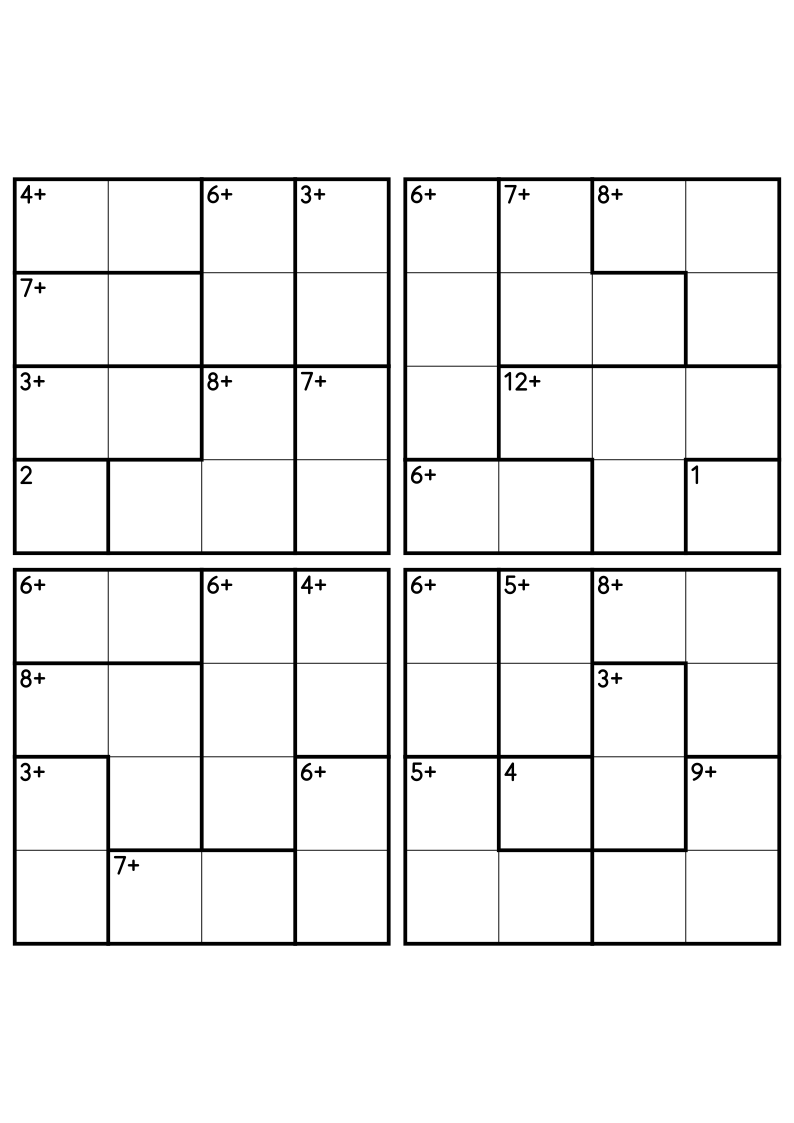
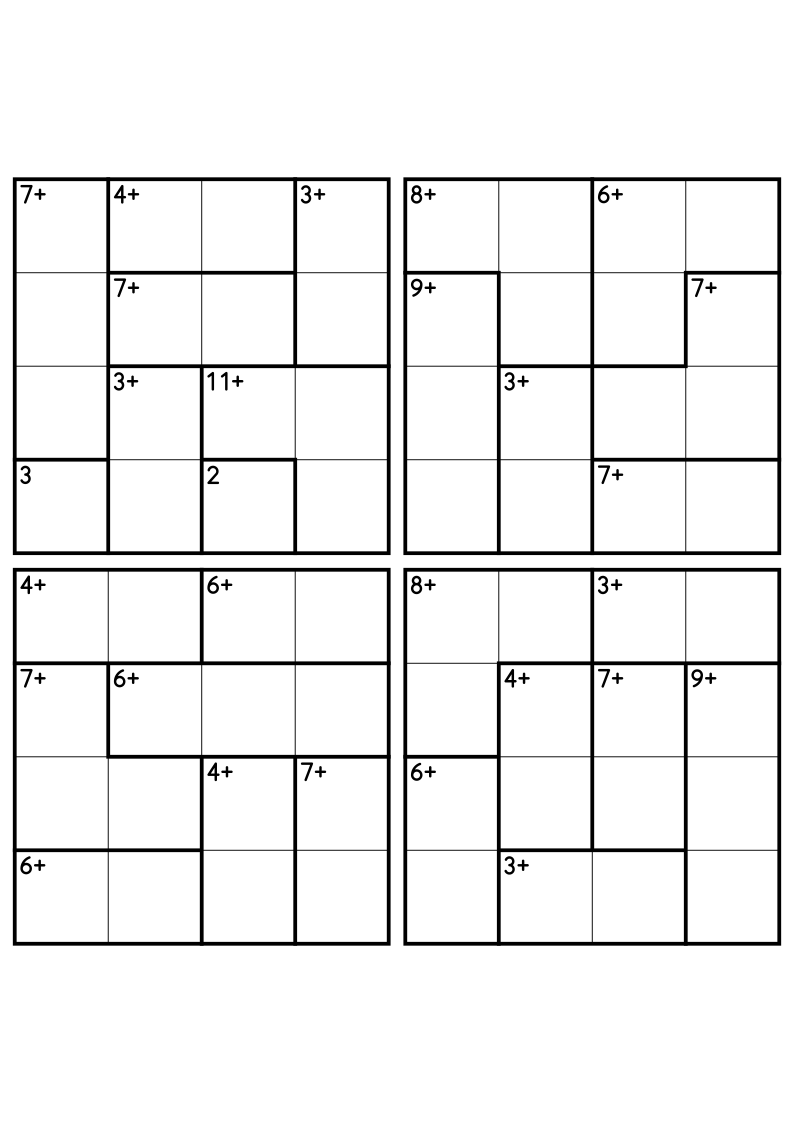
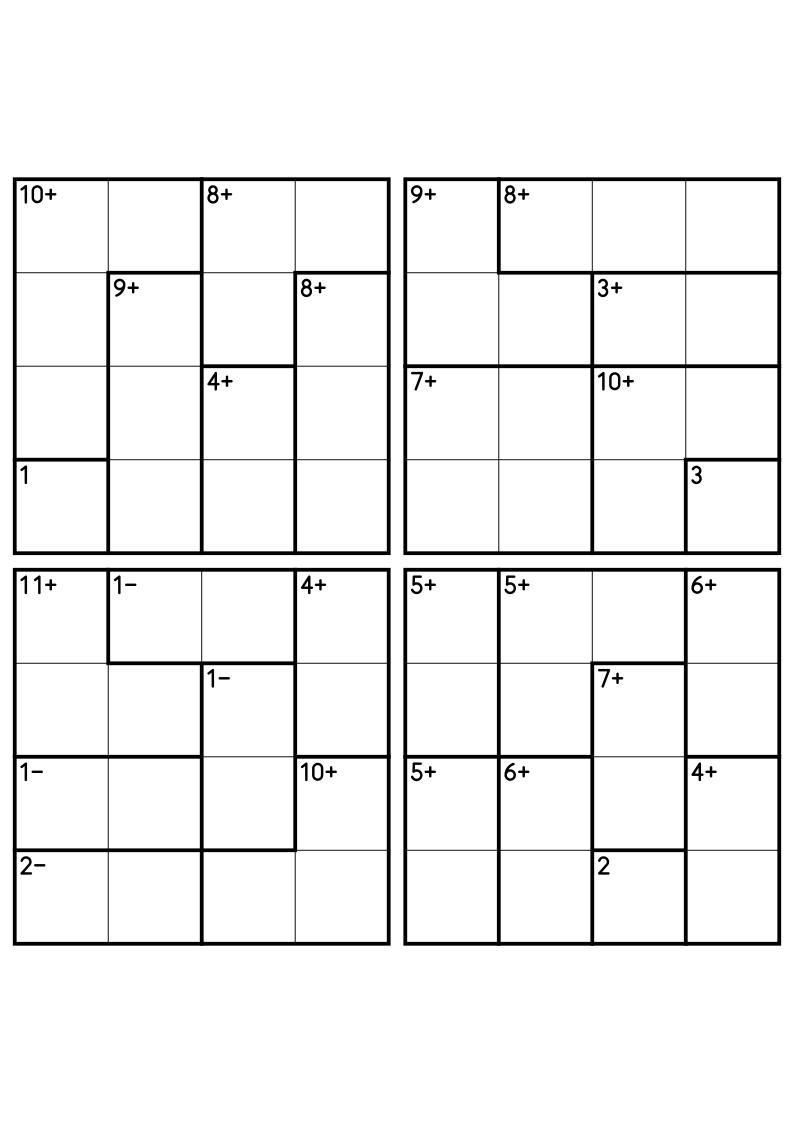
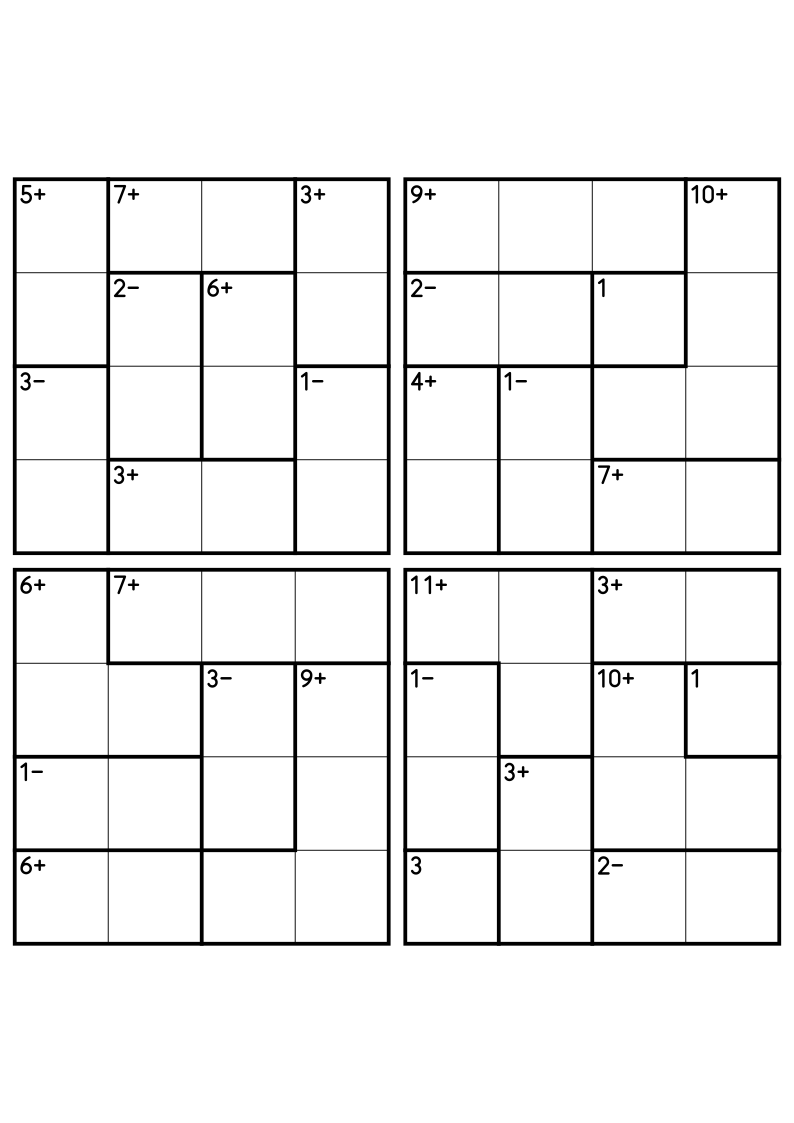
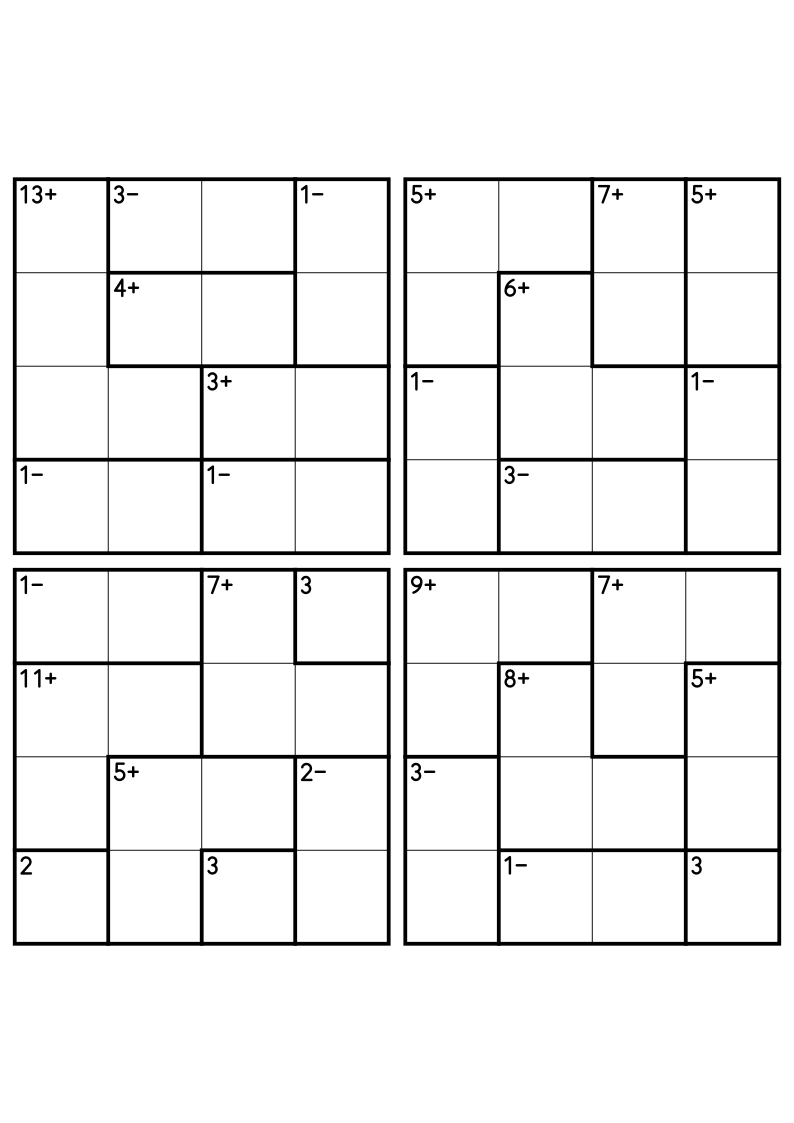
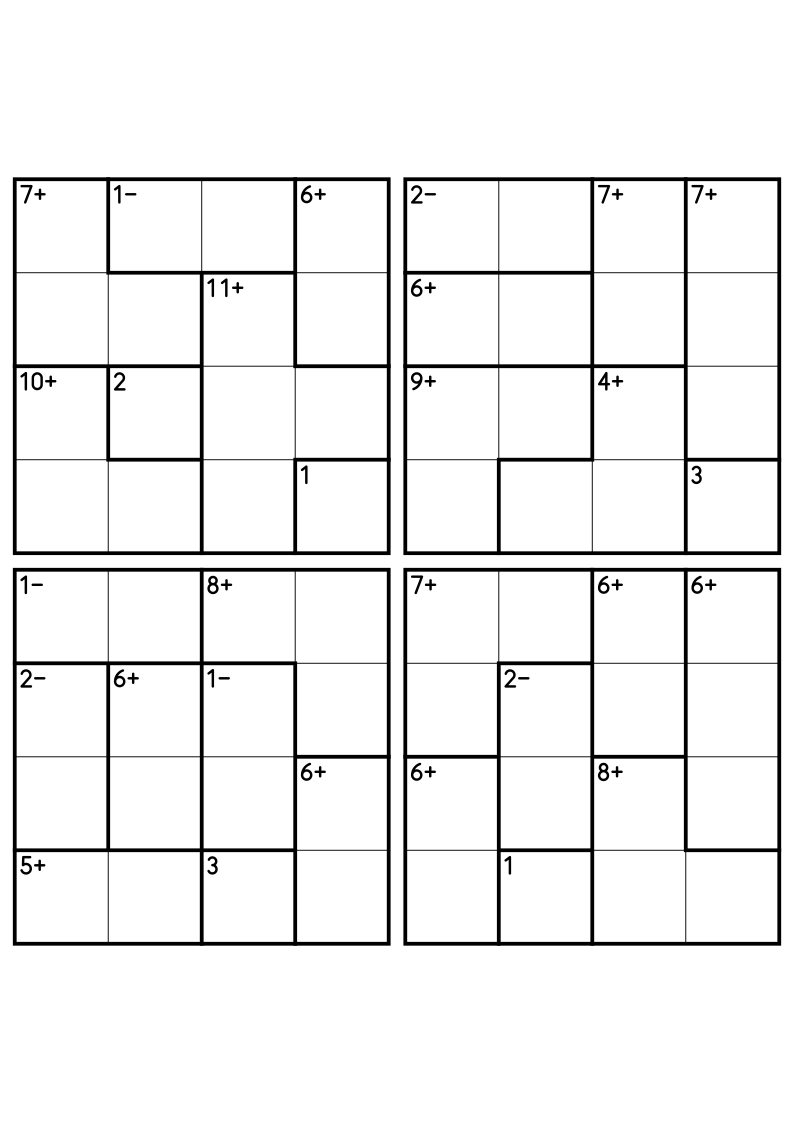
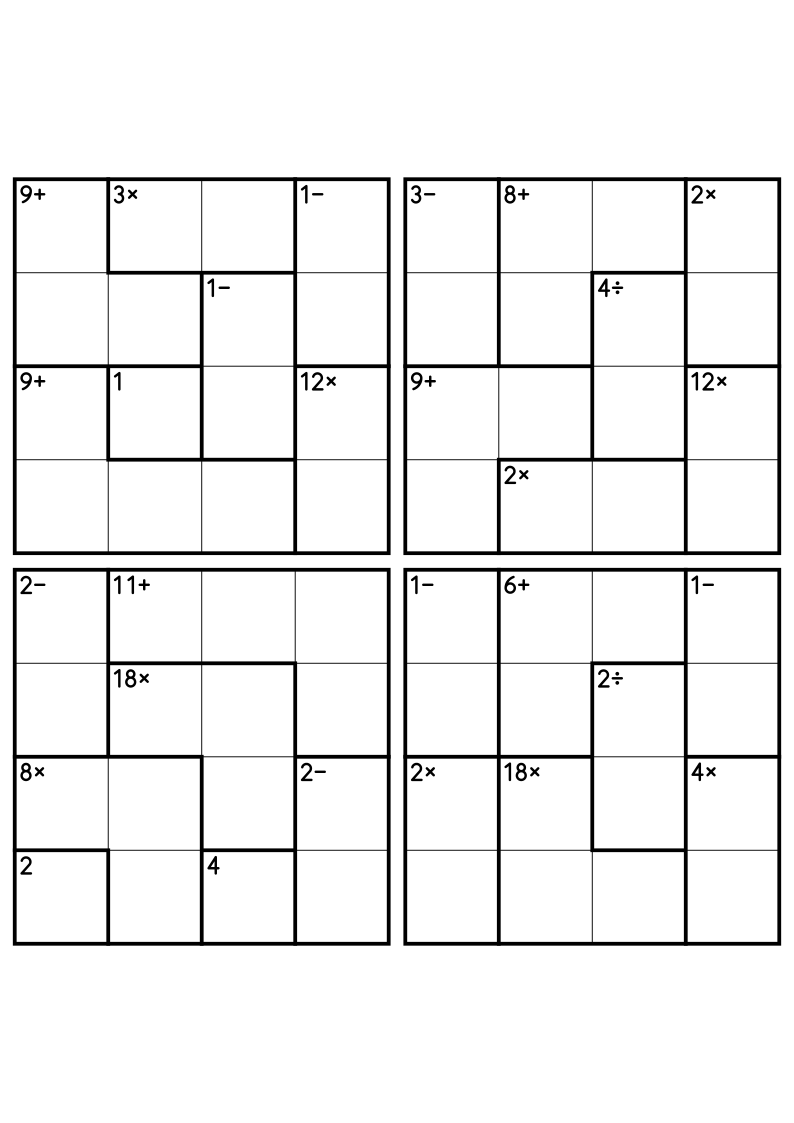
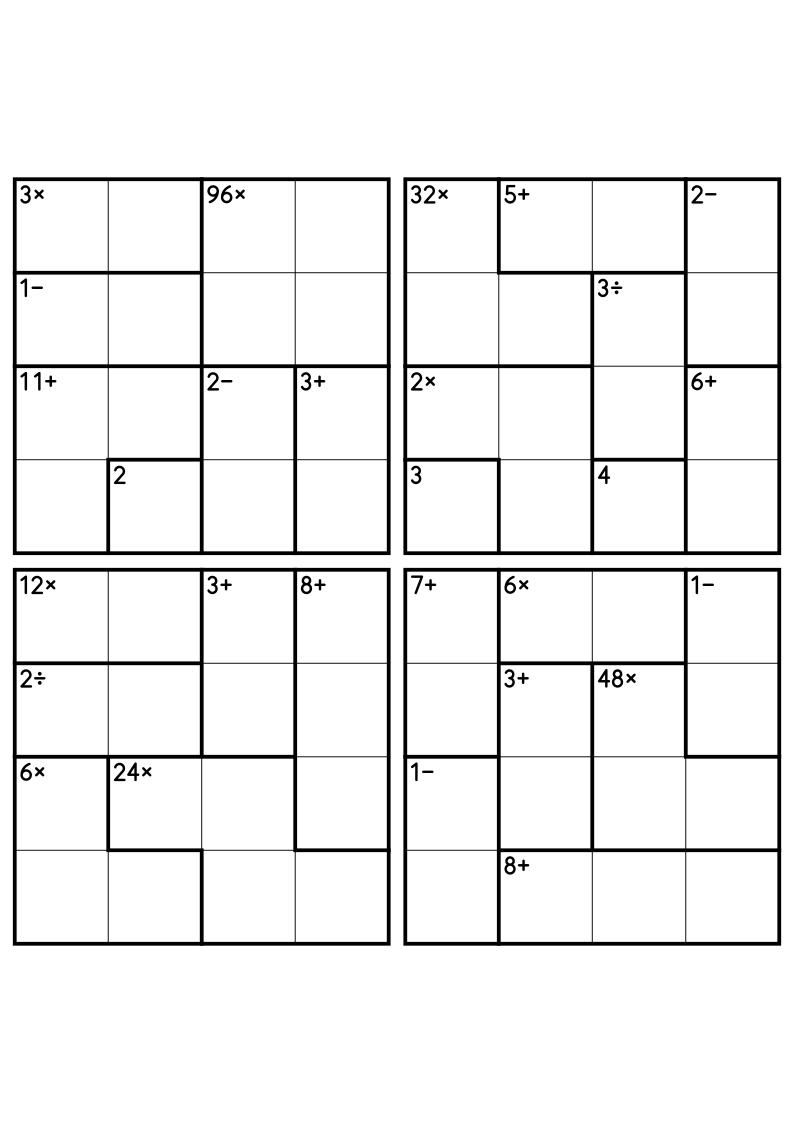
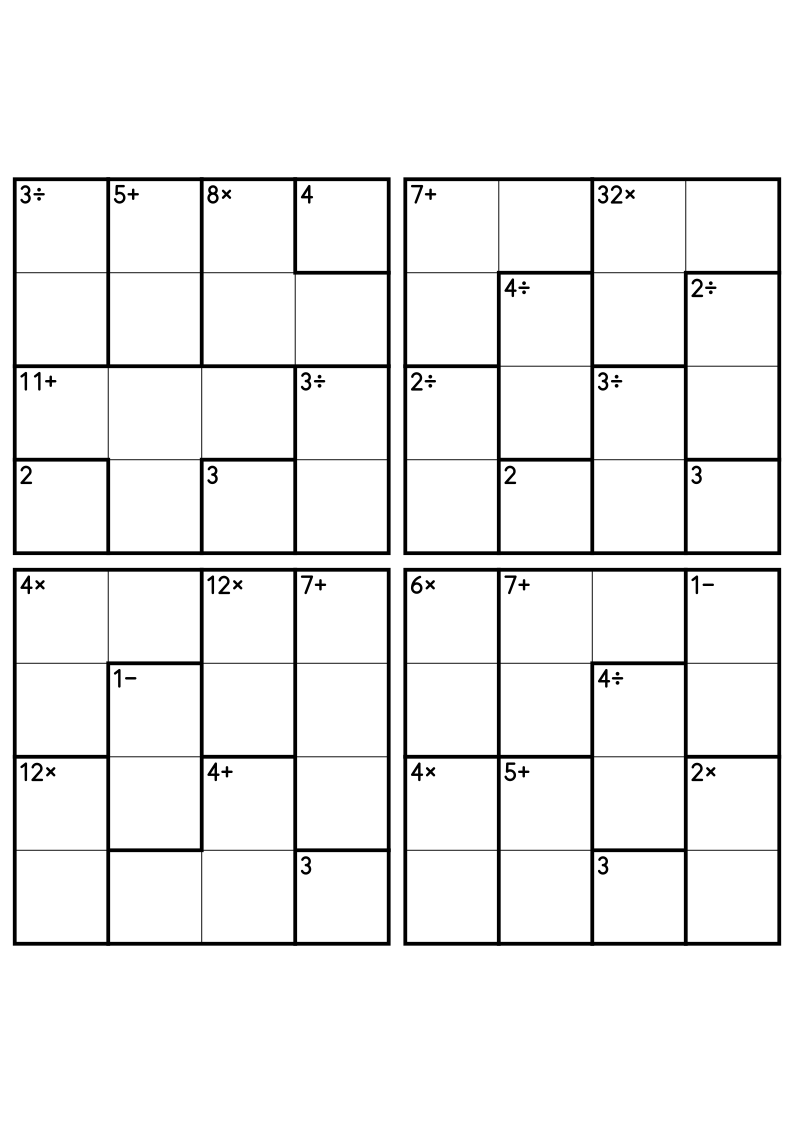
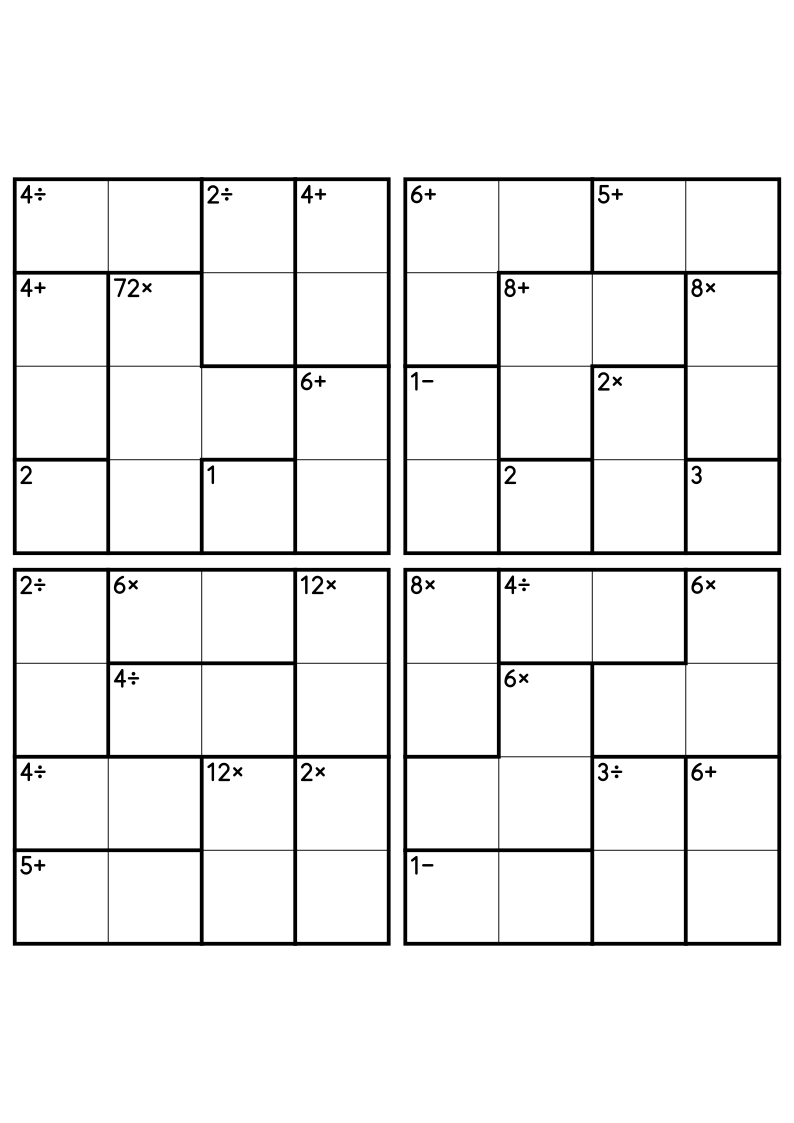
Playing Four 4x4 Calcudoku Grids
Start with the single cells: a cage of one cell shows the digit itself. Then look at the cages whose number allows one pair only: in a 4x4, two cells adding up to 7 hold 3 and 4, and two cells adding up to 3 hold 1 and 2. Every row and column contains 1, 2, 3 and 4 once, so a digit placed in a row is crossed out of the rest of that row and of its column.
Addition, Subtraction and All Four Operations
The first sheets use addition only, the best way to learn the rules. The next ones add subtraction, always on a cage of two cells: its number is the difference between the two digits. The last ones bring multiplication and division too; a division cage also has two cells, and its number is the larger digit divided by the smaller.
Who These Sheets Are For
Four small grids per sheet suit children practising addition and their first multiplications, short warm-ups in class, and adults who want a quick puzzle. The sheets come out in black and white on A4; the 4x4 Calcudoku page has one larger grid per sheet.