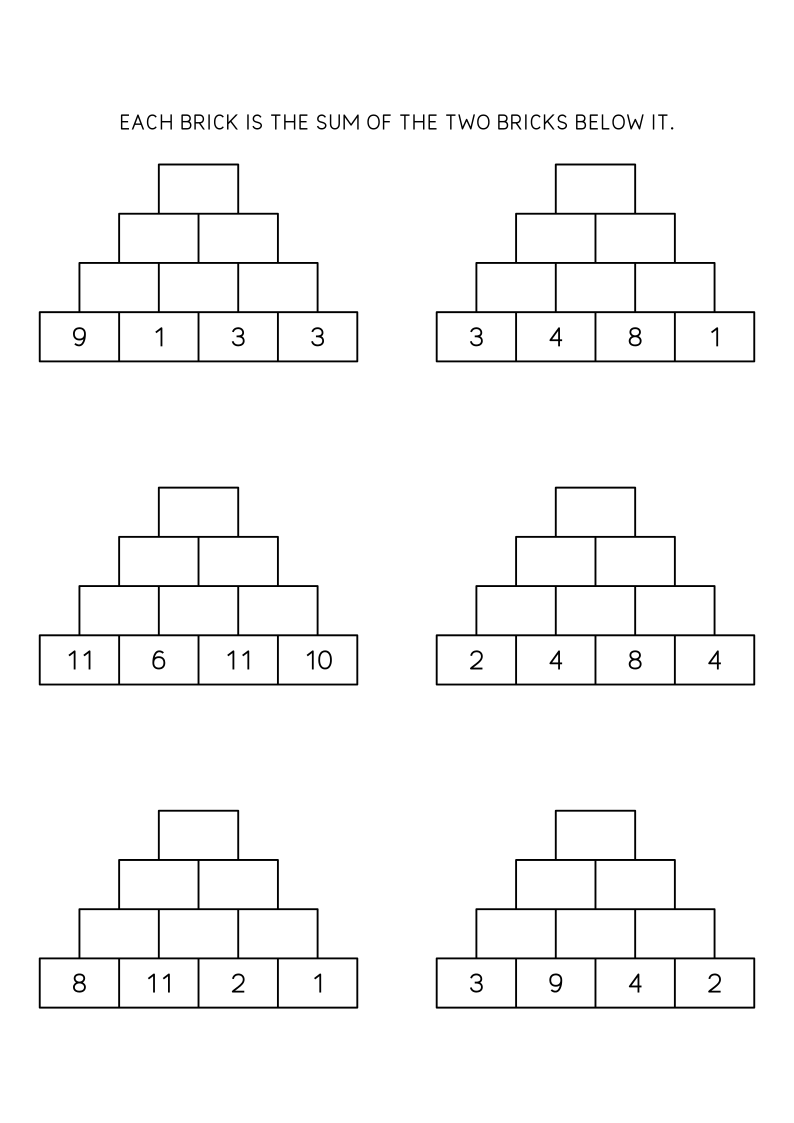
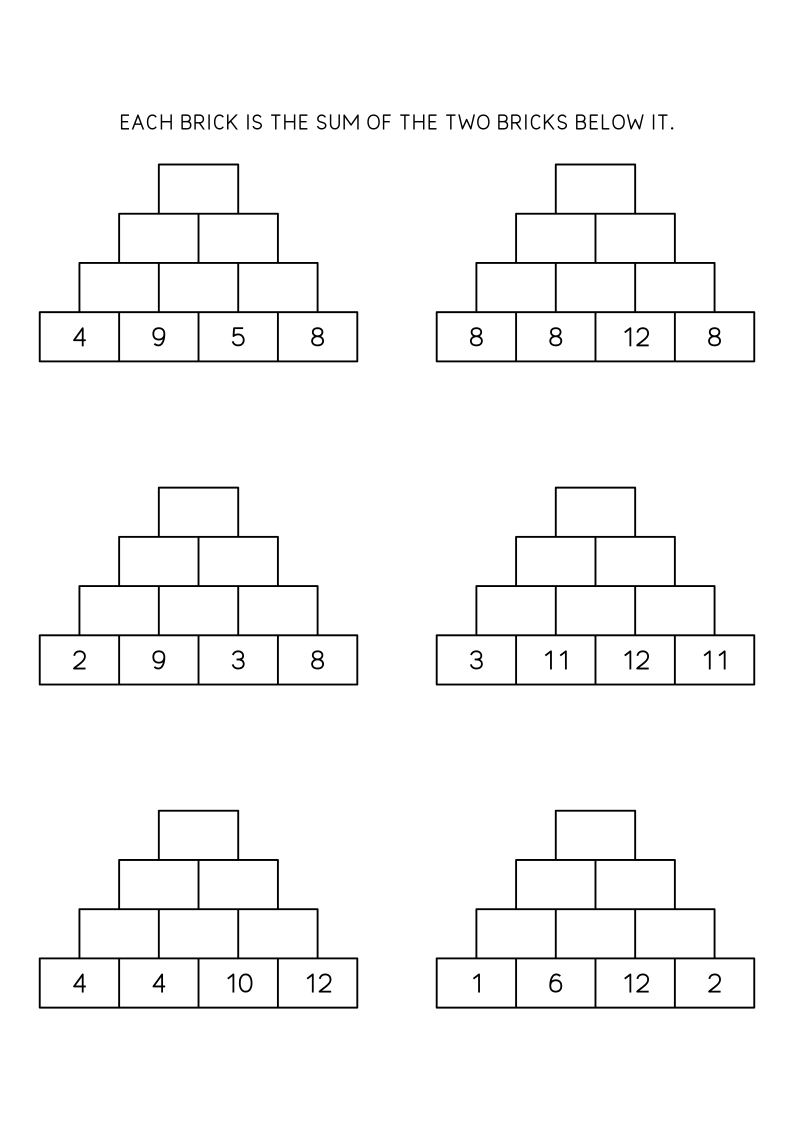
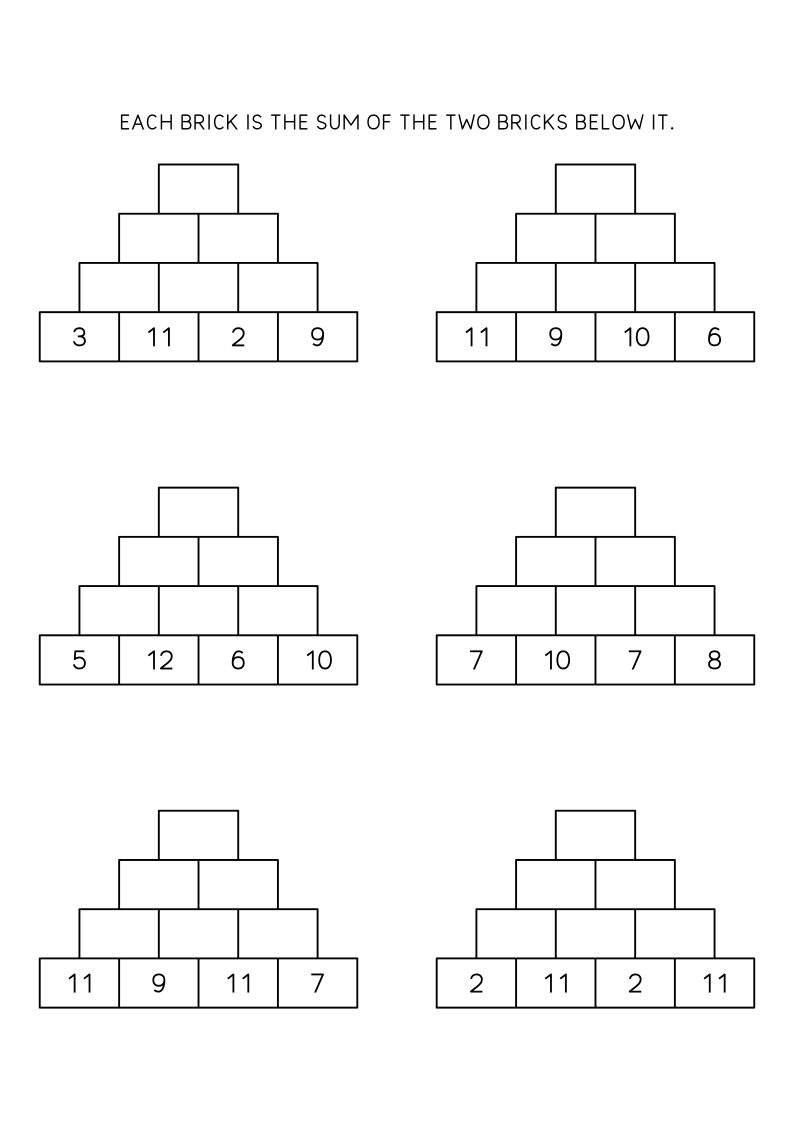
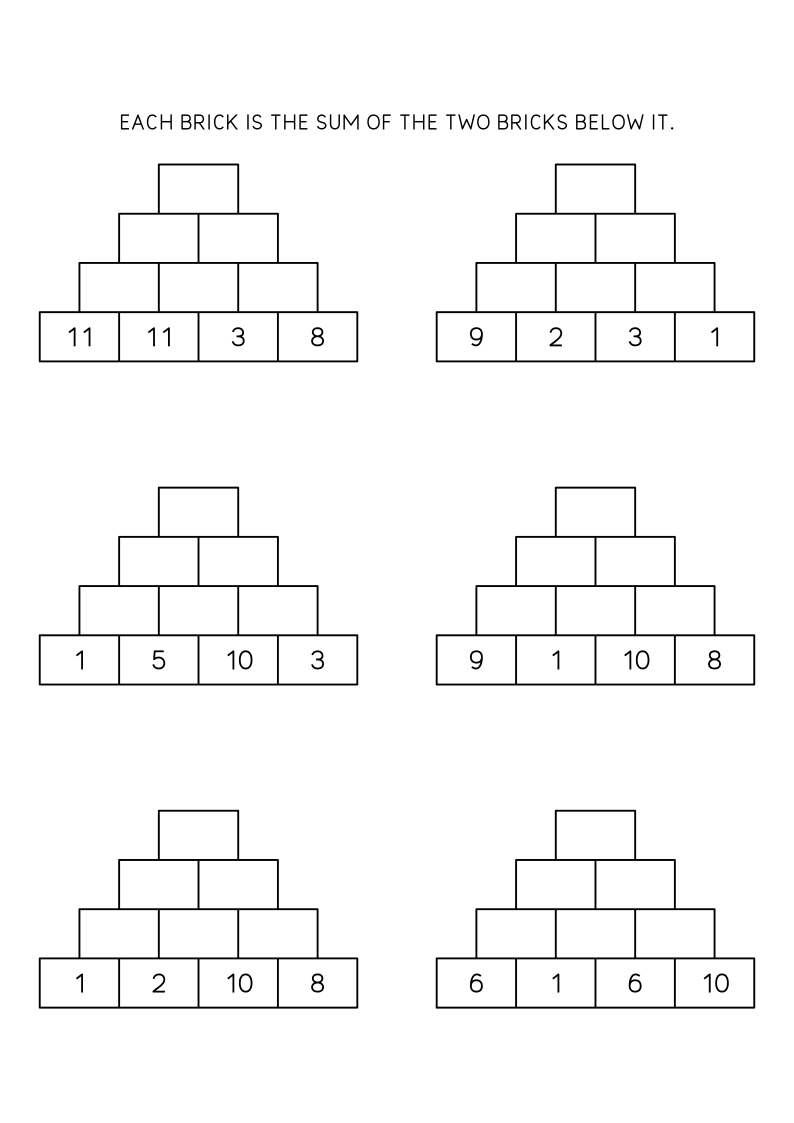
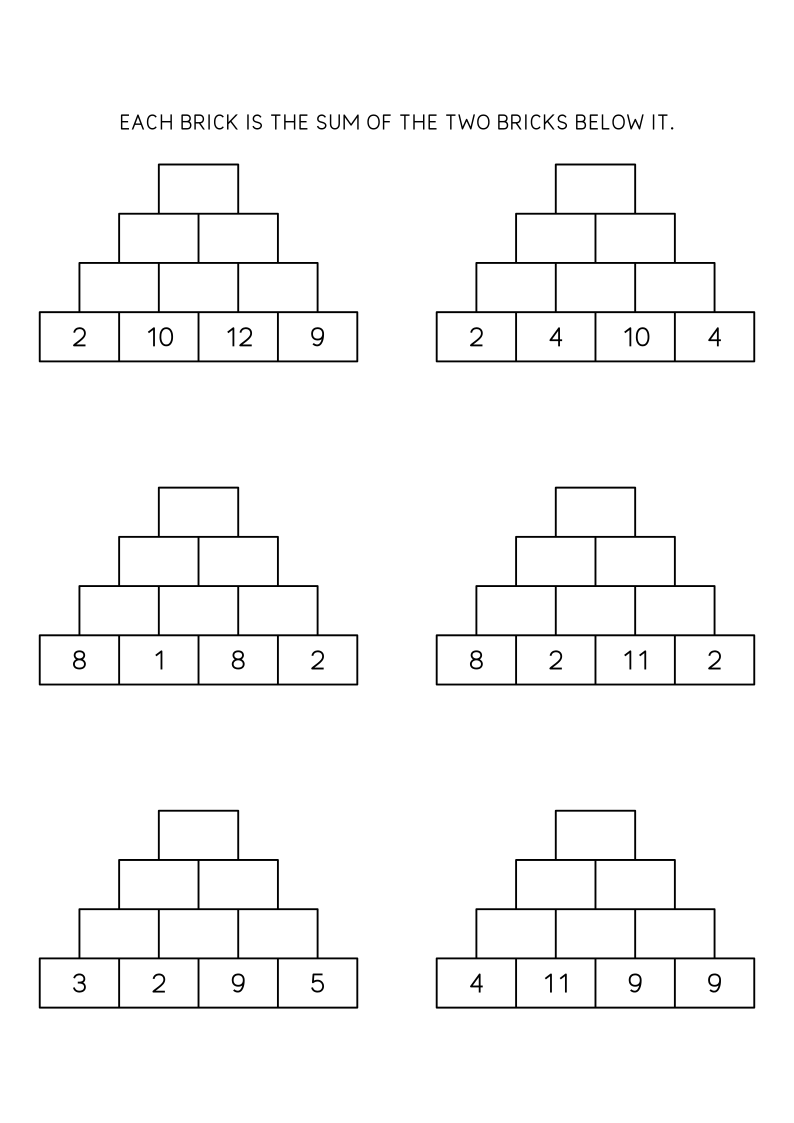
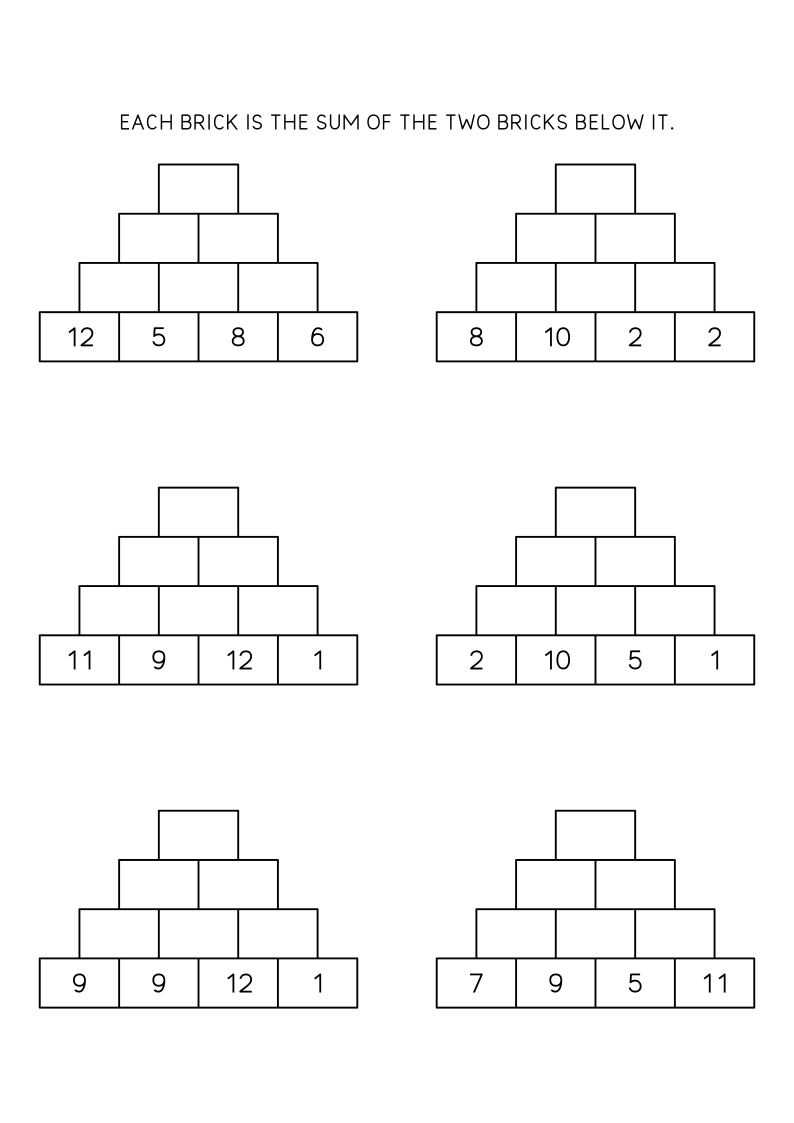
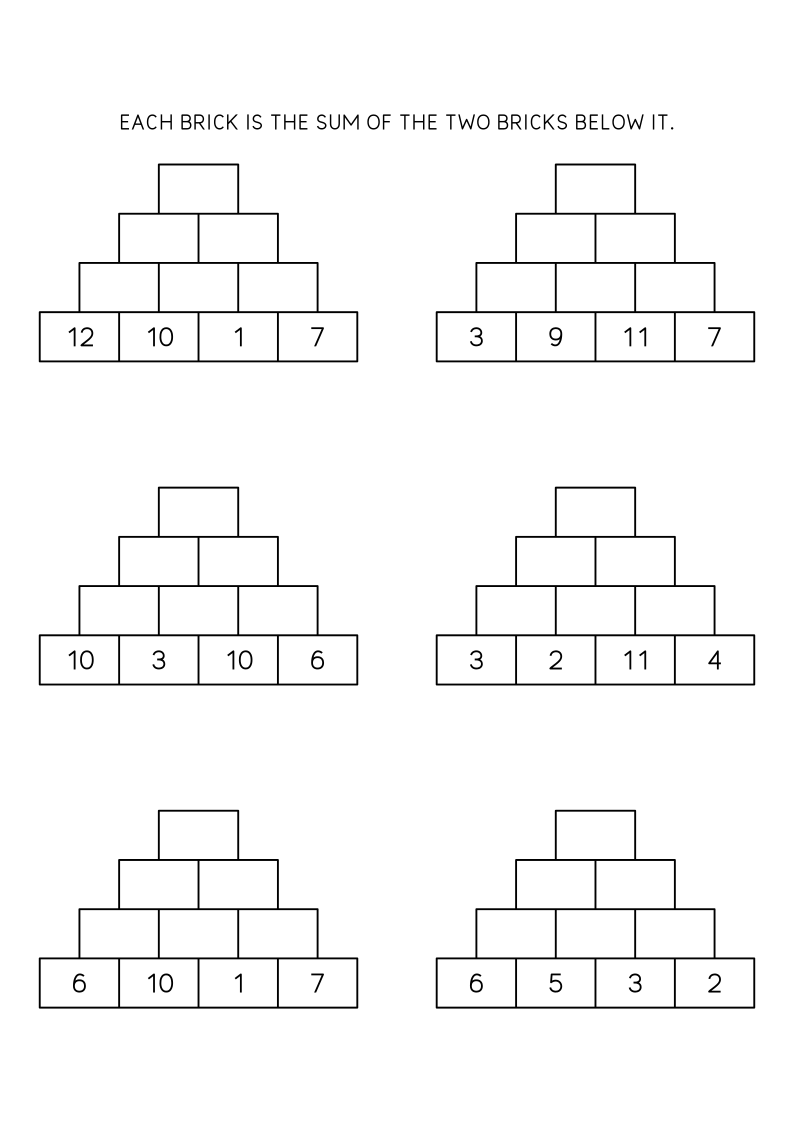
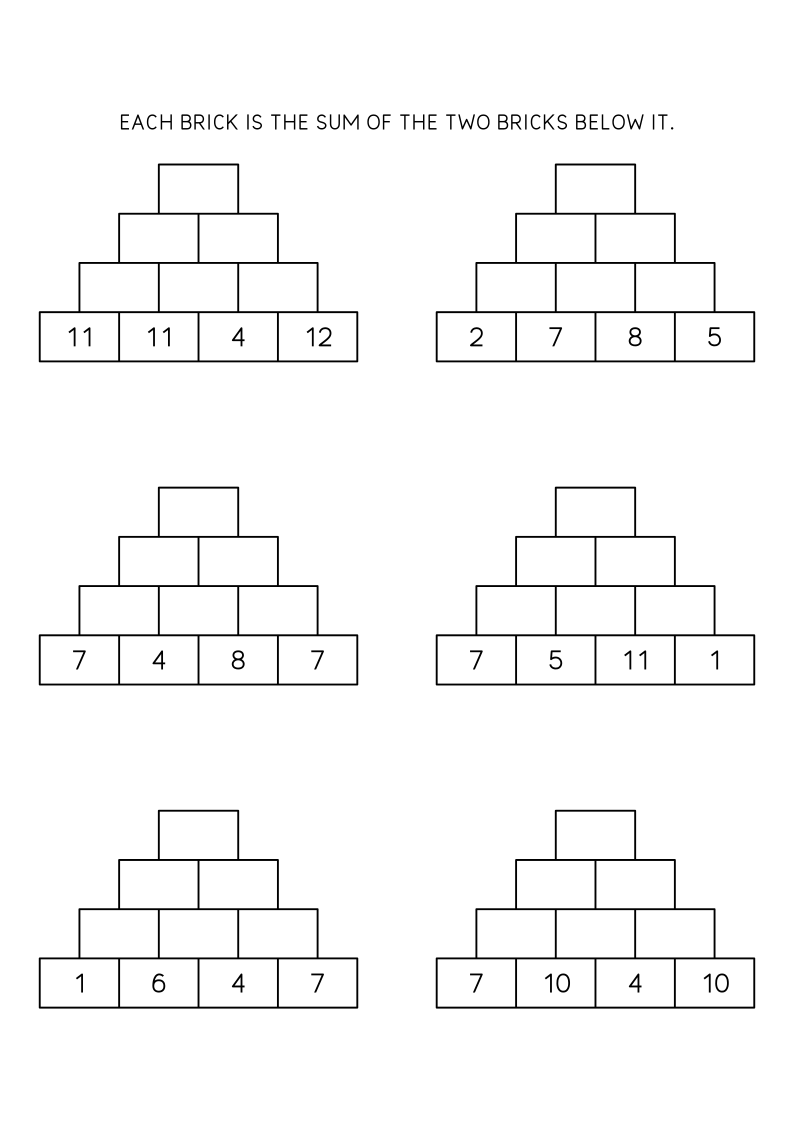
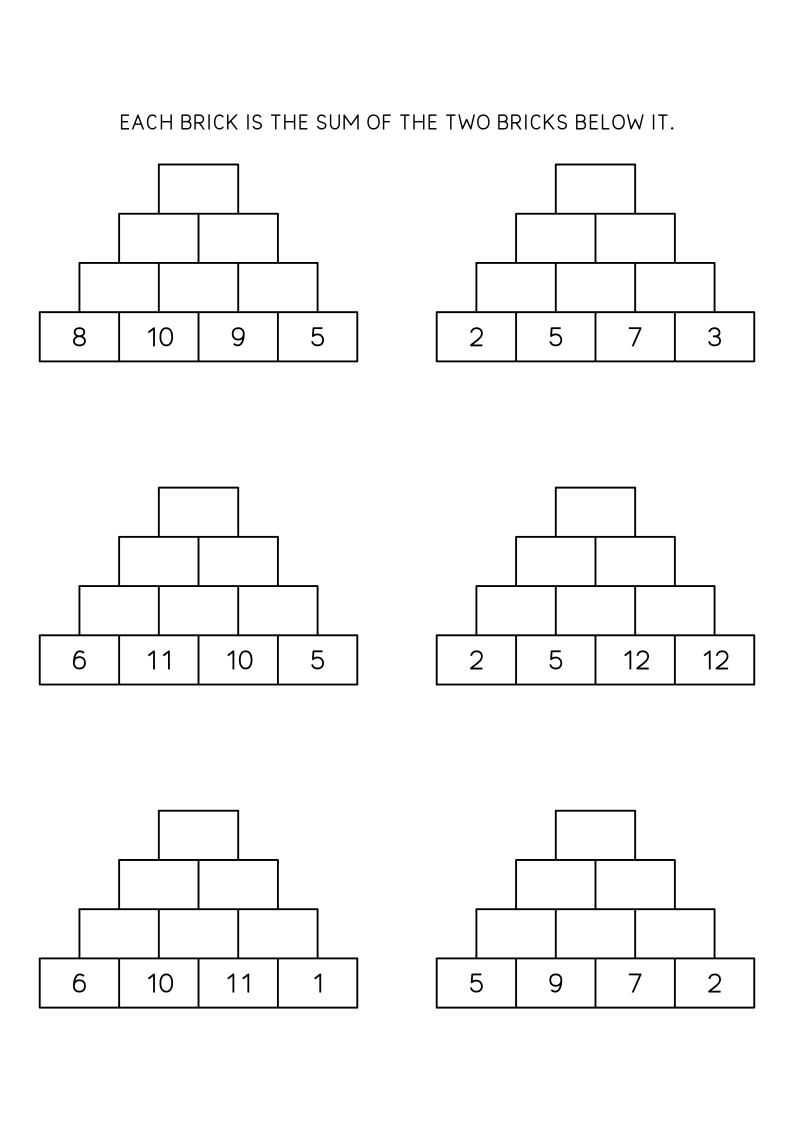
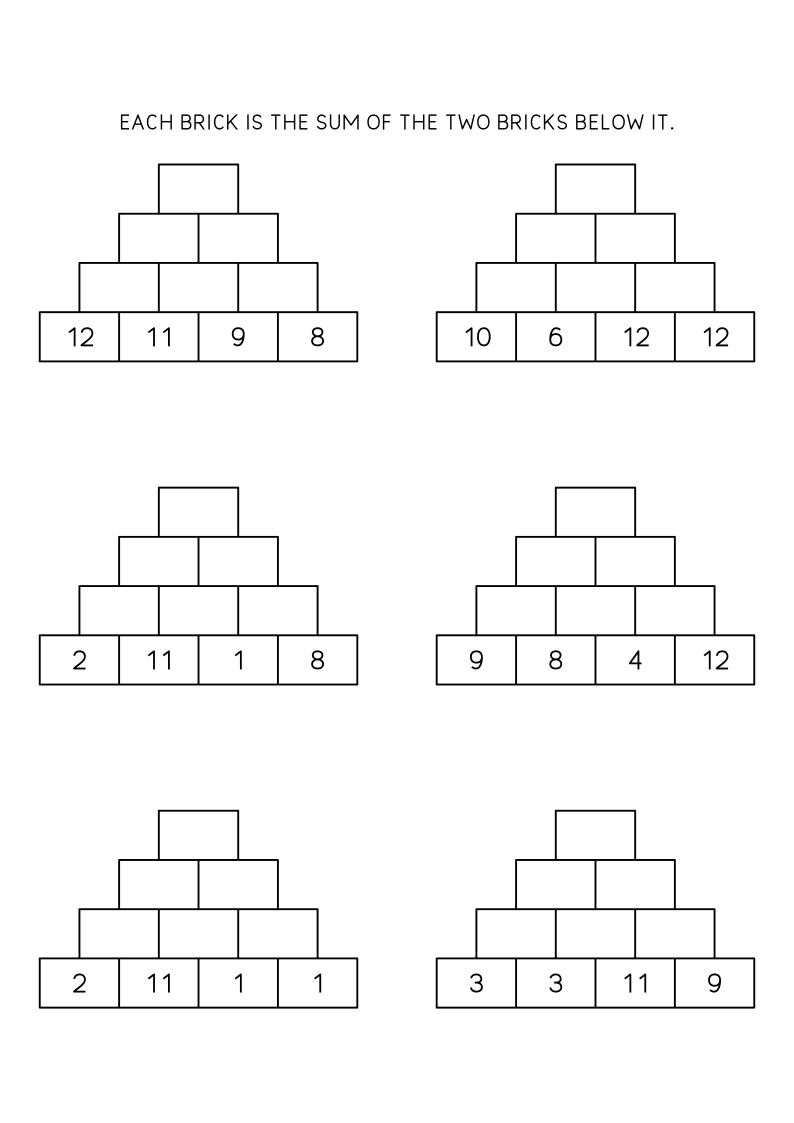
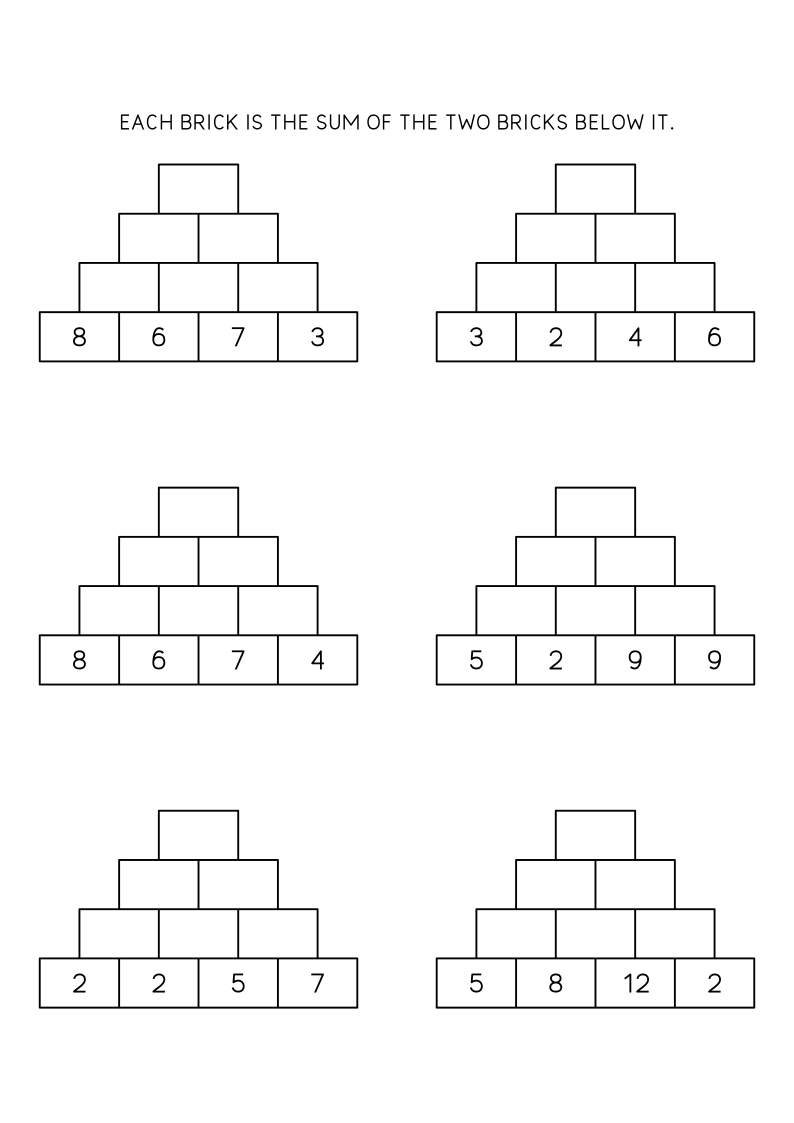
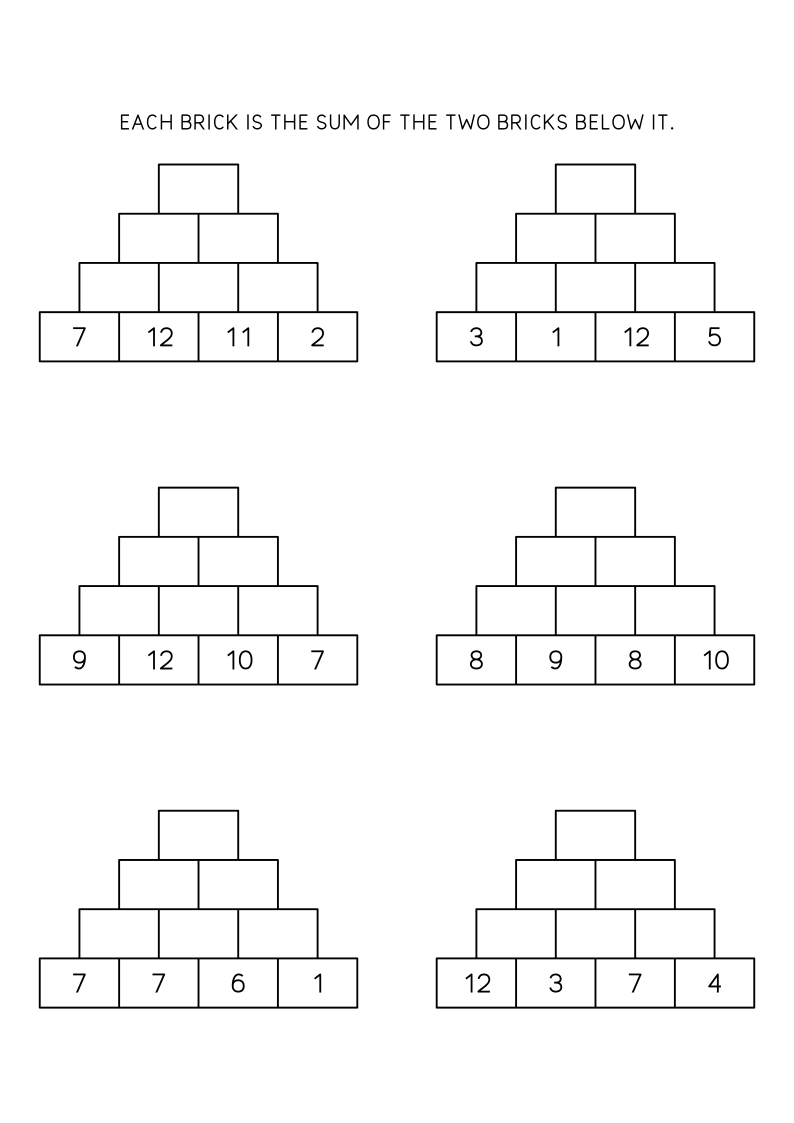
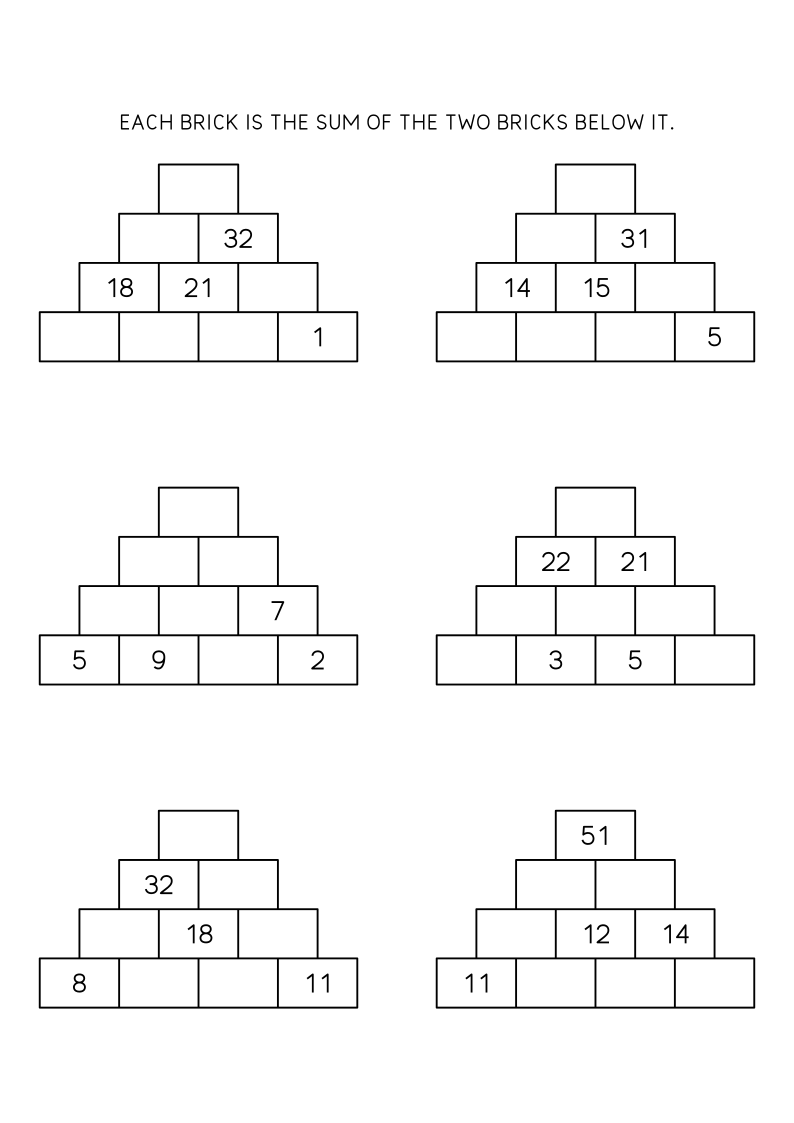
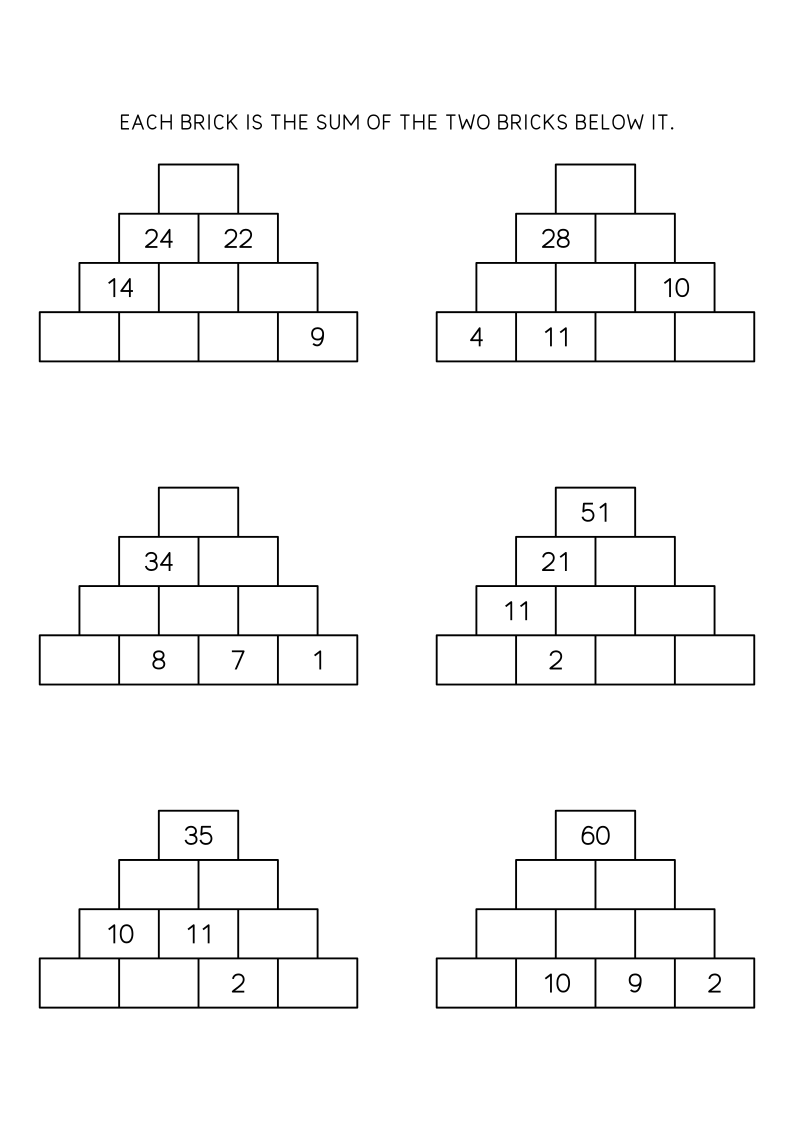
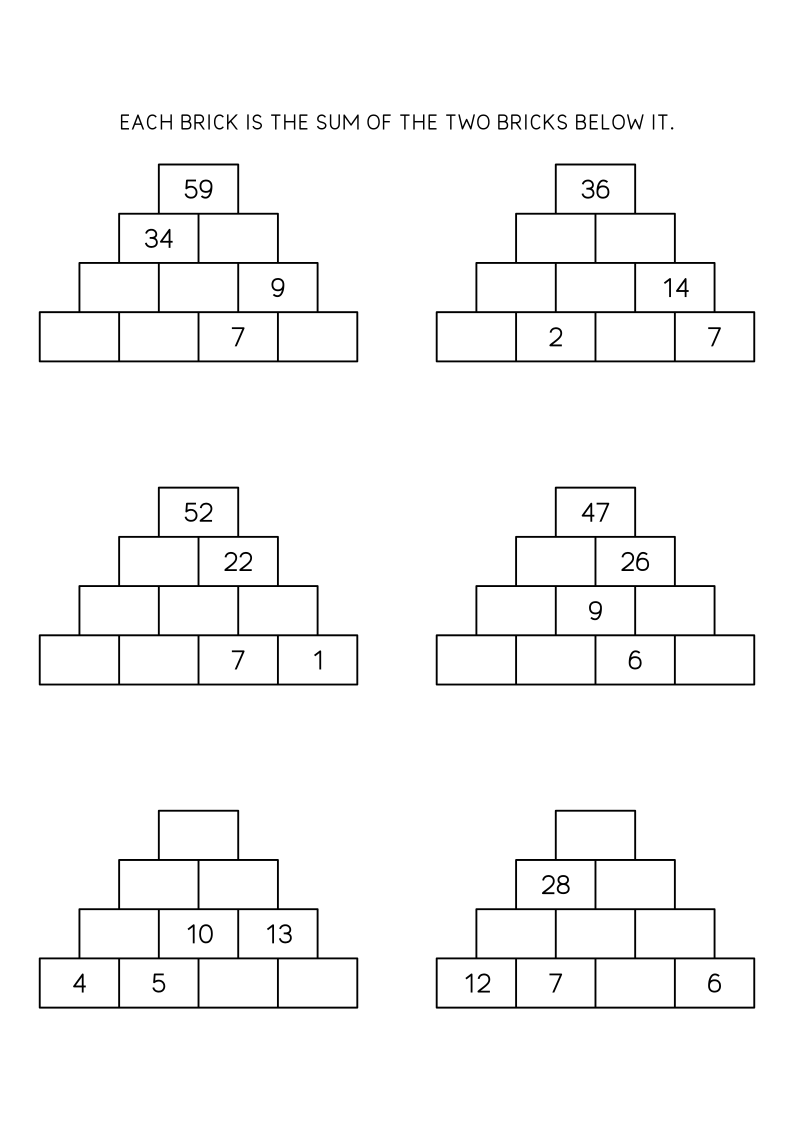
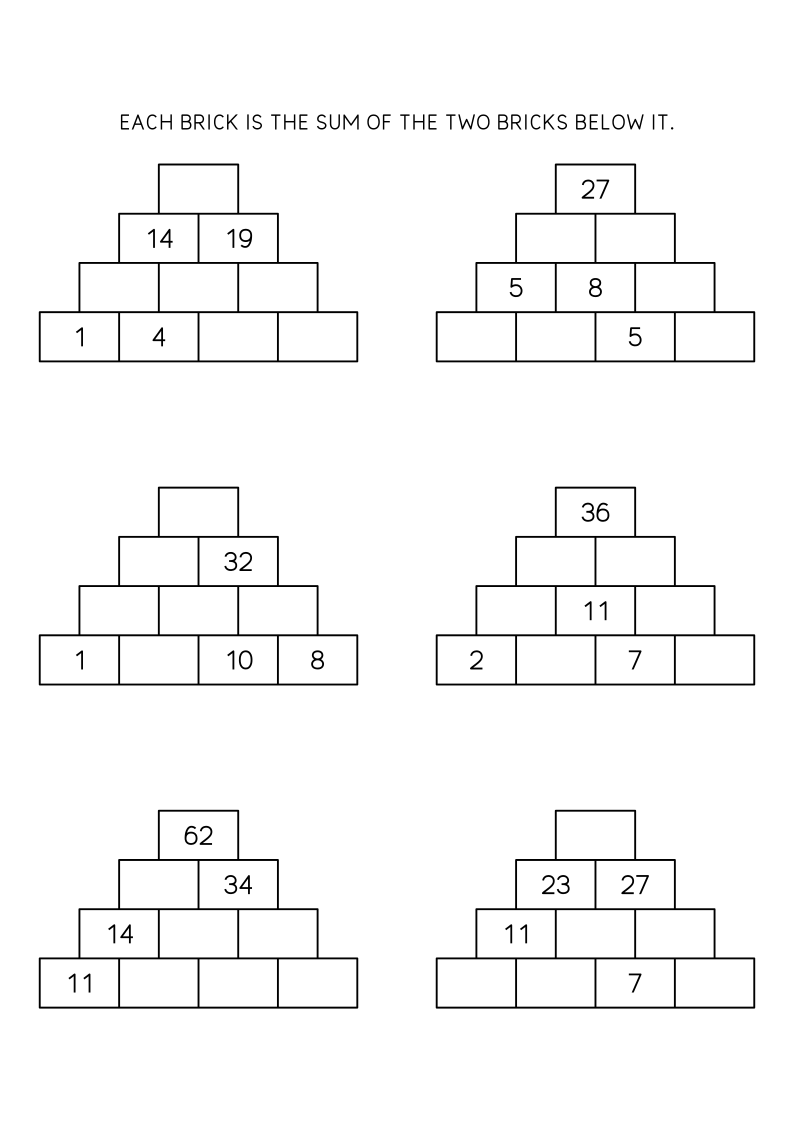
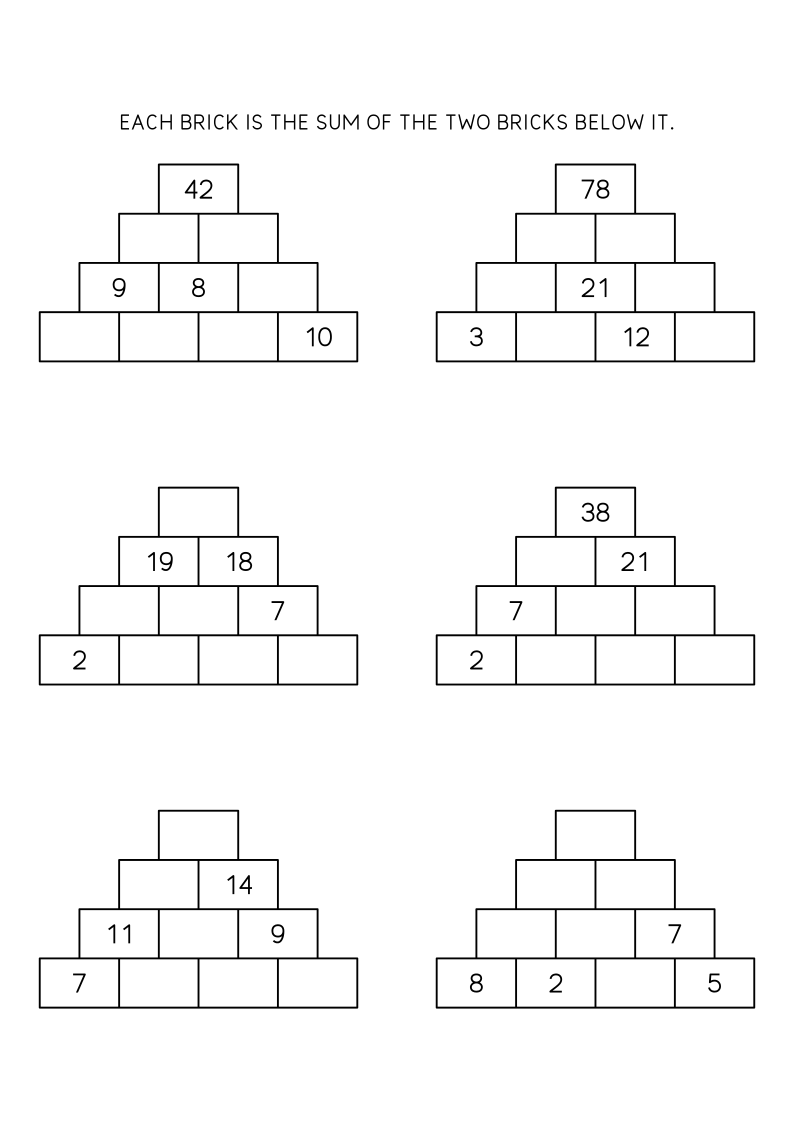
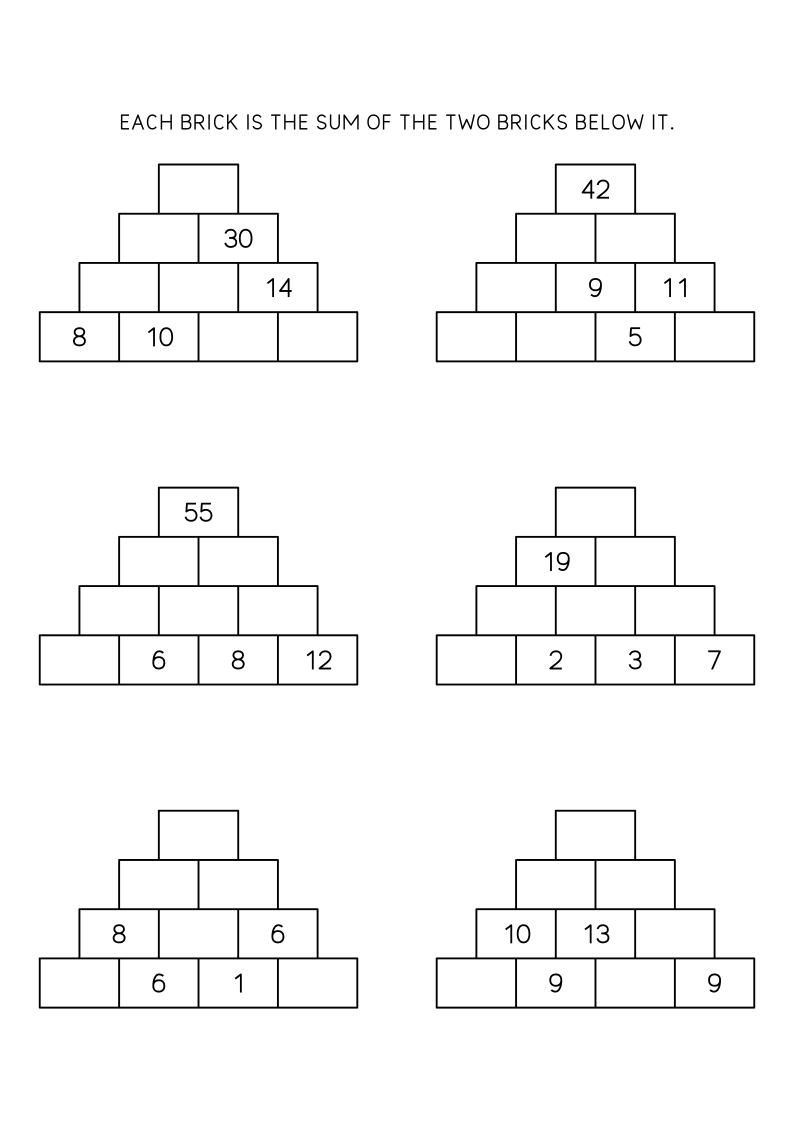
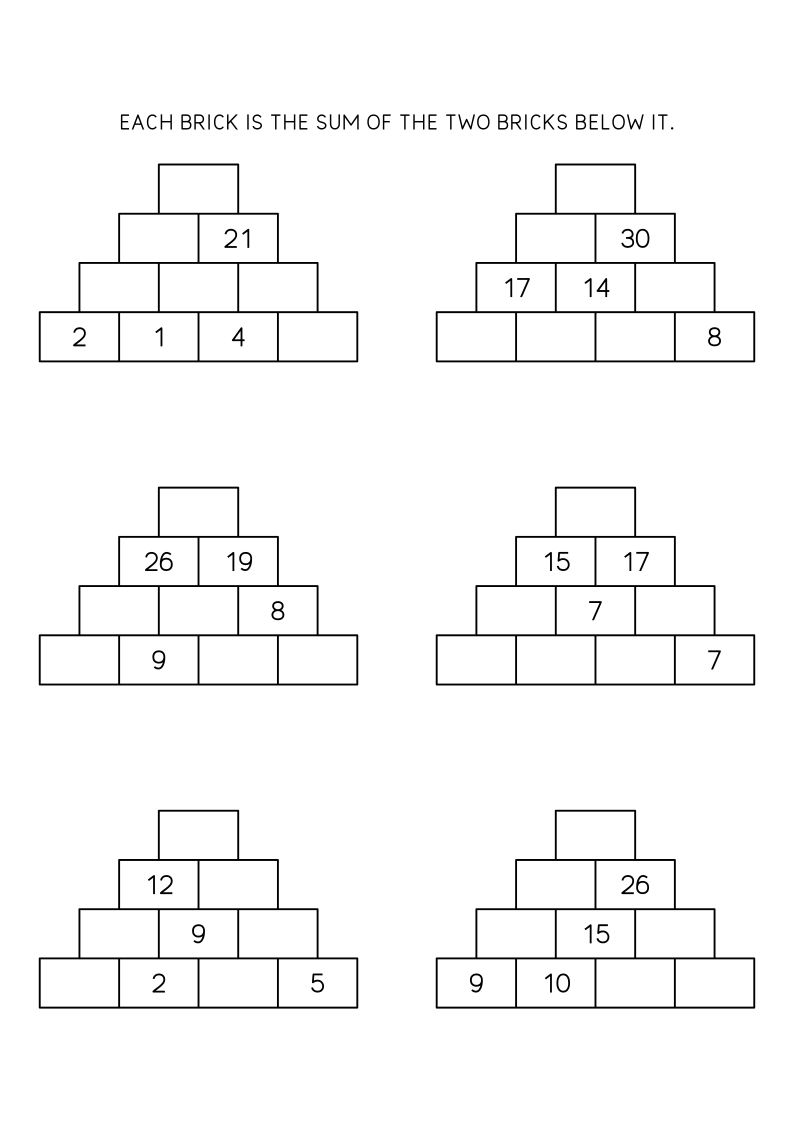
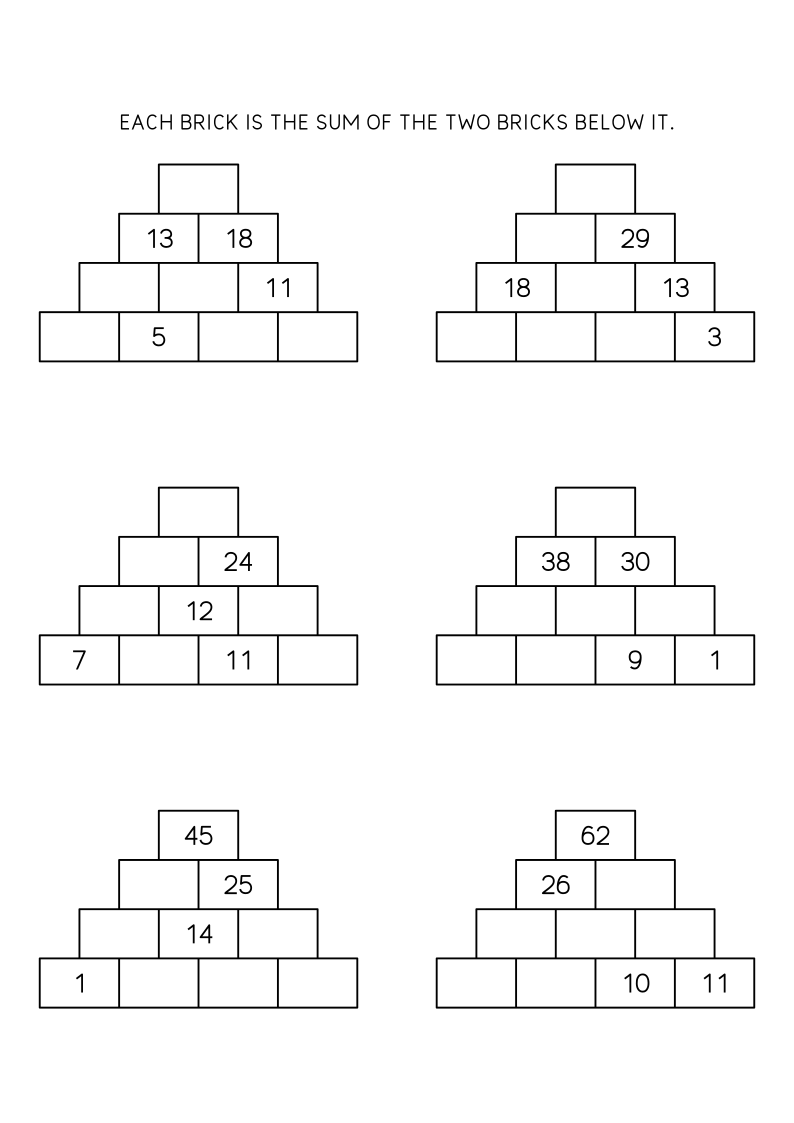
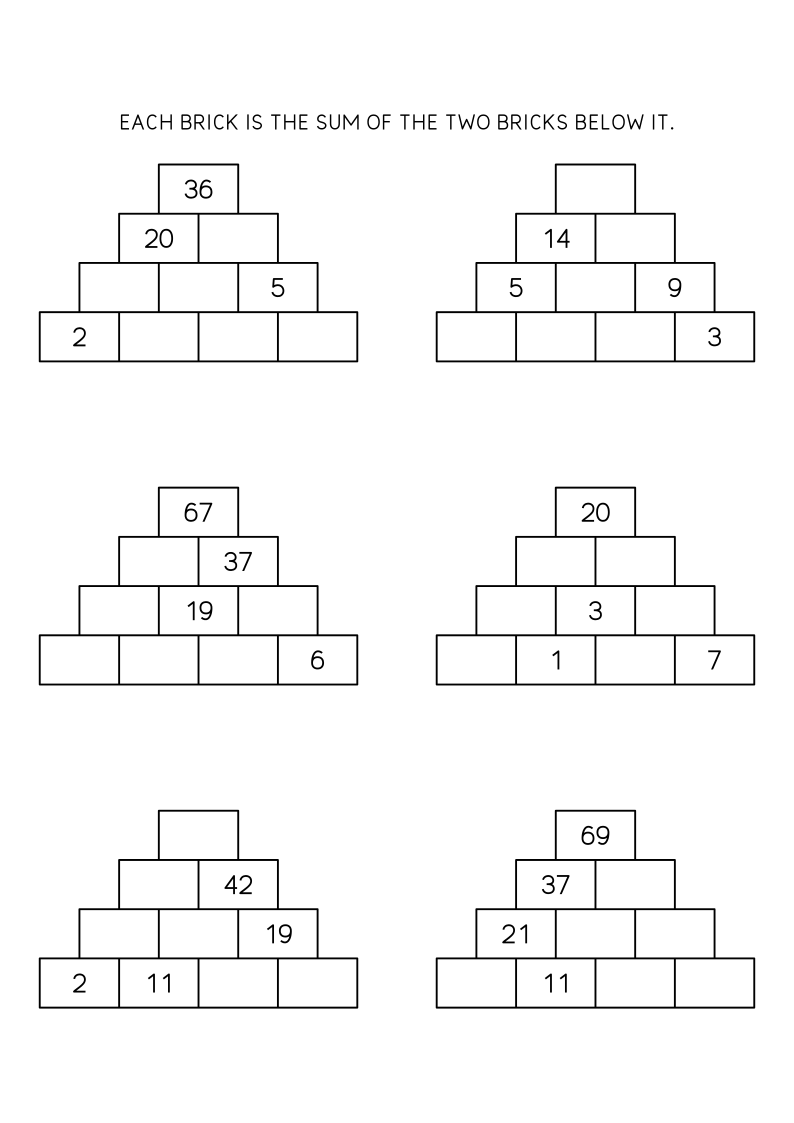
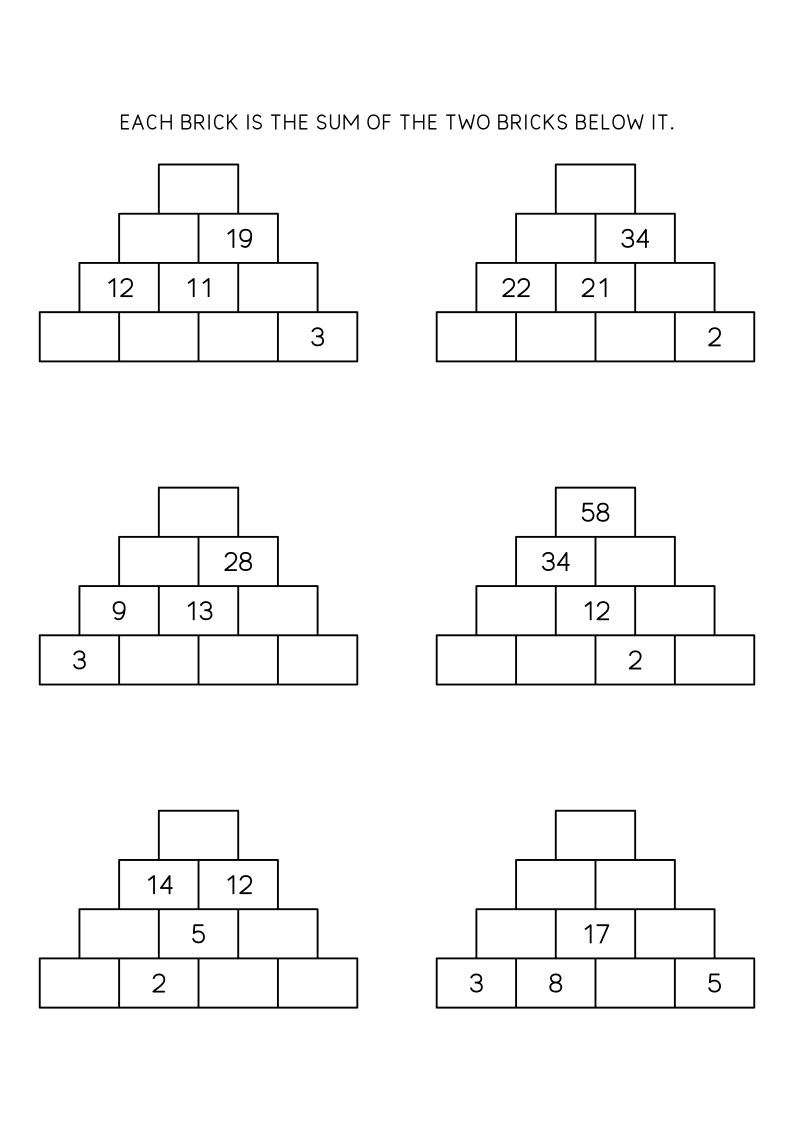
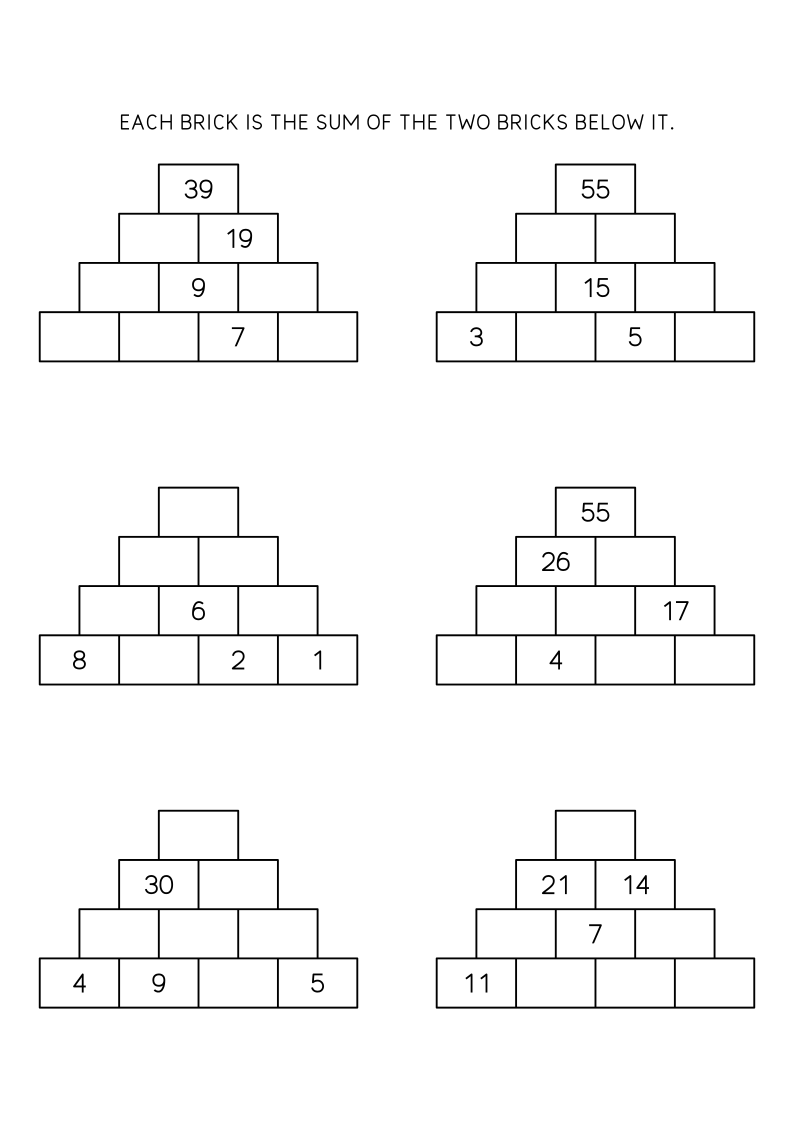
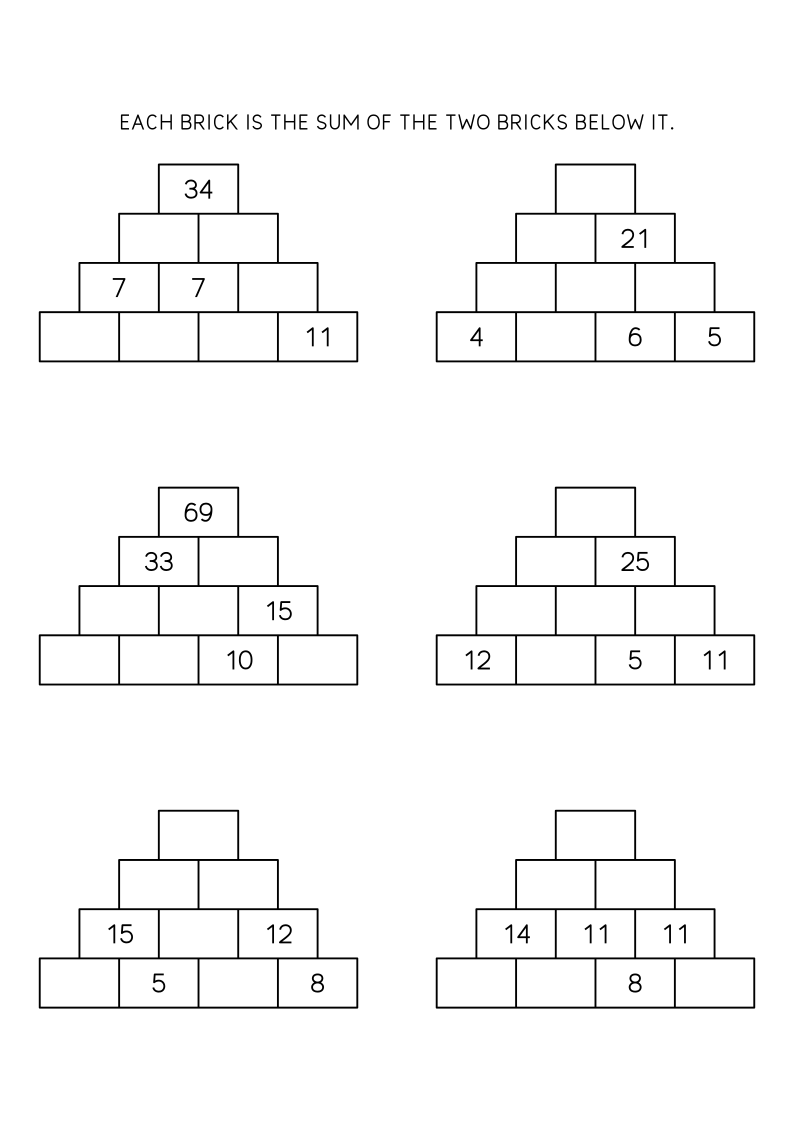
Ten Bricks per Pyramid
One row more than the first set means six bricks to compute instead of three, and a top brick that collects the whole base. Sums grow into two digits by the third row, so the pages practice two-digit addition as well as the facts.
From a Full Base or From Clues
With the base printed, the work is steady addition, row by row. With four clues instead, the child must spot a brick that two known ones decide, fill it, then look again: some answers come from adding, others from subtracting a brick from the one above it.
Checking a Pyramid
Any brick can be checked against the pair under it. A quick test for the whole pyramid: the top equals the first base number, plus three times the second and the third, plus the last.