Ten Lines to Balance
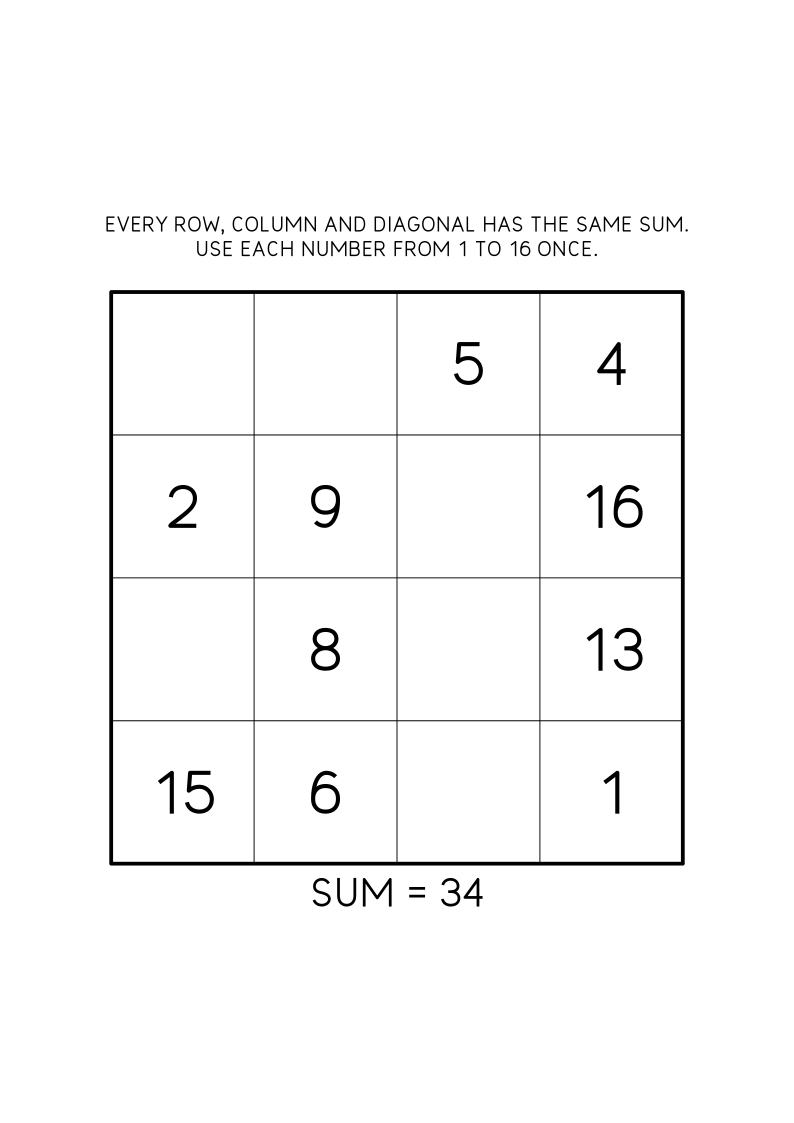
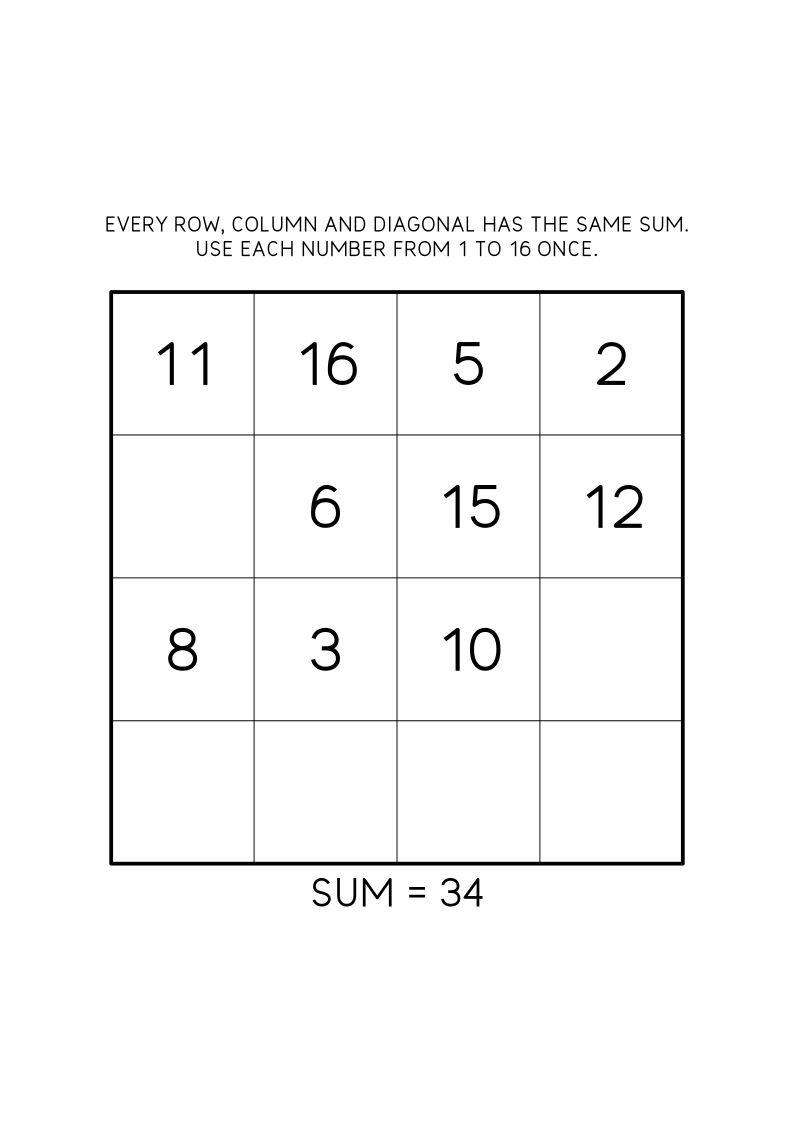
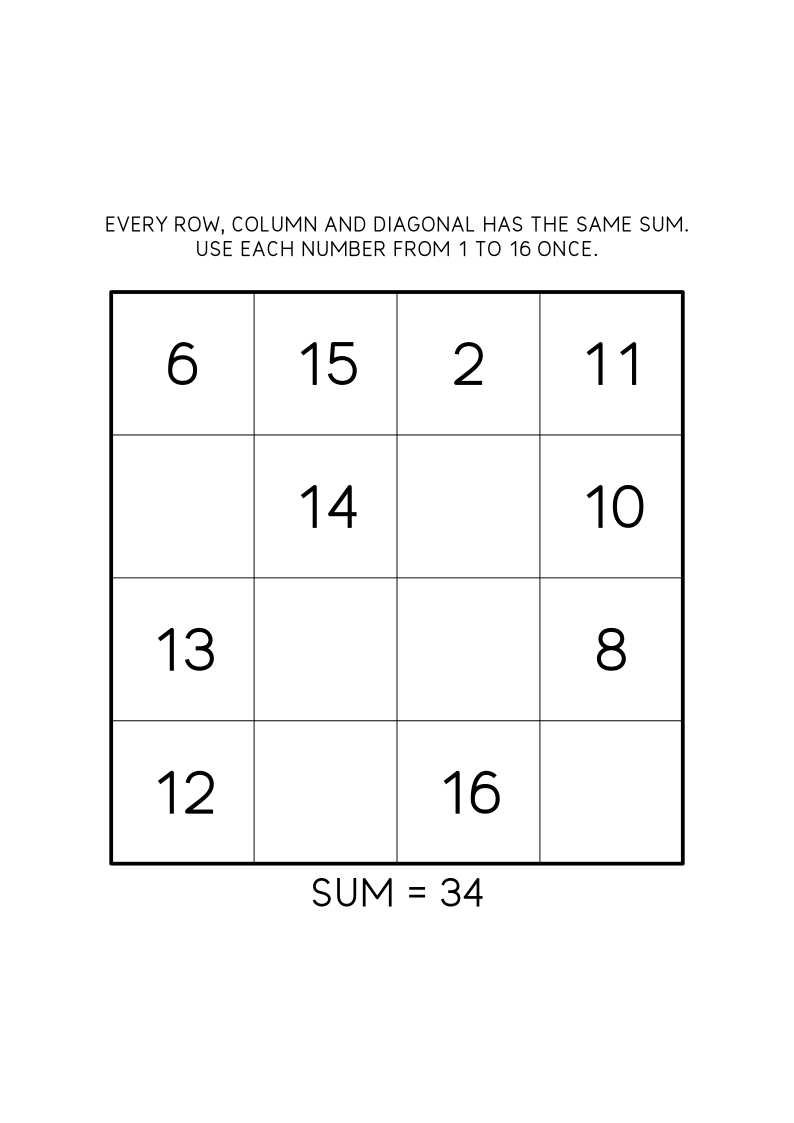
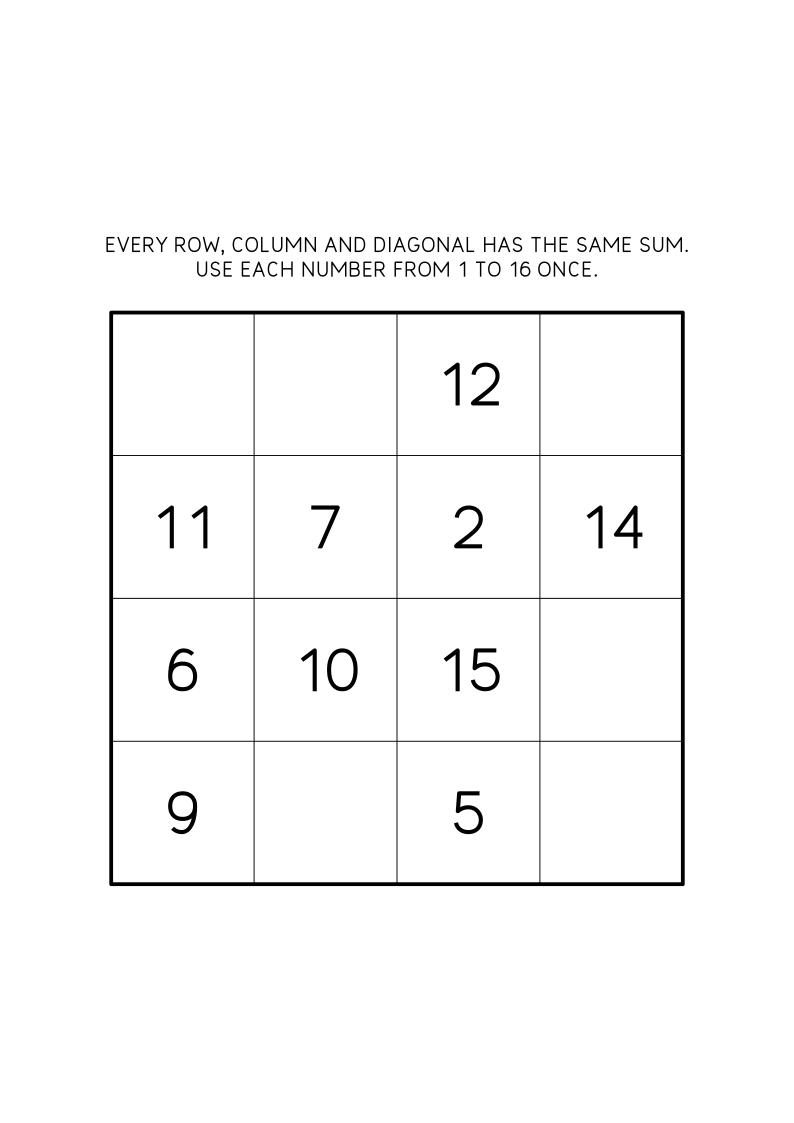
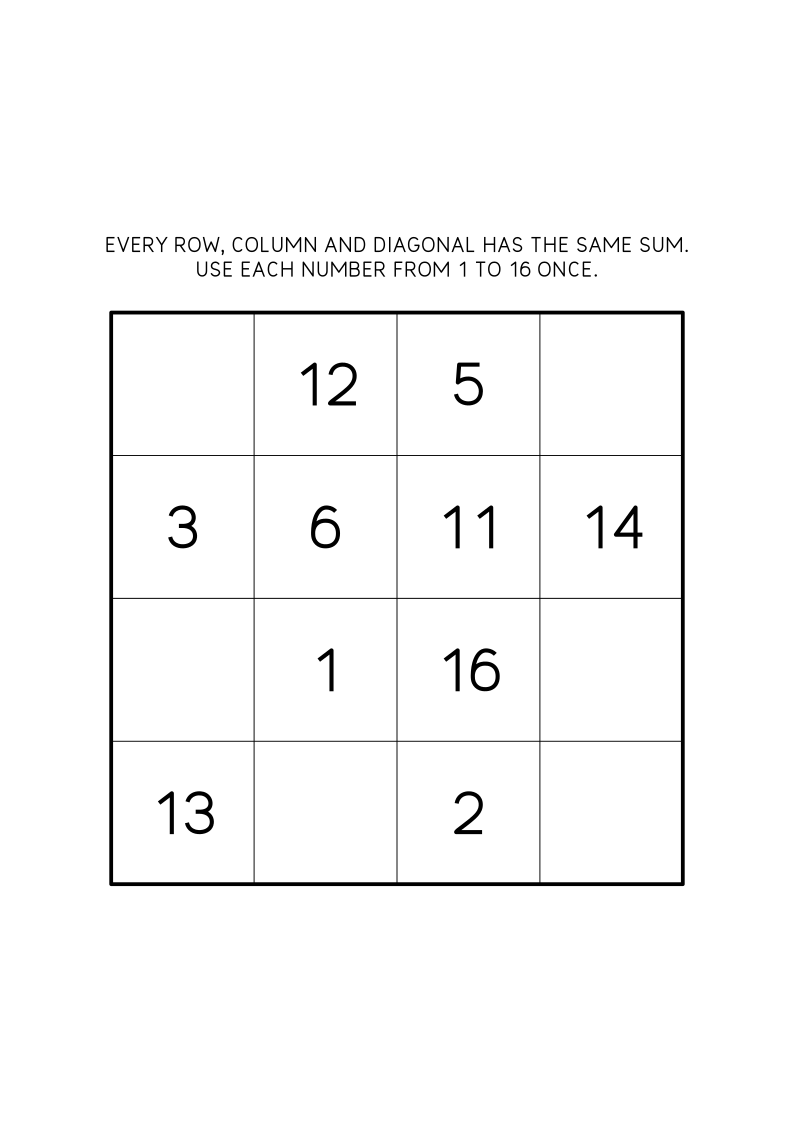
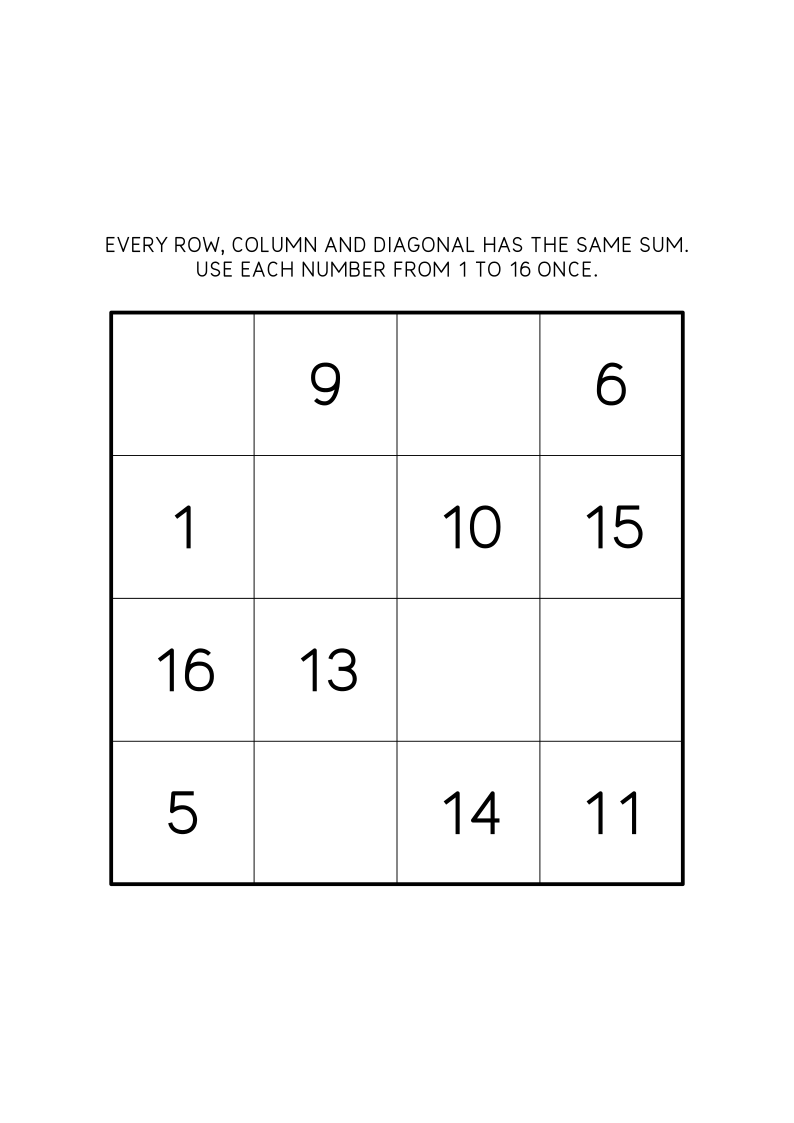
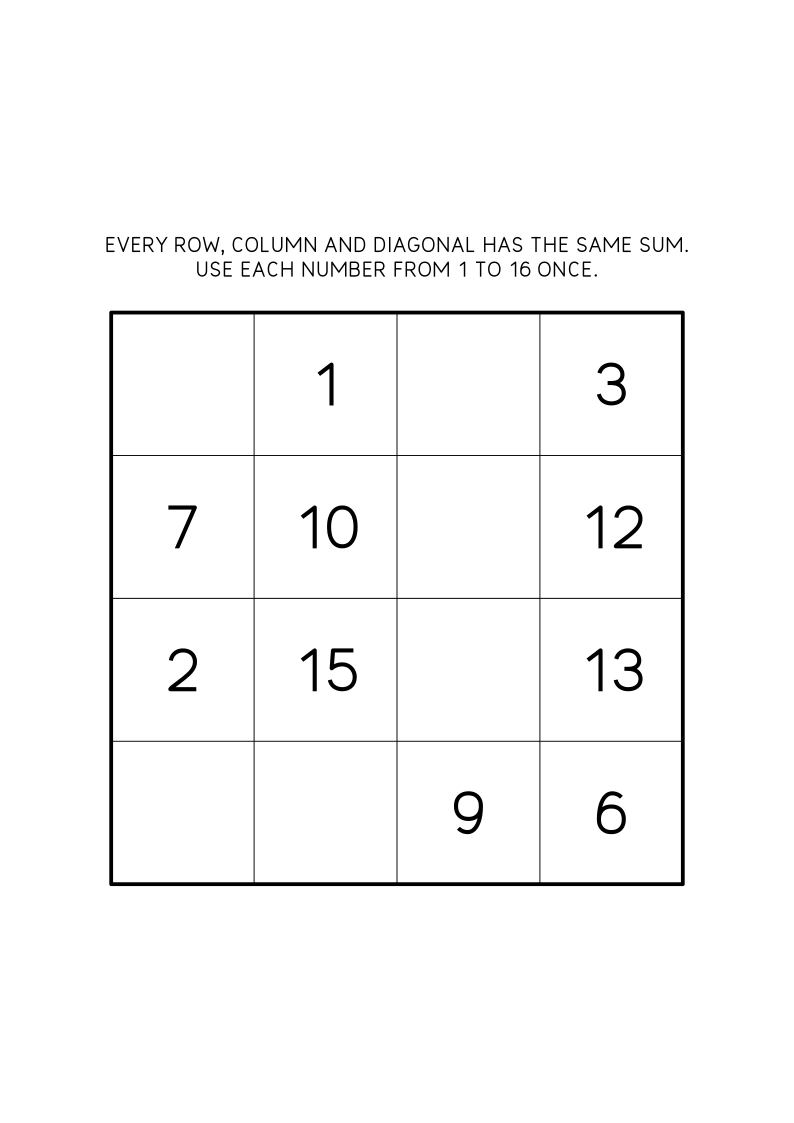
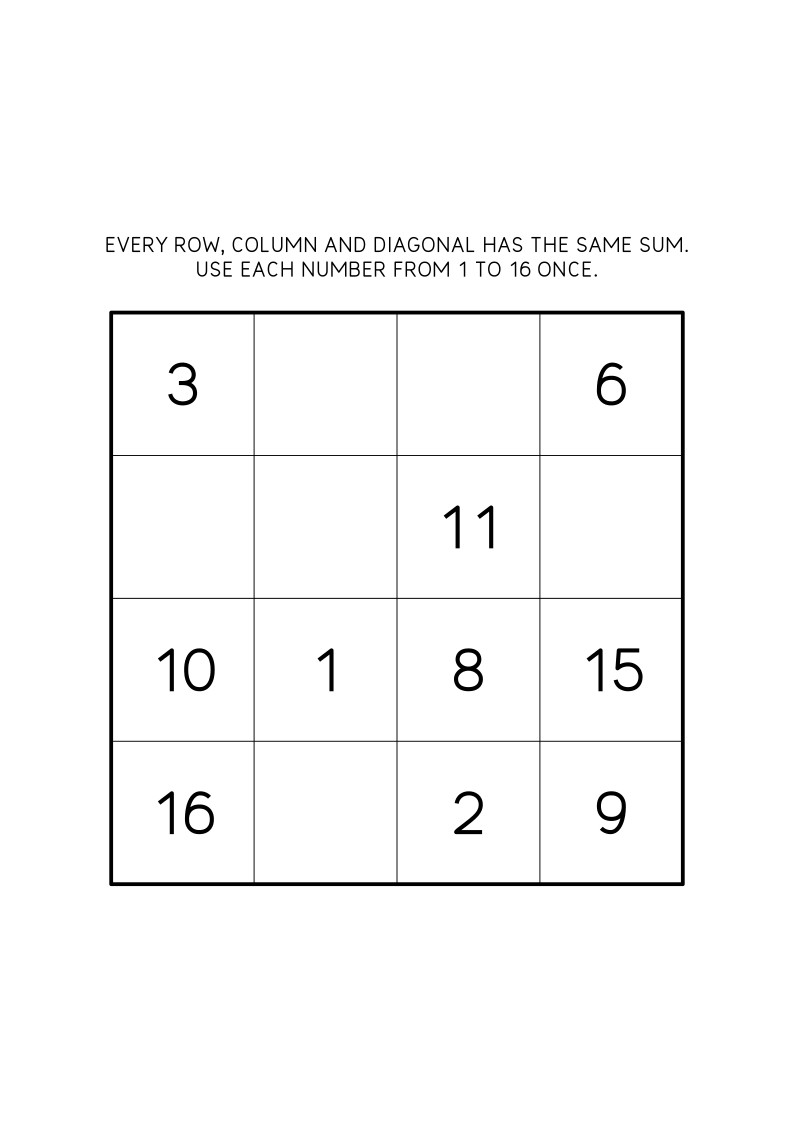
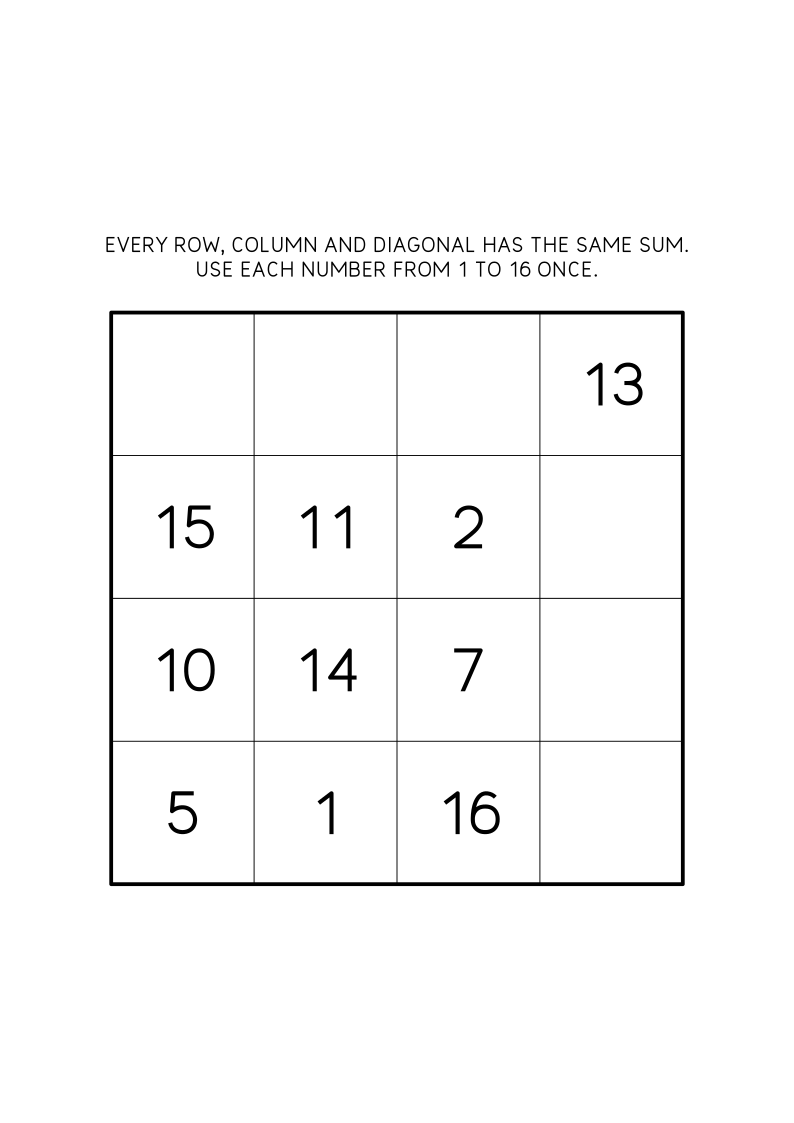
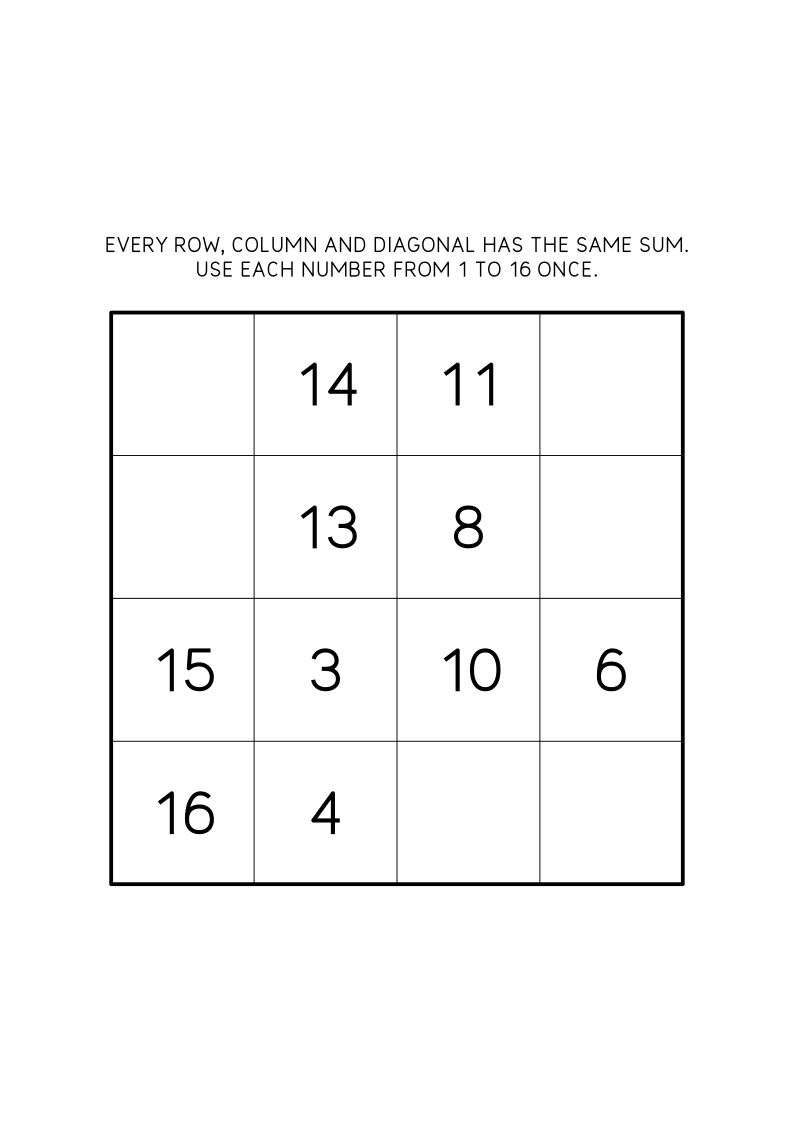
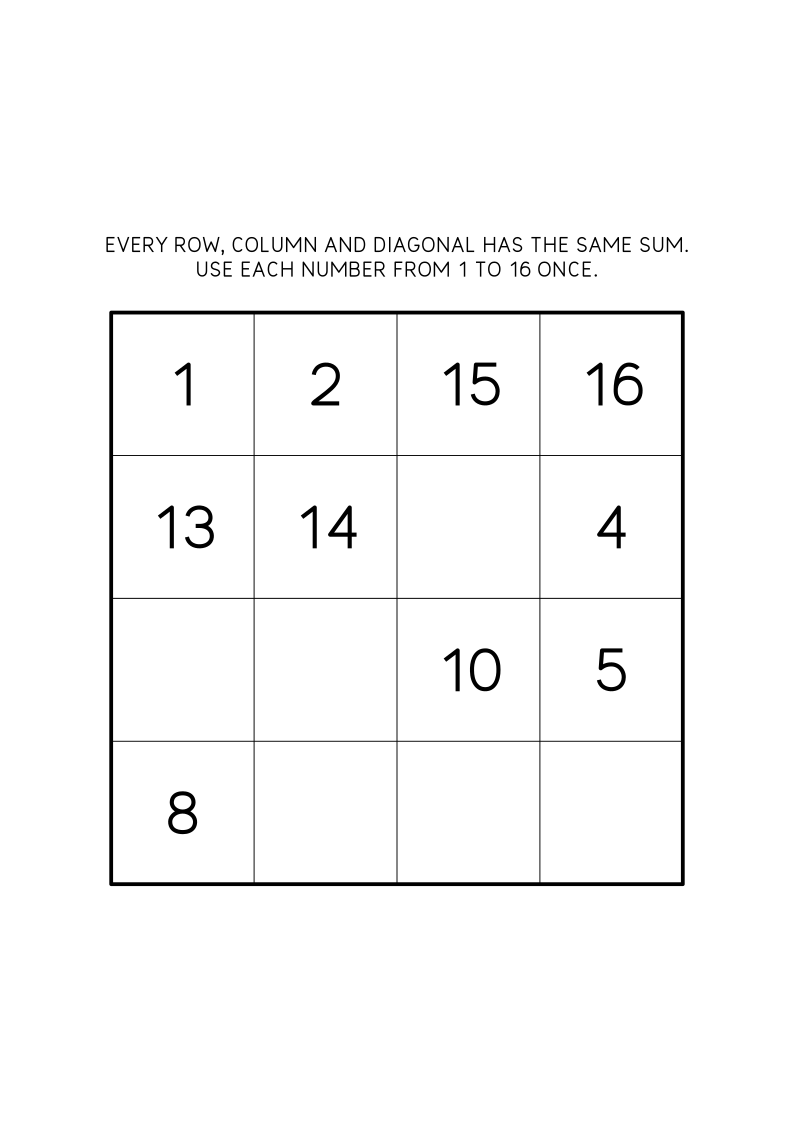
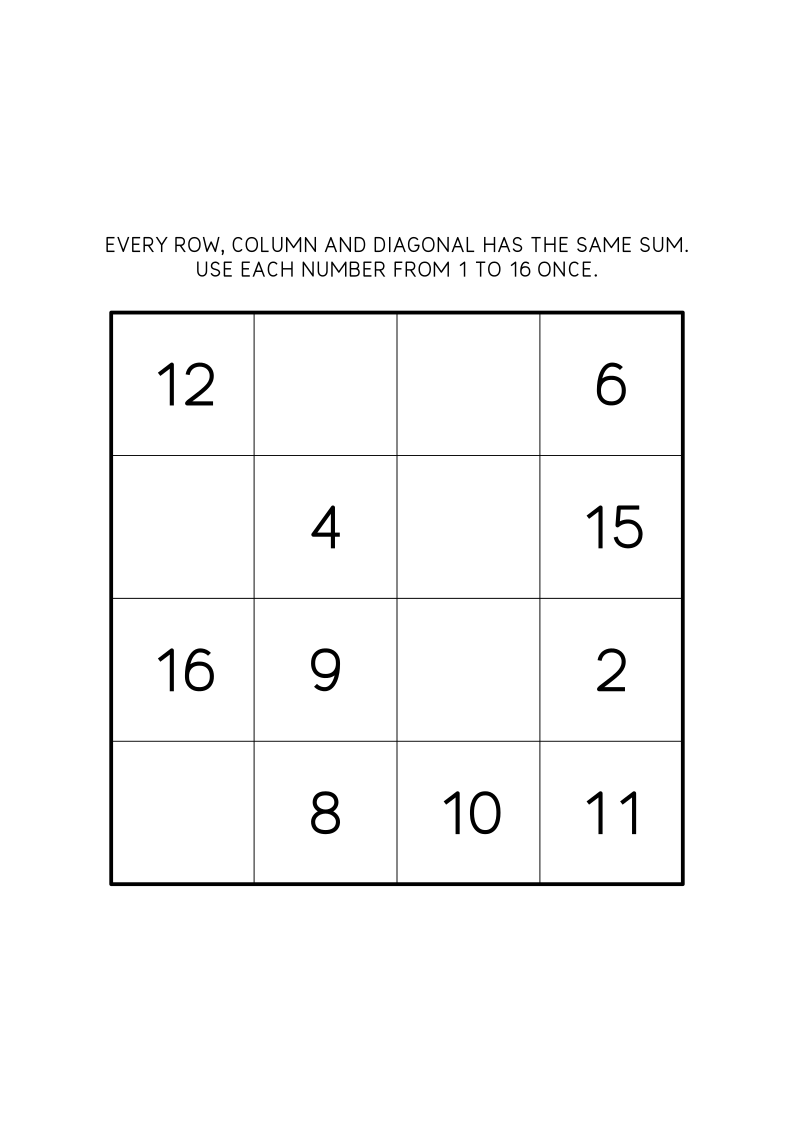
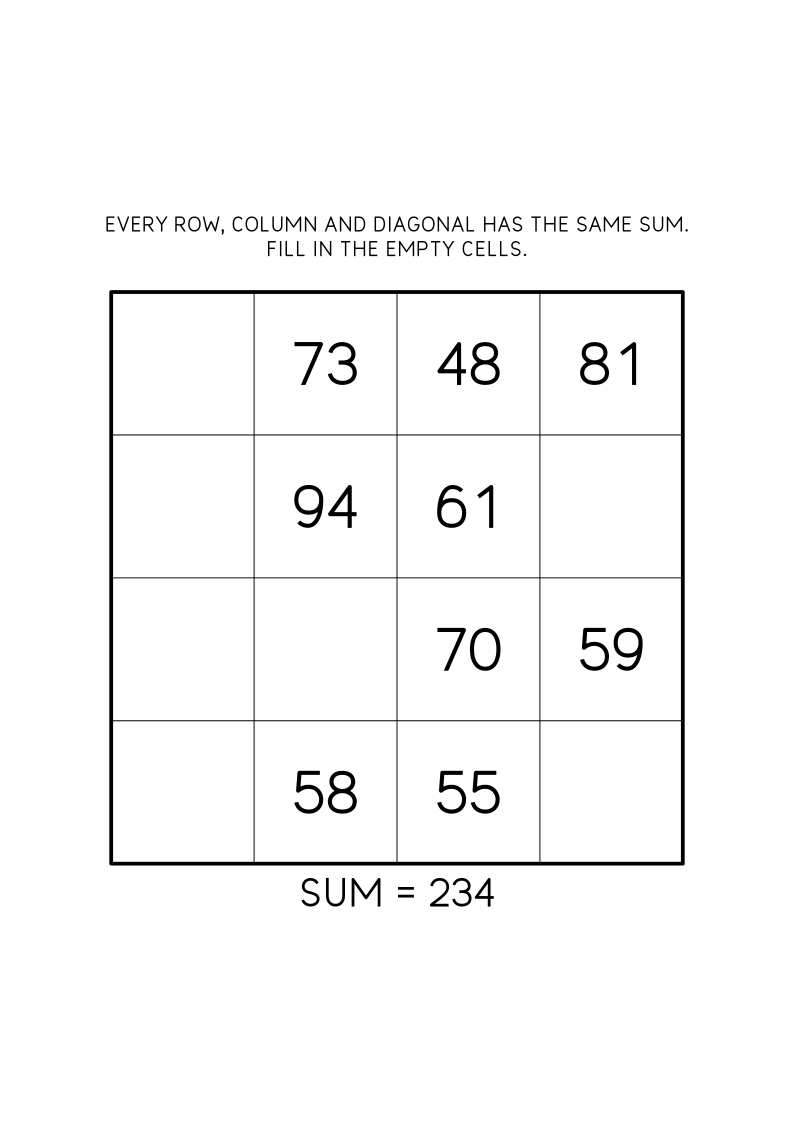
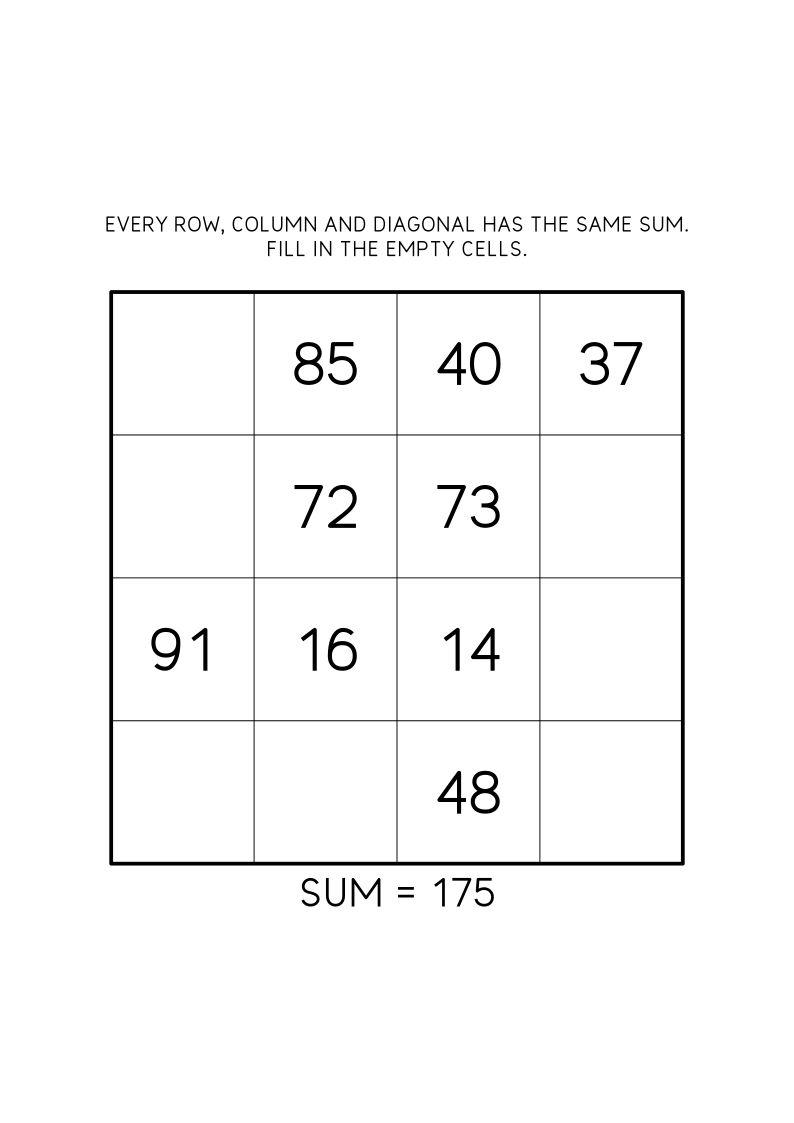
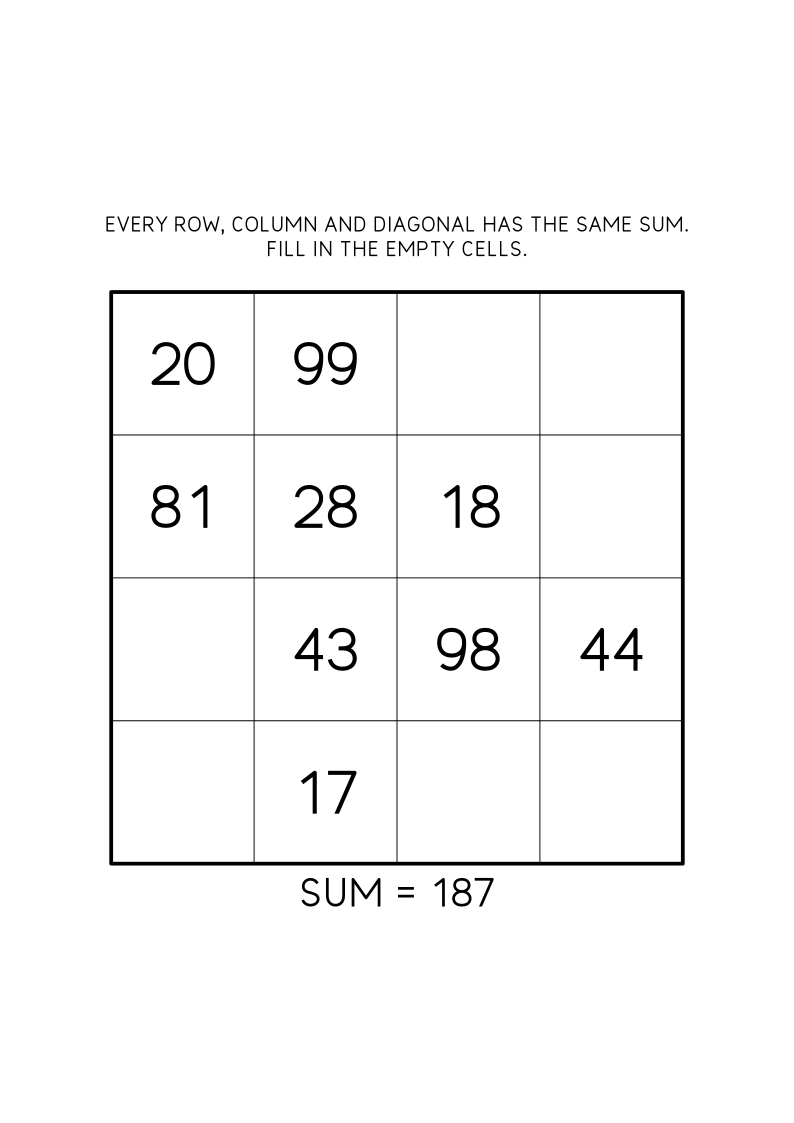
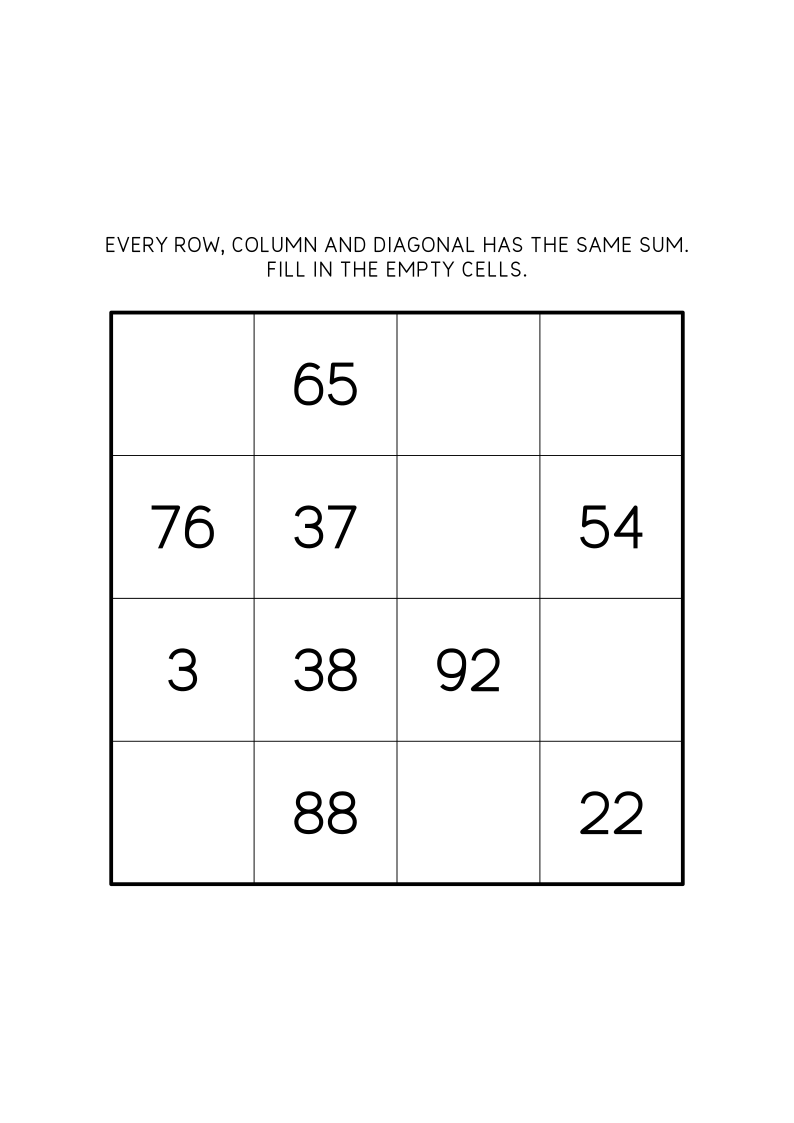
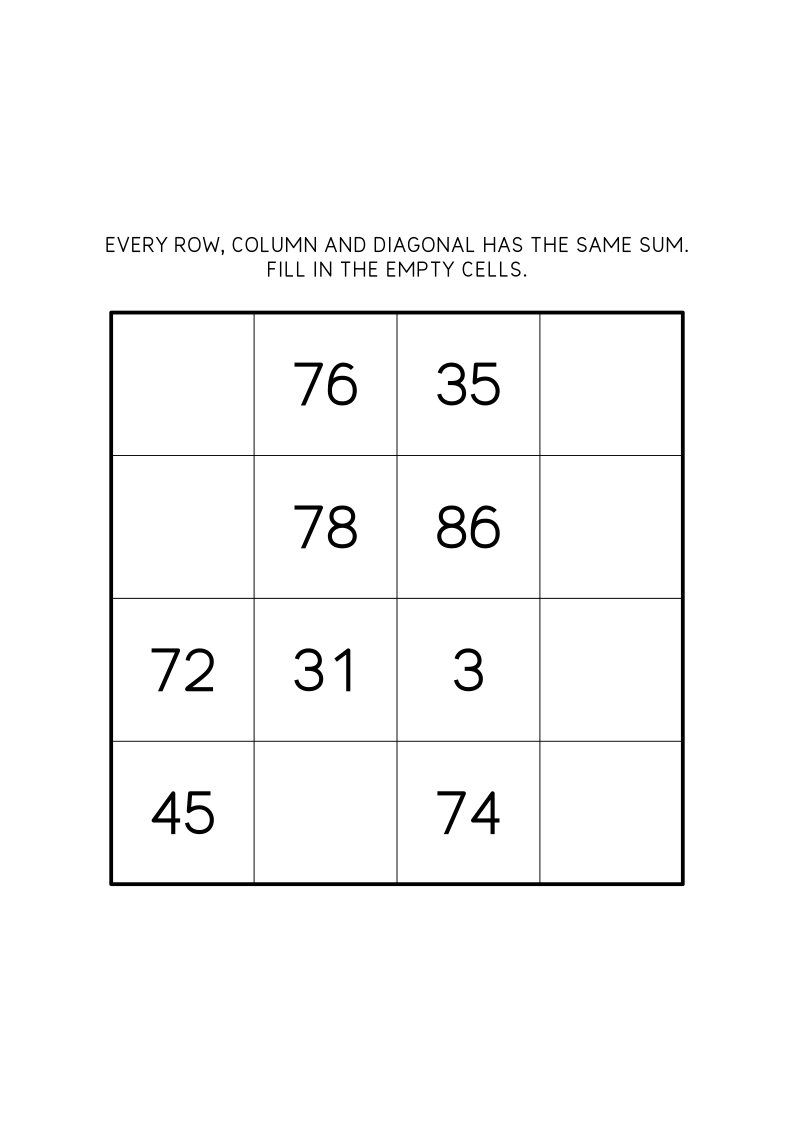
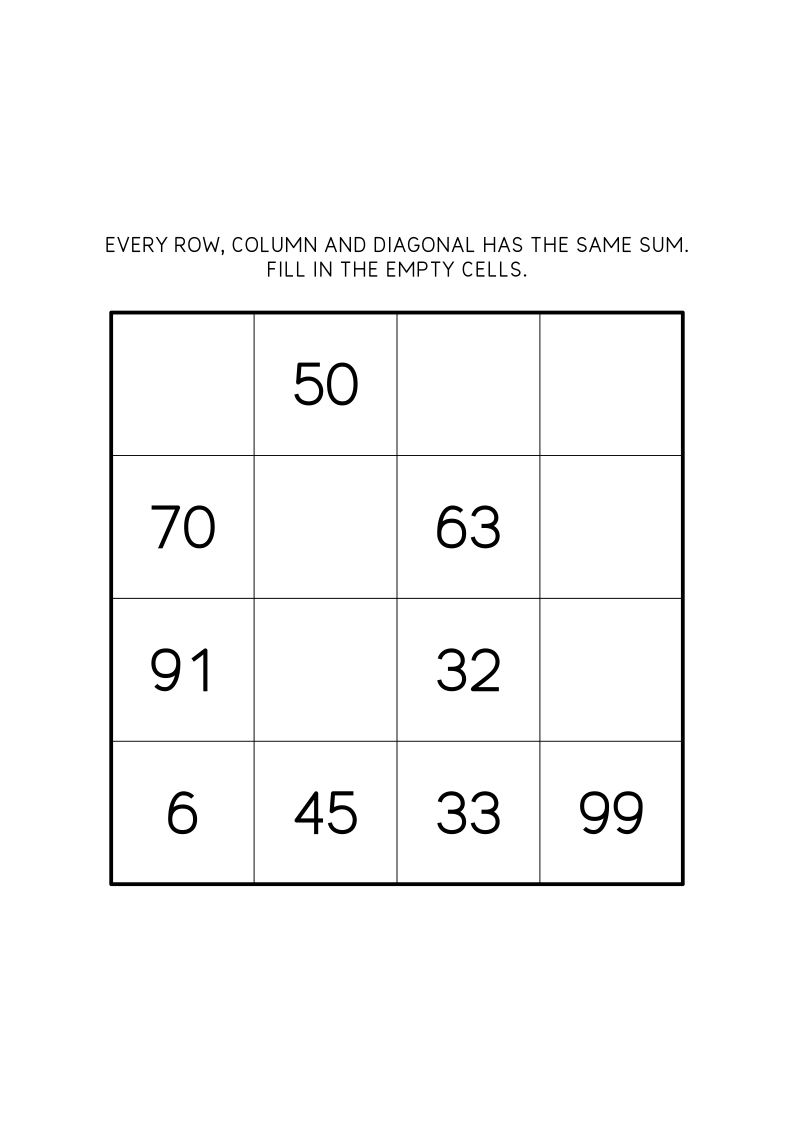
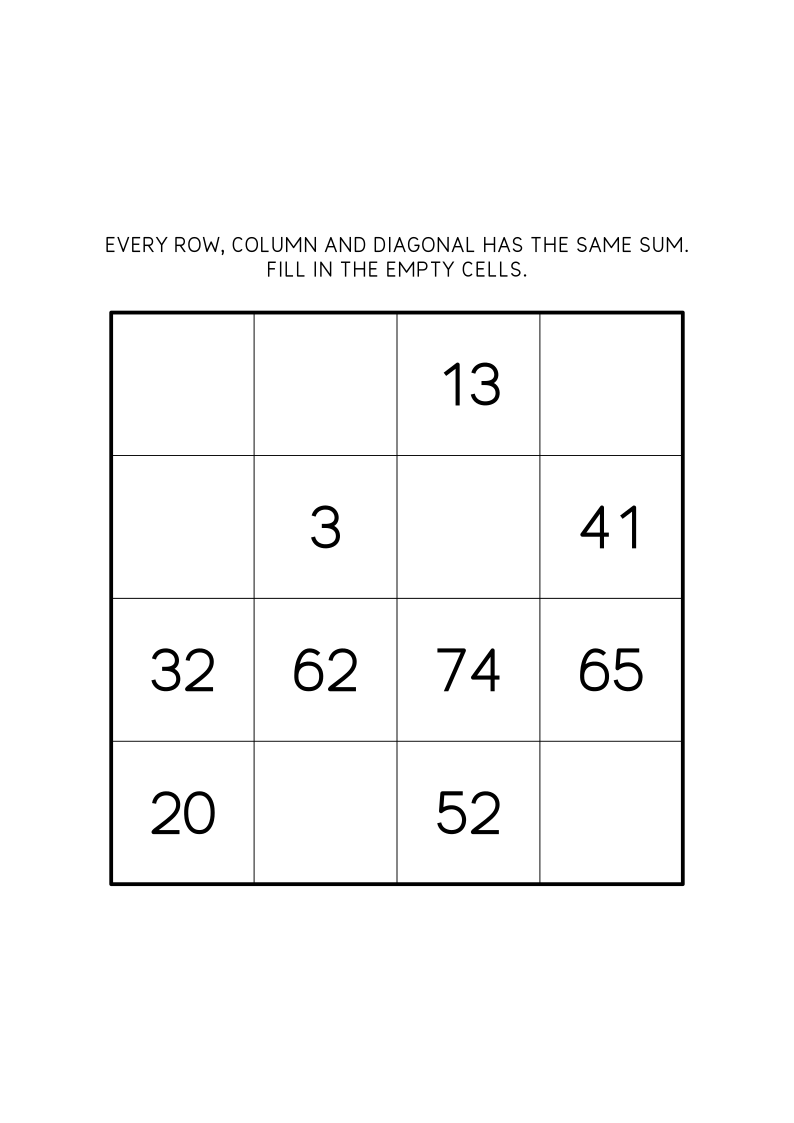
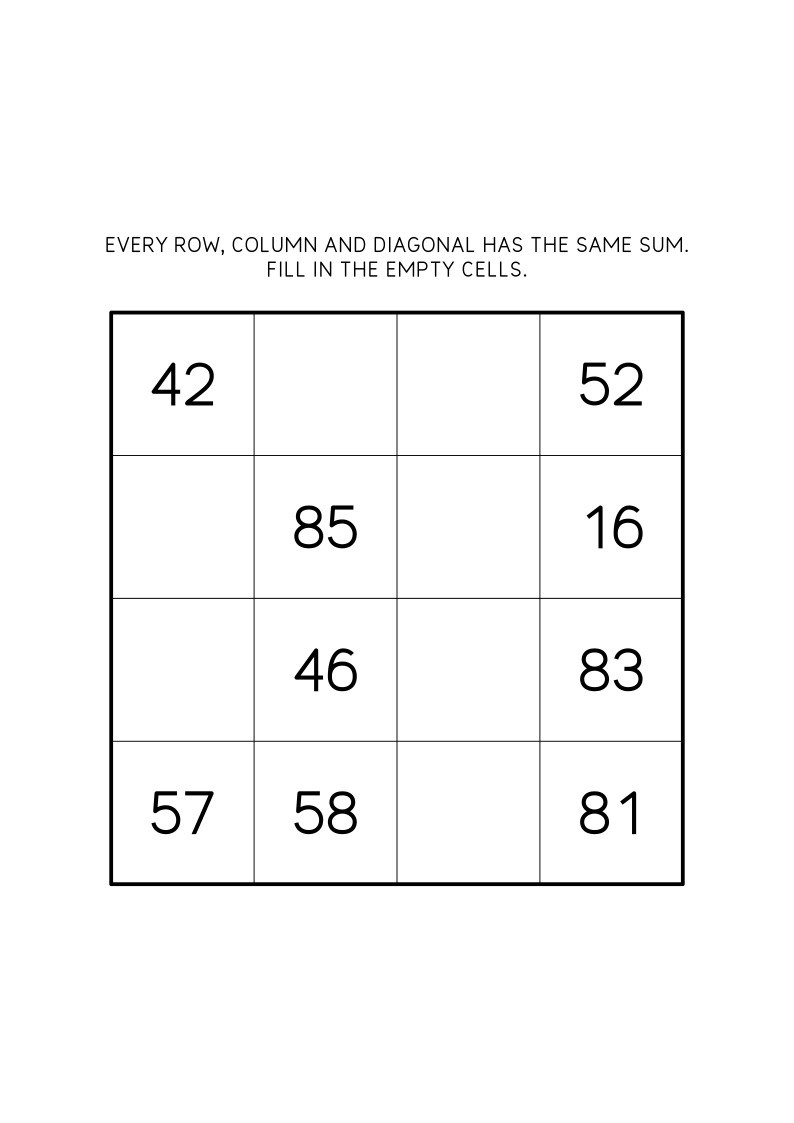
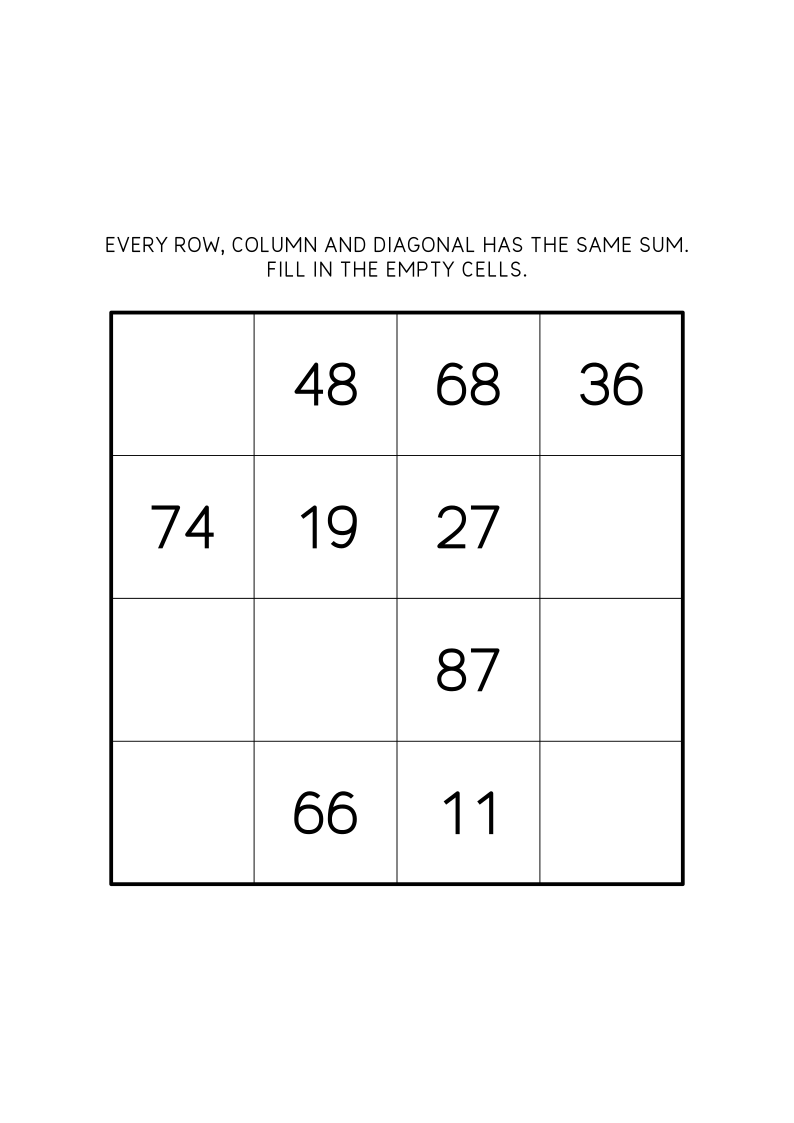
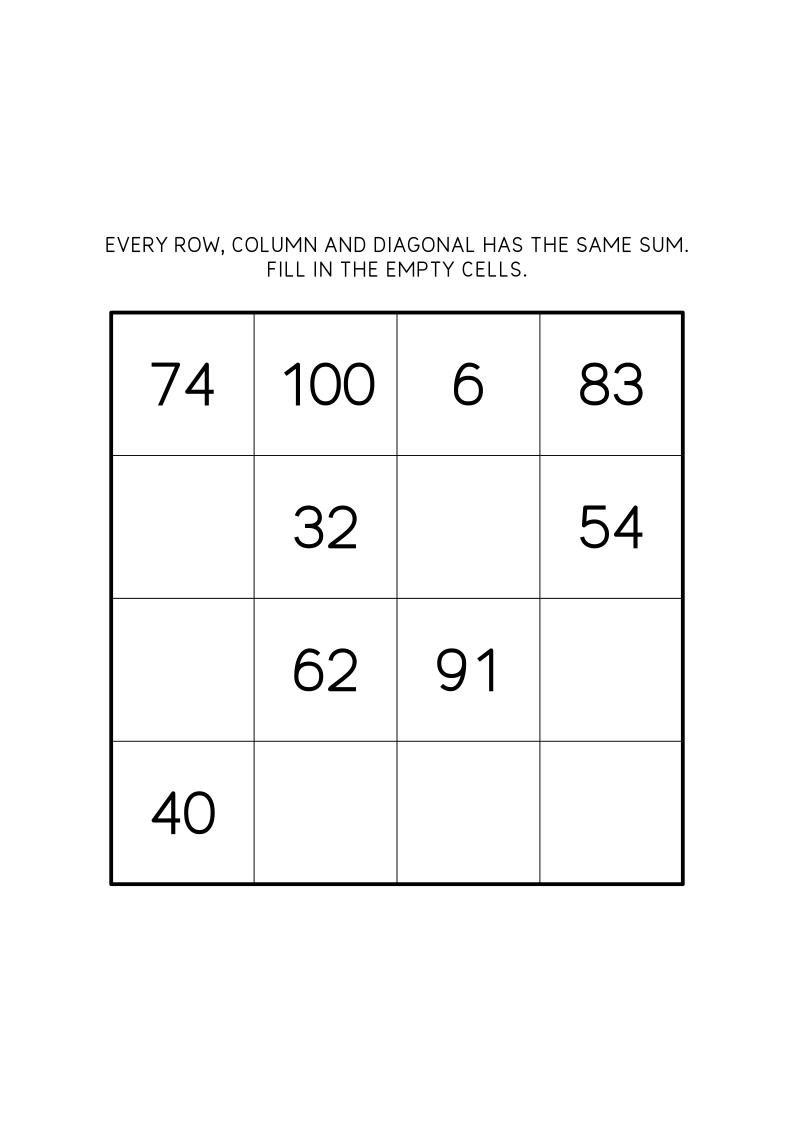
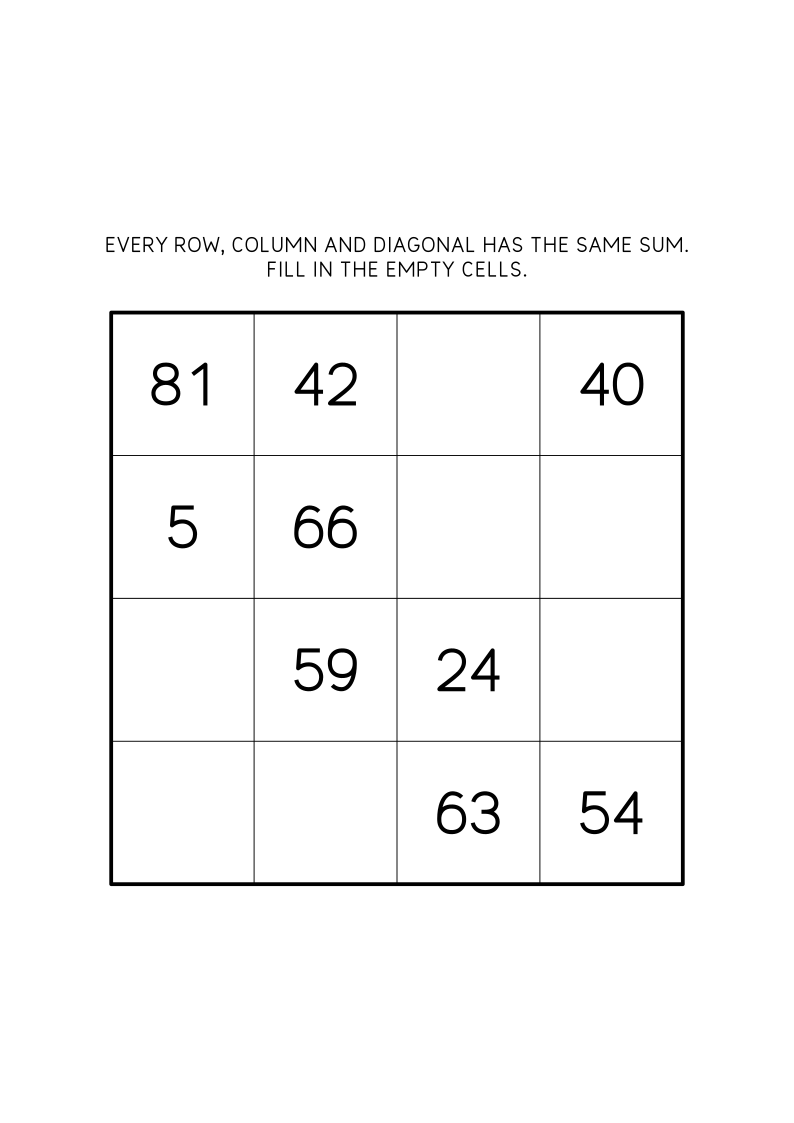
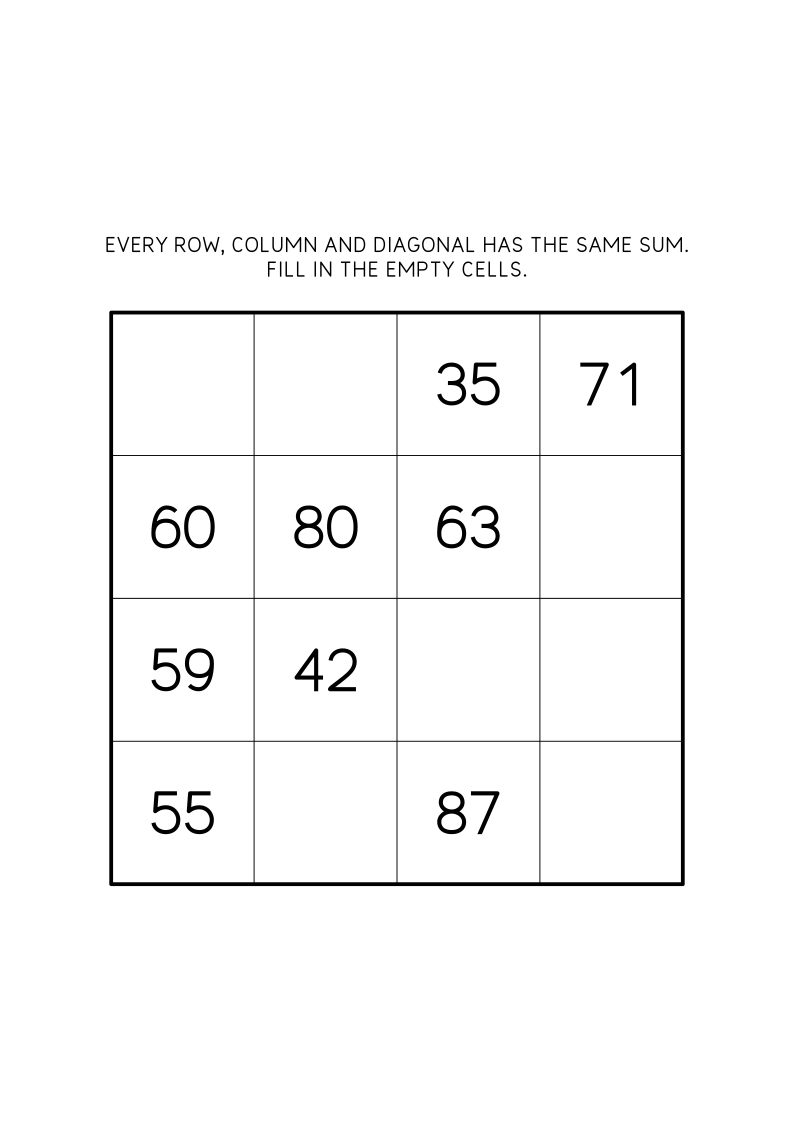
A 4x4 square has ten lines, across, down and on its two diagonals, and all of them must give the same total. Each number belongs to two or three of those lines, so a single wrong cell spoils several at once, and checking becomes part of the puzzle.
Dürer’s Famous Square
Albrecht Dürer placed a 4x4 magic square of the numbers 1 to 16 in his engraving Melencolia I, and every line of it totals 34. The two middle cells of its last row hold 15 and 14, which spell out 1514, the year of the print. The sheets built from 1 to 16 make squares of the same family.
Larger Numbers, New Totals
From sheet thirteen on, the numbers grow as large as 100, the total changes from one square to the next, and seven cells are blank instead of six. The solver first adds a complete line to learn the total every other line must reach, then works mostly with two-digit numbers.