One Big Square at a Time
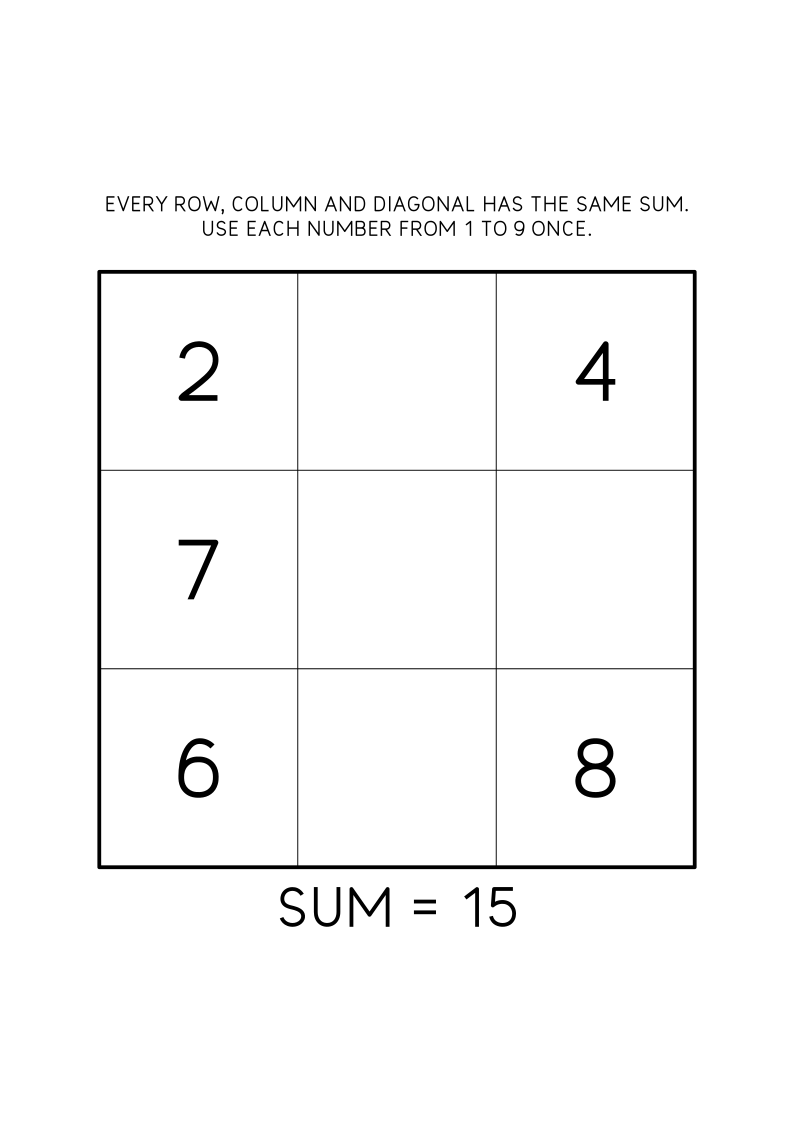
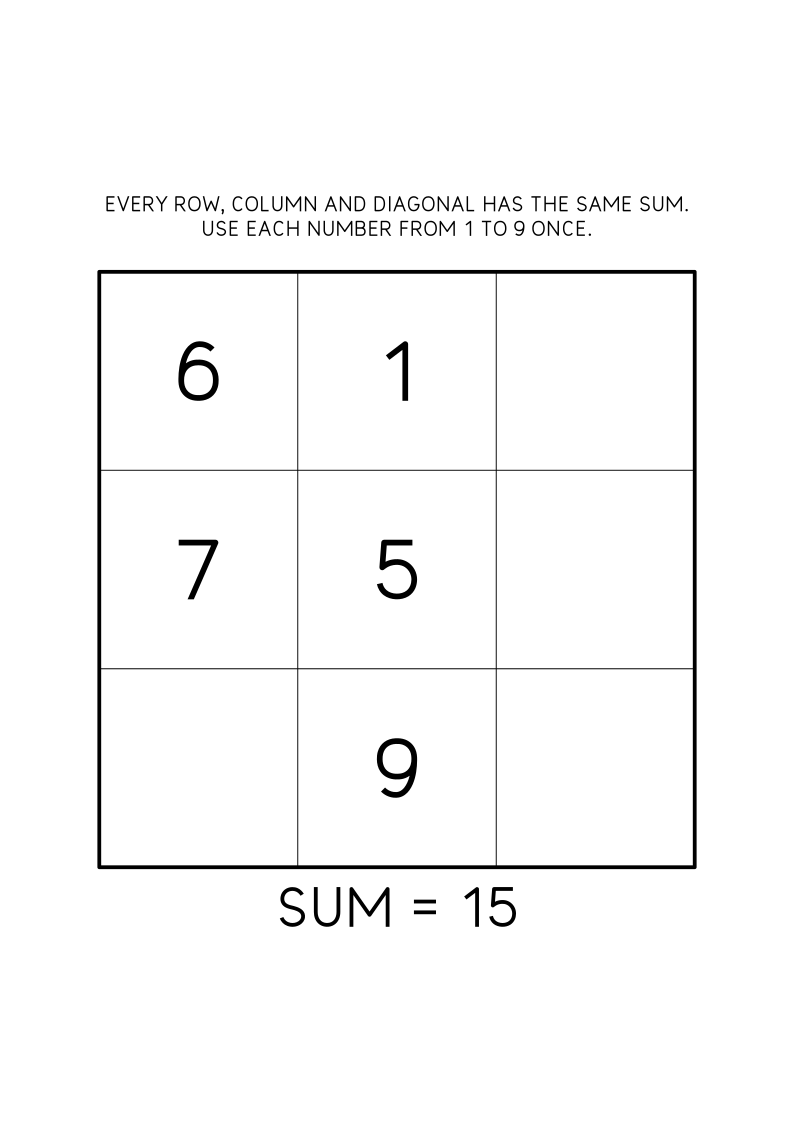
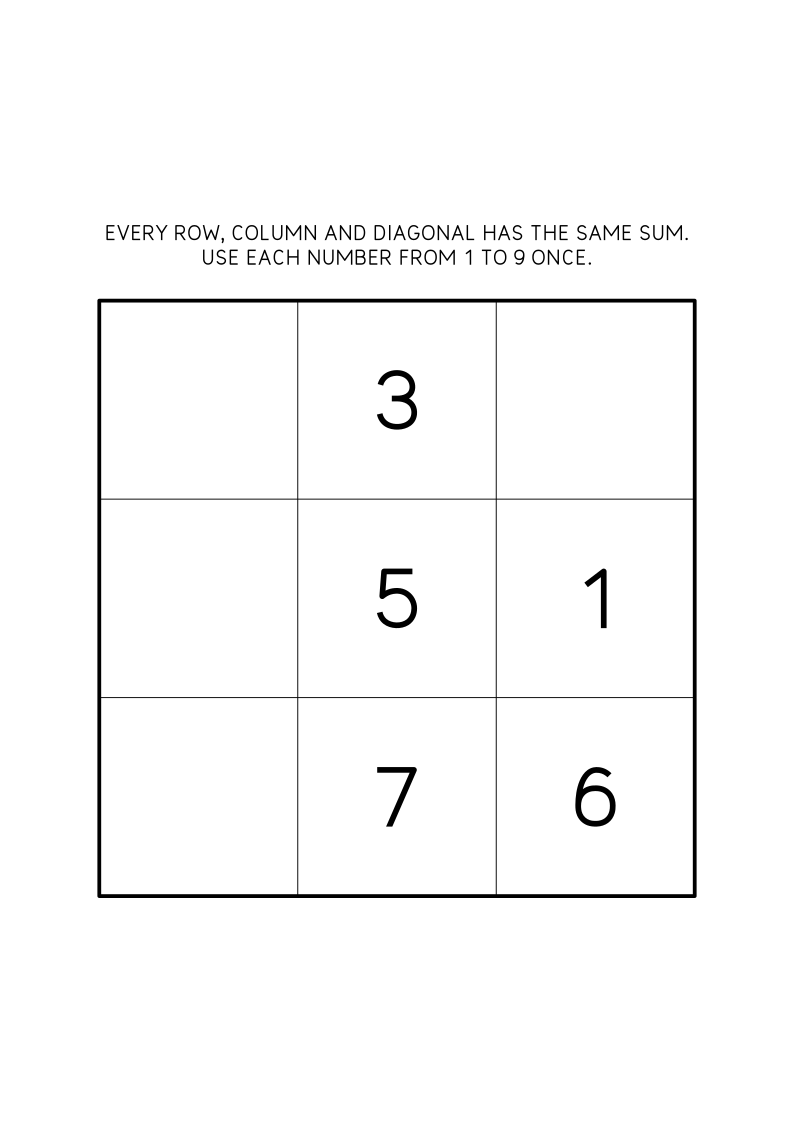
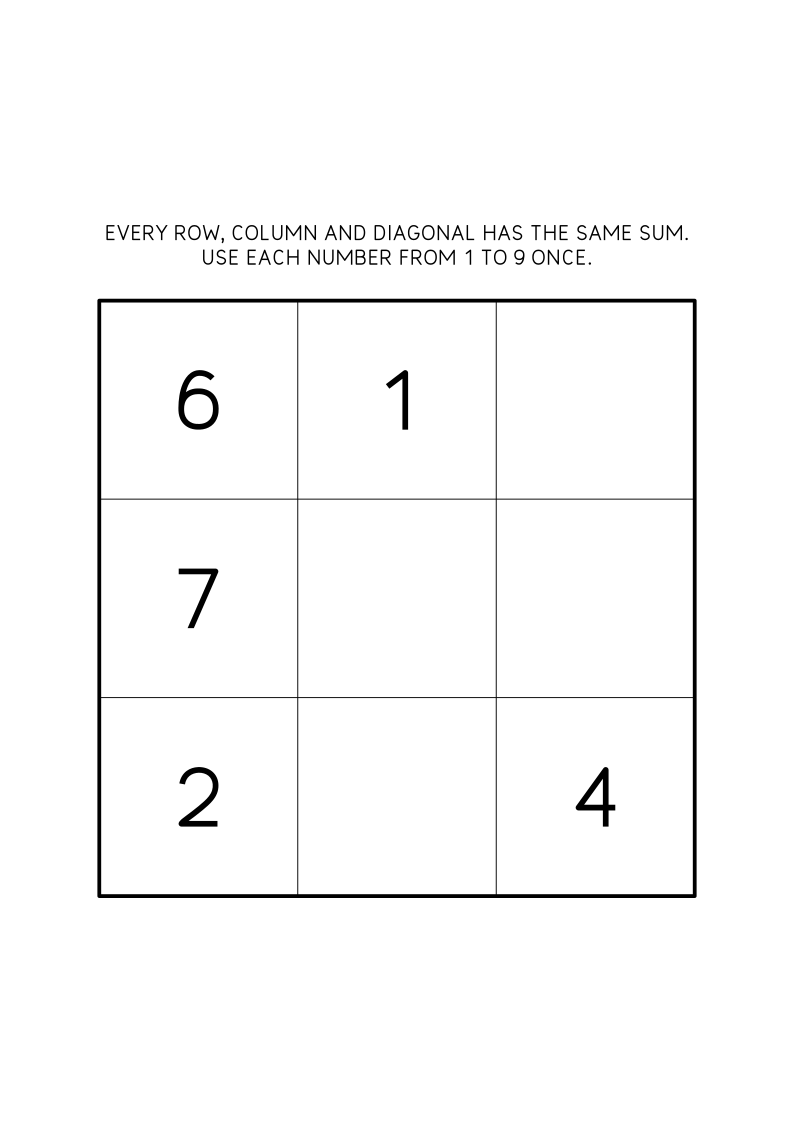
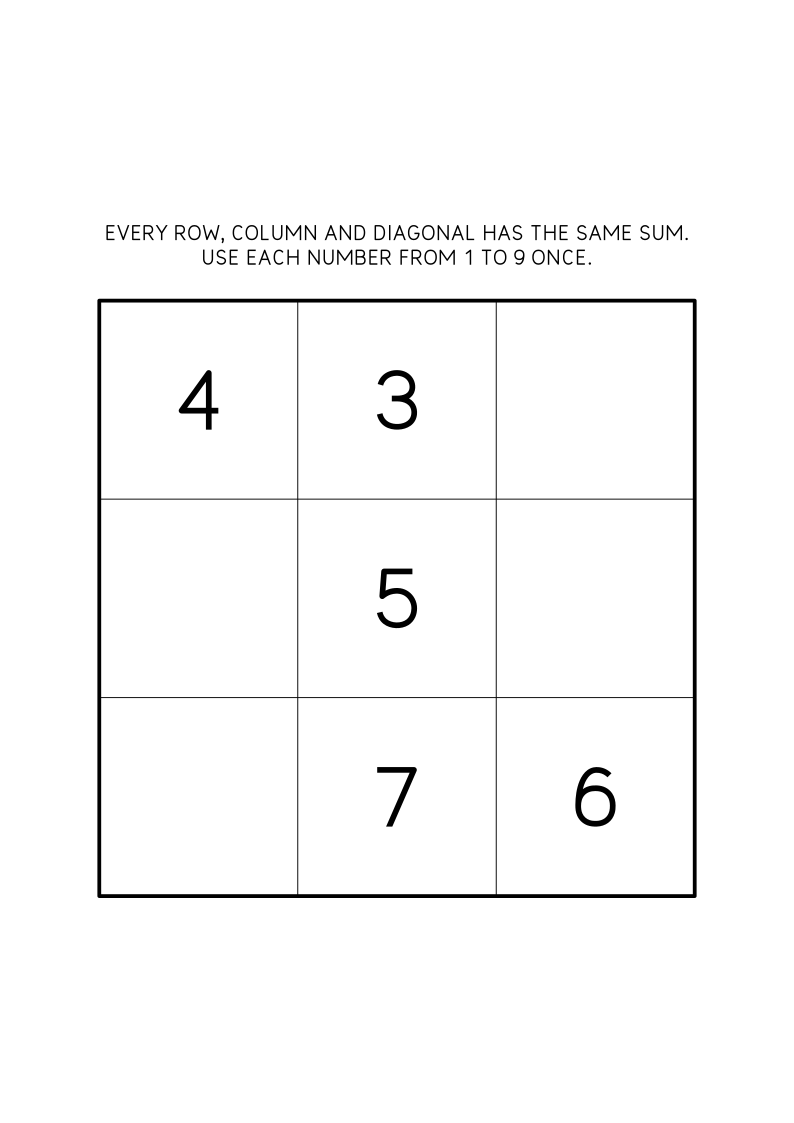
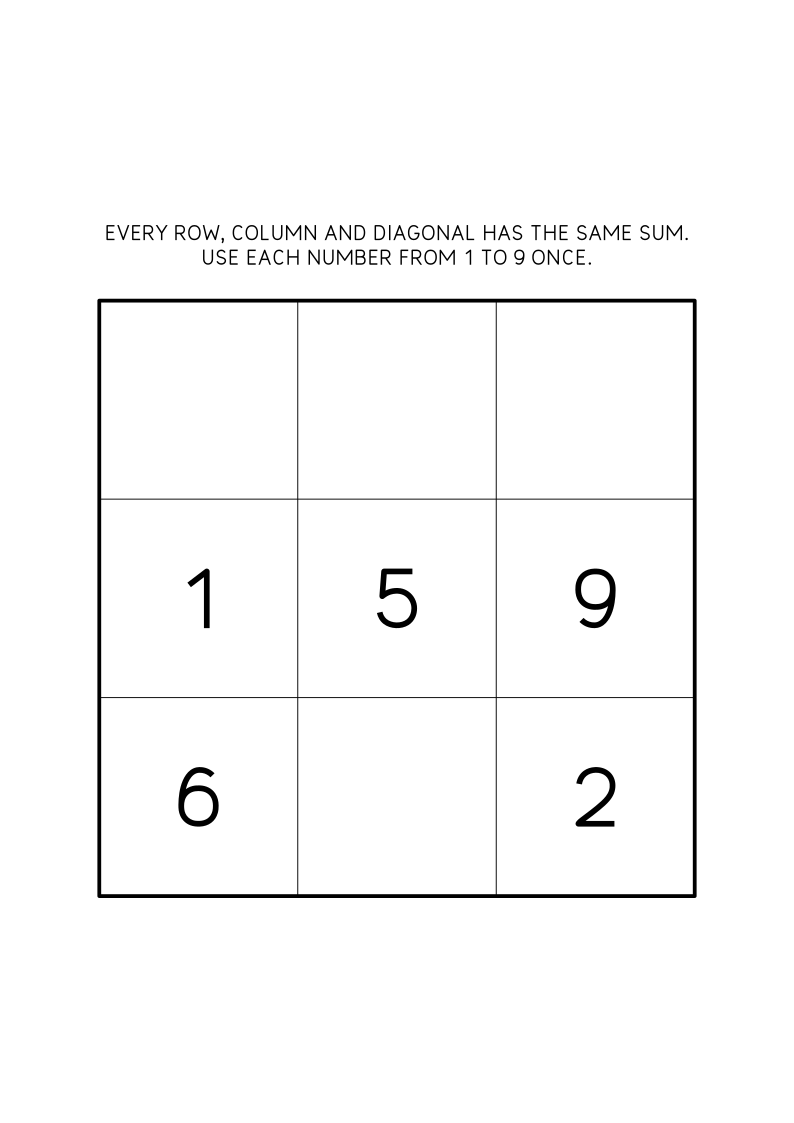
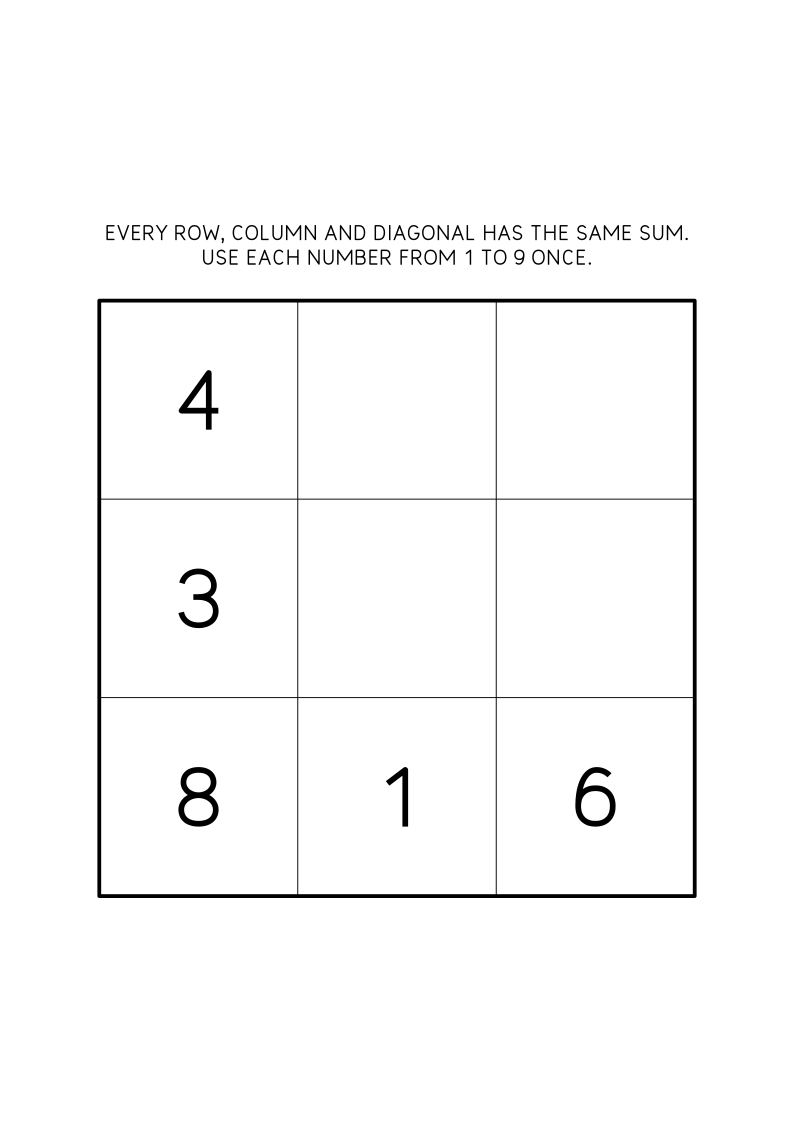
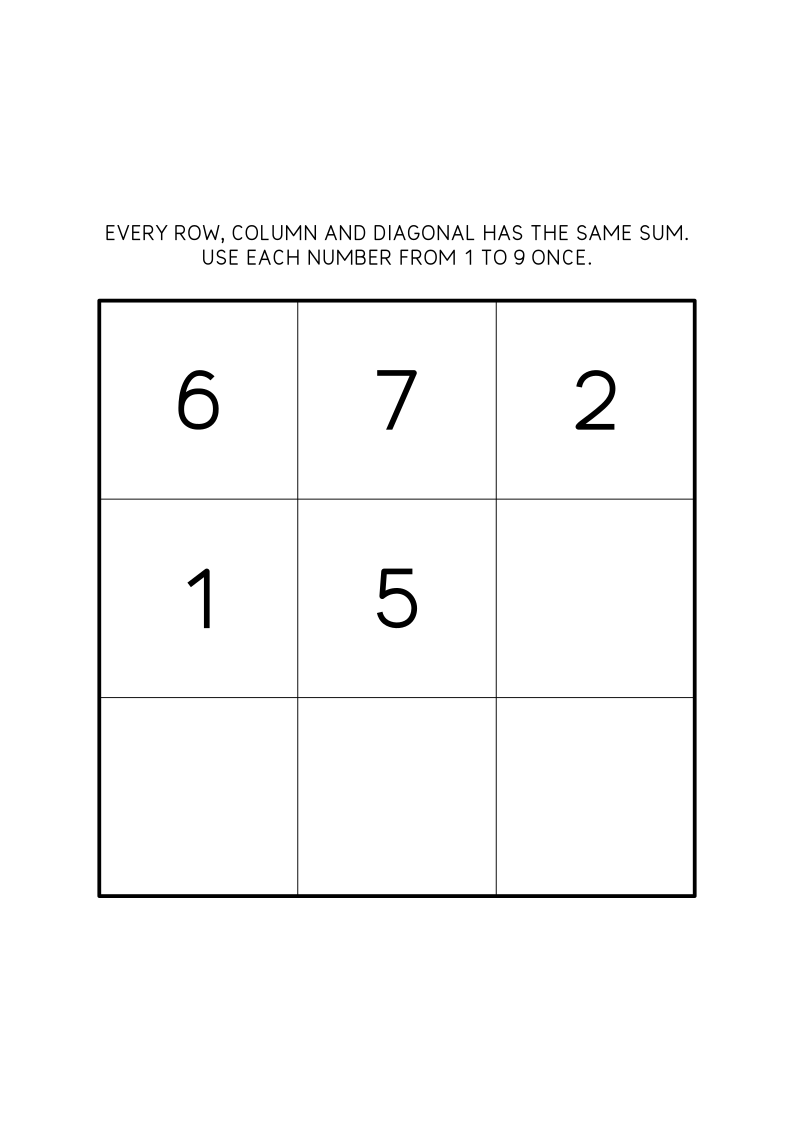
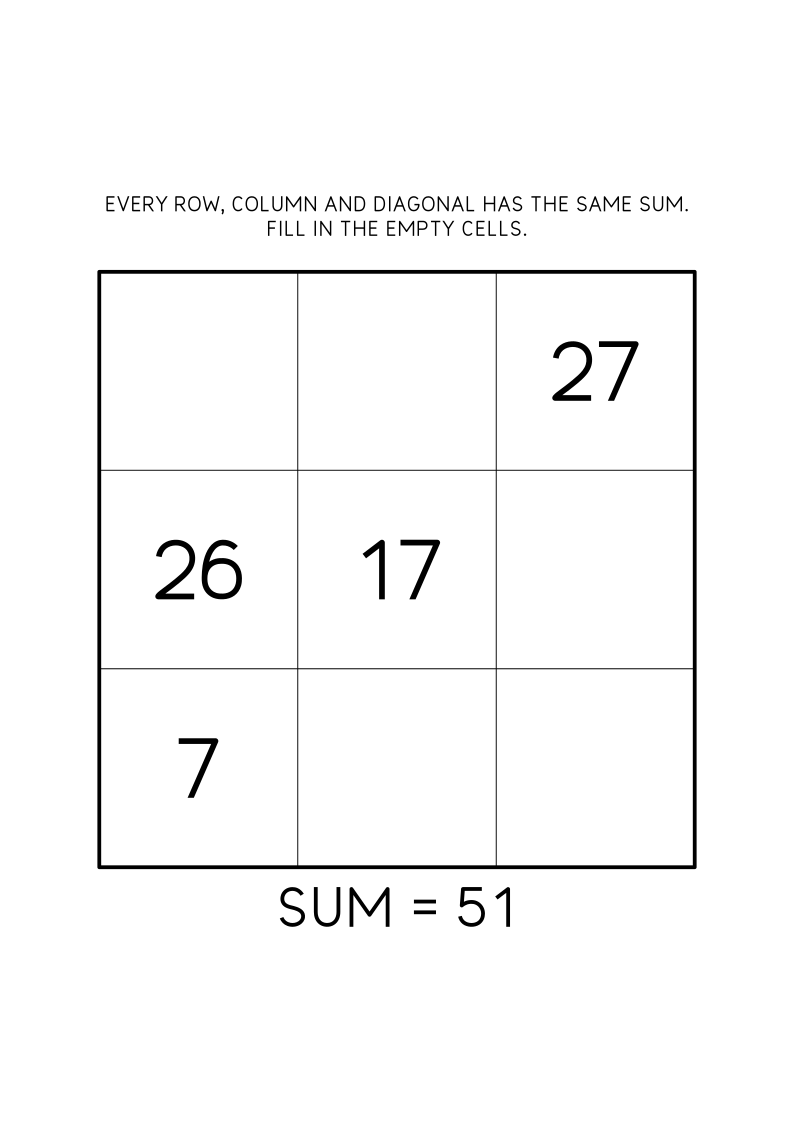
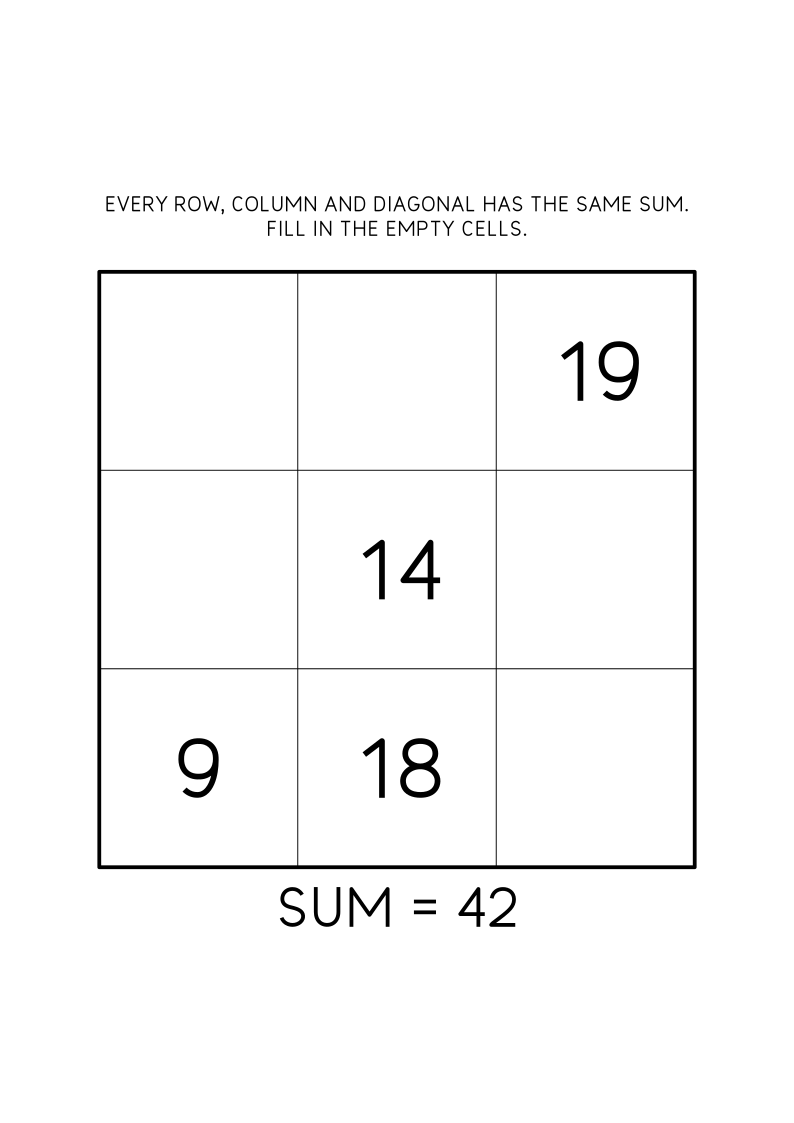
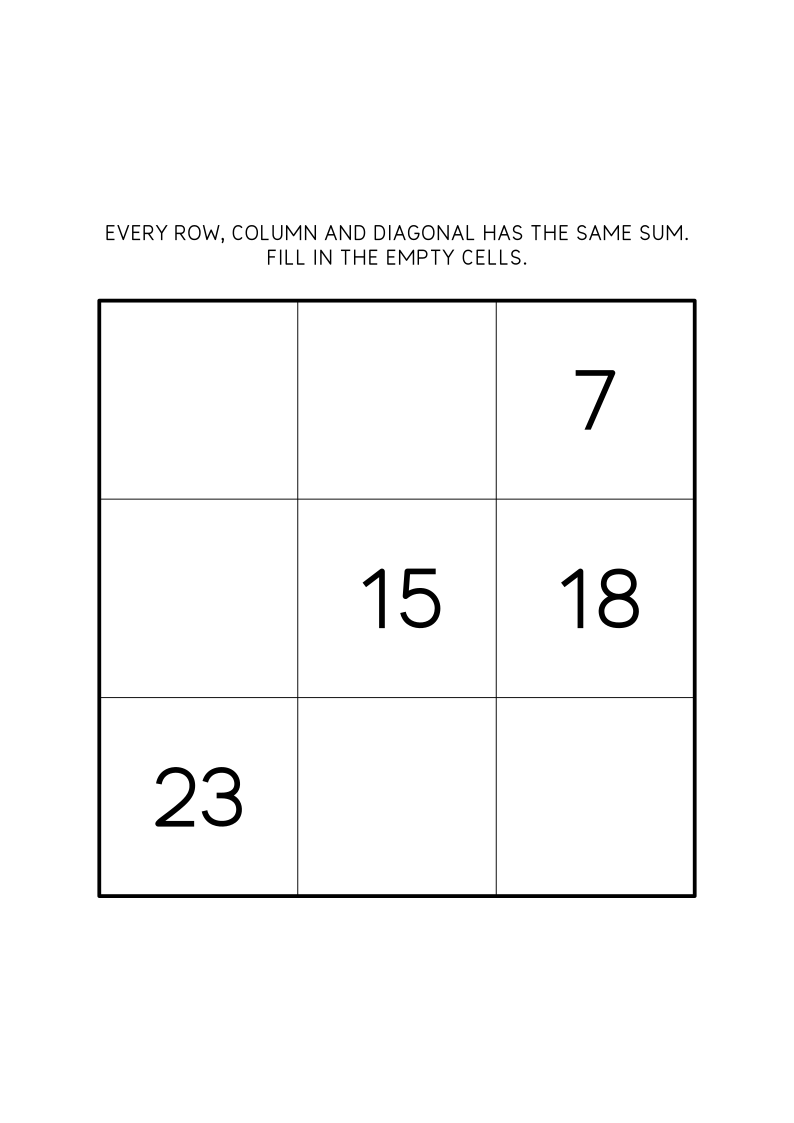
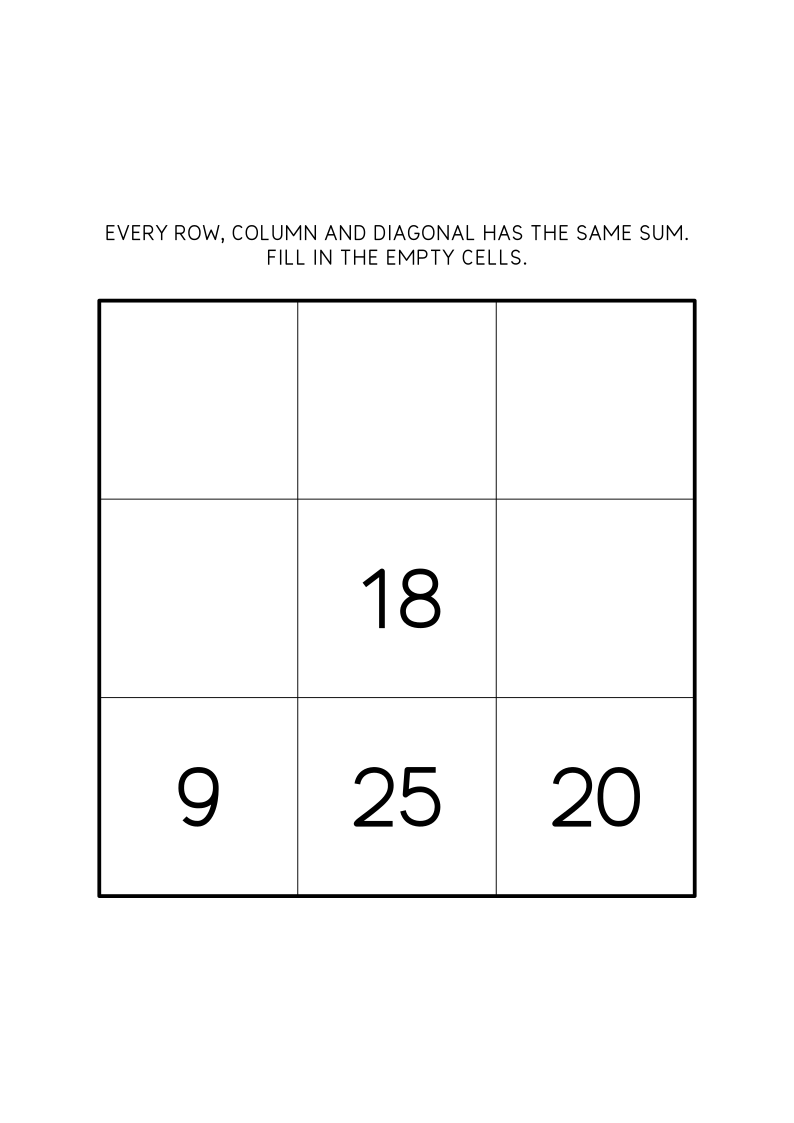
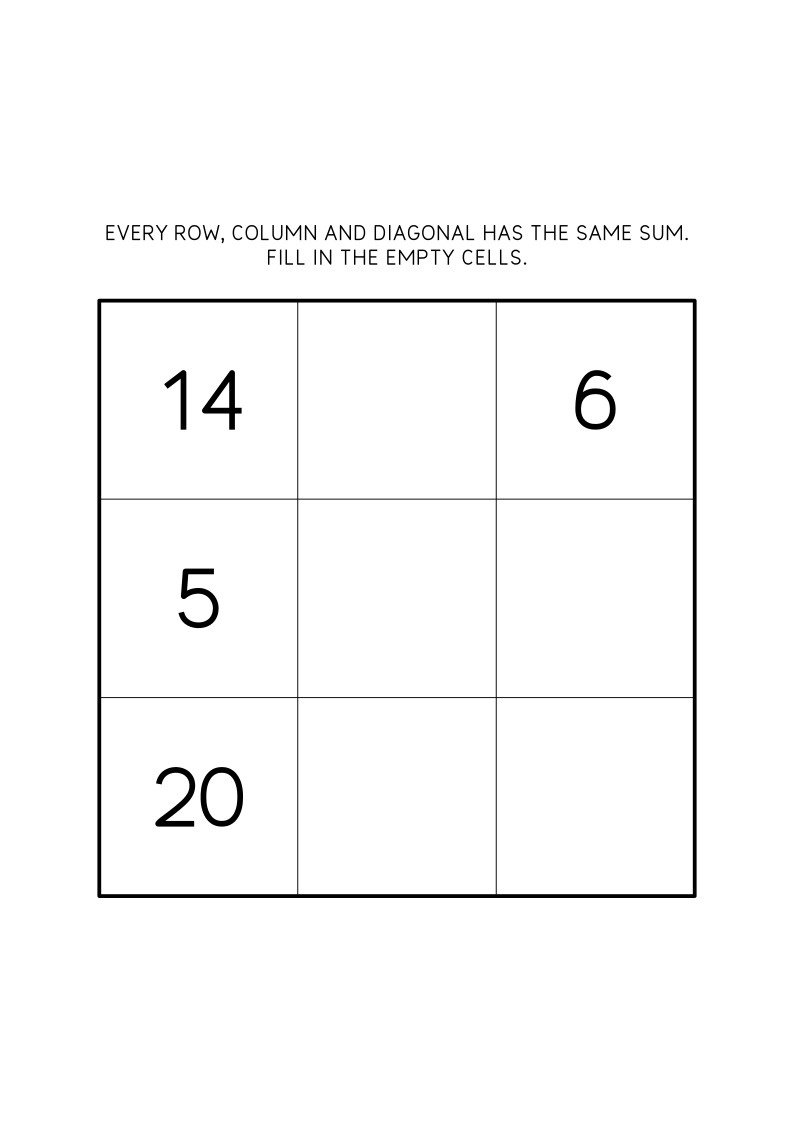
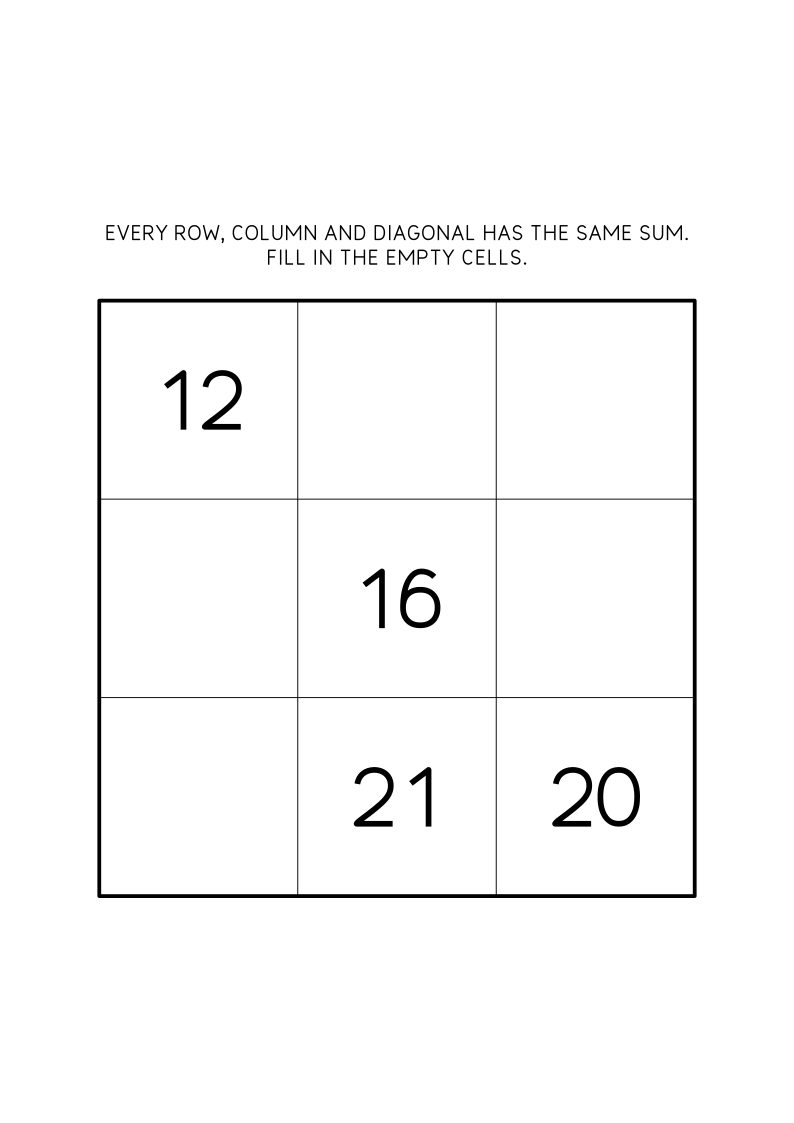
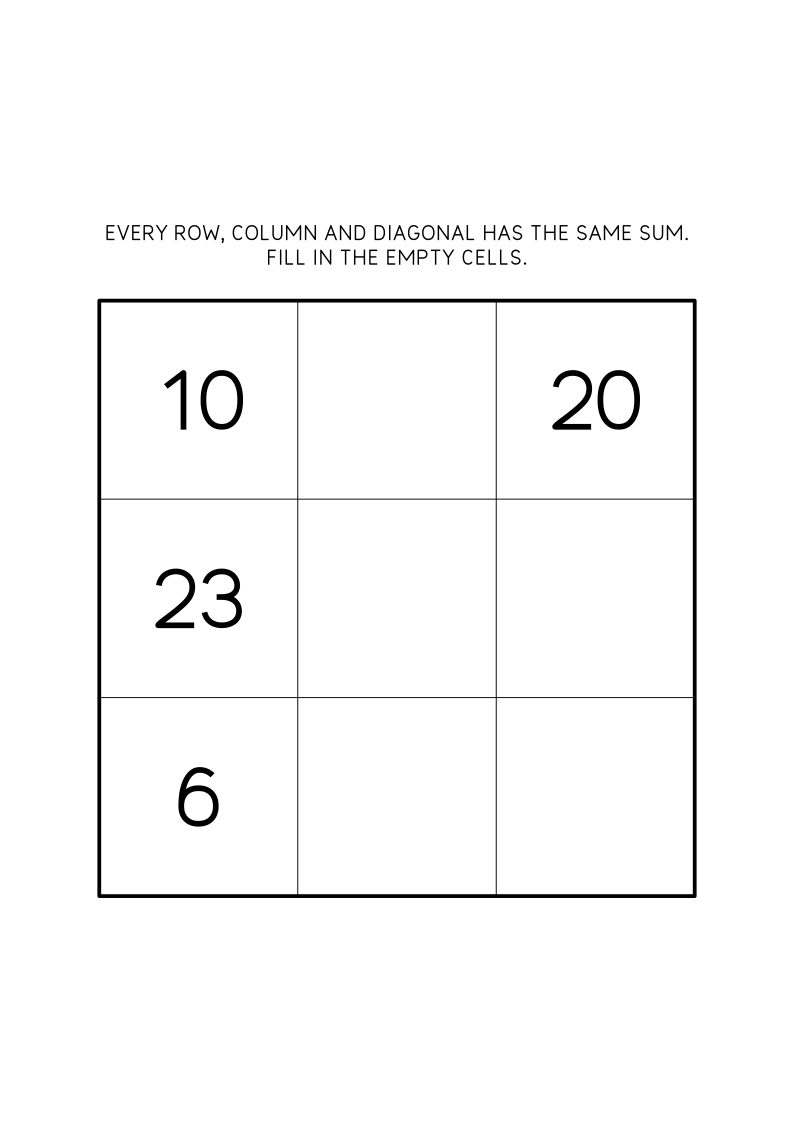
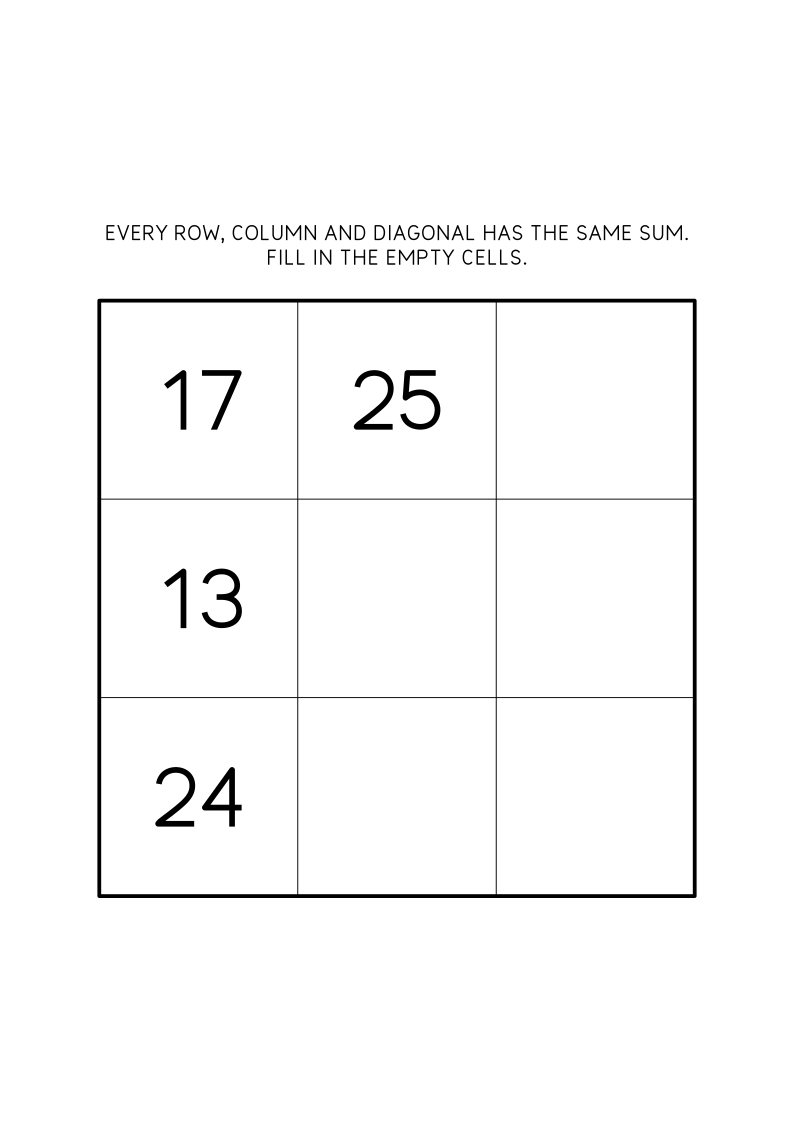
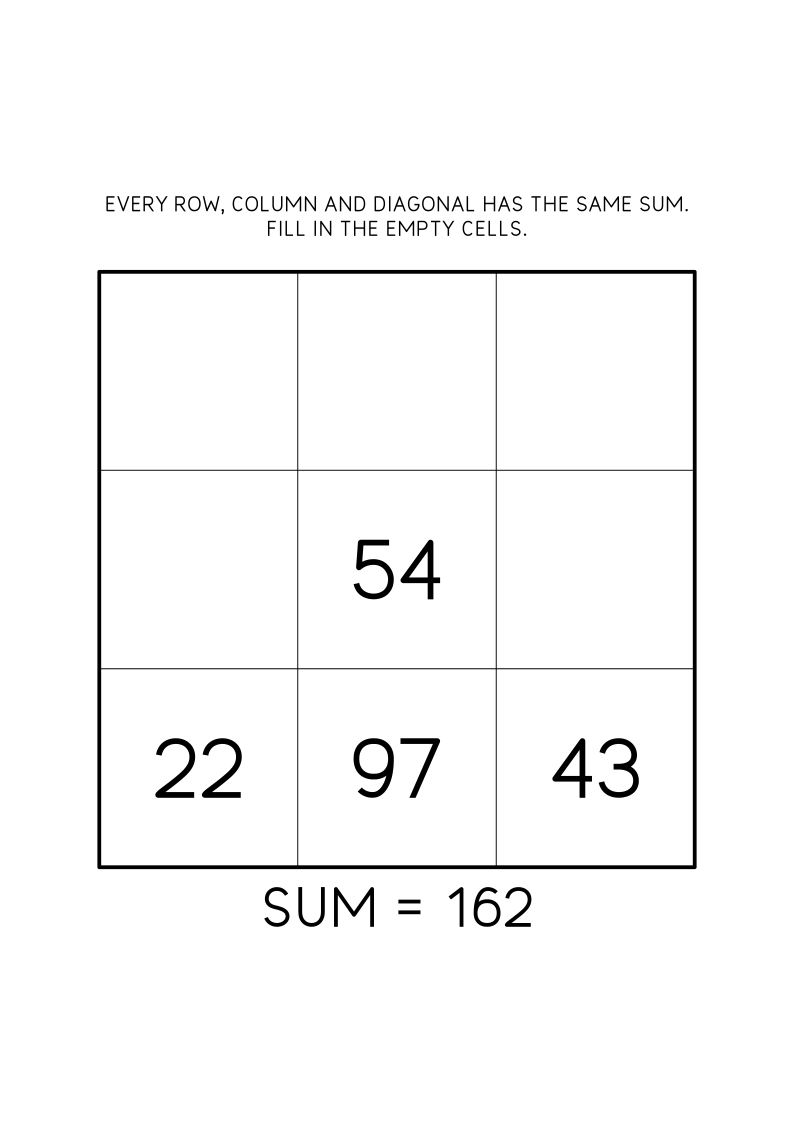
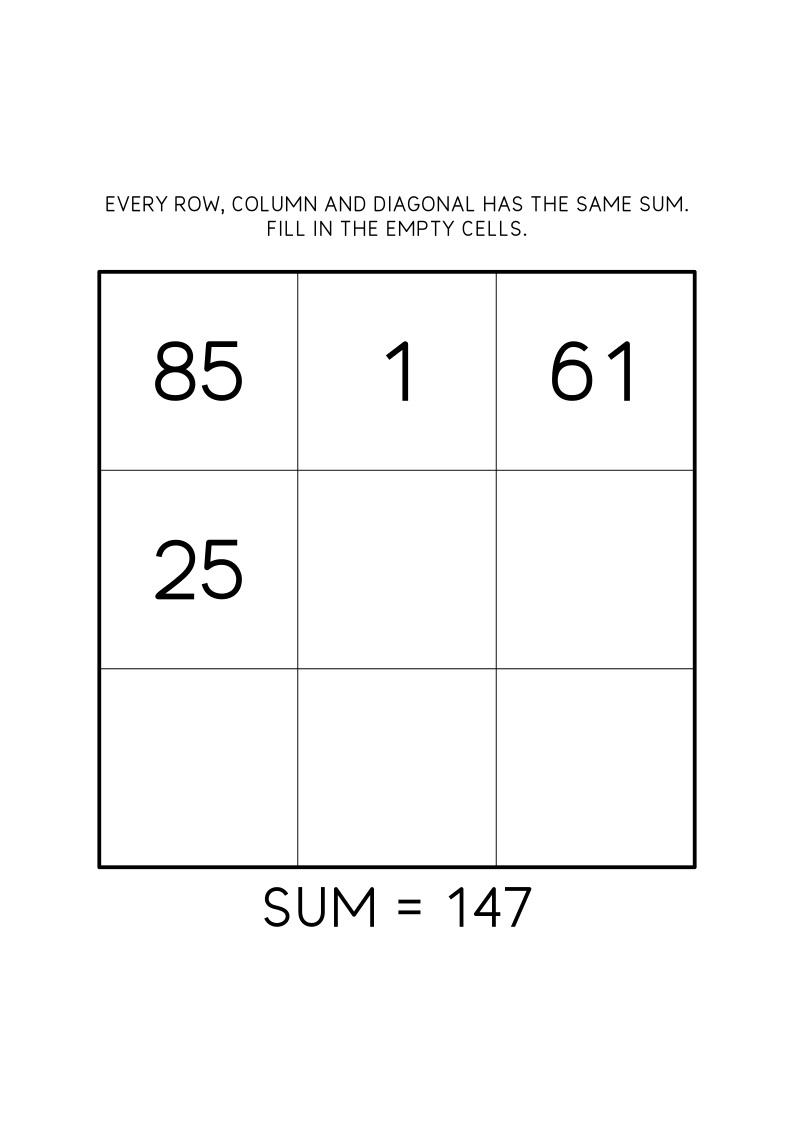
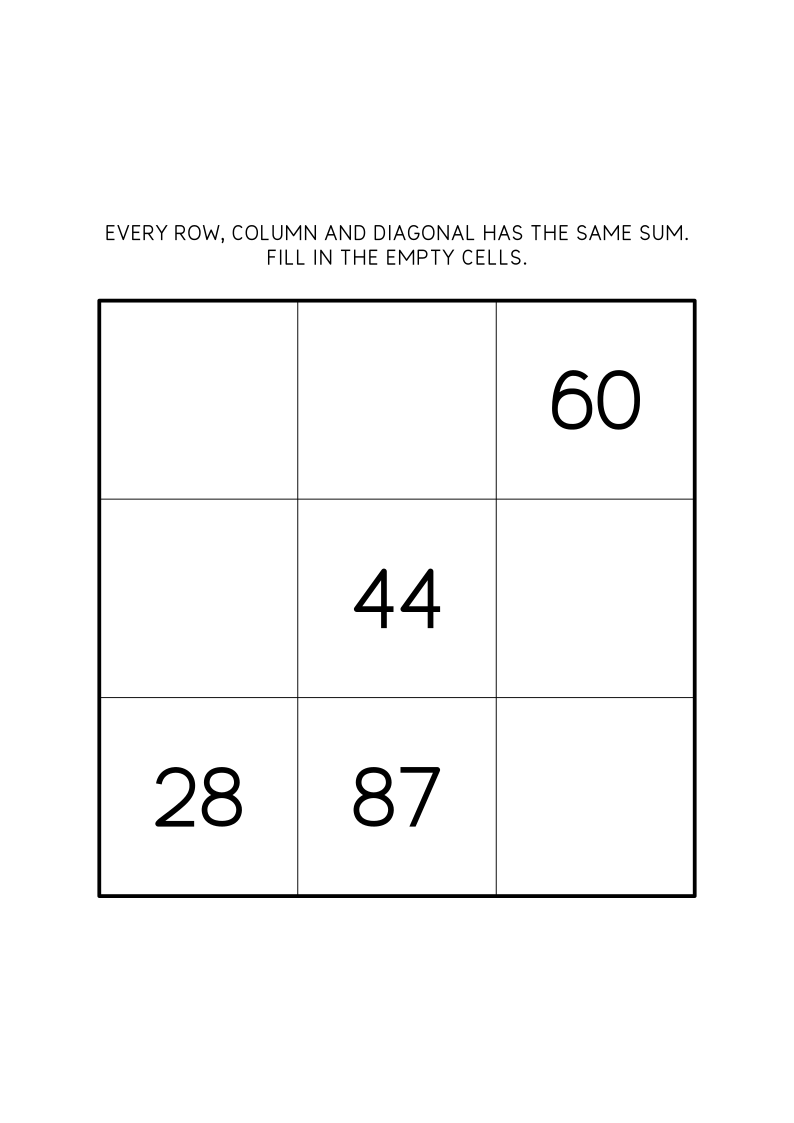
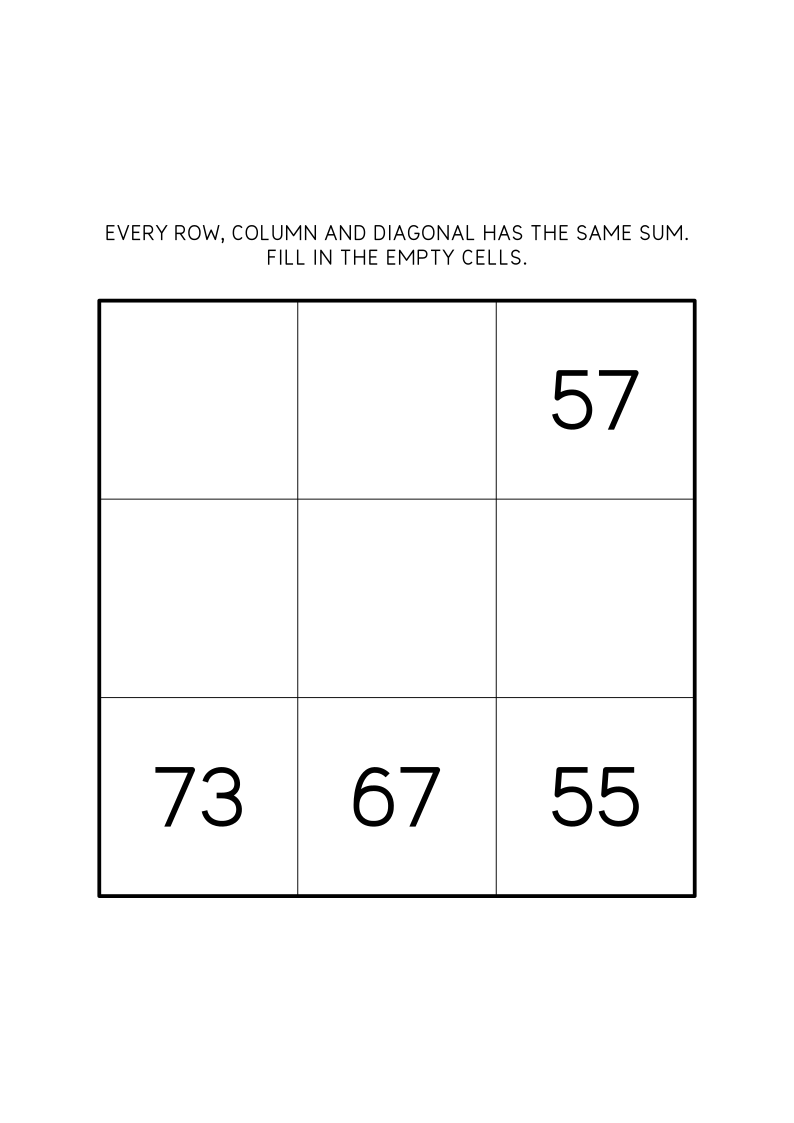
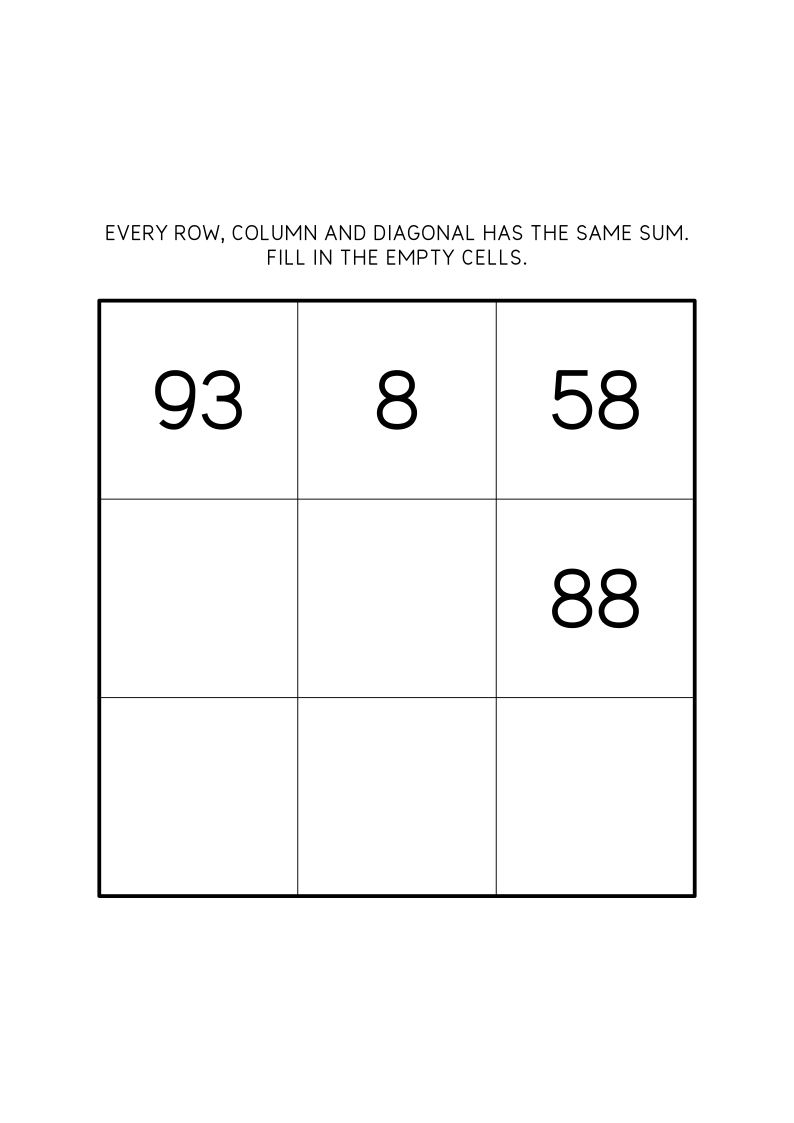
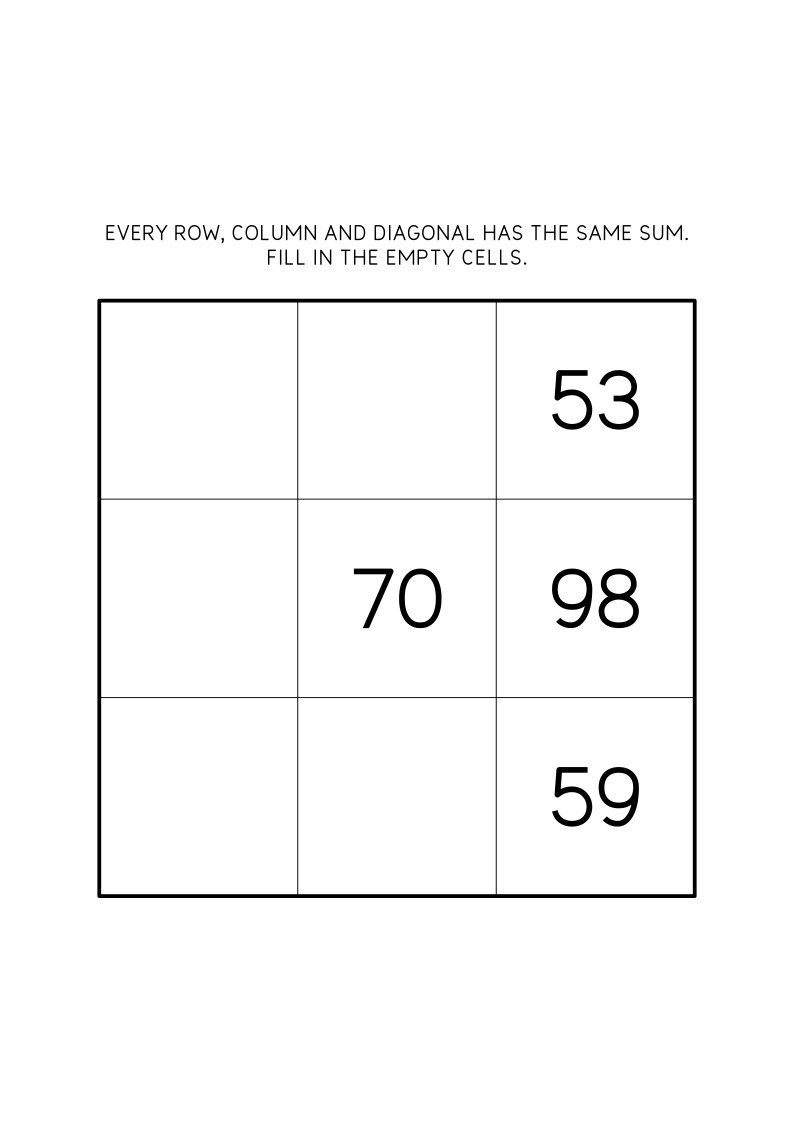
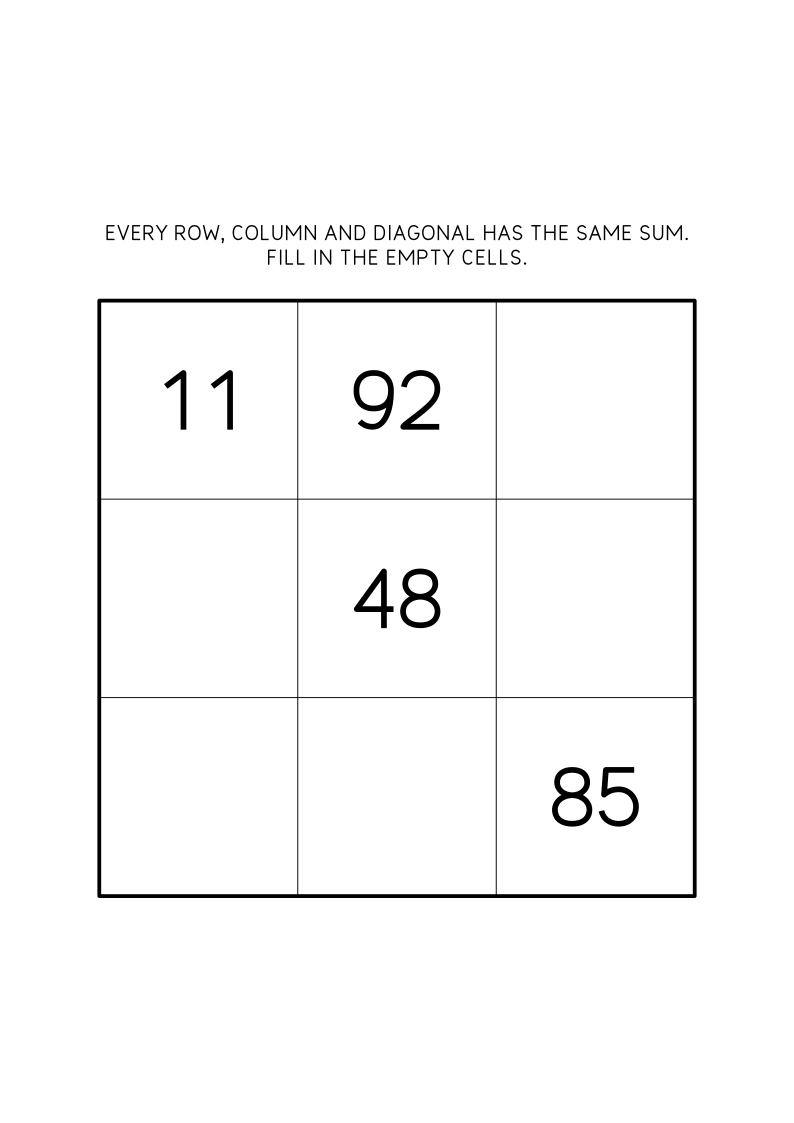
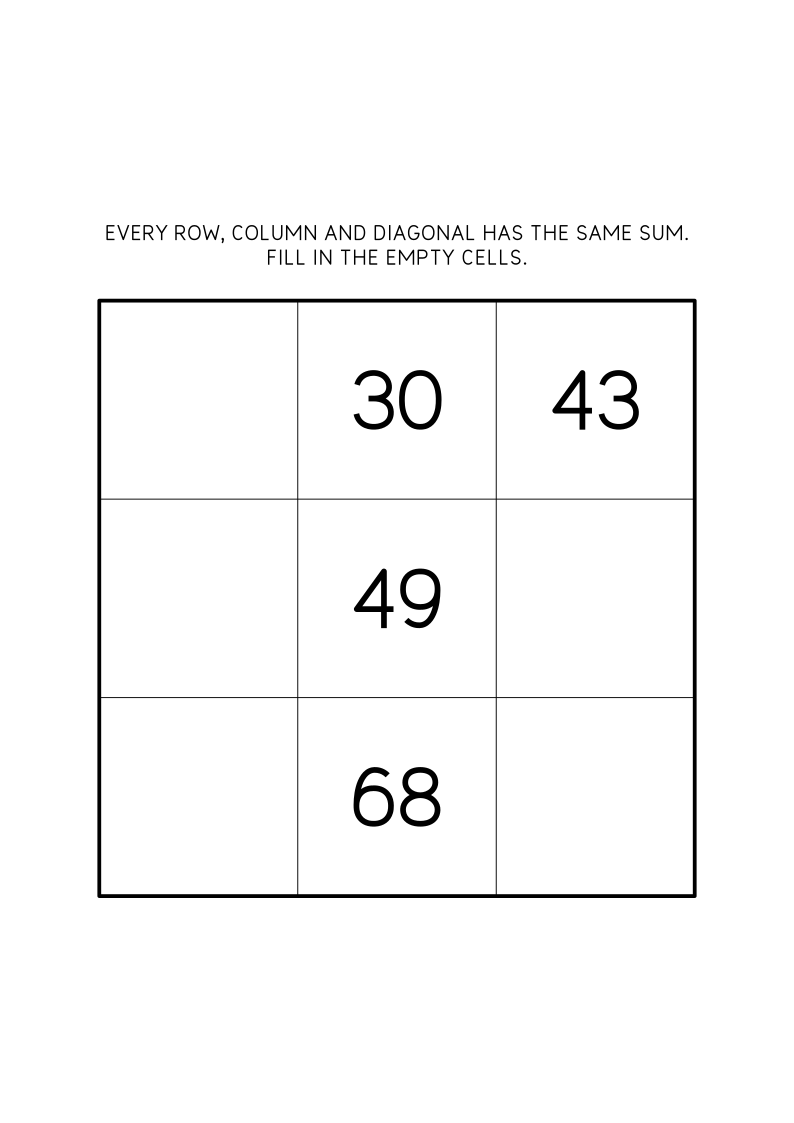
A single square on the page means large cells, a calm layout and nothing to distract from the numbers. It suits children meeting magic squares for the first time, and adults who want to project a square on a board and solve it with the class, cell by cell, before handing out the practice sheets.
Three Ranges of Numbers
On a Lo Shu sheet, four cells are blank and the total never moves from 15, so the work stays with small sums. From sheet nine on, the numbers grow to two digits, five cells are blank, and each square brings a total of its own. Printing that total on the first sheets of each range lets beginners skip straight to the missing numbers.
In the Classroom
Use one sheet as a warm-up at the start of a math lesson, or let pairs of students race to the last cell, then check each line together. The workbook keeps the twenty-four pages in order, from the gentlest to the hardest.