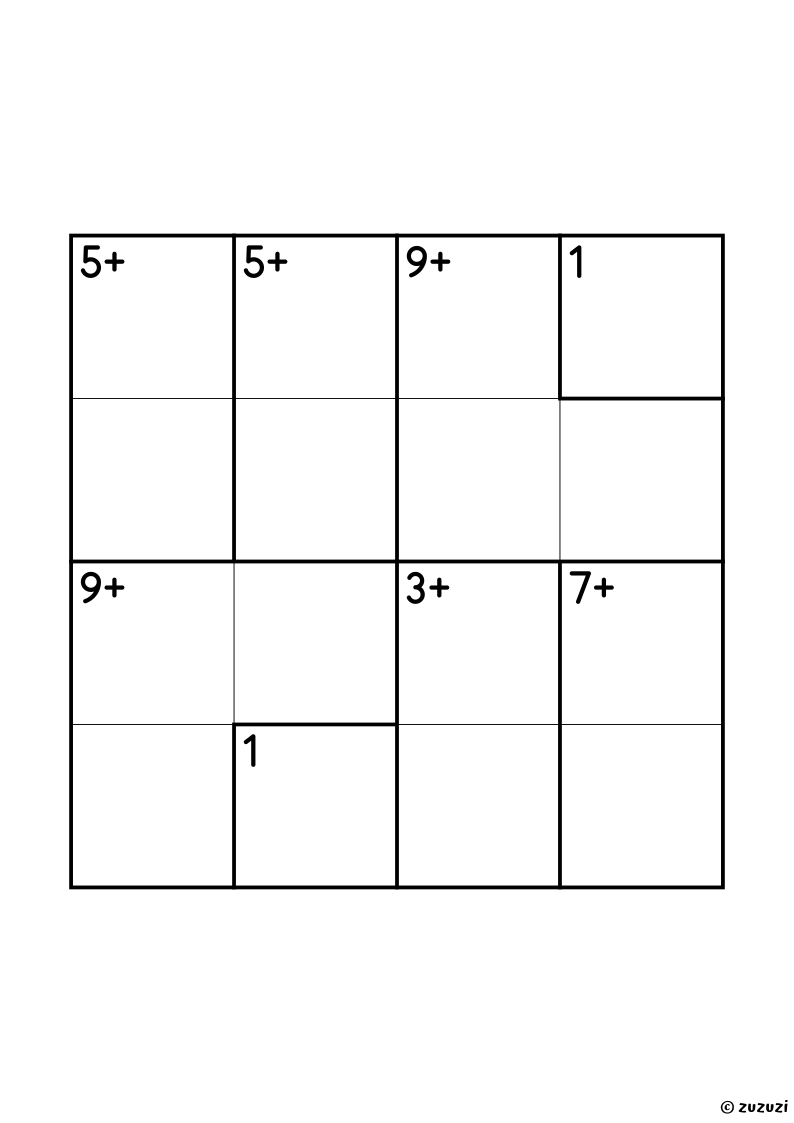
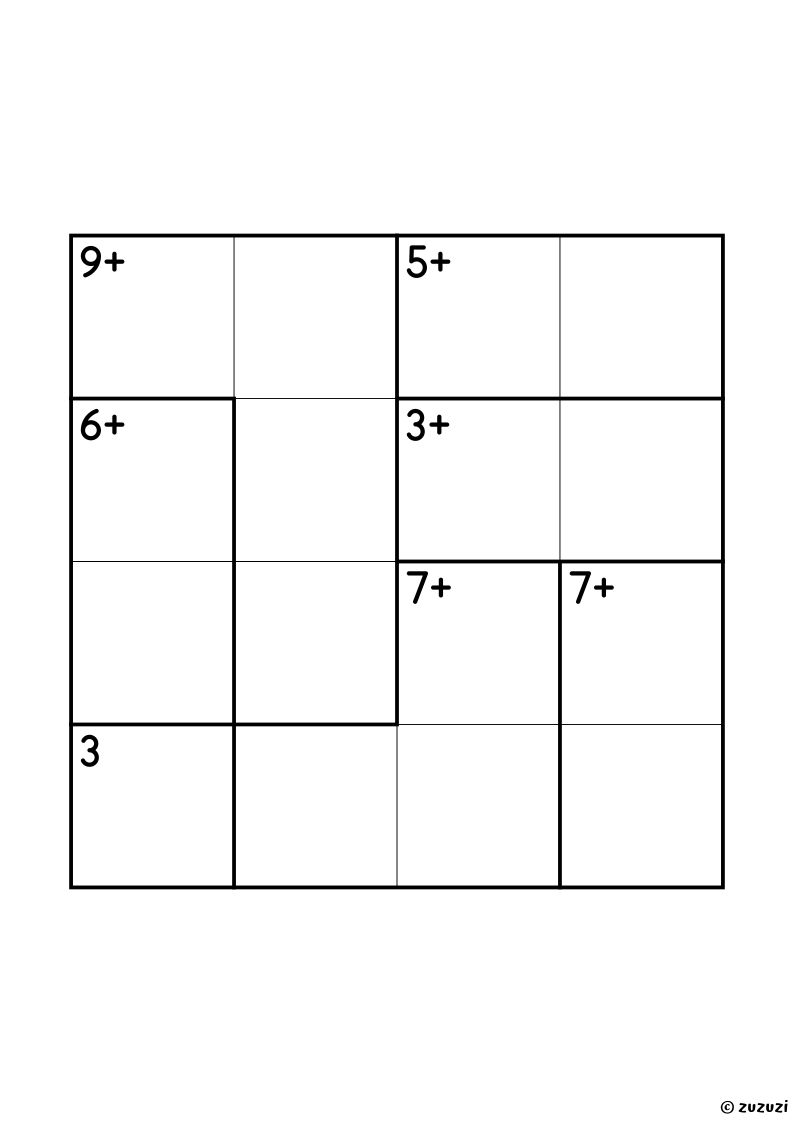
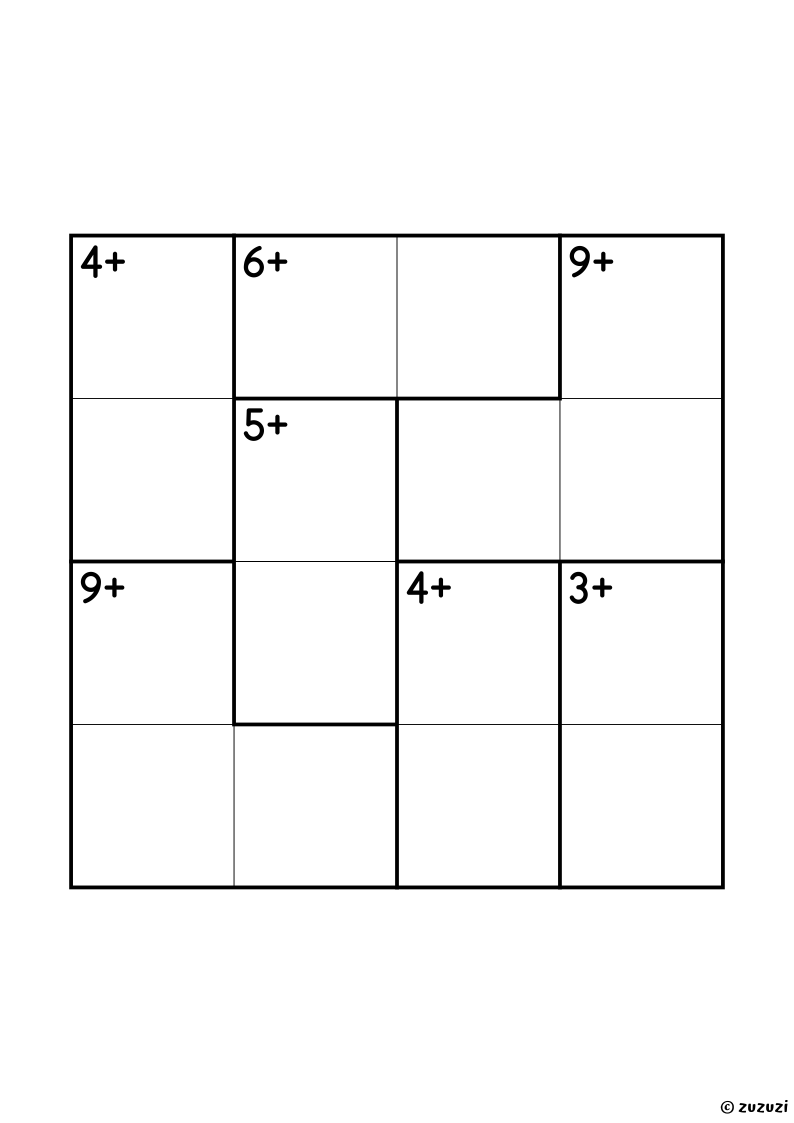
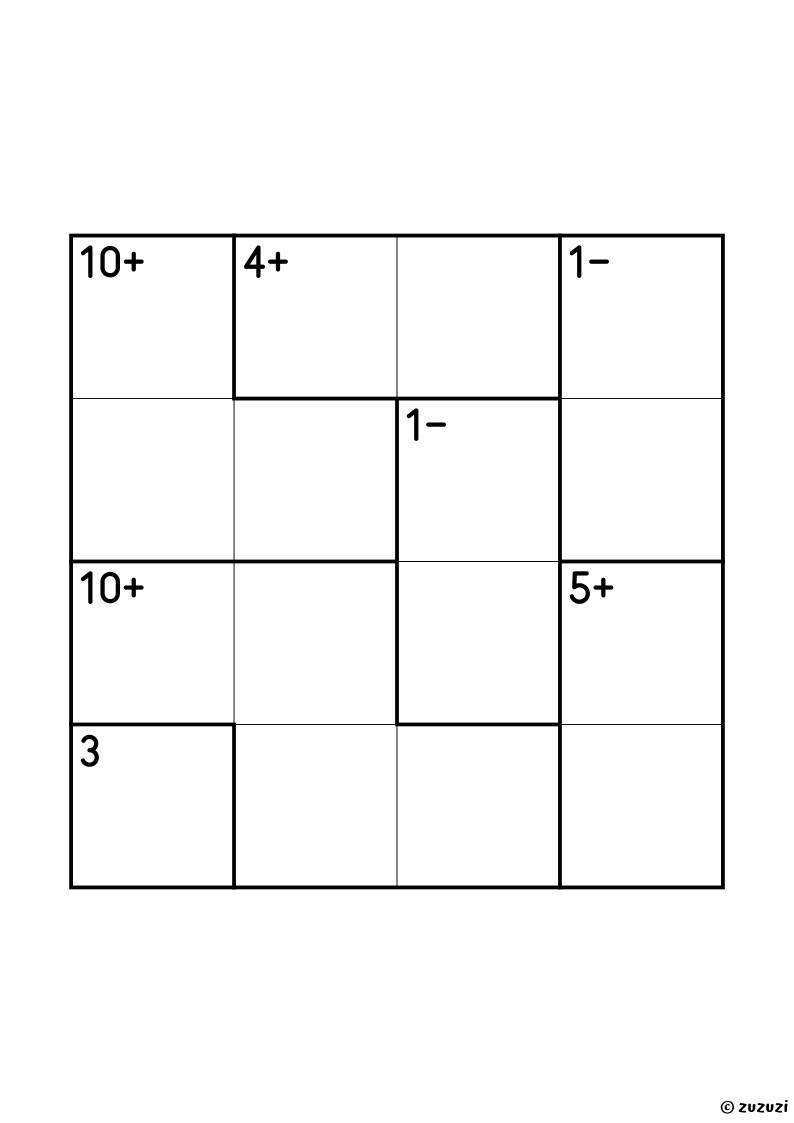
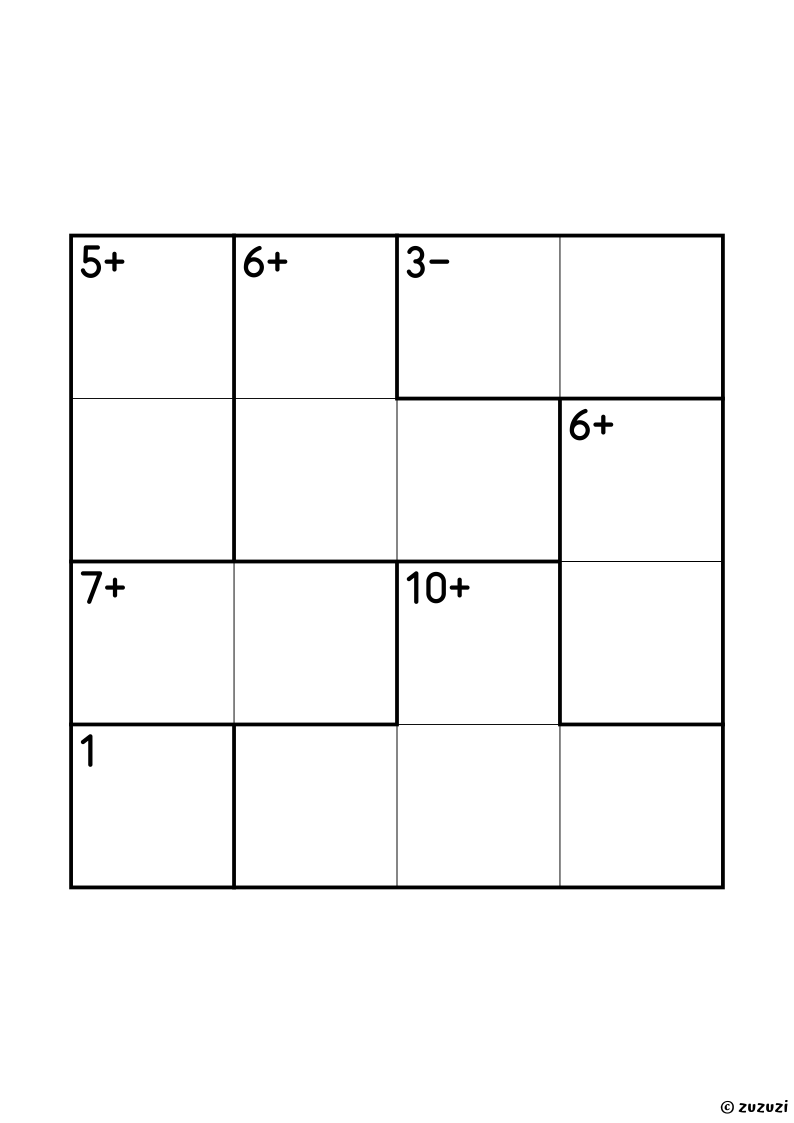
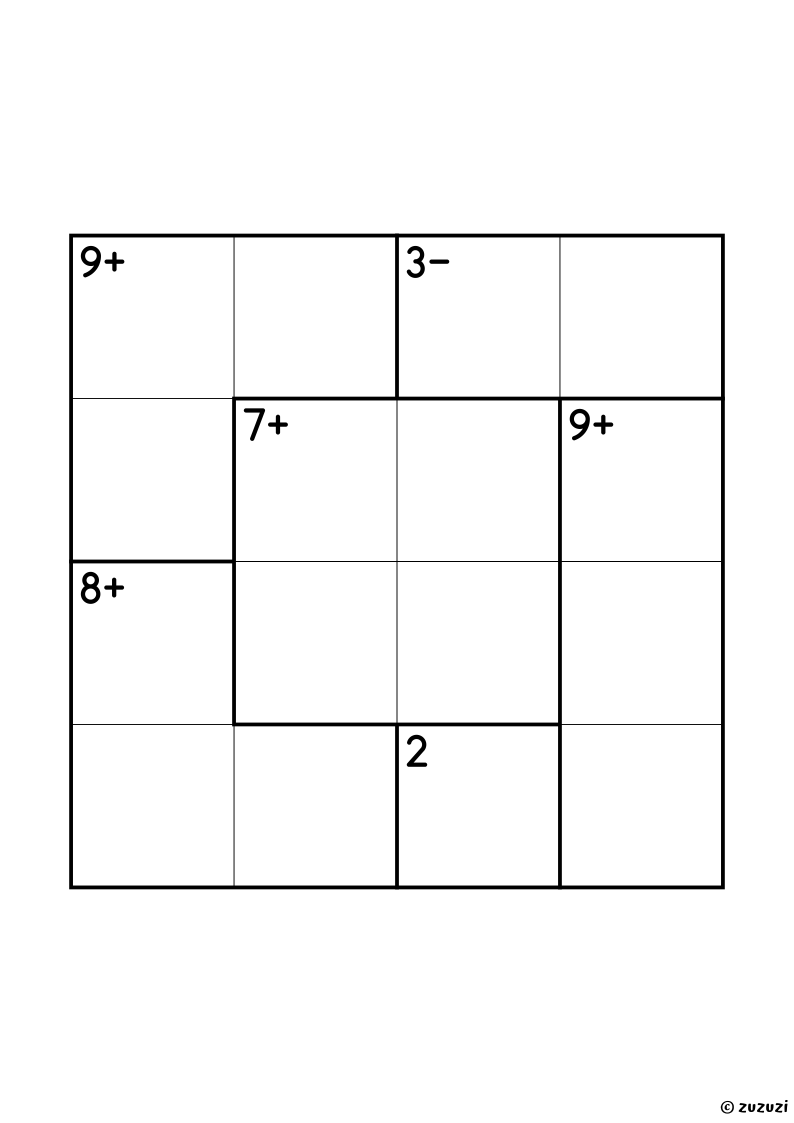
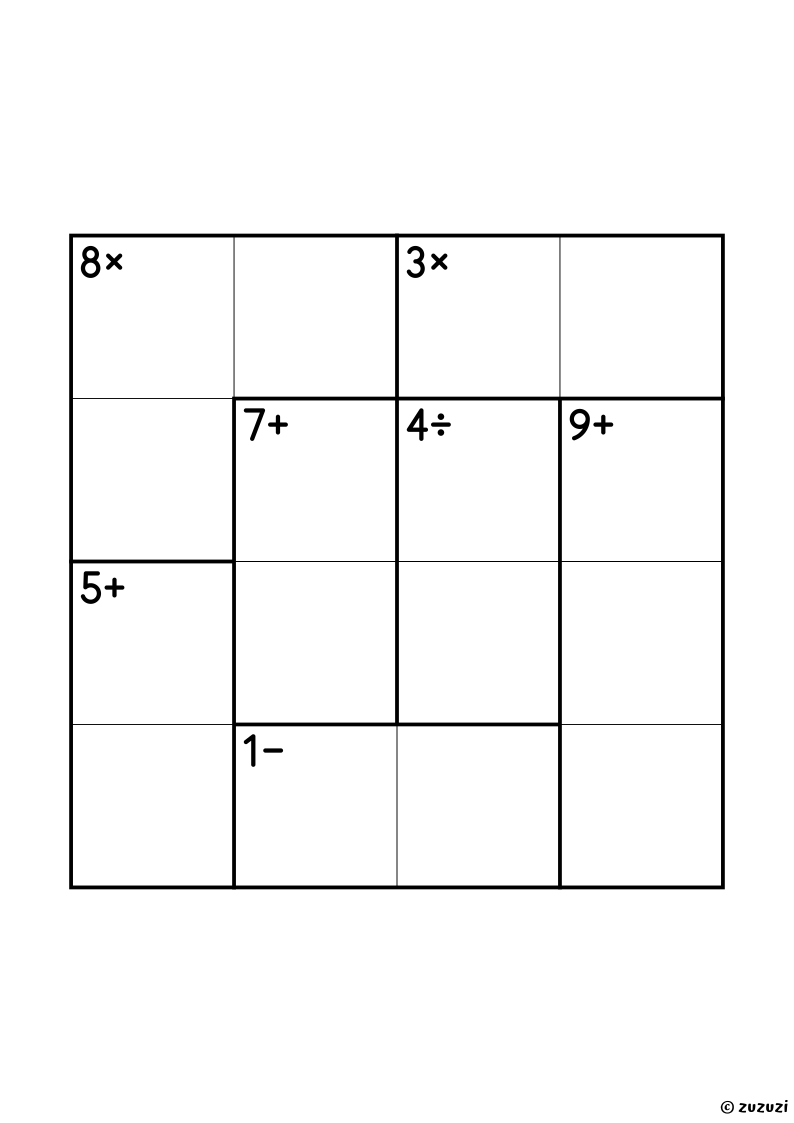
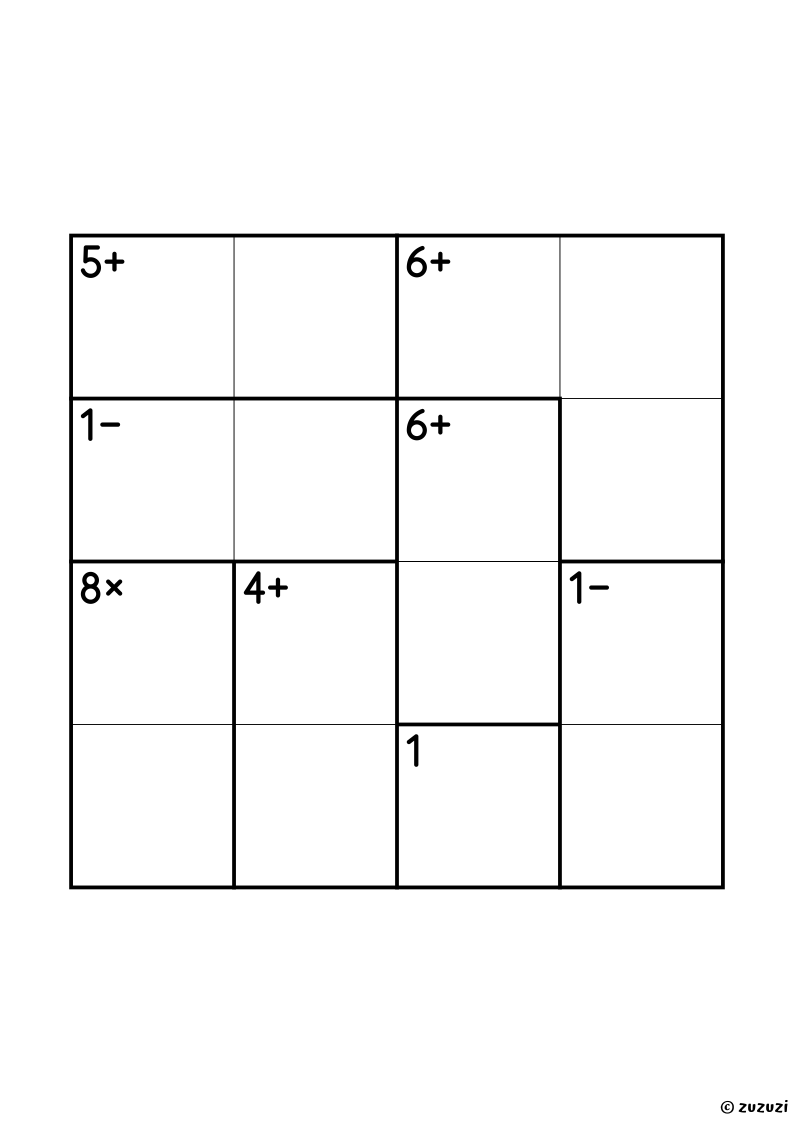
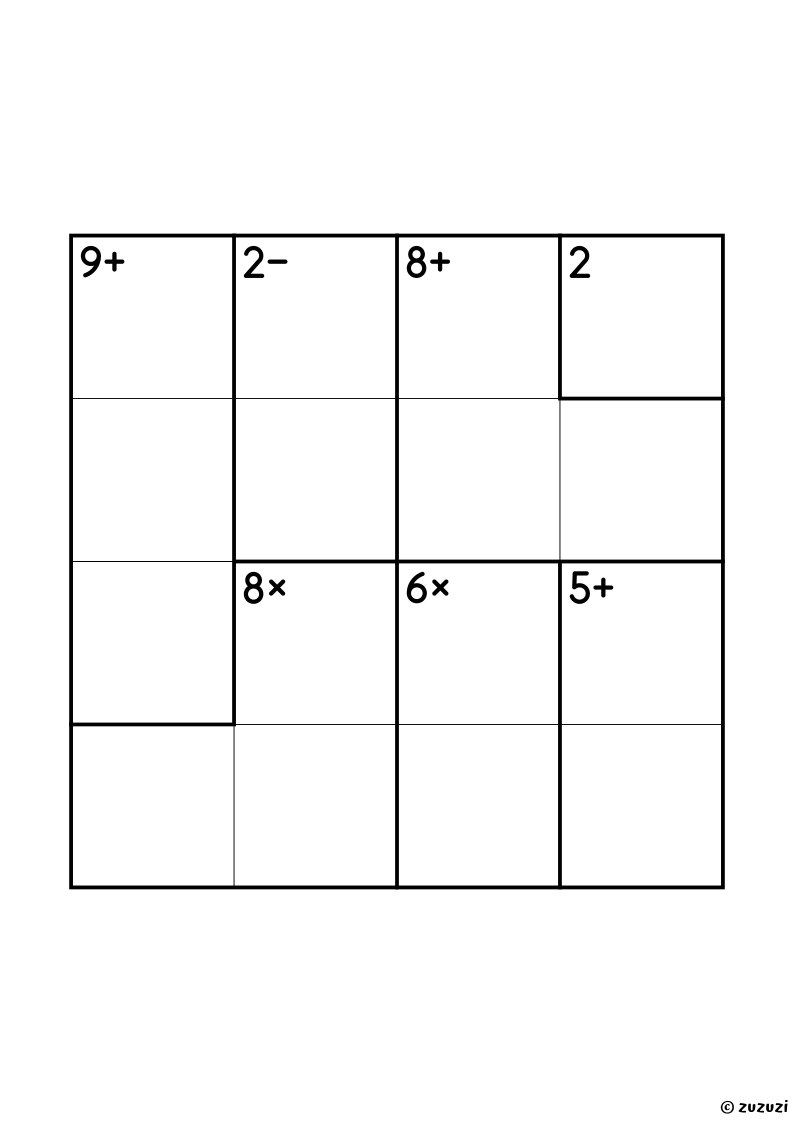
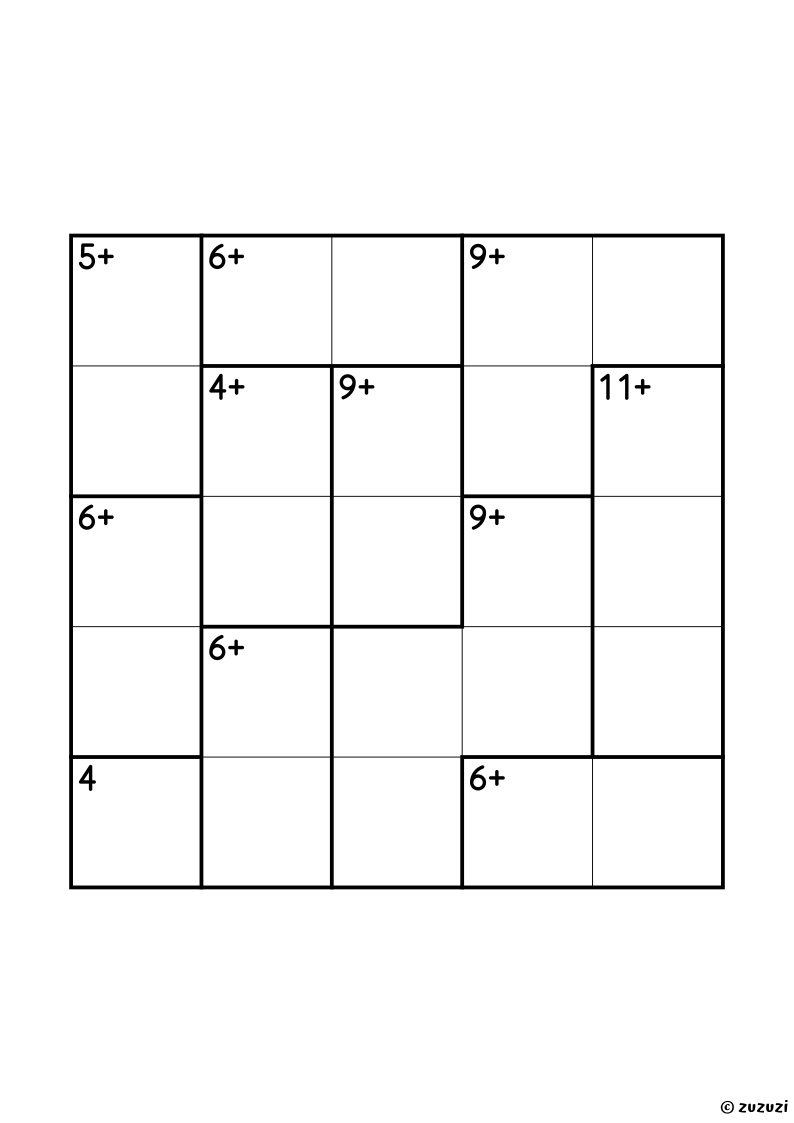
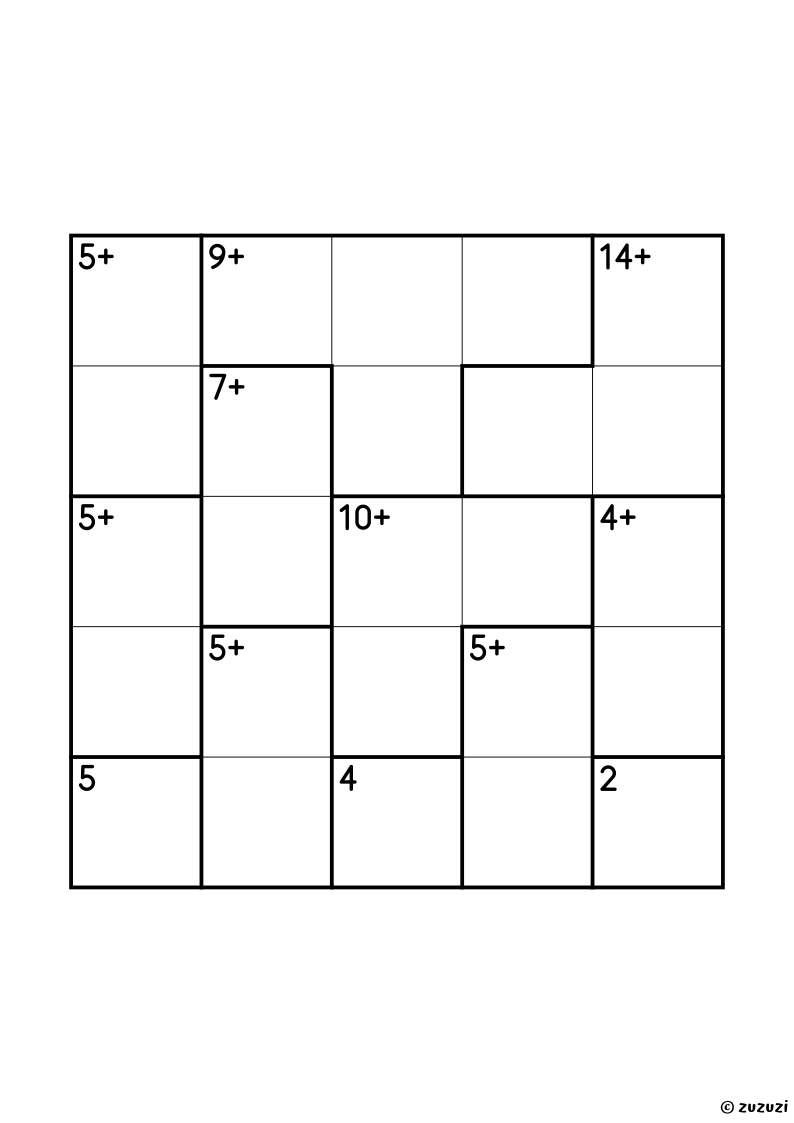
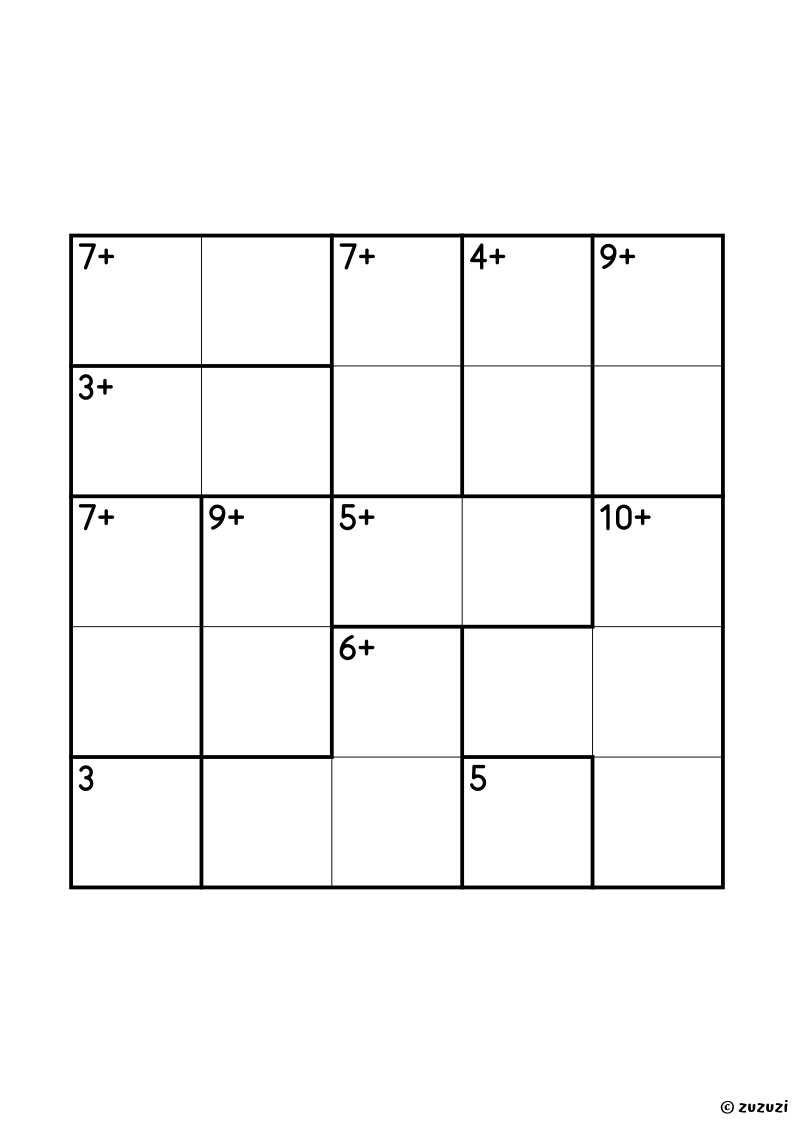
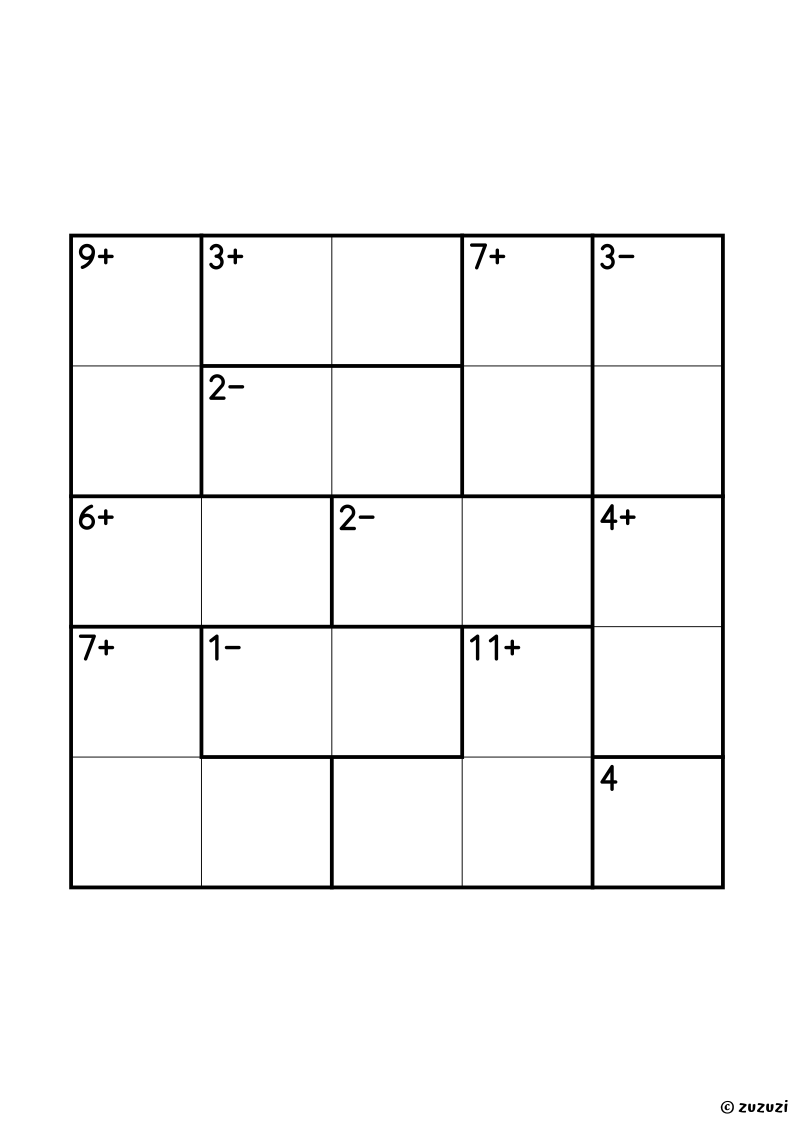
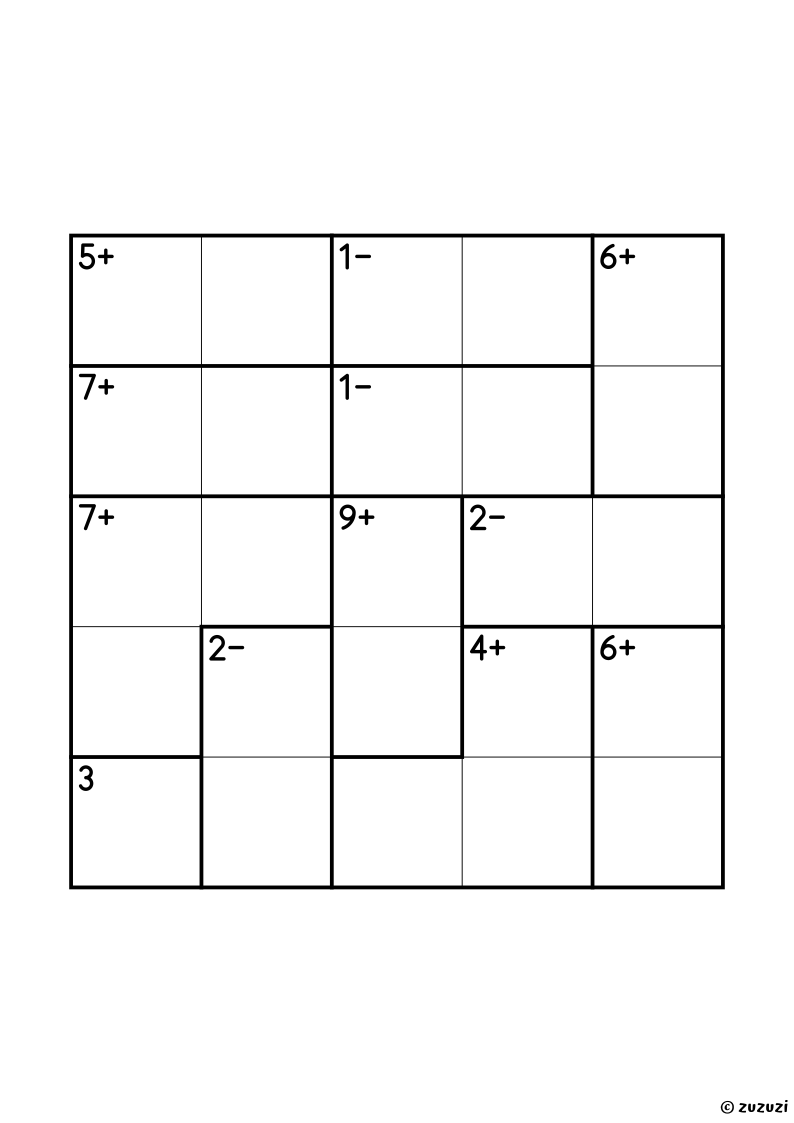
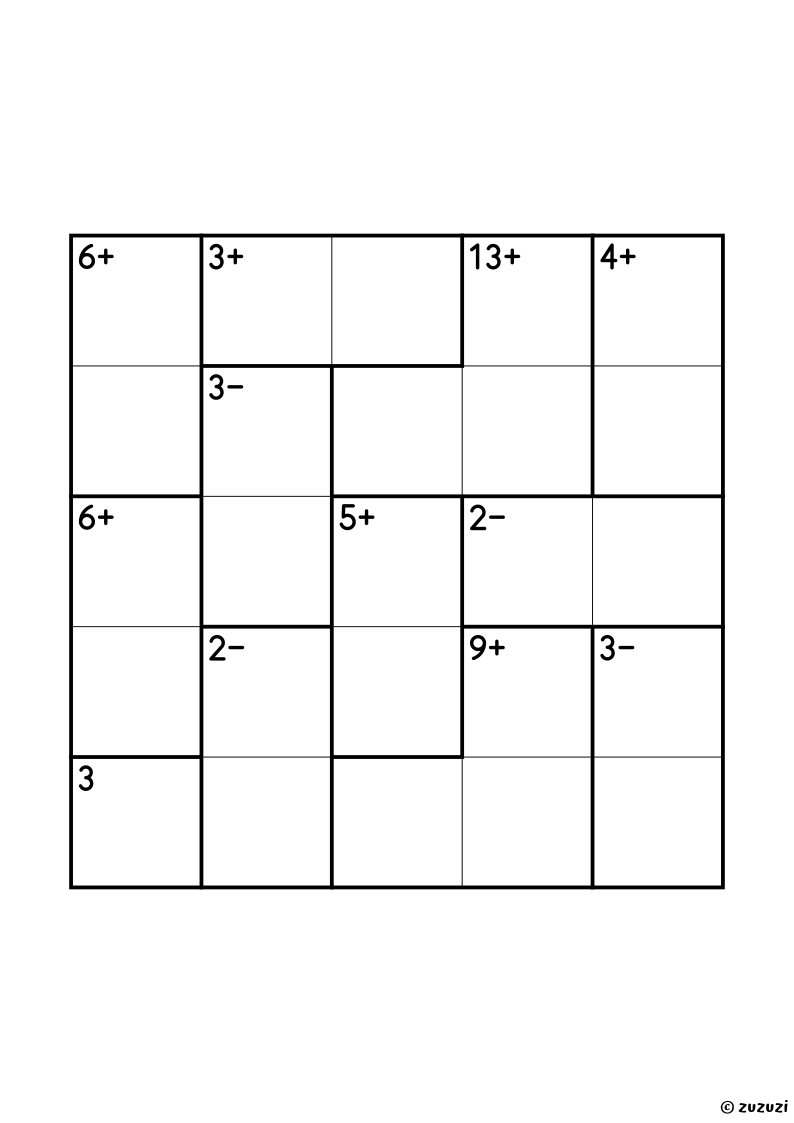
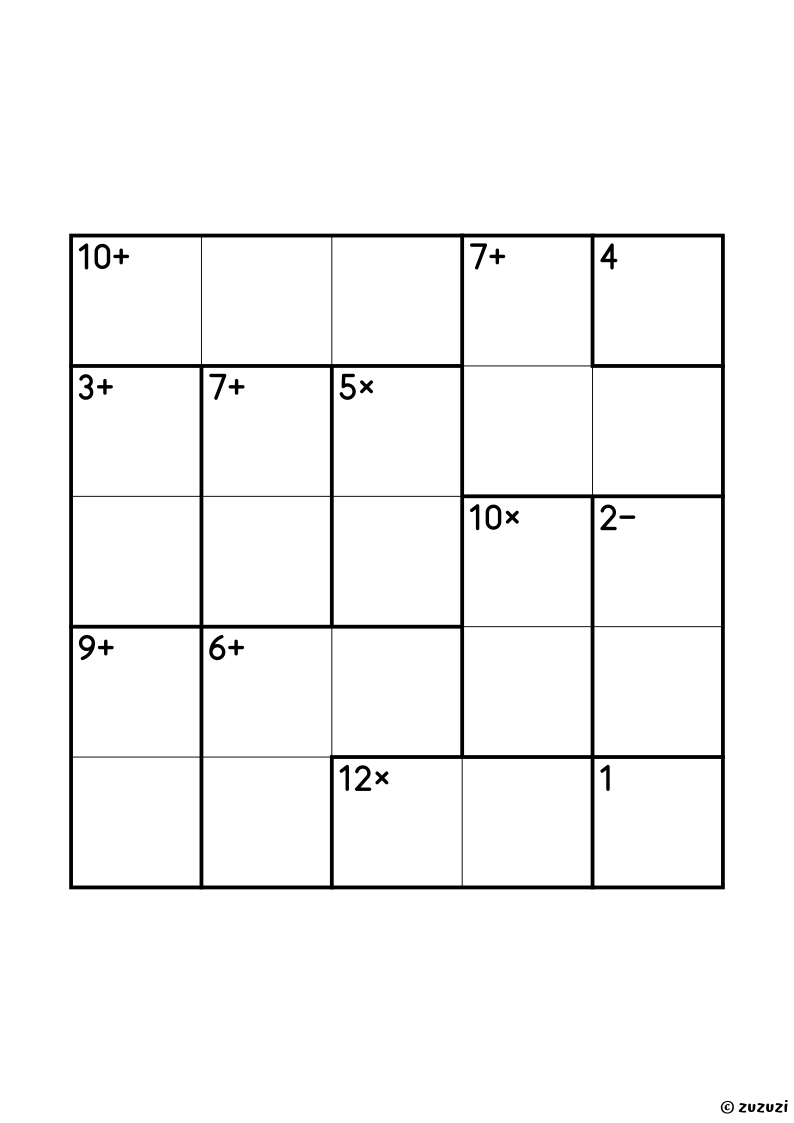
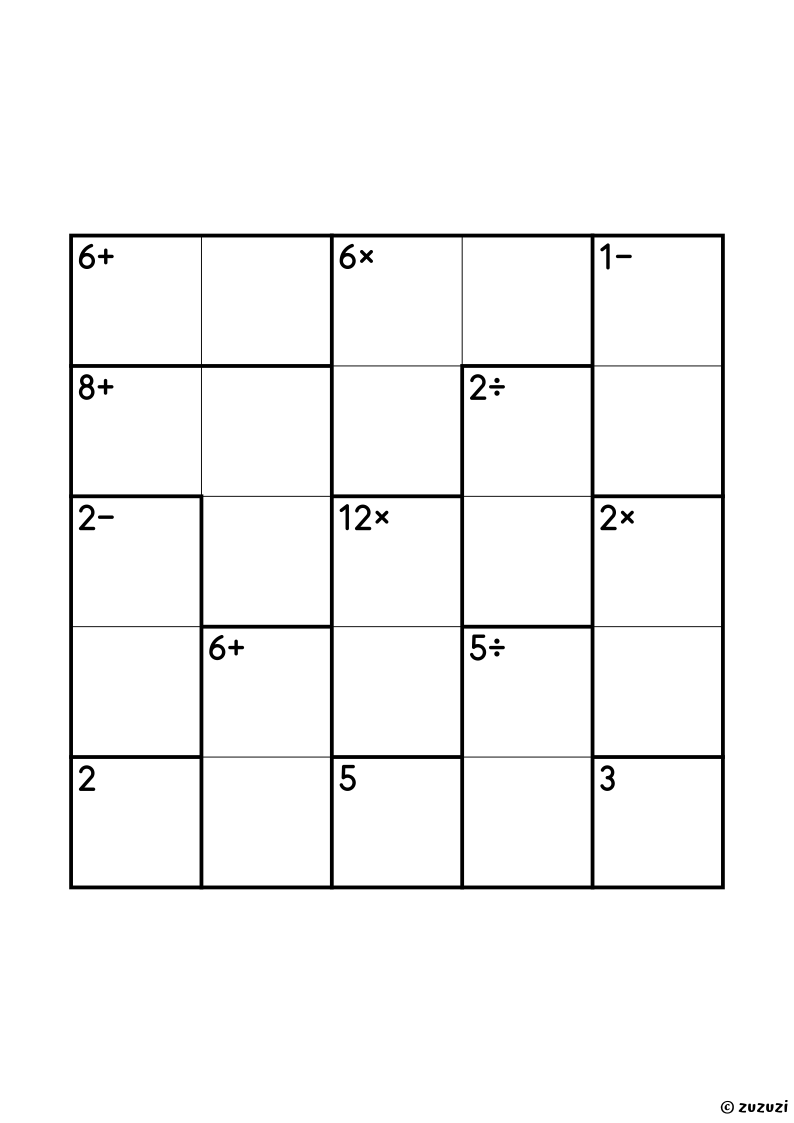
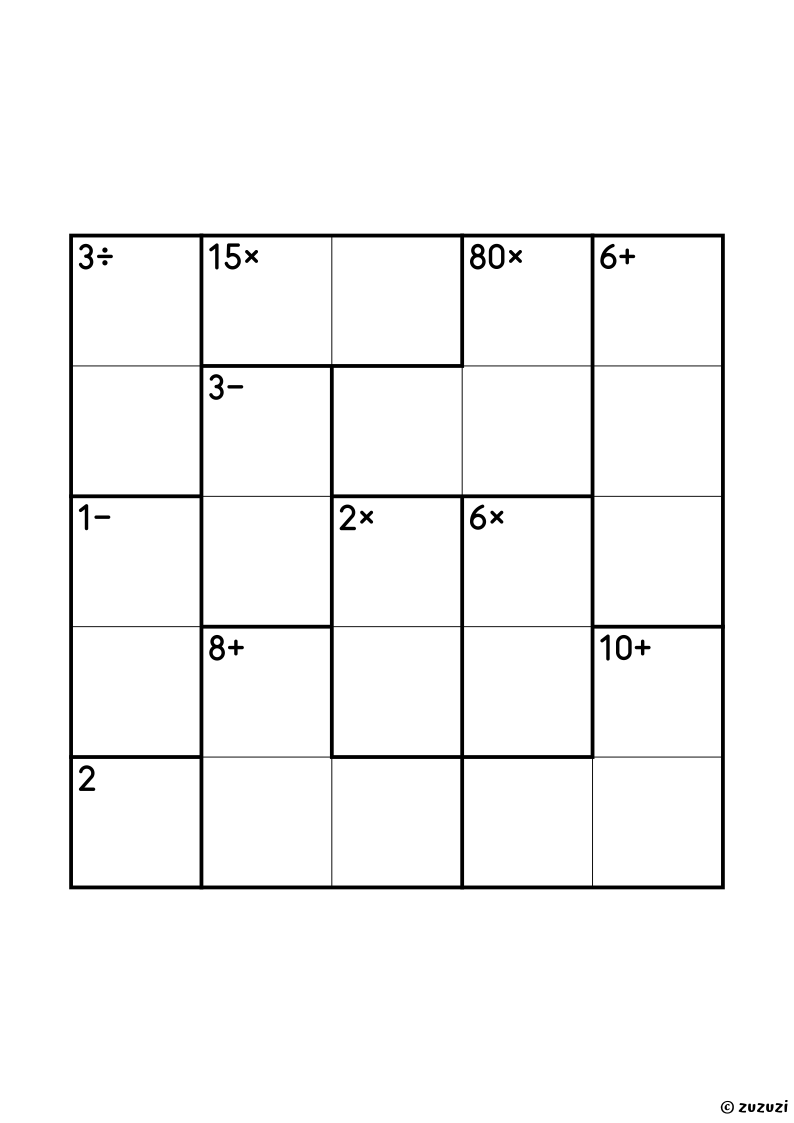
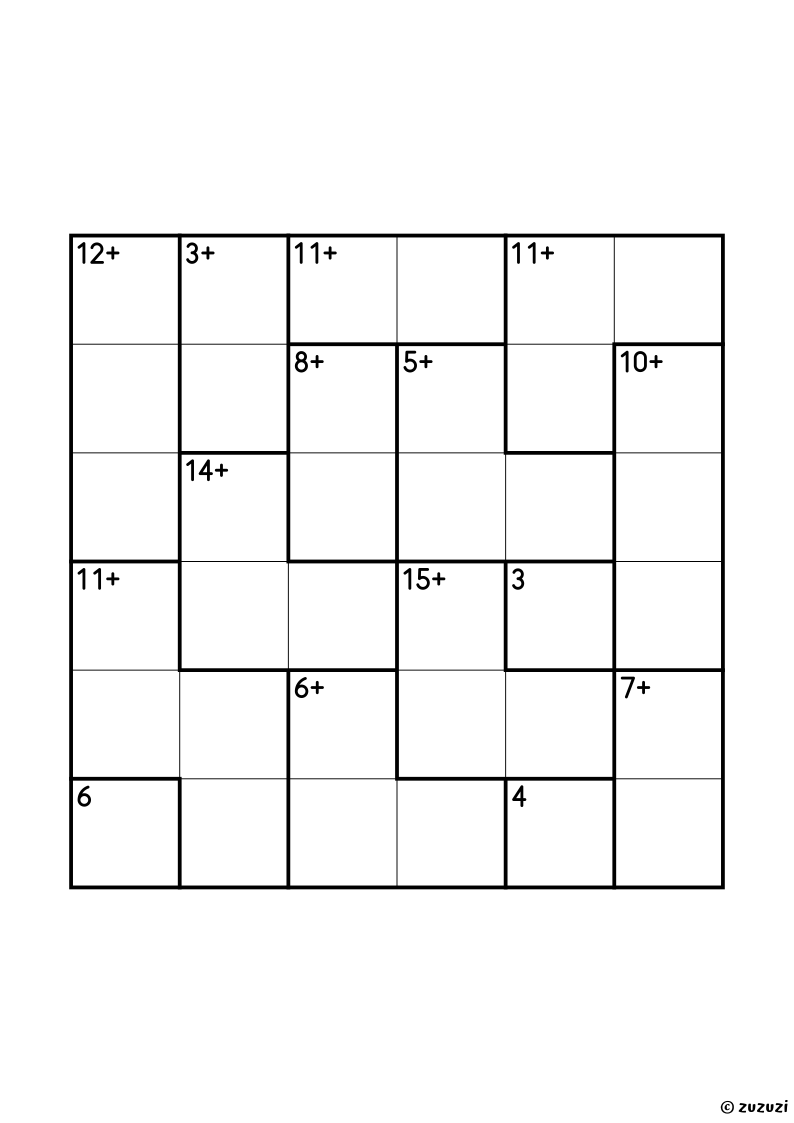
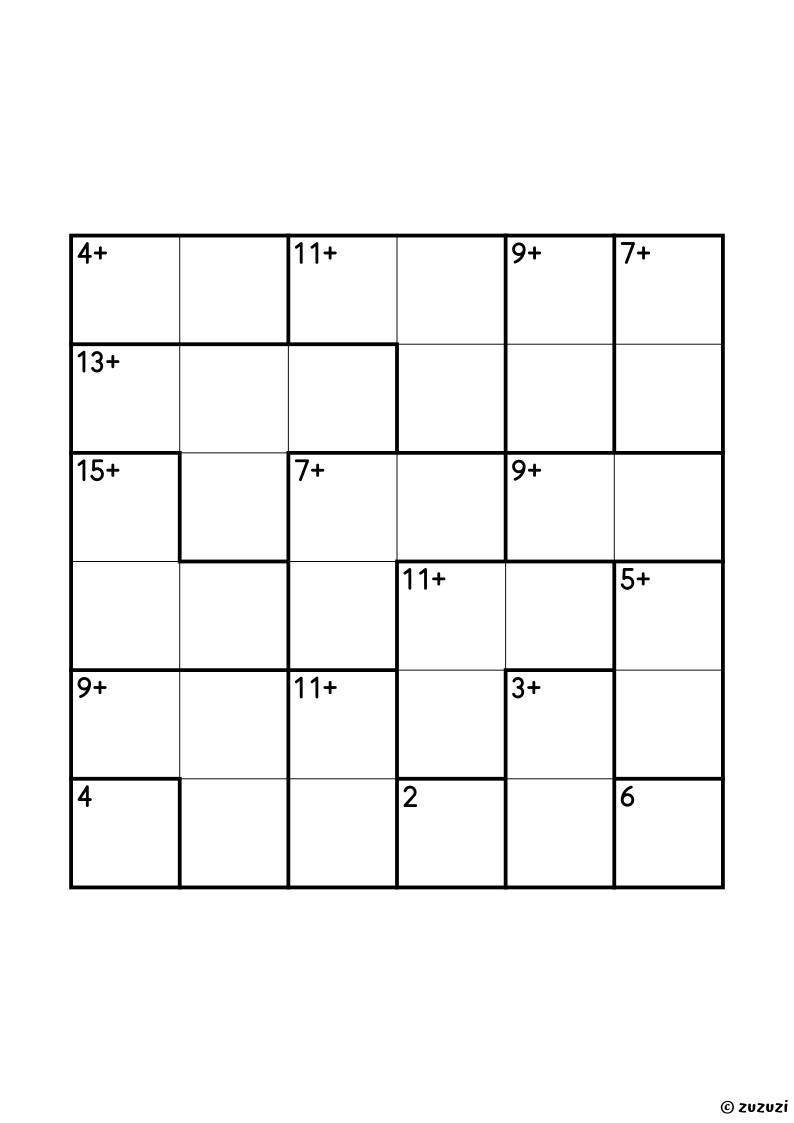
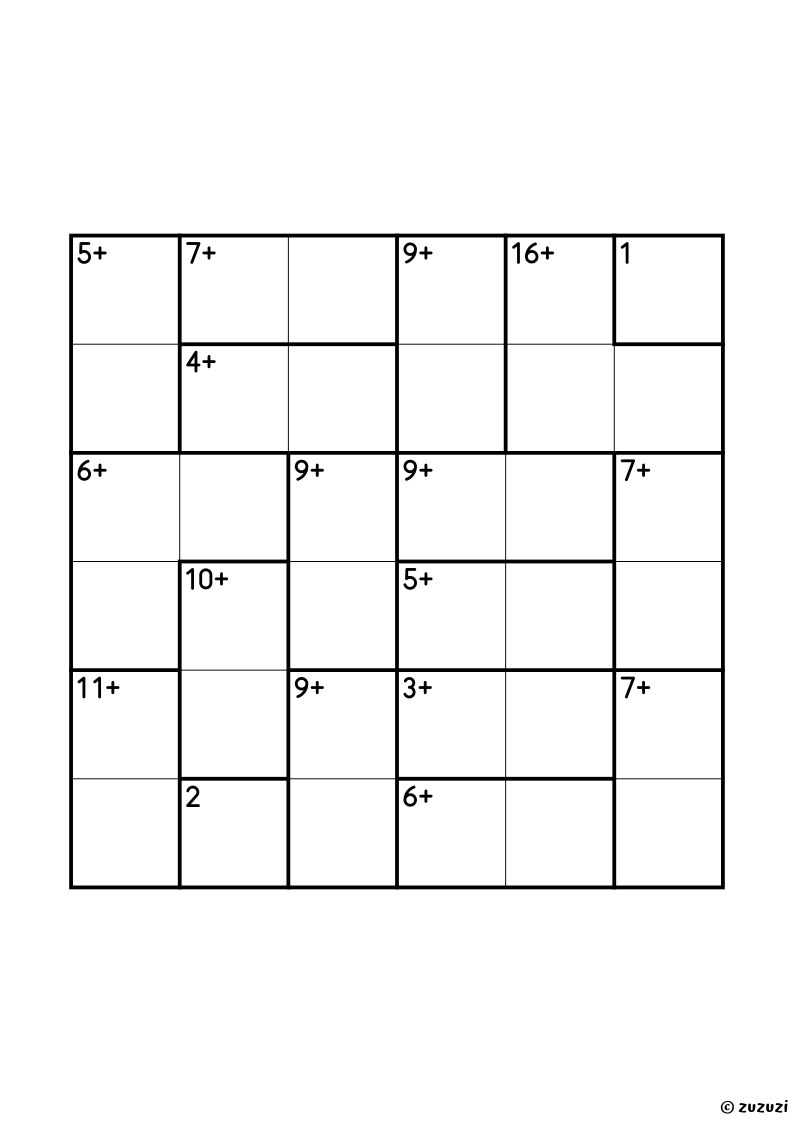
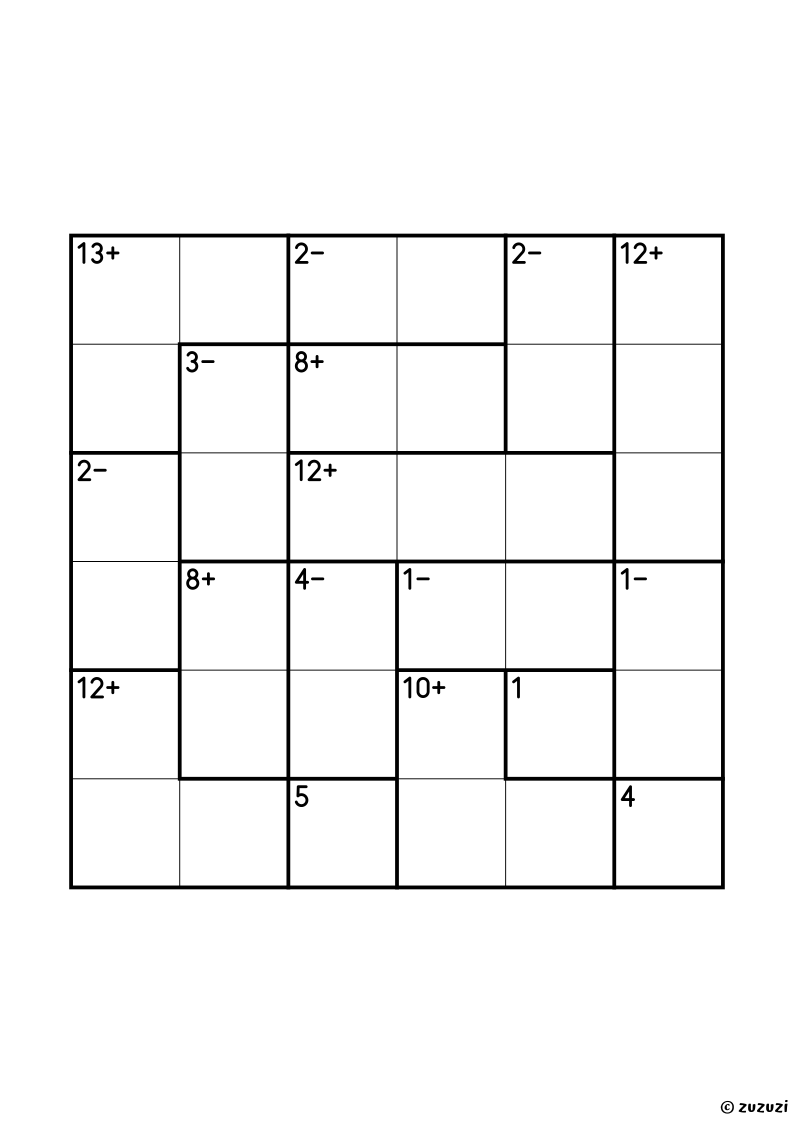
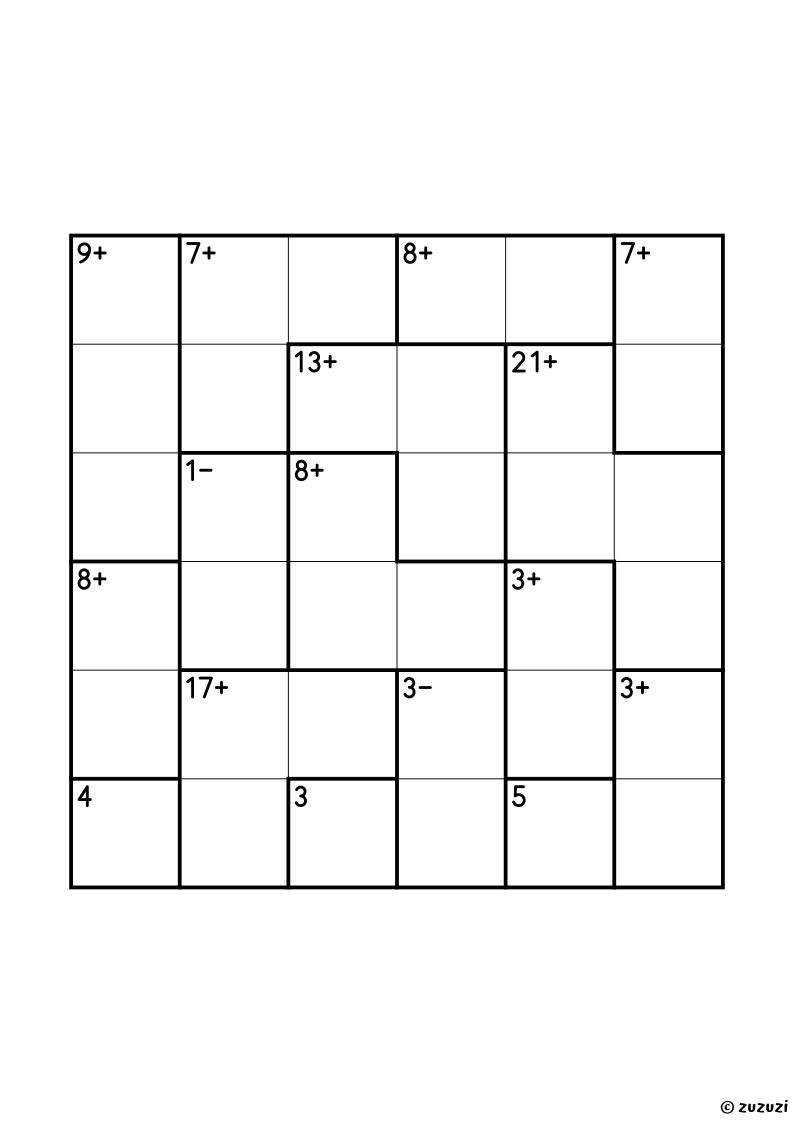
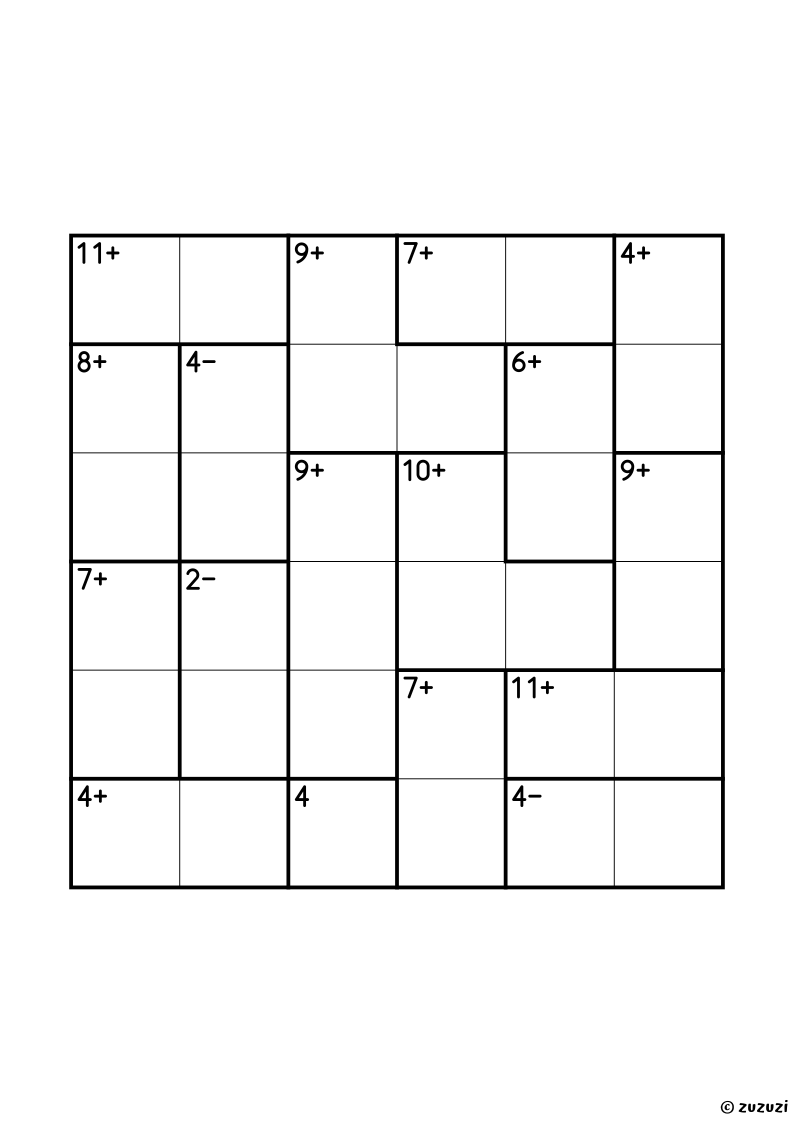
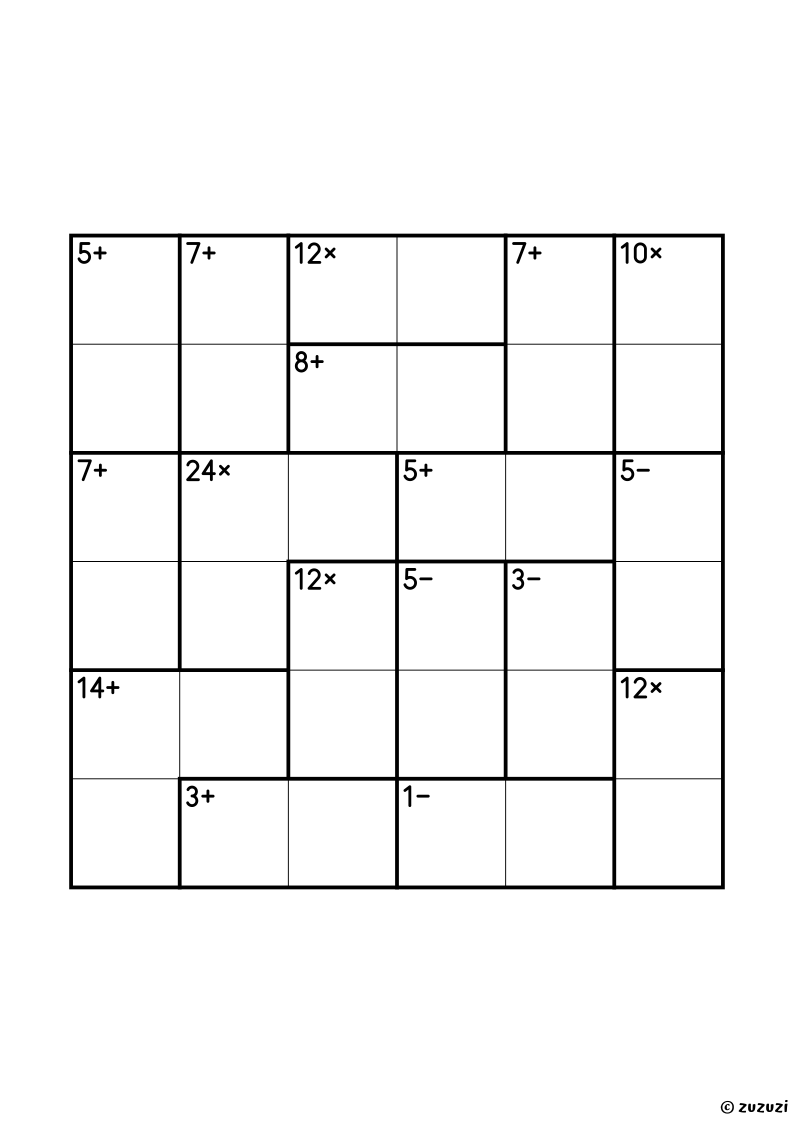
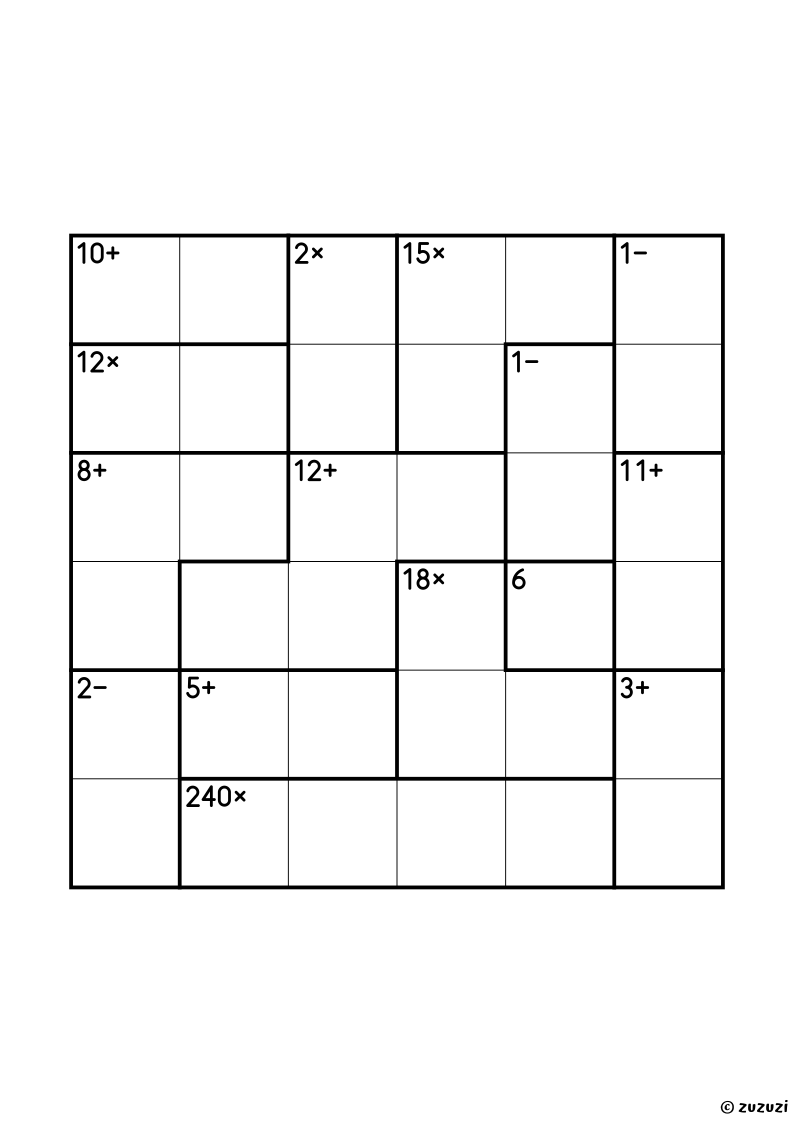
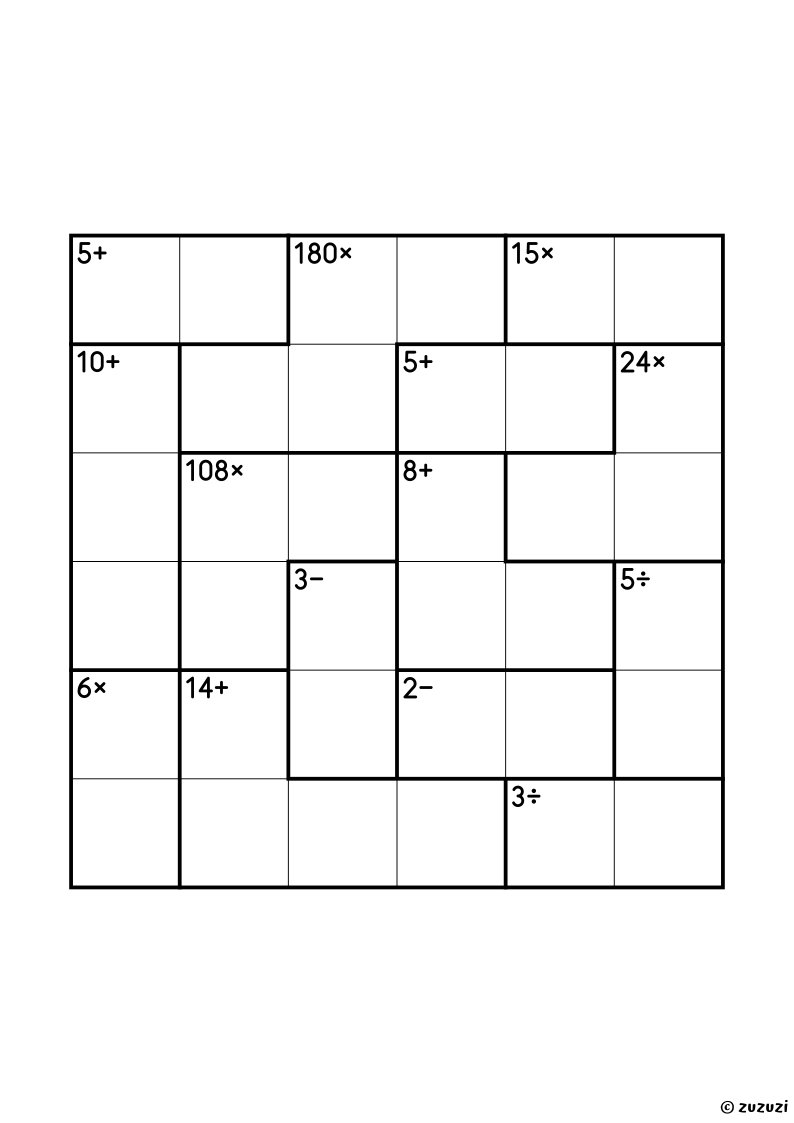
How to Play Calcudoku
Fill the grid with digits from 1 to the size of the grid: 1 to 4 in a 4x4 grid, 1 to 5 in a 5x5 grid, and 1 to 6 in a 6x6 grid. Each digit appears exactly once in every row and every column. Thick lines divide the grid into cages, and each cage shows a target number followed by an operation sign. Added or multiplied together, the digits of a cage give its number. In a two-cell cage with a minus or a division sign, the larger digit minus or divided by the smaller one gives the number. A single-cell cage simply shows its digit.
No digits are given, but every puzzle has exactly one solution that logic and arithmetic can reach without guessing.
How does difficulty work in calcudoku?
Two things set the difficulty: the size of the grid and the operations used. Addition-only puzzles are the best place to start. Adding subtraction brings in differences between two digits, and puzzles with all four operations add products and quotients, with many more combinations to consider. Bigger grids mean more digits, more cages, and longer chains of deductions.
Tips for solving calcudoku
- Fill single-cell cages first: they give their digit directly.
- List the digit combinations that can make the number of each cage, and cross out those that break the row and column rules.
- Large products narrow the choices quickly: in a 6x6 grid, a two-cell cage of 30× can only hold 5 and 6.
- Remember that every row and column adds up to the same total: 10 in a 4x4 grid, 15 in a 5x5 grid, and 21 in a 6x6 grid.